


Diverse Workplace And Inclusion Priorities Powerpoint Presentation Slides




Try Before you Buy Download Free Sample Product
 Impress Your
 Audience
 100%
100% Editable
 Save Hours
 of Time


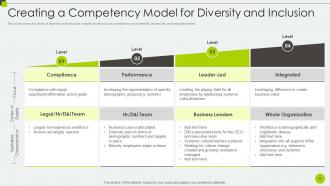
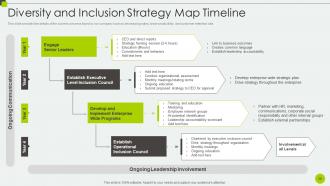
Diversity and inclusion management refers to the organizational actions which aim to promote the inclusion of employees from different regions into the company structure. Check out our competently designed template on Diverse Workplace and Inclusion Priorities that is made to improve the companys current culture and introduce diversity and inclusion within the companys culture. We have covered recent state analysis, focusing on current company situation, workforce comparison based on gender, race, ethnicity, etc. Our focus is also on issues the company faces due to the lack of diversity and inclusion and survey results obtained by team members. Challenges faced due to diversity and inclusion have been covered here and its solutions. Different diversity and inclusion dimensions have been focused like diversity, diversity wheel, dimensions affecting the workplace, 3 dimensions of inclusion, and signature traits of inclusive management. This template evaluates the inclusion model wherein the creation of the competency model. We have depicted the strategies of the D and I. Diversity and inclusion program that focuses on types of D and I training methods, a program for employees and managers. The ways to implement D and I within the company have been shared here. Download it now.
People who downloaded this PowerPoint presentation also viewed the following :
Content of this Powerpoint Presentation
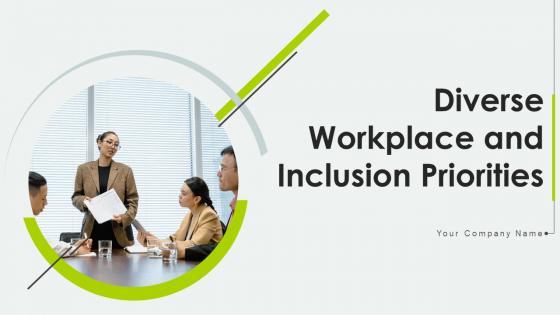
Slide 1: This slide introduces Diverse Workplace and Inclusion Priorities. State Your Company Name and begin.
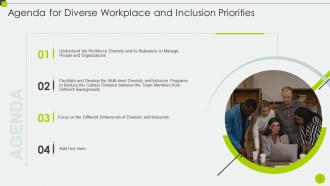
Slide 2: This slide states Agenda of the presentation.
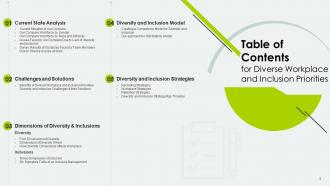
Slide 3: This slide presents Table of Content for the presentation.
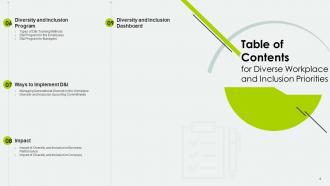
Slide 4: This is another slide continuing Table of Content for the presentation.
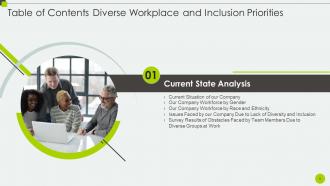
Slide 5: This slide displays various topics under 'Current State Analysis' to be covered in the template.
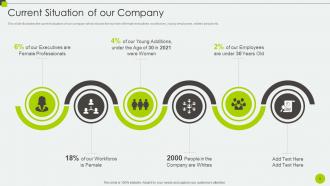
Slide 6: This slide illustrates the current situation of the company.
Slide 7: This slide illustrates the number of workforce in the company based on gender in different teams and over hiring.
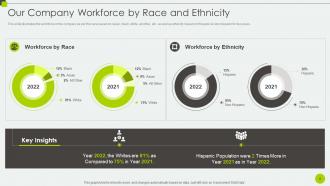
Slide 8: This slide illustrates the workforce in the company as per the race based on Asian, black etc. for two years.
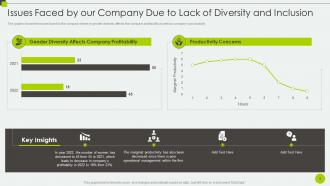
Slide 9: The slide demonstrates graphs that show the issues faced by the company like gender diversity affecting the company profitability and productivity.
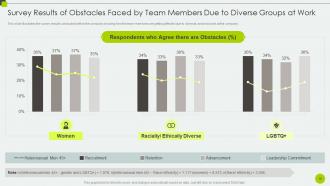
Slide 10: This slide illustrates the survey results conducted within the company showing the team members getting affected.
Slide 11: This slide displays two topics under 'Challenges and Solutions' to be covered in the template.
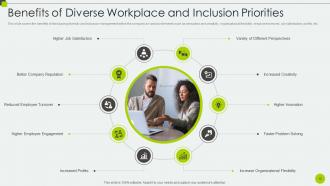
Slide 12: This slide covers the benefits of introducing diversity and inclusion management within the company on various elements.
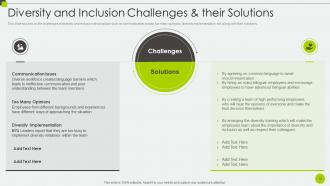
Slide 13: This slide focuses on the challenges of diversity and inclusion at workplace such as communication issues etc.
Slide 14: This slide displays three topics under 'Dimensions of Diversity & Inclusions' to be covered in the template.
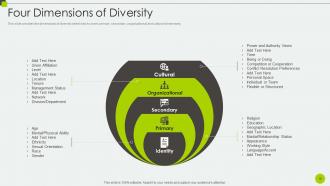
Slide 15: This slide provides the four dimensions of diversity wheel.
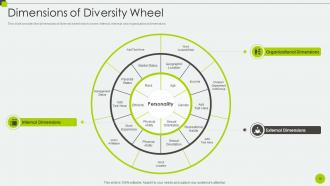
Slide 16: This slide provides the dimensions of diversity wheel.
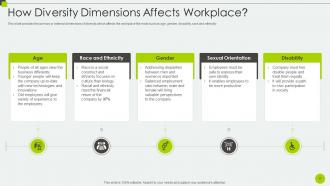
Slide 17: This slide provides the primary or internal dimensions of diversity which affects the workplace the most .
Slide 18: This slide displays topics under 'Dimensions of Diversity & Inclusions' to be covered in the template.
Slide 19: This slide provides the details of the three dimensions of inclusion important in the company.
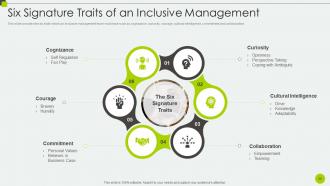
Slide 20: This slide provides the six traits which an inclusive management team must have.
Slide 21: This sli displays two topics under 'Diversity and Inclusion Model' to be covered in the template.
Slide 22: This slide covers the levels of diversity and inclusion maturity model such as compliance, etc.
Slide 23: This slide provides the diversity and inclusion maturity model which will be the approach followed by the company.
Slide 24: This slide displays four topics under 'Diversity and Inclusion Strategies' to be covered in the template.
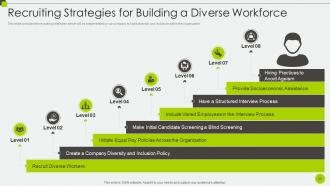
Slide 25: This slide provides the recruiting strategies which will be implemented by the company.
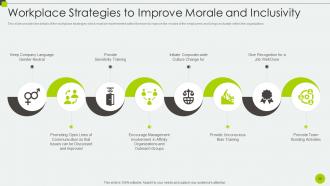
Slide 26: This slide provides the details of the workplace strategies which must be implemented within the team.
Slide 27: This slide provides the details of the retention strategies which must be implemented by the company.
Slide 28: This slide provides the details of the current concerns faced by our company such as decreasing sales, lower productivity etc.
Slide 29: This slide displays three topics under 'Diversity and Inclusion Program' to be covered in the template.
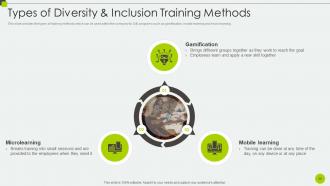
Slide 30: This slide provides the types of training methods which can be used within the company for D&I programs.
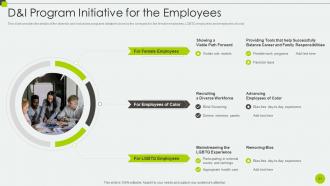
Slide 31: This slide provides the details of the diversity and inclusions programs initiatives done by the company for the female employees etc.
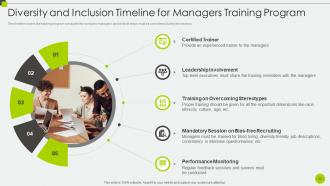
Slide 32: In this slide the timeline covers the training program conducted for company managers and the steps that must be considered during the session.
Slide 33: This slide displays two topics under 'Ways to Implement D&I' to be covered in the template.
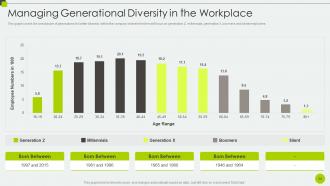
Slide 34: This slide exhibits a graph that covers the breakdown of generations for better diversity within the company focussing on generation Z etc.
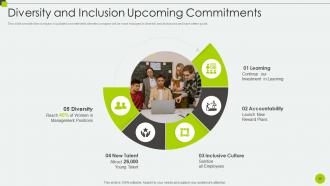
Slide 35: This slide provides the company’s updated commitments.
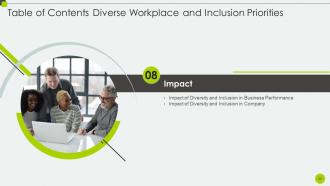
Slide 36: This slide displays two topics under 'Impact' to be covered in the template.
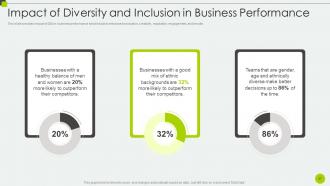
Slide 37: This slide provides impact of D&I in business performance.
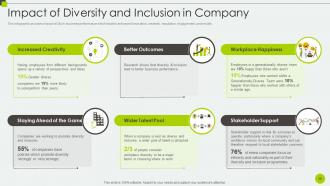
Slide 38: This slide exhibits infographics providing impact of D&I in business performance.
Slide 39: This slide displays the topic 'Diversity and Inclusion Dashboard' to be covered in the template.
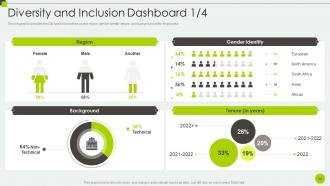
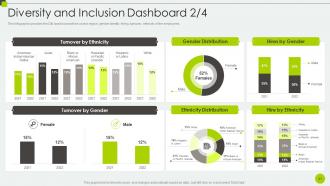
Slide 40: This slide demonstrates an infographic that provides the D&I dashboard which covers region, gender identity etc.
Slide 41: This slide presents an infographic providing the D&I dashboard which covers region, gender identity etc.
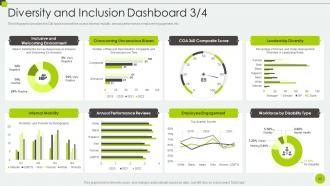
Slide 42: This slide presents an infographic that provides the D&I dashboard which covers internal mobility, annual performance etc.
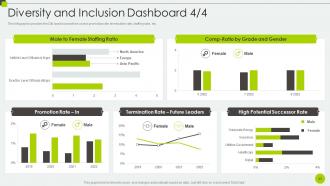
Slide 43: This slide exhibits an infographic that provides the D&I dashboard which covers promotion rate, termination rate etc.
Slide 44: This slide displays Icons for Diverse Workplace and Inclusion Priorities.
Slide 45: This slide is titled as Additional Slides for moving forward.
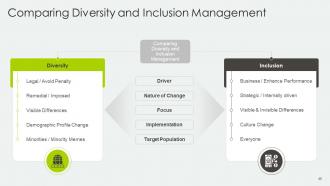
Slide 46: This slide presents Comparing Diversity and Inclusion Management.
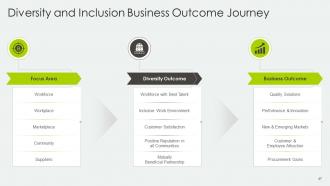
Slide 47: This slide displays Diversity and Inclusion Business Outcome Journey.
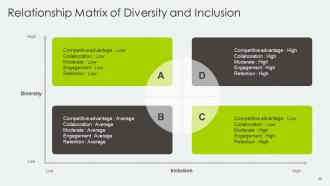
Slide 48: This slide showcases Relationship Matrix of Diversity and Inclusion.
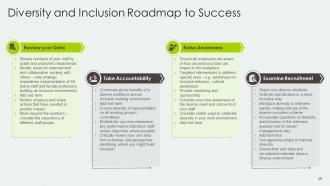
Slide 49: This slide represents Diversity and Inclusion Roadmap to Success.
Slide 50: This slide provides 30 60 90 Days Plan with text boxes.
Slide 51: This slide shows Post It Notes. Post your important notes here.
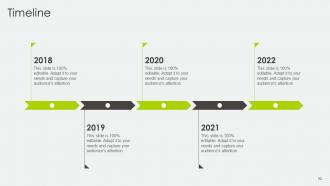
Slide 52: This is a Timeline slide. Show data related to time intervals here.
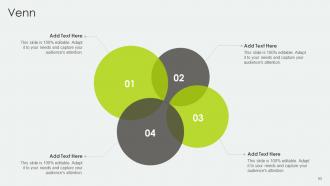
Slide 53: This slide depicts Venn diagram with text boxes.
Slide 54: This is a Thank You slide with address, contact numbers and email address.
Diverse Workplace And Inclusion Priorities Powerpoint Presentation Slides with all 59 slides:
Use our Diverse Workplace And Inclusion Priorities Powerpoint Presentation Slides to effectively help you save your valuable time. They are readymade to fit into any presentation structure.










FAQs for Diverse Workplace And Inclusion Priorities
Honestly, diverse teams just perform better - they spot problems others miss and come up with way more creative ideas. Your financial performance improves too, which is nice. People actually want to stick around when they feel valued for who they are, so retention goes up. Plus diverse teams connect with customers better since they actually reflect your market (makes sense, right?). It's not just about doing good anymore - it's smart business. I'd start by fixing your hiring process first. Then focus on psychological safety so people actually speak up instead of staying quiet.
Honestly, you've gotta track both the hard numbers and the softer stuff. Start with hiring/promotion rates by demographic - that'll show obvious gaps fast. Employee surveys are huge for engagement scores, and exit interviews? Pure gold for real talk about what's broken. Focus groups help you understand how inclusion actually feels day-to-day, not just what looks good on paper. The tricky part is staying consistent - one-off measurements don't tell you much. I'd pick maybe 3-4 metrics you can actually keep up with monthly or quarterly, otherwise you'll burn out trying to track everything.
Honestly, leadership makes or breaks this stuff. If your execs aren't genuinely bought in, forget about it - I've watched so many diversity programs crash and burn because the C-suite just talks a good game. Your leaders have to actually call out bias when they see it, promote diverse voices, and show everyone that this matters for real business reasons. You can't just grassroots your way to inclusion (though that helps too). When people see their CEO or department head walking the walk, suddenly everyone feels like they can speak up. Without that top-down commitment? You're basically rearranging deck chairs.
Honestly, start with standardized questions - same ones for every candidate. Makes a huge difference. Then try blind resume reviews where you strip out names and personal details before looking at them. Diverse interview panels help too, though that one's trickier to pull off depending on your team size. Skills tests beat going with your gut every time. I learned that the hard way after some questionable hires lol. Training your managers on bias recognition is smart but honestly most people think they're already unbiased. Pick one thing first - probably the standardized questions since that's easiest - then add more stuff gradually.
Honestly, the biggest thing is setting ground rules about listening and respect from day one. Some people need time to think before talking, others just blurt everything out - both are fine if you make space for it. I always rotate who runs meetings because otherwise the same loud voices dominate every time. Skip the jargon and insider references that leave people confused. And this might sound obvious, but actually check that everyone's following along before you move to the next topic. Oh, and shut down interruptions immediately - that stuff kills participation fast.
Okay so having different types of people on your team is honestly game-changing. You'll spot problems you never would've seen otherwise. Like, I remember this one project where Sarah (who thinks totally backwards from me) pointed out this huge flaw in my logic that would've been a disaster later. Different backgrounds mean people approach stuff from completely different angles. Short sentences hit different sometimes. When everyone thinks the same way, you get boring solutions. But mix it up? That's when the really creative ideas happen. Next time you're brainstorming, find whoever disagrees with you most and actually listen to them.
Honestly, it usually comes down to unconscious bias and leadership teams that all look the same. People don't feel safe speaking up differently. Plus a lot of companies do surface-level stuff - hire diverse people but never actually change how decisions get made or what the culture feels like day-to-day. Sometimes it's smaller things too, like using insider jargon or having those informal networks where real conversations happen. Your systems end up rewarding people who just "fit in" instead of making room for different perspectives. I'd start by watching how your team meetings actually work - who talks, who doesn't, how ideas get shot down. That's where you'll see it most clearly.
Honestly, I'd start by figuring out what's actually blocking people from underrepresented groups - don't just guess. Then set up mentorship programs, but make them structured with real goals, not just random coffee meetups that go nowhere. Pair junior folks with senior leaders who've been through similar stuff, not whoever raises their hand first. Oh, and try reverse mentoring too - leadership needs those fresh perspectives. Track how it's going and celebrate wins publicly so people see it matters. Maybe pilot it with a small group first? That way you can fix any issues before rolling it out everywhere.
Oh totally! ERGs create these amazing spaces where people can actually be themselves at work. I've watched some incredible cross-department friendships form through them - like, relationships that never would've happened otherwise. People feel way more engaged when they're not putting on some corporate mask all day. Plus they're honestly goldmines for developing leadership skills and mentorship. The cool thing is how it spreads outward too. Those ERG members become your biggest cheerleaders for recruiting diverse talent. If you don't have any yet, just pick one focus area and let it build naturally from there.
Honestly, you don't need to pick sides here - good hiring gets you both. Start by casting a wider net when you're looking for people. Post jobs in different places, not just the usual spots. Then ditch the "I have a good feeling about this person" interviews (those are basically bias factories anyway). Structured questions work way better. Oh, and check your job posts - are you asking for stuff that doesn't actually matter? Like requiring a degree when skills are what count? Skills-based tests tell you way more than a resume ever will. Take a hard look at what you're doing now. Bet you'll find some obvious fixes that help you grab talent from everywhere.
First thing - audit what you've got now for barriers and gaps in representation. Include diverse case studies and examples (this part's huge, honestly). Mix up your formats too - visual, audio, hands-on stuff so everyone can actually engage. Flexible scheduling helps a ton. Don't just send out those generic surveys either. Get specific feedback from underrepresented groups. Have diverse people involved in designing AND running the programs. Oh, and definitely pilot it with a small mixed group first - you'll catch things you never would've thought of. Way better than discovering issues after you've rolled it out to everyone.
Honestly, remote work can be a game-changer for diversity. Geography stops being a barrier - you can hire amazing people from small towns, other countries, or folks who just can't move because of family stuff. People with disabilities get way better opportunities too since they don't have to deal with commuting or office accessibility issues. Face-to-face meetings are where a lot of unconscious bias happens, so that's reduced (though video calls aren't perfect either, let's be real). You just gotta be smart about it - actively look for diverse candidates instead of hoping they'll magically appear.
Look, having diversity only at entry level is pretty pointless if those voices never make it to actual decision-making roles. People need to see others like them in leadership positions - otherwise you're basically saying "this is as far as you go." The real issue? All those different perspectives get filtered out way before they reach the strategy discussions that actually matter. I mean, representation without real power isn't representation at all, right? So push for diverse leadership hiring and create actual paths for advancement. Otherwise you're just checking boxes while keeping the same old guard making all the important calls.
Dude, don't just throw numbers at them - nobody wants to stare at spreadsheets. Tell the actual story: where you started, where you're at now, and why it matters to the business. Visuals are your friend here - dashboards, charts, whatever keeps people awake. Break stuff down by groups and time periods so the patterns jump out. Here's the thing though - you gotta connect your diversity metrics to real business stuff like retention or employee happiness. Otherwise they'll just nod politely and forget about it. Wrap up with concrete next steps they can actually do.
Yeah, you definitely need to keep that education going regularly. Biases sneak back in when we're not paying attention, plus new situations pop up all the time. I've noticed people forget everything from those one-off trainings pretty quickly anyway. Make it interactive though - nobody wants another boring presentation. Quarterly discussions work well, or maybe lunch sessions where people actually talk and share stuff. Shows your team this isn't just some HR box to check. The whole thing falls apart if it feels forced, so keep it real and tied to what's actually happening at your workplace.
-
Their professional templates are very impressive, even my manager was curious about the source. I am very grateful.
-
SlideTeam makes creating presentations easy. Unlimited products, premium quality designs and affordable.