


Diversity and inclusion training on diversity inclusion equality equity and belonging edu ppt




Try Before you Buy Download Free Sample Product
 Impress Your
 Audience
 100%
100% Editable
 Save Hours
 of Time


This PPT deck contains slides to explain the concept of DIBEs in the diversity and inclusion training session. It contains information on techniques to make the workplace more inclusive by communicating openly, paying attention to everyone, etc. Also, it highlights the difference between equality and equity. Further, it showcases a framework to highlight how diversity, inclusion, and equity lead to high belongings at the workplace.
People who downloaded this PowerPoint presentation also viewed the following :
Content of this Powerpoint Presentation
Slide 1
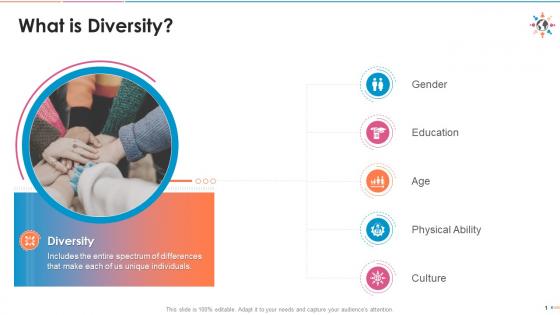
This slide covers a brief description of diversity. It also depicts that Diversity refers to what distinguishes each of us and includes our cultures, personalities, life experiences, and views, as well as everything else that makes us who we are.
Instructor's Notes:
To better comprehend and describe diversity, we might consider it in a societal context. For example, at work, we may engage with employees of diverse genders, ages, and beliefs. Similarly, kids at school may come from diverse socioeconomic backgrounds and have varied personalities and physical talents.
Slide 2
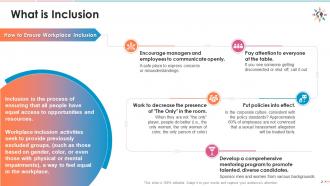
This slide covers a brief description of inclusion at work place. It also depicts that Inclusion is the process of ensuring that all people have equal access to opportunities and resources.
Slide 3
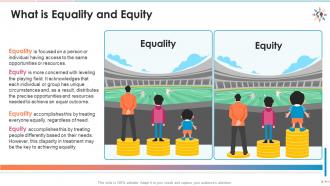
This slide covers a brief description of equality and equity. It also depicts that equality achieves the desired outcome by treating everyone equally, regardless of need, whereas equity accomplishes this by treating people differently based on their needs.
Instructor's Notes:
Resumes with “white-sounding” names (“Tom,” “Jennifer”) receive more attention than resumes with foreign or Black-sounding names. It is critical for recruiting managers to notice these tendencies, assess their prejudices, and aggressively combat discrimination during the hiring process. This type of focus on recruiting for diversity helps create the groundwork for a more fair working environment.
Slide 4
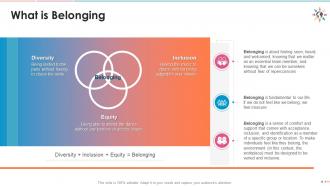
This slide covers a brief description of Belonging. It also depicts that Diversity plus Inclusion plus Equity is equal to Belonging.
Instructor's Notes:
Diversity is being invited to a party without having to hunt it down, inclusion has music to dance to without being criticized for the skills, and equity is being allowed to dance without barriers to entry. Belonging is the place in the center.
Additional Slide 1
This slide contains icons related to Diversity and Inclusion in the same color theme that can be used by you to provide additional information of your own.
Additional Slide 2
This slide can be edited by anyone to provide information about your organization. The slide is using the same color theme and similar design elements as the main deck.
Additional Slide 3
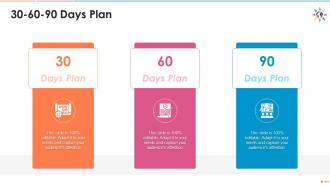
This slide contains editable 30-60-90-day plan and is completely editable to suit presenter’s needs.
Additional Slide 4
This slide contains a roadmap template which you can edit to communicate your roadmap in an impactful way.
Additional Slide 5
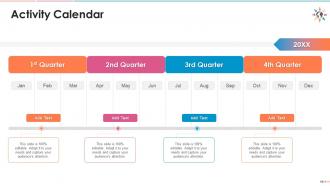
This fully editable slide contains Activity Calendar for Diversity & Inclusion activities that you can plan for your teams.
Additional Slide 6
This fully editable slide contains timelines for your plan around implementing Diversity & Inclusion agenda in your organization.
Diversity and inclusion training on diversity inclusion equality equity and belonging edu ppt with all 11 slides:
Use our Diversity And Inclusion Training On Diversity Inclusion Equality Equity And Belonging Edu Ppt to effectively help you save your valuable time. They are readymade to fit into any presentation structure.


FAQs for Diversity and inclusion training on diversity inclusion equality equity and
Honestly, the whole point is helping people spot their unconscious biases and making everyone feel safe to actually speak up. You want practical stuff - not just boring theory that nobody remembers. Train people to recognize different perspectives and catch moments when someone's getting left out. Yeah, there's the compliance angle too, but the real goal is changing day-to-day behavior. Like, can your team have tough conversations without people shutting down? Pick training with realistic scenarios you'll actually face. When done right, your workplace culture shifts and people genuinely feel more included.
Look, you gotta measure the obvious stuff first - participation rates, test scores, feedback surveys. That's your starting point. But here's where it gets interesting: the real changes show up later in engagement surveys, retention numbers, and who's actually getting promoted. Watch for behavioral shifts too - are people using more inclusive language? Better collaboration happening? I'd say set up quarterly check-ins and compare your before/after data. Oh, and don't forget to track if they're applying what they learned in real situations.
Honestly, your leaders make or break the whole thing. If they're just talking about diversity but not actually doing anything? Everyone sees right through that. The good ones jump into D&I stuff themselves, shut down bias when it happens, and actually measure managers on inclusion. That's when people realize it's not just corporate BS. Teams copy what they see at the top - kinda obvious but worth saying. So when your executives genuinely care about diverse hiring and making meetings inclusive, that attitude spreads. The trick is consistency though. They can't just show up for the annual diversity workshop and call it a day.
Honestly, training works because it shows you biases you didn't even know you had. Like, most of us make quick judgments about people based on their name or how they sound - we just don't realize we're doing it. The good programs use real scenarios that make you go "oh crap, I totally do that." Short sentences hit harder sometimes. What really helps is learning to pause before making decisions about people and asking yourself what assumptions you're making. Especially during hiring - that's where it matters most. You can't fix something you can't see, you know?
Ugh, remote D&I training is tough. You lose all the body language stuff that makes conversations feel real. Plus people just mute themselves when things get uncomfortable - can't blame them honestly, but it kills the whole point. Breaking into small groups is clunky as hell online. Then you've got folks joining at like 6am or whatever because of time zones, so they're barely awake. The worst part though? Those random follow-up chats that happen naturally after in-person sessions just... don't exist virtually. Maybe try setting up casual coffee hangouts after the formal stuff to keep people talking.
Honestly, start by asking your team what diversity stuff they actually deal with day-to-day. Way better than generic training that nobody remembers. Healthcare folks need scenarios about different cultural backgrounds with patients. Tech companies? More about inclusive hiring and team dynamics. Use real examples from your actual workplace - not some boring case study from 2015. Match how you deliver it to your company vibe too. Startups usually want interactive workshops while traditional places prefer structured presentations. The whole point is making it relevant to what people face every single day.
Honestly, D&I stuff actually works when it's done right. The numbers back it up - people stay longer and feel way better about their jobs. Makes sense, right? Nobody wants to pretend to be someone else at work all day. Diverse teams crush it performance-wise too, which is cool. But here's the thing - it can't just be some BS corporate checkbox thing. Leadership has to actually care and follow through consistently. Oh, and definitely survey your people first to see what's really going on before you start changing everything.
Ugh, the worst misconception is people treating it like some meaningless checkbox exercise. Or thinking it's all about political correctness and making folks feel bad about themselves - which honestly just tells me they sat through garbage training before. Good D&I work is actually super practical stuff. Reducing hiring bias, helping teams feel safe speaking up, building better communication habits. It's about getting real business results, not virtue signaling (though some companies definitely phone it in). Next time someone rolls their eyes at it, I'd ask what specific training they're even talking about. Half the time they're just repeating what they heard somewhere else.
Honestly, VR is a game-changer for D&I training - people actually *feel* what bias looks like instead of just hearing about it. Interactive stuff works way better too. Polls, breakout rooms, quizzes - anything that stops people from mentally checking out. On-demand sessions are clutch for remote teams or weird time zones. Some AI tools can customize content based on roles, which is pretty cool I guess. But here's the thing - don't go overboard with fancy tech just because it exists. Pick one thing that'll actually help your specific team. Test it out first.
So first thing - mix up how people can actually access this stuff. Live sessions, recordings, interactive bits. People learn differently and have crazy schedules. Skip the jargon and add captions plus transcripts (screen readers too if you can swing it). Don't jam everything into 9-5 either - parents and night owls exist! Oh, and check cultural holidays before you lock in dates. Honestly though? Just survey your team first. Ask what they actually need instead of guessing. I've seen too many trainings flop because someone assumed everyone learns the same way. Their feedback will tell you way more than any best practices guide.
Definitely do post-training surveys, but also throw in some focus groups and casual check-ins like 3 months later. Ask specific stuff - what clicked, what was totally useless, where they're still lost. Those generic "rate 1-5" surveys are basically worthless, honestly. You want to spot patterns in what people say. Maybe your scenarios are falling flat or they need way more practice on certain skills. Then actually fix those things and let people know you listened. Oh, and informal feedback can be gold too - sometimes the best insights come from random hallway conversations.
Look, the ROI numbers don't lie - diverse teams just perform better financially. Different backgrounds mean better problem-solving, period. You'll get way less turnover because people actually want to stick around when they feel valued. Innovation goes up too since you're not stuck in the same old groupthink bubble. Your talent pool basically doubles overnight when you're not limiting yourself to one type of person. Oh, and definitely start tracking your diversity metrics now so you can see if you're actually making progress. The data on this stuff is honestly pretty convincing at this point.
Stories hit different in D&I training, honestly. People actually connect with real experiences instead of just nodding through another PowerPoint. Share stuff about microaggressions or times someone felt excluded—suddenly those abstract concepts click. Your brain holds onto stories way better than random stats anyway. Ask employees to share their own experiences, or pull case studies from your company. Just make sure you're getting diverse perspectives, not the same voices every time. Oh, and skip the slides next session. Start with an authentic story instead—the engagement difference is crazy obvious.
Look, intersectionality is just recognizing that people aren't walking around with just one identity, you know? Like someone might be dealing with stuff as both a woman AND a person of color - that's completely different from facing either thing alone. Pretty mind-blowing once it clicks. When you're putting together diversity training, you can't just tackle race OR gender separately. Ask yourself: how's this gonna affect someone juggling multiple identities? That question alone will make your whole approach so much better. Trust me on this one.
Stop treating this like a one-and-done thing - that's where most companies screw up. Build it into your regular stuff: team meetings, hiring, reviews. Employee resource groups actually work if you fund them properly. Track real metrics quarterly (not just participation numbers, btw). Your leadership has to walk the walk consistently or people see right through it. Get honest feedback from your team about what's actually happening day-to-day, not what you think is happening. Pick 2-3 concrete areas to start with this month instead of trying to fix everything at once.
-
Attractive design and informative presentation.
-
Unique design & color.
-
Excellent design and quick turnaround.
-
Helpful product design for delivering presentation.