

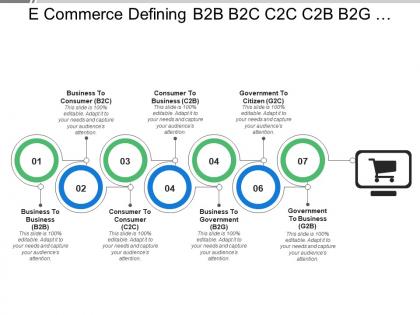
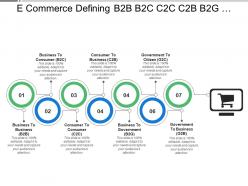
E commerce defining b2b b2c c2c c2b b2g g2c g2b




Try Before you Buy Download Free Sample Product
 Impress Your
 Audience
 100%
100% Editable
 Save Hours
 of Time


Display deft handling with our E Commerce Defining B2b B2c C2c C2b B2g G2c G2b.Demonstrate alertness and agility of thought.
People who downloaded this PowerPoint presentation also viewed the following :
E commerce defining b2b b2c c2c c2b b2g g2c g2b with all 5 slides:
Galvanize your team with our E Commerce Defining B2b B2c C2c C2b B2g G2c G2b. They will all burst into action.
FAQs for E commerce defining b2b b2c c2c c2b
Everyone's shopping on their phones now, plus social media selling is everywhere. Like, people literally buy stuff directly through TikTok and Instagram instead of going to actual websites. Same-day shipping isn't special anymore - it's what customers just expect, which is honestly wild for supply chains. The AI stuff is getting pretty intense too. These platforms know what you want before you do, which is both impressive and kinda creepy. Oh, and if you're doing any online business stuff, definitely make sure your site works great on mobile. Maybe look into selling directly on social platforms too - that's where the younger crowd shops now.
Honestly, just do what Amazon can't - get personal with your customers. Pick a super specific niche and become *the* person for that thing. Write actual thank-you notes, remember details about people. Big companies suck at that stuff. Test new products fast since you don't have to run everything through 50 committees. Partner with local people who actually care about your community. Your brand story should feel real, not like some corporate BS. Oh and don't try to compete on everything - find one underserved group and own that space completely.
Dude, mobile optimization can make or break your sales. Most people are shopping on phones now, so if your site's slow or the checkout sucks, they'll just bounce. I saw this happen with a client - their mobile site was trash and they were losing so much money. Make sure your buttons aren't tiny (seriously, test with your thumbs), pages load fast, and product images actually look good on small screens. Even little annoying things will make people abandon their carts. Honestly? Just use your own site on your phone and see where you want to throw it across the room.
Honestly, reviews are everything when shopping online since you can't actually see the stuff in person. Most people check the star rating first, then scroll through recent ones looking for red flags about sizing or quality issues. I do this religiously - like, I won't even buy a phone case without reading what people say first! Something like 90% of shoppers do the same thing, and good reviews seriously help with sales. The trick is getting your happy customers to actually write reviews (which is harder than it sounds) and replying nicely to the bad ones so people see you care.
Honestly, email marketing is where I'd start - it's cheap and the ROI is insane, like supposedly 4200% but take that with a grain of salt. Facebook and Instagram ads are solid too since you can get really granular with targeting based on what people actually like and do online. SEO on your product pages brings in buyers who are already hunting for what you're selling, which is gold. Oh, and don't forget retargeting! Those "hey you forgot something in your cart" emails actually work way better than you'd think. I know it sounds basic, but email first if you're just starting out.
Honestly, pick one platform where your customers actually spend time and go all-in there first. Great visuals are everything - show your products in action through stories and reels because people need to see stuff working before they'll buy. Those Instagram Shop features and Facebook Marketplace are goldmines if you use them right. But here's the thing - don't just post and disappear. Actually talk to people in your comments and build real relationships. Trust me, micro-influencers in your niche will get you way better results than some random celebrity with millions of followers. Their audiences actually care about what they're selling. Oh, and targeted ads obviously help too, but engagement comes first.
SSL encryption is non-negotiable - get that set up first. Use legit payment gateways like Stripe or PayPal, and make customers create strong passwords with two-factor auth. I can't stress this enough: don't skip the security audits. Too many people think they're fine until they're not. If you're processing credit cards directly, PCI compliance isn't optional. Keep everything updated and encrypt stored customer data. Oh, and layer your security - don't put all your eggs in one basket. Start with SSL and payments since that's where hackers usually go first.
Dude, personalization is honestly a game-changer. Customers feel way more connected when you show them stuff they actually want to see. Think product recs based on what they've browsed, emails about things they care about, customized homepages - all that good stuff. It's basically like having that one amazing salesperson who remembers you love those weird niche products. You can personalize pretty much everything too - pricing, content, how the site's laid out. Just don't be weird about their data, you know? Start with simple product suggestions and go from there.
Digital wallets are everywhere now - Apple Pay, Google Pay, you know the drill. Buy-now-pay-later stuff like Klarna is blowing up too. QR codes became normal after COVID made everyone paranoid about touching things, which honestly was probably overdue anyway. One-click checkout isn't optional anymore since Amazon trained us all to be impatient. Crypto payments are slowly becoming legit. Here's the thing though - people will straight up ditch their cart if you don't have their favorite payment option. I'd add at least 2-3 of these ASAP if you haven't already.
Honestly, start with automation - warehouse stuff and order processing will save you so much headache. Build relationships with multiple shipping partners too because relying on just one is asking for trouble (trust me on this one). Real-time tracking is huge for keeping customers happy and knowing where everything is. Oh, and don't sleep on having backup plans during busy seasons - that's when everything falls apart if you're not ready. First step though? Figure out where your biggest slowdown is happening right now. Once you fix that bottleneck, everything else flows better.
Yeah, sustainable packaging does sway people - especially millennials and Gen Z who'll literally drop brands over it. Around 60-70% say they want eco-friendly options, but let's be real, most still go for whatever's cheapest. That said, it's becoming a solid way to stand out. People notice when you use recyclable stuff or cut down on excess packaging. Builds loyalty too, which is huge long-term. My cousin's coffee shop switched to compostable cups last year and customers actually mention it. If you're thinking about it, maybe try one sustainable product first? See how your crowd reacts before going all-in.
Dude, start with guest checkout - forcing people to create accounts is conversion death. Show shipping costs upfront too, nobody likes surprises at the end. Your forms should only ask for what's actually needed, and throw some security badges on there because people are paranoid about their credit cards (rightfully so tbh). Mobile checkout is where most people bail, so test that religiously. Fire off those abandoned cart emails within like an hour - works way better than waiting. Oh, and exit popups with small discounts can save some sales before people bounce.
Start with your product titles - throw in your main keyword plus specifics like brand and model numbers. Yeah, writing unique descriptions for every single product is a pain, but duplicate content will tank your rankings. Clean URLs matter too, not those weird product ID strings. Good images with alt text help a ton. Schema markup lets Google show those fancy price snippets. Honestly, customer reviews do half the SEO work for you since they're constantly adding new keyword-rich content. I'd tackle your bestsellers first, then move down the list.
Honestly, AI just makes shopping feel way more personal for customers. Those product recommendations actually work pretty well now, and chatbots can handle basic stuff without being totally useless. Visual search is kinda neat - people upload photos to find similar items. You'll also get better inventory management and fraud protection automatically running in the background. My advice? Don't go crazy trying to implement everything at once. Start small with maybe a chatbot or recommendation system first. Build from there once you see what actually moves the needle for your business.
Okay so first things first - you gotta nail the boring stuff like privacy policies and terms of service. GDPR matters if you're selling internationally, which honestly most people forget about. Payment processing is a big deal too, PCI compliance will bite you if you ignore it. Tax stuff gets weird fast depending on where customers live (ugh). Each state has different consumer protection rules for refunds and how you can advertise. Seriously though, just pay for an e-commerce lawyer upfront. Way better than getting slapped with violations later when it'll cost you way more.
-
The content is very helpful from business point of view.
-
Perfect template with attractive color combination.