

E commerce industry introduction powerpoint presentation slides




Try Before you Buy Download Free Sample Product
 Impress Your
 Audience
 100%
100% Editable
 Save Hours
 of Time


Explore our content ready E-Commerce Industry Introduction Powerpoint Presentation Slides. Our online business industry layout PowerPoint slideshow can give your business a unique identity. Not just this, you can exhibit your vision mission utilizing our e-commerce industry diagram PPT slides to dazzle your customers. These internet business industry system PowerPoint slides are planned such that they can be utilized for related subjects, for example, developing web-based business patterns, web-based business conditions, web-based business plans of action, web-based business conditions. This e-commerce business introduction PPT is designed by very proficient designers. This online business introduction presentation deck has different slides like emerging eCommerce industry trends, eCommerce sales projection worldwide, e-commerce key growth drivers, eCommerce business models, eCommerce features, etc. Therefore, download our internet business Introduction PPT layouts today and present it with certainty! Enchant the audience with absolute brilliance due to our e commerce ppt presentations.
People who downloaded this PowerPoint presentation also viewed the following :
Content of this Powerpoint Presentation
Slide 1: This slide introduces Ecommerce Industry Introduction. State Your Company Name and begin.
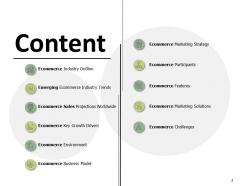
Slide 2: This slide shows Contents of the presentation.
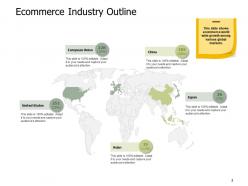
Slide 3: This slide presents Ecommerce Industry Outline to show world wide growth among various global markets.
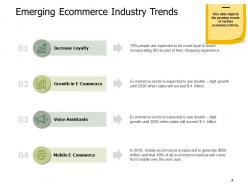
Slide 4: This slide displays Emerging Ecommerce Industry Trends to help in depicting the growing trends of various ecommerce firms.
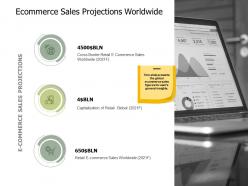
Slide 5: This slide represents Ecommerce Sales Projections Worldwide with sales figures for user’s general insights.
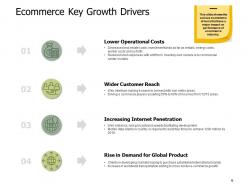
Slide 6: This slide shows the various E-commerce key growth drivers that have a major impact on performance of ecommerce industry.
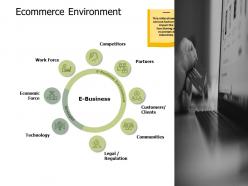
Slide 7: This slide showcases Ecommerce Environment to describe the various factors that impact the functioning of ecommerce industries.
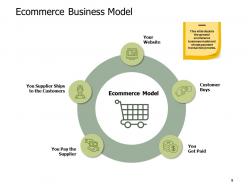
Slide 8: This slide depicts the general E-commerce business model and shows payment transaction process.
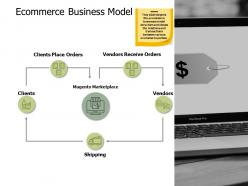
Slide 9: This is an optional slide for Ecommerce Business Model.
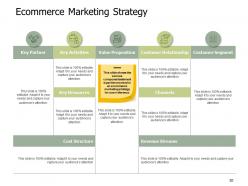
Slide 10: This slide shows the various components/elements/parties involved in an ecommerce marketing strategy for user reference.
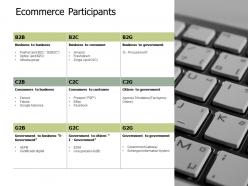
Slide 11: This slide presents the list of multiple ecommerce participants for user reference.
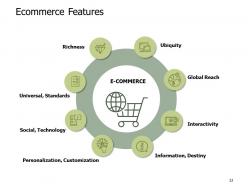
Slide 12: This slide displays Ecommerce Features describing- Richness, Interactivity, Information, Destiny, Personalization, Customization, Ubiquity, Global Reach, Universal, Standards, Social, Technology.
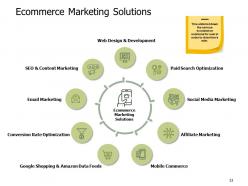
Slide 13: This slide list down the various ecommerce marketing solutions for user in order to drive firm’s sale.
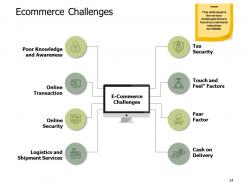
Slide 14: This slide depicts the various challenges that are faced by ecommerce industries worldwide.
Slide 15: This slide reminds about a 15 minutes coffee break.
Slide 16: This is Our Best Team slide with names and designation.
Slide 17: This is Our Goal slide. Show firm's goals here.
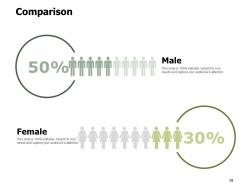
Slide 18: This is a Comparison slide to state comparison between commodities, entities etc.
Slide 19: This is Our Mission slide with related imagery and text.
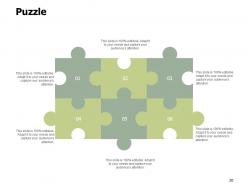
Slide 20: This is a Puzzle slide with text boxes.
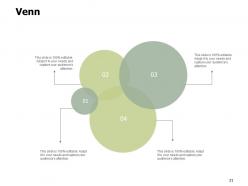
Slide 21: This is a Venn slide with additional text boxes.
Slide 22: This is a Thank you slide with address, contact numbers and email address.
E commerce industry introduction powerpoint presentation slides with all 22 slides:
The content of our E Commerce Industry Introduction Powerpoint Presentation Slides is difficult to copy. They contain that exclusive element.




FAQs for E commerce industry introduction
Dude, mobile optimization is absolutely huge right now - like if you're not mobile-first, you're basically screwed. AI personalization and voice shopping are blowing up too. Social commerce is everywhere now. People actually care about sustainability when they buy stuff, which is kinda surprising but good I guess. AR try-ons are getting pretty cool, especially for clothes and furniture. Oh and everyone expects same-day delivery now because we're all spoiled lol. I'd honestly just pick 2-3 of these to focus on this quarter instead of trying to do everything at once.
Okay so first thing - your pages better load fast, like under 3 seconds or people bounce immediately. I'm talking about myself here too lol. Keep checkout super simple, maybe 2-3 steps tops, and make those buttons huge so they're actually tappable. Apple Pay and Google Pay are clutch because nobody wants to type their card info on a tiny keyboard. Oh and test on real phones, not just your computer's developer mode - it's totally different. Basically you want someone to impulse buy your stuff while they're bored waiting for their Starbucks order.
Honestly, speed is everything - if your site loads slow, people just bounce. Make sure search actually works and checkout doesn't suck. Most folks are shopping on phones now so mobile better be solid. Good product photos with zoom are clutch, plus descriptions that answer the obvious questions. I'd definitely add personalized recommendations and live chat support. Oh, and guest checkout is a must - nobody wants to create another account just to buy something. Returns should be simple too. Start by figuring out where customers get frustrated most and fix those spots first.
Honestly, social media has completely changed how people shop. You'll see stuff through influencers, targeted ads, your friends posting about products - and somehow it feels more trustworthy than regular ads? Instagram and TikTok are basically shopping apps now (my entire feed is just people selling me things lol). The social proof thing is huge too. When you see other people buying and reviewing products, it makes you way more likely to purchase. I'd focus on tracking which platforms actually convert for you and put your money there instead of spreading it everywhere.
Think of data analytics as your secret weapon for e-commerce decisions. Track what customers actually do (not what you assume they do), see which products fly off the shelves, and spot where people bail on checkout. Honestly, conversion rates and customer acquisition costs are where I'd start - those two will blow your mind with insights. You'll figure out better pricing, nail your inventory, and stop wasting money on ads that don't work. Once you get into it, the numbers become pretty addictive. Oh, and personalized recommendations? Total game-changer for sales.
Dude, you absolutely need inventory management software that syncs everything in real-time. Manual spreadsheets will drive you insane - trust me on that one. Get something that connects your website, Amazon, all your channels so you don't oversell. Set up automatic reorder alerts too. Otherwise you'll be panicking when stuff runs out. Oh, and use forecasting tools to predict what'll sell during different seasons - saves you from being stuck with dead inventory. Start by figuring out where you're currently losing track of things. That's usually where the worst problems are hiding anyway.
Predictable money every month is the biggest win - beats scrambling for new sales constantly. Customers love the convenience too, usually get better deals. But man, keeping people around is tough work. Miss the mark one month and they're gone faster than you signed them up. Payment issues are annoying, subscription stuff gets messy, and you'll spend more upfront getting customers. Works great when you're actually solving ongoing problems though, not just splitting up a one-time purchase into payments. I'd test it with your best customers first - they'll tell you if it's worth it.
Honestly, personalization works because you're basically showing people stuff they actually want to buy. Think of it like a salesperson who never forgets what you like - but automated. When someone hits your homepage and sees products based on what they've looked at before, they're way more likely to purchase something. You can personalize recommendations, emails, search results, even pricing for different customer groups. Start simple though - maybe just "people who bought this also liked..." recommendations. Then build from there as you get more customer data. Oh, and the conversion boost is usually pretty significant once you get it dialed in.
Honestly, focus on these four things: SEO that actually targets what people search for, being active on whatever social platforms your customers use (not all of them), email marketing because it still works crazy well, and making sure your website doesn't suck at converting visitors. Don't fall for that "build it and they'll come" BS - total myth. Track your numbers obsessively too. Customer acquisition costs, lifetime value, all that stuff. Oh and conversion rates by channel - super important. I'd start by figuring out where you're weakest right now, then tackle that first instead of trying to do everything at once.
Your payment gateway can totally tank your sales if it sucks. Slow loading times? People bail immediately. I learned this the hard way with my first store - switched gateways and saw conversions jump like 20%. Make sure you've got multiple options: cards, Apple Pay, those buy-now-pay-later things everyone loves now. Security matters too since nobody wants their info stolen. Honestly, the checkout page isn't where you want to be cheap. Find something that loads fast and actually works. Oh, and test it yourself first - you'd be surprised how many business owners never actually buy from their own site.
SSL certificates are your first line of defense - get those set up for encryption. Two-factor authentication is a must, along with solid password requirements. For payments, stick with PCI compliant processors and honestly, don't even think about storing credit card info yourself. Let them deal with that mess. Keep everything updated, run regular security audits, and set up proper firewalls. Oh, and limit who on your team can access what - you'd be surprised how often that gets overlooked. I've seen too many businesses get burned by skipping the basics.
Honestly, there's so much you can do with AI for your business. Product recommendations are probably the biggest win - they actually work really well for boosting sales. Chatbots handle customer service stuff pretty decently now too. You could try dynamic pricing that changes based on demand, or use it for inventory forecasting so you don't run out of popular items. Oh, and fraud detection is huge if you're processing payments. Even email marketing gets way more targeted. My advice? Don't try to do everything at once though. Pick one thing like recommendations and see how it goes first.
Honestly, you've gotta be everywhere - chat, email, social media, phone, the works. Quick responses are make-or-break though. I'm talking under 2 hours for emails, instant chat when you can swing it. Trust me, people will literally dump their whole cart if they can't figure out sizing or whatever. Oh, and train your team to actually solve problems instead of just reciting policies like robots. Your FAQ needs to not suck too - make it searchable. Start measuring response times and satisfaction scores ASAP because you can't fix what you don't track.
Do some market research first to figure out which countries actually want your stuff. Honestly, I'd pick just one or two places to start - spreading yourself too thin is a nightmare. Get your payment processing sorted for their currencies, find good shipping partners, and figure out customer service timing (nobody wants to wait 12 hours for a response). Your website needs way more than just translation too - different countries have weird regulations and tax stuff you wouldn't think of. Oh, and cultural preferences matter more than you'd expect. Test everything in one market first, see what's working, then expand from there.
Yeah, so the biggest culprits are packaging waste, shipping emissions, and all those returns we keep making (guilty as charged lol). Start with your packaging - swap to sustainable materials first since that's the easiest change. Carbon-neutral delivery partners help too, though they're pricier. You can push bulk orders with discounts to cut down on multiple shipments. Honestly, customers eat this green stuff up now, so don't be shy about promoting what you're doing. Just pick one thing and improve it rather than trying to fix everything overnight - that never works.
No Reviews