


B2B E Commerce Business Solutions Powerpoint Presentation Slides




Try Before you Buy Download Free Sample Product
 Impress Your
 Audience
 100%
100% Editable
 Save Hours
 of Time


Business-to-business is a commerce transaction between businesses, such as manufacturers and wholesalers or retailers. Grab our B2B E-Commerce Business Solutions. It is efficiently designed for managers to develop techniques and strategies for the business optimization process. Our B2b Marketing deck represents an overview of b2b e-commerce, statistics, trends, types, stages, and myths. It also covers an overview of the b2b e-commerce market and its market segmentation by application, region, and product type. The Digital supply chain PPT also showcases b2b business models like customer-centric, buyer-centric, and intermediate, with an e-commerce payment system. Additionally, it highlights the trends, the role of fintech, comparison for b2b and b2c, challenges, and methods with associated technologies. These include chatbots, AR and VR, Omni channels, EDI, and third-party logistics. Further, our presentation presents e-commerce marketing through SEO, social media, etc., for b2b business showcasing factors and platform selection. It further comprises a metaverse in b2b, supply chain trend. Lastly, it contains a b2b e-commerce team, showcasing a checklist for team-building, hierarchy structure, roles and responsibilities, and employee training plan. Get access to our e commerce ppt now.
People who downloaded this PowerPoint presentation also viewed the following :
Content of this Powerpoint Presentation
Slide 1: This slide displays the title B2b E-Commerce Business Solutions.
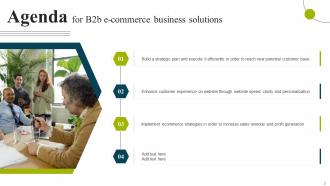
Slide 2: This slide displays the title Agenda for B2b e-commerce business solutions.
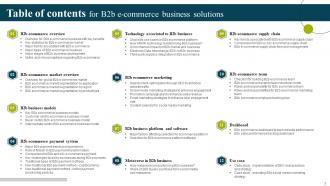
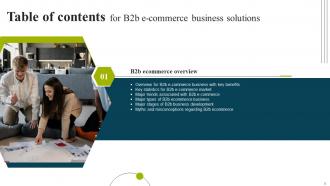
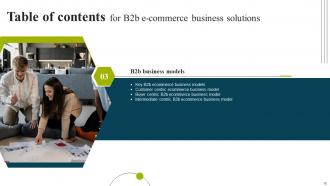
Slide 3: This slide exhibit table of content.
Slide 4: This slide exhibit table of content that is to be discuss further.
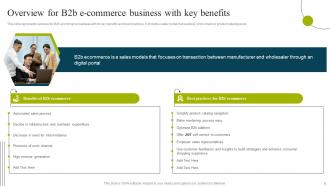
Slide 5: This slide represents overview for B2b ecommerce business with its key benefits and best practices.
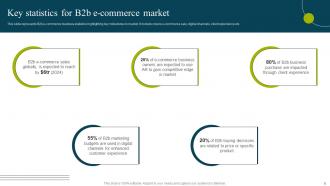
Slide 6: This slide represents B2b e-commerce business statistics highlighting key milestones in market.
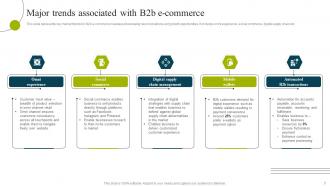
Slide 7: This slide represents key market trends for B2b e-commerce business showcasing new innovations and growth opportunities.
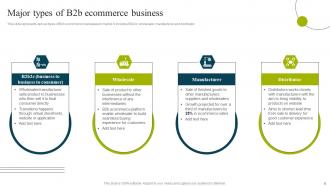
Slide 8: This slide represents various types of B2b ecommerce businesses in market. It includes B2b2c, wholesaler, manufacturer and distributor.
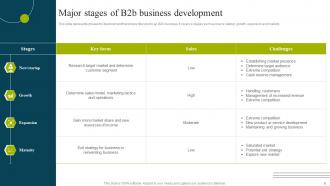
Slide 9: This slide represents phases for development that shows lifecycle for an B2b business.
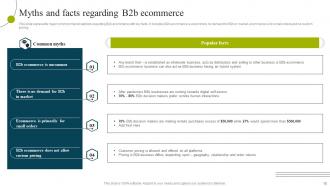
Slide 10: This slide represents major common misconceptions regarding B2b ecommerce with key facts.
Slide 11: This slide exhibit table of content that is to be discuss further.
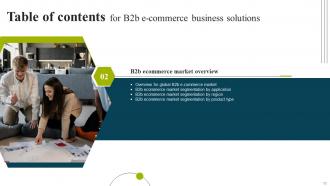
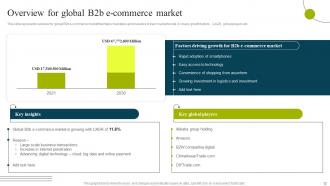
Slide 12: This slide represents overview for global B2b e-commerce market that helps marketers and investors to track market trends.
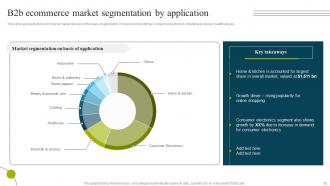
Slide 13: This slide represents B2b ecommerce market division on the basis of application.
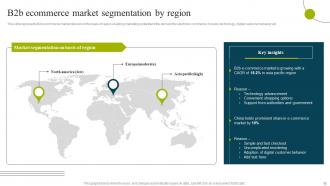
Slide 14: This slide represents B2b ecommerce market division on the basis of region enabling marketing understand the demand for electronic commerce.
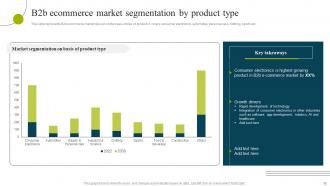
Slide 15: This slide represents B2b ecommerce market division on the basis of type of product.
Slide 16: This slide exhibit table of content that is to be discuss further.
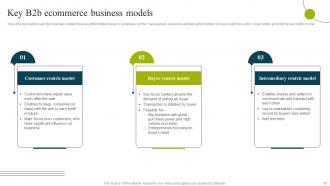
Slide 17: This slide represents major B2b business models those are differentiated based on emphasis, control, management, ownership and transaction initiator.
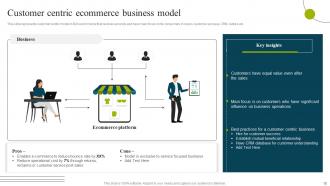
Slide 18: This slide represents customer centric model in B2b ecommerce that revolves arounds and have main focus on its consumers.
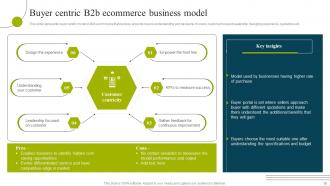
Slide 19: This slide represents buyer centric model in B2b ecommerce that revolves arounds buyers understanding and decisions.
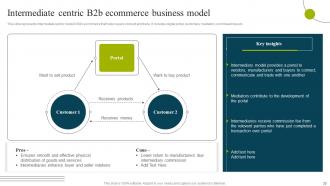
Slide 20: This slide represents intermediate centric model in B2b ecommerce that helps buyers connect and trade.
Slide 21: This slide exhibit table of content that is to be discuss further.
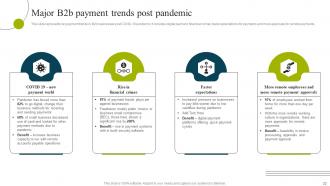
Slide 22: This slide represents key payment trends in B2b businesses post COVID-19 pandemic.
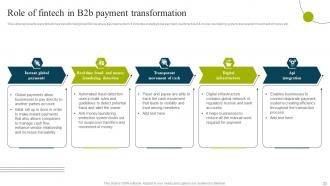
Slide 23: This slide represents ways fintech has transformed global B2b business payment system.
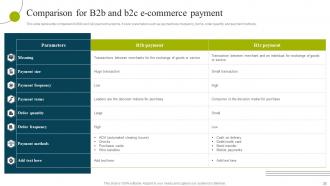
Slide 24: This slide represents comparison for B2b and b2c payment systems.
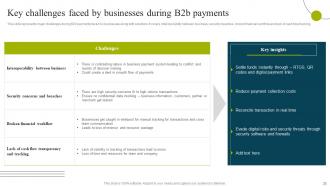
Slide 25: This slide represents major challenges during B2b payments faced by businesses along with solutions.
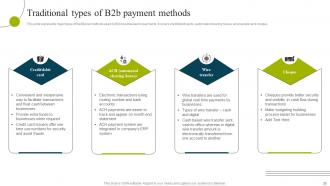
Slide 26: This slide represents major types of traditional methods used by B2b businesses for payments.
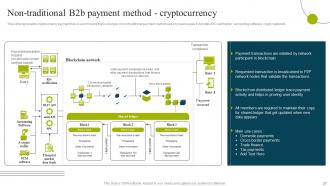
Slide 27: This slide represents cryptocurrency payment flow in ecommerce that is one type of non traditional payment method used by businesses.
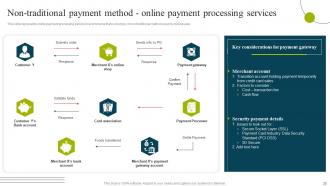
Slide 28: This slide represents online payment processing service in ecommerce that is one type of non traditional method used by businesses.
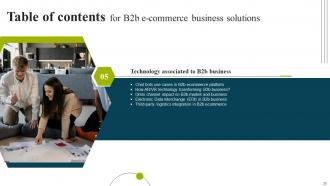
Slide 29: This slide exhibit table of content that is to be discuss further.
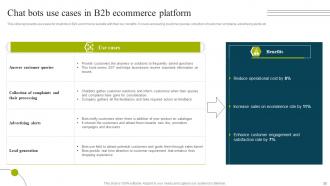
Slide 30: This slide represents use cases for chatbots in B2b ecommerce website with their key benefits.
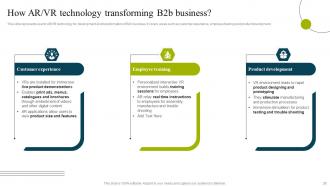
Slide 31: This slide represents use for AR/VR technology for development and transformation of B2b business.
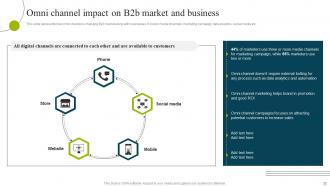
Slide 32: This slide represents how omni channel is changing B2b market along with businesses.
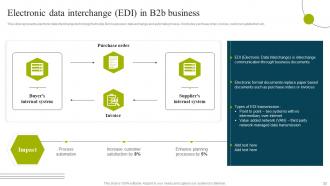
Slide 33: This slide represents electronic data interchange technology that helps B2b business in data exchange and automate process.
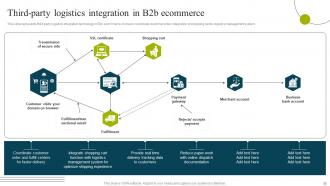
Slide 34: This slide represents third party logistics integration technology in B2b ecommerce.
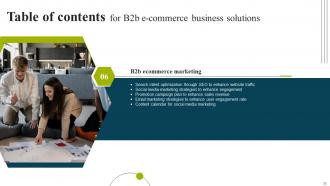
Slide 35: This slide exhibit table of content that is to be discuss further.
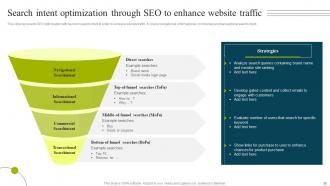
Slide 36: This slide represents SEO optimization with keyword search intent in order to increase website traffic.
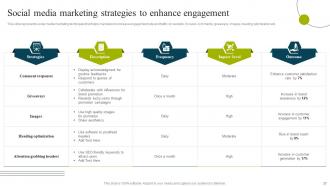
Slide 37: This slide represents social media marketing techniques that helps marketers to increase engagement rate and traffic on website.
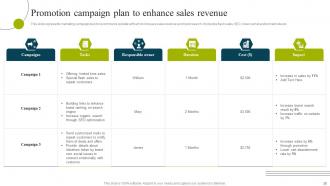
Slide 38: This slide represents marketing campaign plan for ecommerce website with aim to increase sales revenue and brand search.
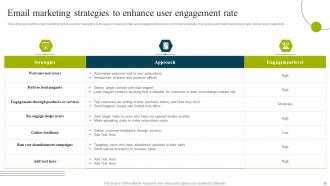
Slide 39: This slide represents email marketing tactics used by marketers to increase conversion rate and engagement level on ecommerce website.
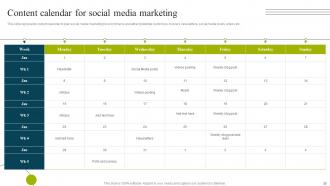
Slide 40: This slide represents content calendar to plan social media marketing for ecommerce and attract potential customers.
Slide 41: This slide exhibit table of content that is to be discuss further.
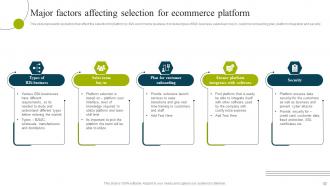
Slide 42: This slide represents key factors that effect the selection for platform by B2b ecommerce business.
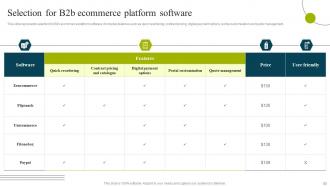
Slide 43: This slide represents selection for B2b ecommerce platform software.
Slide 44: This slide exhibit table of content that is to be discuss further.
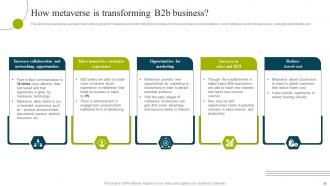
Slide 45: This slide represents ways and approaches through which metaverse is transforming B2b business.
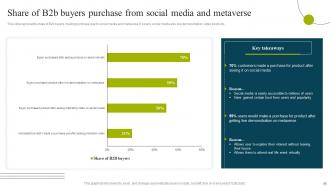
Slide 46: This slide represents share of B2b buyers making purchase due to social media and metaverse.
Slide 47: This slide exhibit table of content that is to be discuss further.
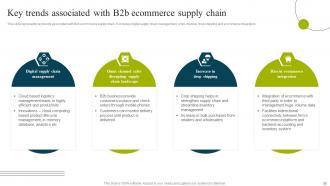
Slide 48: This slide represents key trends associated with B2b ecommerce supply chain.
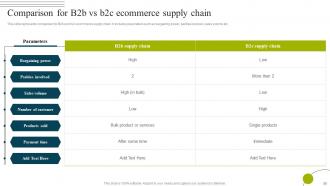
Slide 49: This slide represents comparison for B2b and b2c ecommerce supply chain. It includes parameters such as bargaining power, parities involved, sales volume etc.
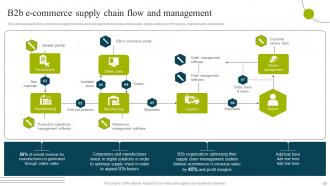
Slide 50: This slide represents B2b ecommerce supply chain flow and management.
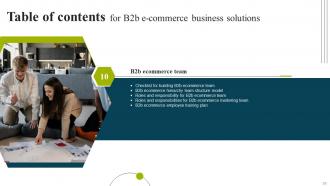
Slide 51: This slide exhibit table of content that is to be discuss further.
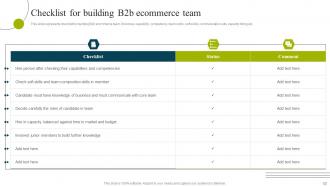
Slide 52: This slide represents checklist for building B2b ecommerce team.
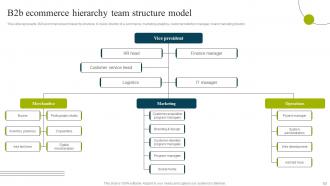
Slide 53: This slide represents B2b ecommerce team hierarchy structure.
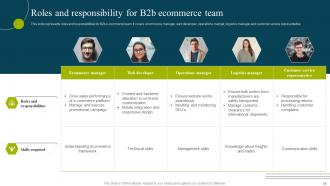
Slide 54: This slide represents roles and responsibilities for B2b e-commerce team.
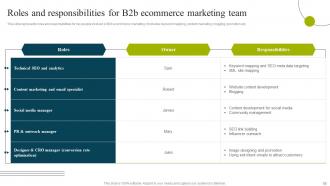
Slide 55: This slide represents roles and responsibilities for key people involved in B2b ecommerce marketing.
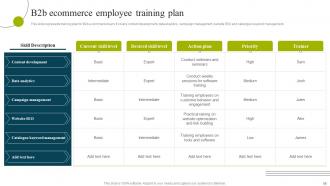
Slide 56: This slide represents training plan for B2b e-commerce team.
Slide 57: This slide exhibit table of content that is to be discuss further.
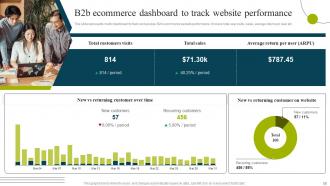
Slide 58: This slide represents metric dashboard to track and analyze B2b ecommerce website performance. It covers total user visits, sales, average return per user etc.
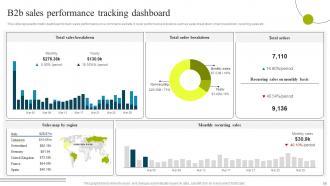
Slide 59: This slide represents metric dashboard to track sales performance on e-commerce website.
Slide 60: This slide exhibit table of content that is to be discuss further.
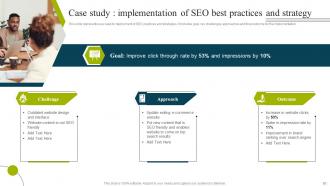
Slide 61: This slide represents use case for deployment of SEO practices and strategies.
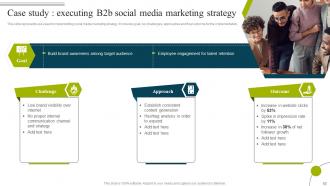
Slide 62: This slide represents use case for implementing social media marketing strategy.
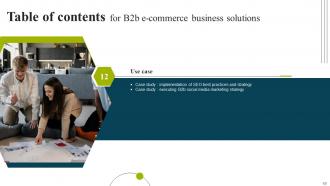
Slide 63: This is the icons slide.
Slide 64: This slide presents title for additional slides.
Slide 65: This slide showcase Our target.
Slide 66: This slide depicts posts for past experiences of clients.
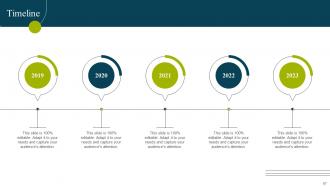
Slide 67: This slide exhibits yearly timeline of company.
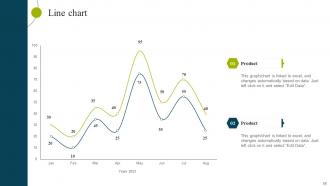
Slide 68: This slide display Line chart for two different products.
Slide 69: This slide exhibits ideas generated.
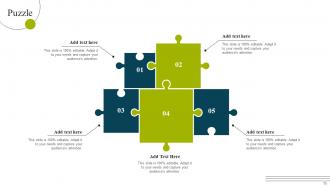
Slide 70: This slide shows puzzle for displaying elements of company.
Slide 71: This is thank you slide & contains contact details of company like office address, phone no., etc.
B2B E Commerce Business Solutions Powerpoint Presentation Slides with all 76 slides:
Use our B2B E Commerce Business Solutions Powerpoint Presentation Slides to effectively help you save your valuable time. They are readymade to fit into any presentation structure.






FAQs for B2B E Commerce Business Solutions
So basically B2B is way more complicated than regular online shopping. You've got bulk pricing, approval chains, different user permissions - all that enterprise stuff. B2C is just one person buying something, pretty simple. Business buyers want their platforms to sync with whatever procurement software they're already using (and trust me, they ALL have opinions about that). They also expect detailed order tracking and often want to haggle on terms. The transaction sizes are usually bigger too, so the whole sales process drags out longer. Bottom line - if you're picking a platform, make sure it can handle complex pricing and multiple user roles. That's where most consumer-focused platforms totally bomb.
Look for platforms with built-in ERP connectors first - seriously, don't try to build this stuff from scratch. Shopify Plus and BigCommerce Enterprise already work well with SAP, NetSuite, and Dynamics. Map your data fields right from the start, especially inventory and pricing. That's where most people screw up. The actual integration isn't too bad honestly, but keeping everything synced in real-time? That's the tricky part. Oh, and definitely run a pilot first with just one product line or customer group. Test it thoroughly before you roll out everything - learned that one the hard way!
Dude, personalization makes such a difference in B2B e-commerce. Show your business customers their specific pricing, order history, stuff they actually buy - it's night and day compared to generic sites. Custom catalogs work great. Quick reorder buttons too. Most B2B platforms still do this one-size-fits-all thing which honestly baffles me in 2024. You've got all this customer data just sitting there! Use it to create those "holy crap this is exactly what I need" moments. That's how you get repeat buyers who keep increasing their order sizes.
Okay so first off - data breaches and payment stuff are your biggest headaches. Get SSL certificates and make sure you're PCI compliant, that's non-negotiable. API security is honestly where most people mess up since B2B platforms connect to everything. You'll want multi-factor authentication and role-based permissions too. Oh, and encrypt your data storage obviously. I'd run a security audit on whatever you have now before launching anything. Trust me, finding vulnerabilities later is way more expensive than catching them early.
Dude, the data you get from B2B platforms is actually crazy good. Track browsing habits, purchase history, how often they order - even when they bail on carts halfway through. Way better than old school sales calls where you're basically guessing. You can spot upselling chances early and set up those automated follow-ups that actually work. Custom pricing for different clients too, which is clutch. Oh and definitely check your analytics dashboard first - that's where all the good CRM stuff hides. Honestly beats cold calling by miles.
Focus on user management first - you need proper role permissions and approval flows for your team. B2B pricing is honestly a nightmare with all the volume discounts and custom rates, so make sure the platform can handle that complexity. Integration is critical too; it has to play nice with your ERP and CRM or you'll hate your life. Mobile optimization matters more than people think, plus self-service stuff like order tracking. Oh, and map out your current sales process before you even start looking - half these platforms look good on demos but can't actually handle real workflows.
Honestly, start with basic Google Analytics - it'll show you which product pages actually work. Track when customers usually reorder and where they're bailing in your sales process. I've watched companies increase sales 30%+ just by figuring out peak ordering times and timing their follow-ups better. Look at what products people browse together, their purchase history, that stuff. Cart abandonment rates and lifetime customer value help you spot your best segments too. It sounds boring but even simple data like this can totally change how you price things and what you recommend to different customers.
Honestly, mobile B2B is a game-changer for speed. Your teams can approve stuff and place orders from anywhere instead of being stuck at their desks. Decision-making gets way faster, which is huge since B2B usually moves like molasses. The younger execs coming up? They expect apps that actually work well on mobile - none of that pinch-and-zoom nonsense from 2010. Buyers won't bail mid-purchase just because they're not at their computer anymore. When you're looking at platforms, definitely focus on responsive design. Oh, and native mobile features make a massive difference in user experience.
Honestly, I'd start with API integrations - get your e-commerce platform talking directly to your ERP and inventory systems. Real-time inventory updates are non-negotiable here, trust me. Otherwise you'll oversell and everyone gets pissed. If your suppliers use EDI, make sure your platform handles that too. Set up automated reorder points based on actual demand data instead of guessing. The whole point is cutting out manual data entry wherever you can. Map out your current supply chain touchpoints first, then tackle the most critical connections. Oh, and prioritize the integrations that'll save you the most headaches daily.
Oh man, currency swings will mess with your head constantly. Tax rules are insane too - every country wants their cut differently. Payment methods? Totally different everywhere you go. Language stuff slows you down more than you'd think. Here's what actually works: grab local payment processors who know their market. Multi-currency platforms save tons of headaches. Find shipping partners who do cross-border stuff regularly - they're worth it. For taxes, either hire someone local or get automated tools that calculate everything. Seriously though, pick like two countries max to start. Going everywhere at once is a recipe for disaster.
Dude, B2B sales cycles are brutal - like months instead of impulse buys. Your customers aren't scrolling and clicking "add to cart." They're downloading whitepapers, requesting demos, then disappearing for weeks while Karen from procurement argues with Steve from IT about budgets. Multiple people have to sign off, which honestly makes everything take forever. Forget flashy ads - they want ROI calculators and boring case studies. You'll watch them visit your site like 20 times before they even fill out a form. Just focus on educational content and being patient. It's a marathon, not a sprint.
Honestly, AI and machine learning are crushing it right now - everything from product recommendations to inventory stuff runs on it. Headless commerce is pretty cool too because you can mess with the front end without breaking your backend (saved my butt last year). API-first platforms are basically standard now. Mobile optimization? Yeah, that's not negotiable anymore since everyone's glued to their phones. Cloud keeps things running smooth when you scale up. My advice? Find solutions that play nice together so you don't have to rebuild everything from scratch.
So B2B buyers do crazy amounts of research before buying anything - way more than regular consumers. Content marketing works really well here. Write whitepapers, case studies, industry guides that actually solve their problems. Blog about trends, host webinars, share success stories on your site. Here's the thing though - it can't feel like a sales pitch at all. Buyers will run if they sense you're just trying to sell them something. Make it genuinely useful and you'll build trust while showing you know your stuff. Position yourself as the expert, not just another vendor competing on price.
Honestly, you gotta support tons of payment options - credit cards, ACH, wire transfers, all that stuff. B2B buyers are picky about how they pay. Security's obviously crucial since these transactions are way bigger than B2C. Get PCI compliant and decent fraud protection. The integration piece is where most people mess up though. If your payment gateway doesn't talk to your ERP and accounting systems, you'll be doing manual reconciliation forever (nightmare fuel). Oh, and bigger clients love payment plans and installment options. Start by checking where people bail during checkout - that's usually your answer right there.
Dude, B2B service is totally different from regular customer stuff. These buyers drop way more cash and need actual experts who know their shit - not some chatbot. They want dedicated account reps, detailed specs, custom quotes, the whole nine yards. Here's the thing though - you're usually dealing with like 3-4 decision makers instead of just one person, so everything takes forever. Sales cycles drag on and on. My advice? Don't cheap out on support staff. You need people who can actually build relationships and answer complex technical questions without fumbling around.
-
“Ample and amazing variety of templates available, really helpful for making professional PPT for day to day workings.”
-
I am a big fan of their newsletters because that is how I found my perfect requirement at the time of urgency. Thank God, I kept opening those.