


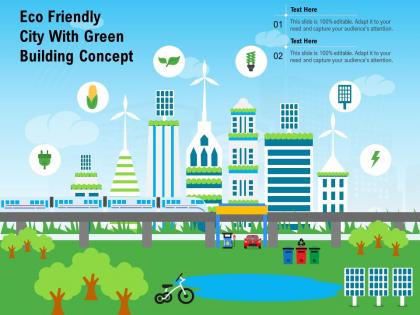
Eco friendly city with green building concept




Try Before you Buy Download Free Sample Product
 Impress Your
 Audience
 100%
100% Editable
 Save Hours
 of Time


Our Eco Friendly City With Green Building Concept are topically designed to provide an attractive backdrop to any subject. Use them to look like a presentation pro.
People who downloaded this PowerPoint presentation also viewed the following :
Eco friendly city with green building concept with all 2 slides:
Use our Eco Friendly City With Green Building Concept to effectively help you save your valuable time. They are readymade to fit into any presentation structure.
FAQs for Eco friendly city with
So basically there's three big things: environmental stuff (green buildings, renewable energy, less waste), social fairness (affordable housing, public spaces everyone can use), and making sure it actually pays for itself while creating jobs. Mixed-use development is really where it's at - keeps things compact instead of sprawling everywhere, which honestly just costs more anyway. Transit-oriented stuff is clutch too since it cuts emissions and actually connects people. Oh, and don't treat these like separate boxes to check. Map out how your project hits all three at once - that's when the magic happens.
Yeah totally! Green infrastructure is where it's at - you can create tons of jobs while actually cutting emissions. Think building retrofits, expanding transit, renewable energy projects. The clean tech sector is exploding right now so there's real money in it. Mixed-use neighborhoods and walkable areas help local businesses thrive while people drive less. I mean, it's kind of a no-brainer when you think about it. Your city should definitely look into public-private partnerships for this stuff - that's usually how the best projects get funded.
Dude, green architecture is such a game-changer for cities. Buildings with green roofs and energy-efficient designs actually cut down energy use and help manage stormwater runoff. Air quality gets way better too. You won't believe how much cooler areas stay when you add green walls - cuts down on that nasty heat island effect cities always get. Oh, and carbon emissions drop significantly. If you're planning any urban stuff, definitely fight for green building standards from day one. Trust me, it's worth the extra effort upfront.
Public transit needs to be way more frequent and reliable - nobody wants to wait 20 minutes for a bus that's already late. Electric buses are great, but honestly the scheduling thing drives me crazy. Dedicated bus lanes help tons, plus better route connections so you're not doing weird transfers. Real-time tracking apps are a game changer too. Making everything accessible is huge, and you've gotta link up buses, trains, bike-shares - the whole system. It's basically about removing all those annoying friction points that make people go "forget this, I'm just driving."
Oh man, urban farming is actually pretty brilliant for food security! Fresh produce grows right where people need it most. Transportation costs drop big time, and you're not dealing with wilted lettuce that's been trucked across the country. Community gardens create local jobs too – my neighbor started one last year and now half our block is obsessed with their cherry tomatoes. Residents get way more control over what they're eating, which feels good honestly. The trick is planning these spaces early when cities are developing, not just squeezing them in later as an afterthought.
Green corridors connecting parks are game-changers - wildlife actually needs those pathways to move around. Plant native stuff instead of random exotic plants, bugs and birds love the local species way more. Honestly, green roofs look amazing and add tons of habitat space throughout the city. You could also create pollinator routes with flowers along streets and in tiny spots. Oh, and don't forget bird-friendly building designs plus keeping those big old trees that are already there. I'd start by figuring out where your city's green spaces are, then spot the gaps you could fill.
You really can't skip community engagement - learned that the hard way watching projects crash and burn. Start talking to residents before you even sketch anything out. Otherwise you'll build what YOU think they need, not what they actually want. Engaged people stick around to maintain stuff too, which matters more than you'd think. Half the benefit is just getting neighbors talking to each other honestly. I've watched fancy developments sit empty because planners never bothered asking locals first. The social connections you build during planning? That's what makes neighborhoods actually work long-term.
Dude, mixed-use developments are actually brilliant for the environment. People can walk to work, grab groceries, hit up restaurants - all without touching their car keys. Transportation emissions drop like crazy. The neighborhoods end up way more interesting too, not those weird suburban ghost towns where everything shuts down at 5pm. Infrastructure gets used more efficiently since one area serves tons of different needs. Oh, and the economic diversity is pretty cool - you get this mix of income levels naturally. Just gotta make sure there's decent walkways and maybe some bus routes, or people will still drive out of laziness.
IoT sensors are your best bet for tracking air quality, traffic patterns, and energy use in real time. Smart grids make renewable energy way more efficient to distribute. AI traffic systems cut down emissions by reducing those awful rush hour jams. Digital twin tech is actually pretty neat - you can test out urban planning ideas virtually before spending millions on them. Mobile apps get residents involved too, like reporting potholes or tracking their own carbon usage. Honestly though, don't try to do everything at once. Pick your city's worst sustainability problem first and pilot just one solution that tackles it head-on.
Honestly, retrofitting cities is like trying to renovate your house while you're still living in it - total chaos. Costs get insane fast, and good luck getting all the different departments to actually work together. Plus you're stuck dealing with old systems that definitely weren't built for today's green tech. That said, the payoff is real. Energy bills drop big time, air gets cleaner, and it usually pays for itself eventually. My advice? Pick one small area first and prove it works - way easier than trying to overhaul everything at once.
Honestly, you'll want to tackle three main things: mixed-use zoning, density bonuses, and green space rules. That old single-use stuff is so outdated - just creates car-dependent sprawl, which sucks. Mixed-use lets people actually walk to work and shops instead of driving everywhere. Give developers sweet deals like taller buildings or less parking when they add affordable units or transit access. Don't forget mandatory green space and stormwater management too. Oh, and definitely test this in one pilot area first before going citywide - way less political headache that way.
So for tracking success, I'd focus on environmental stuff first - air quality, energy efficiency, how much green space people actually have. Housing affordability and transit usage are huge too. Job creation and property values tell you if the economy's working. Honestly though, you'll go crazy trying to measure everything at once (learned that the hard way). Just pick like 3-4 things that match your main goals. Community engagement levels are underrated btw - people either care about their neighborhood or they don't, and that shows up in the data pretty clearly.
Honestly, you've gotta dig into the community first before launching anything green. People will straight-up resist changes that clash with their values, even if the project's objectively awesome. I've watched incredible eco-initiatives completely flop because nobody asked locals what they actually needed. Strong neighborhoods are different too - they'll maintain shared gardens and stick with recycling programs way longer. Social bonds make or break sustainability efforts. Oh, and traditions matter more than most planners realize. Spend time understanding their priorities and existing networks. Otherwise you're just creating expensive paperwork that nobody follows.
Okay so green spaces are like natural air purifiers for cities - they cool things down and give people actual places to chill out. Parks make such a difference for mental health too, people need somewhere to exercise and hang out that isn't just concrete everywhere. Plus they handle stormwater pretty well and bump up property values. Even tiny additions work wonders - rooftop gardens, more street trees, community plots. Honestly I think cities underestimate how much just a few trees can change the whole vibe of a neighborhood. Worth adding green stuff to whatever you're working on.
Honestly, cities just need to stop wasting water everywhere. Start with fixing those leaky pipes - you'd be shocked how much gets lost there. Rainwater harvesting is huge, plus greywater recycling for stuff like irrigation. Singapore's NEWater thing is actually pretty genius if you think about it. Tiered pricing works too because people suddenly care when their bill goes up. Green roofs help recharge groundwater naturally, and permeable pavement stops flooding while storing water underground. The whole trick is treating wastewater like it's valuable instead of just flushing it away forever.
-
Excellent template with unique design.
-
Unique and attractive product design.