


Employee Engagement And Internal Communication Strategy





Try Before you Buy Download Free Sample Product
 Impress Your
 Audience
 100%
100% Editable
 Save Hours
 of Time


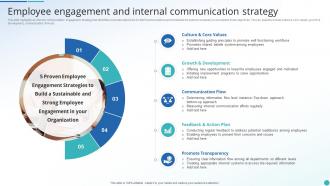
This slide highlights an internal communication engagement strategy that identifies corporate objectives for staff communications and schedules the actions necessary to accomplish those objectives. The key aspects include culture and core values, growth and development, communication flow etc.
People who downloaded this PowerPoint presentation also viewed the following :
Employee Engagement And Internal Communication Strategy with all 6 slides:
Use our Employee Engagement And Internal Communication Strategy to effectively help you save your valuable time. They are readymade to fit into any presentation structure.





FAQs for Employee Engagement And
Honestly, good leadership makes or breaks everything. Career growth opportunities are massive too - nobody wants to feel stuck. People need to know their work actually matters and that they're getting paid fairly. Work-life balance became way more important after COVID flipped everyone's world upside down. Recognition goes a long way, and micromanaging kills morale fast. Company culture matters more than most bosses think - if your team hates each other, you're screwed. Clear communication helps too, obviously. I'd start with a simple survey to figure out what your people actually care about instead of guessing.
Look, engaged employees are literally business gold - they're 23% more profitable and 18% more productive than the checked-out ones. Your people will actually stick around longer (goodbye expensive hiring cycles) and become genuine advocates for your company. Monday "sick days" drop way down too, obviously. Better customer service, more innovation, higher quality everything. The whole thing just snowballs in the best way. My advice? Actually listen to what your team needs and give them work that feels meaningful - like it connects to something bigger than just hitting numbers.
Dude, leadership makes or breaks engagement - no question. Good managers communicate their vision clearly and actually recognize when you do solid work. Plus they listen to feedback instead of just pretending to care. I've literally watched entire teams flip around just because they got a boss who wasn't terrible. Being nice helps, but consistency matters way more. Your leaders need to be transparent about big decisions and give people actual growth opportunities. Honestly? Just have your leadership team act the way they want everyone else to act.
Mix surveys with actual behavioral stuff - that's where you get real answers. Those yearly surveys are honestly a waste of time by the time anyone acts on them. Go with pulse surveys instead, way more useful. Track things like who's actually staying, internal promotions, even who shows up to optional events. Ask specific questions about their manager, growth opportunities, workload - not just vague "engagement" stuff. One thing though - you absolutely have to follow up on what people tell you. If you don't act on feedback, they'll just stop bothering to respond. Learned that one the hard way.
Honestly, remote work kills those random conversations that build relationships. Start with virtual coffee hangouts - no work talk allowed. Maybe try rotating show-and-tells where people share random hobbies? I know it sounds super cheesy, but my friend's team does online escape rooms and they're obsessed. Oh, and async recognition boards work great too - people can hype up teammates all week. The trick is picking stuff that fits your team's vibe, not forcing it. Just test one thing this month and see what happens. Some teams are into the silly games, others prefer low-key chat sessions.
Honestly, recognition works because people just want to feel like their work actually matters. When you call out what someone did well, you're basically giving them proof that they're not invisible. It's way better than those generic "good job" comments though - get specific about what they nailed. That dopamine hit keeps them motivated to keep crushing it. Plus it shows other people what success looks like on your team. The timing matters too - don't wait three weeks to mention something great they did last month.
Oh totally - there's a huge link there. Engaged people just don't leave as much, you know? Like when someone actually cares about their job and feels appreciated, they're not scrolling through job boards every lunch break. I saw this stat somewhere that engaged teams have 40% lower turnover, which is pretty wild. Disengaged employees though? They've mentally checked out already, even if they haven't quit yet. Honestly, if you're stressed about losing your good people, work on engagement stuff first. Way better than trying to replace everyone later.
Look for the obvious stuff first - people calling out more, barely talking in meetings, just seeming totally over it. Most folks aren't as sneaky as they think they are about being disengaged lol. Set up regular check-ins where you actually ask how they're doing, not just about deadlines. Listen to what they say. If someone's clearly checked out, figure out why - maybe they're bored, overworked, or dealing with team drama. Then brainstorm fixes together instead of crossing your fingers and hoping things improve.
So here's the thing - your company culture basically makes or breaks whether people actually want to show up. If people feel safe speaking up and the culture matches their values, engagement goes way up. Trust matters. So does recognition and growth opportunities. Oh, and you can't just slap your values on the break room wall and call it a day - you've got to actually live them. Honestly, I've seen toxic cultures destroy engagement even when the benefits package was amazing. Bottom line: does your daily reality match what you promised when hiring? Start there.
Honestly, ditch those awful annual reviews - nobody likes them anyway. What actually works is having regular touchpoints throughout the year. Weekly one-on-ones are gold. Also set up peer feedback and let people give upward feedback about their managers (that's where you get the real tea). Timing is huge too - feedback from last week hits way harder than something from months ago. Oh, and this should go without saying, but actually DO something with the feedback you collect. Monthly pulse surveys work great, or try skip-level meetings where people can be brutally honest about what's broken.
Honestly, communication breakdowns are huge - like when people don't feel safe speaking up in meetings because of language barriers or just different comfort levels. Cultural misunderstandings happen constantly too. Your managers probably aren't trained on inclusive stuff, which shows when certain employees feel totally ignored or when there's obvious bias in decisions. Different work styles clash - some cultures are way more hierarchical than others. Oh, and that whole "just speak up in the meeting" thing? Doesn't work for everyone. You need multiple ways for people to actually contribute and feel heard.
Dude, training opportunities are seriously game-changers for keeping people engaged. Shows you actually care about where they're headed, not just what they can do for you right now. People get way more invested when they're building skills and growing their careers. Makes the day-to-day less boring too - learning new stuff beats doing the same tasks forever. But here's the thing: don't just throw random workshops at them. Ask what skills they actually want to develop first, then build around that. I've seen too many companies waste money on irrelevant training that nobody asked for.
Honestly, there's tons you can do with tech to get people more engaged. Those digital recognition platforms are amazing - you can celebrate someone's win right when it happens instead of waiting weeks. Skip the awful annual surveys and use feedback apps that actually catch how people feel in real time. Slack and Teams are lifesavers for keeping remote teams connected (seriously, how did we survive before?). Learning platforms let people grow their skills whenever they want. Just don't go crazy adding random tech - pick stuff that fixes actual problems your team complains about.
Honestly, engaged employees are your best marketing team without even trying. They'll talk up your company to friends, give amazing customer service, and stick around longer - which makes you look stable to everyone else. Lower turnover is huge because it shows you're not a nightmare to work for. Happy workers naturally become these mini brand ambassadors posting positive stuff online too. The whole thing snowballs over time. You can actually track this by measuring how much your employees advocate for you and comparing it to what outsiders think of your brand. It's pretty cool when the numbers line up.
Honestly, you can't just treat everyone the same - figure out what actually drives different groups. Survey people directly instead of guessing, because assuming Gen Z only wants flexibility while boomers want security is a recipe for disaster. Remote folks need totally different stuff than office people. Your star employees versus newbies? Completely different motivations. I'd start small though - pick a few main groups and test some targeted ideas with each before going all-in. The whole point is having multiple approaches instead of some blanket program that excites nobody. Trust me, one-size-fits-all employee engagement is basically guaranteed to fall flat.
-
Templates are beautiful and easy to use. An amateur can also create a presentation using these slides. It is amazing.
-
It makes easy work of my work presentations. I’ve never had to be nervous about my presentations for meetings.