

Employee lifecycle template powerpoint presentation





Try Before you Buy Download Free Sample Product
 Impress Your
 Audience
 100%
100% Editable
 Save Hours
 of Time


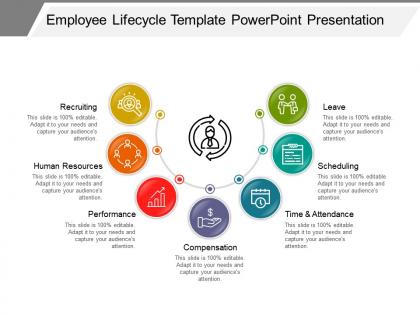
Discuss strategies to create an optimal employee experience with our employee life cycle template PowerPoint presentation template. Nourishing employee relationships and building a positive work environment to keep the employees happy and engaged is an important task for any business to be successful. With this powerful employee life cycle activities PowerPoint template, you can easily highlight stages to success with employee life cycle. Design enables your audiences understand the stages like recruiting, human resource, performance, compensation, attendance, leave etc. effectively. You can easily manage all these things with this design. Design is extremely helpful to share the requirements for developing employee life cycle management software and automate the employee life cycle process. We have shown the wonderful visuals to display various employee life cycle stages. Design is perfect for HR managers, business professionals, entrepreneurs to develop employee relationship management strategies. Download this pre designed employee life cycle PowerPoint and convey your ideas with confidence. Be declared the front-runner with our Employee Lifecycle Template Powerpoint Presentation. The audience will be always behind you.
People who downloaded this PowerPoint presentation also viewed the following :
Employee lifecycle template powerpoint presentation with all 5 slides:
End any ambiguity that exists with our Employee Lifecycle Template Powerpoint Presentation. Identify the cause of ambivalence.



FAQs for Employee lifecycle
So there are six stages: attraction, recruitment, onboarding, development, retention, and separation. Losing good people costs a fortune - recruiting, training new folks, productivity drops during transitions. It's brutal honestly. Each stage affects your bottom line differently. Better employee experiences mean higher engagement and less turnover. The trick is connecting all stages instead of treating them like separate HR boxes to check. I'd start by mapping your current process first. Look for where people usually get frustrated or check out mentally - that's where you'll find the biggest wins.
Dude, onboarding is seriously underrated - it can bump your retention up by 50% easily. Map out what new people actually need in their first few weeks instead of just winging it. Give them clear goals, do regular check-ins, introduce them to the team properly. Nobody wants to feel like they're drowning on day one, you know? When people understand their job and feel connected, they don't bail as quickly. Plus you'll catch red flags early before someone's secretly updating their LinkedIn. Honestly, just planning out weeks 1, 2, and 4 will help tons.
So performance management isn't just those awful yearly reviews everyone hates. Think of it more like... ongoing conversations? You're setting expectations from day one during onboarding, then checking in regularly through feedback and goal stuff. Honestly, most managers do this backwards and wonder why nothing sticks. Regular informal chats make the formal reviews way less weird. Use these conversations to spot who's ready for promotion, what skills people need, succession planning - all that good stuff. The trick is making it continuous instead of cramming everything into one awkward annual meeting.
Look, you've gotta weave development into everything, not just those awkward first-week orientations. Day one should include clear growth expectations. During regular check-ins, actually talk about where people want to go career-wise. Budget for real training and conferences - and here's the thing that drives me crazy - don't get all panicky when people actually want to advance. Good managers will champion their team even if it means losing them to other departments. Stretch projects work great too. Set up mentorship programs and make a big deal about internal promotions when they happen.
Do a real exit interview - actually listen to what they're saying. Give them time to wrap up projects and say goodbye to people they like. Honestly, rushing someone out just feels petty and looks bad to everyone else watching. Make sure they know about their benefits stuff, offer to be a reference if they did good work. Oh, and definitely keep things open-ended in case you want to work together again someday. A quick thank-you text or email after they're gone is clutch. Basically just don't be weird about it - treat them like a human being.
So here's the thing - new hires are always super pumped at first, but that honeymoon phase crashes hard around 6-18 months in. After that, engagement usually bounces back once people actually know what they're doing. Mid-career gets weird though - if there's nowhere to grow, people just... stagnate. Honestly, that's where you lose your best talent. Then right before someone leaves, they're already mentally gone anyway. The trick is catching these dips before they happen. Maybe check in more during those danger zones?
So I'd check out BambooHR or Workday for the full lifecycle stuff - they're pretty solid HRIS platforms. Greenhouse is killer for recruiting if that's where you're struggling most. Performance management wise, 15Five and Lattice are both decent options. The integration between different platforms can be annoying though, not gonna lie. Actually, if you're a smaller company, Rippling might be your best bet since it does payroll, benefits, and employee management all in one place. Way less headache that way. My advice? Don't try to fix everything at once. Pick whatever's driving you crazy right now and start there.
Start with your job postings - make them actually inclusive, not just buzzword soup. Get diverse people on interview panels too. When someone's onboarding, show different faces and stories in your materials. It's wild how much that matters for making people feel like they belong. Mentorship programs work great if you're connecting folks across different groups. Oh, and make promotion criteria crystal clear - none of that mysterious "cultural fit" nonsense. Don't forget exit interviews either. People will tell you the real tea about inclusion when they're leaving. Pick one area and fix it properly rather than doing everything halfway.
So here's what I'd focus on - grab your time-to-hire and quality of hire metrics first. Those are your bread and butter. Then look at engagement scores and retention rates during onboarding. Internal mobility is huge too, honestly people get so motivated when they see others moving up. Track your exit interview feedback and turnover by department (some managers are just... yikes). Oh, and don't try measuring everything at once - you'll go crazy. Pick maybe 3-5 metrics that actually matter to your company and stick with those. Build a simple dashboard so you can spot where people are dropping off. Way easier than drowning in data you'll never use.
Dude, your employees are basically walking advertisements for your company whether you realize it or not. Bad onboarding? They're venting on Glassdoor. Terrible manager? Their friends hear about it. But when you nail the employee experience - from day one through their exit interview - those same people become your biggest advocates. They'll actually refer good people and stick up for you online. I always tell companies to map out each stage and think "what impression are we leaving here?" Sounds obvious but most places have these random awful touchpoints they don't even know about. Fix those gaps and you've got built-in recruiting power.
Ditch those yearly reviews - they're basically useless at this point. Set up regular check-ins instead, like 30-60-90 day meetings for new people so they don't feel lost. Pulse surveys work great for ongoing stuff, plus skip-level meetings where people can talk to their boss's boss. One-on-ones need actual agendas though, not just "how's it going?" conversations. Exit interviews matter too, but ask real questions about their manager and growth opportunities. Oh, and create different ways for people to give feedback when they actually want to, not just when it's convenient for HR.
Honestly, remote onboarding is a whole different beast. Ship their equipment way early and set up virtual coffee chats with the team - that lonely first week at home hits different. Check in constantly during those first 90 days because you can't just peek over their shoulder anymore. Digital learning platforms are your friend for development stuff. Have career talks more often since those hallway conversations don't happen naturally. Oh, and create actual systems for feedback and recognition - remote people feel forgotten super easily. Start by asking your current remote folks what's broken. They'll tell you exactly what sucks about your process right now.
Honestly, the worst part is when departments just don't talk to each other. HR does onboarding their way, then managers handle reviews totally differently - it's such a headache. Most places I've seen are like this unfortunately. What works is getting everyone on the same page with standard processes and connecting your systems so info actually flows from hiring to when people leave. Oh, and ask employees directly where things suck because they'll tell you exactly what's broken. I'd start by drawing out your whole process first, then fix the biggest problems.
Wellness isn't just some HR perk you slap on during hiring. Start with recruitment - good programs actually draw people in. Then during onboarding, show them you're serious about balance (not just saying it). Honestly, keeping people healthy throughout their time there saves you tons compared to replacing burned-out employees. Even when they leave, ask what wellness stuff worked or didn't in exit interviews. The trick is making it feel real, not performative. I've seen too many companies treat it like checking boxes instead of building it into how they actually operate day-to-day.
Announce the change early - don't be one of those companies that keeps everyone in the dark until the last second. Be super clear about who's reporting to who and reassure people their jobs aren't going anywhere. The outgoing person should definitely do a proper handoff and introduce their replacement face-to-face if they can. Your new leader needs to jump right in with team meetings to set expectations. Oh, and keep those development plans rolling - people hate when new management scraps everything. Most important thing? Get one-on-ones scheduled with everyone affected within two weeks. Trust me, rumors spread fast when people don't have answers.
-
Editable templates with innovative design and color combination.
-
Very unique, user-friendly presentation interface.
-
Awesomely designed templates, Easy to understand.
-
Designs have enough space to add content.