Employee Training Plan For Manufacturing Department Smart Manufacturing Implementation To Enhance
Try Before you Buy Download Free Sample Product
Audience
Editable
of Time
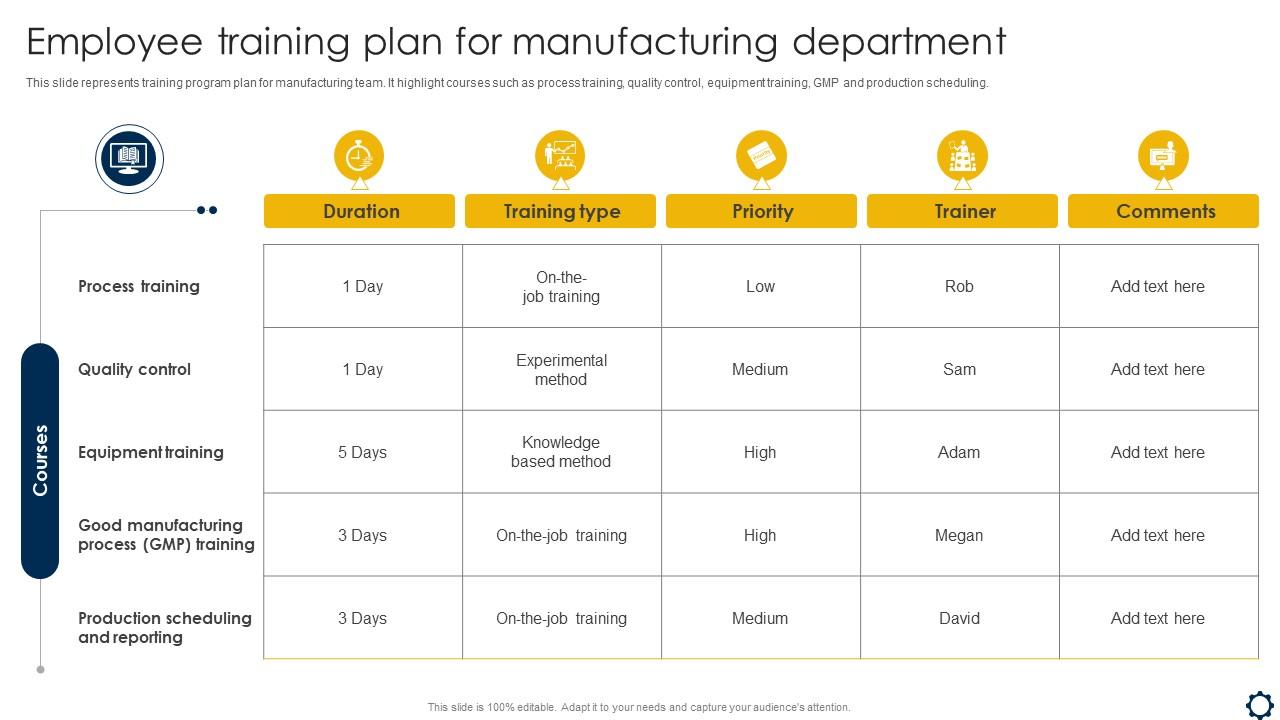
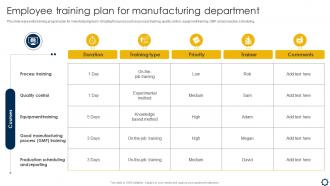
This slide represents training program plan for manufacturing team. It highlight courses such as process training, quality control, equipment training, GMP and production scheduling.
People who downloaded this PowerPoint presentation also viewed the following :
Employee Training Plan For Manufacturing Department Smart Manufacturing Implementation To Enhance with all 6 slides:
Use our Employee Training Plan For Manufacturing Department Smart Manufacturing Implementation To Enhance to effectively help you save your valuable time. They are readymade to fit into any presentation structure.
FAQs for Employee Training Plan For Manufacturing Department Smart Manufacturing
Okay so first figure out what you actually want people to learn - like specific skills, not vague stuff. Mix up how you teach it too. Some people hate sitting through workshops but love hands-on practice. Others are fine with online modules (honestly those can be pretty boring though). You'll need some way to test if it worked - maybe quizzes or just watching them do the task. Budget time and figure out who's running what. And definitely get feedback after because I guarantee something won't land right the first time. The biggest thing is making it fit your actual team instead of using some cookie-cutter program.
Honestly, I'd start by figuring out what skills your team actually needs vs what they have now - basically a gap analysis. Survey your people and get managers to weigh in too. Performance reviews are gold for this stuff. Also check if your business goals are shifting because you might need completely different skills soon (happened to us last year). Your employees know where they're struggling, but managers see the whole picture. Once you've got that info, focus on training that'll actually move the needle instead of just random workshops that nobody remembers.
Honestly, tech has completely changed how we do training at work. LMS platforms, VR simulations, mobile apps - employees can learn whenever they want now. The analytics side is where it gets really cool though - you'll see actual data on who's completing what and where the knowledge gaps are. AI personalizes everything based on how people are progressing too. Scaling across your whole company becomes way easier since you don't have to coordinate a million in-person sessions (which is such a headache). Oh, and definitely check what training tools you're already paying for first - most companies have stuff they're not even using.
Honestly, just mix up how you deliver the same content. Some people are visual - they'll love charts and videos. Others need to hear stuff, so try podcasts or group discussions. The hands-on learners are kind of a pain but they need simulations or workshops where they can actually do things. Then you've got the note-takers who want written materials and handouts. Don't make everyone sit through identical training though - that's brutal. Survey your team first about what works for them. Then create maybe 2-3 different ways to teach the same objectives. Way more effective than the one-size-fits-all approach most companies do.
You gotta track both sides - the learning stuff AND business results. Start with the obvious metrics: completion rates, test scores, how people felt about it. But here's what really matters - are they actually using this stuff at work? Check job performance, productivity numbers, retention rates. Honestly, retention is huge because people stick around when they feel invested in. Oh, and measure everything beforehand so you can show leadership the actual ROI later. Trust me, they'll ask.
Honestly? At least once a year, but it really depends on what you do. Tech and healthcare move so fast - those guys probably need quarterly updates or they'll fall behind. More stable industries can get away with annual reviews just fine. Don't wait for your scheduled review if you're rolling out new products though. Mini-updates whenever you launch something new will save you headaches later. Trust me on this one - staying ahead of skill gaps beats scrambling to catch up. Oh, and set that calendar reminder now before you forget!
There's a bunch of ways you could go with this. Interactive workshops are perfect if people need hands-on practice. Online modules let everyone go at their own speed, which is nice. I swear short videos work better than long presentations sometimes - people actually watch them. Mentoring's really underrated too, especially for tricky stuff. Mix things up based on what you're teaching. Oh, and definitely ask your team how they like to learn first. Some people hate sitting through training videos while others can't focus in group settings. Build from there.
Ditch the boring PowerPoint marathons - seriously, people's eyes glaze over after like 20 minutes. Get them doing stuff instead: breakout discussions, polls, real scenarios they'd actually face at work. I always keep sessions under 90 minutes because attention spans are shot these days. Start with something like "What challenge did you deal with this week?" to get everyone talking. Mix up your approach too - maybe throw in a case study from your company or split into small groups. Oh, and actually listen when people give feedback during the session. That's how you know if it's landing or not.
Dude, you absolutely need feedback or you're just throwing money away. Seriously - your employees could be totally lost or bored out of their minds and you'd never know. Everyone learns differently too, so feedback shows you what's bombing. I made this mistake once where my training looked amazing but was way too technical. Nobody got it! Get feedback while you're training, not just at the end. That way you can actually fix things before it's too late. Trust me on this one.
Honestly, just pair your new people with someone experienced right from the start. Weekly check-ins for the first month work great, then maybe every two weeks after that. But here's the thing - don't force anyone into mentoring who doesn't want to do it. That's just awkward for everyone. Find your people who actually like teaching others and are good culture fits. Give them some quick tips on coaching vs just telling people what to do. Oh, and make sure it feels organic, not like another corporate checkbox thing. Trust me, when it's done right, both sides actually get something out of it.
Honestly, cross-training is a lifesaver when someone calls out sick or quits without notice. People get bored doing the exact same tasks forever, so they actually appreciate learning new stuff. I've seen it boost morale way more than I expected. You'll also catch weird inefficiencies between departments - like why does accounting need three approvals for something that takes marketing one? The teamwork improves too since people finally understand what everyone else deals with. Don't go crazy at first though. Just have two people in similar roles shadow each other a few hours each week.
So first things first - figure out what skills your team is actually missing. Do some assessments, ask people directly what they struggle with. Then build training around those specific gaps. Don't just focus on technical stuff either - soft skills matter way more than most managers think they do. Make it hands-on, not boring theory sessions that put everyone to sleep. Oh and here's the thing - it can't be a one-time workshop deal. You'll need ongoing programs that actually connect to what people do daily. Survey your team first though, they'll tell you exactly where the gaps are.
Learning needs to feel normal, not like extra homework. Monthly skill-sharing sessions work great - have people teach each other stuff they know. Managers sharing what they're learning makes a huge difference too. Give actual time for courses and conferences, don't just say "find time when you can" because that never happens. Lunch-and-learns are solid if people actually show up. Mentorship pairs help a lot. Oh, and definitely factor knowledge sharing into performance reviews - people do what gets measured. The whole thing's contagious once it gets going.
Ugh, tight budgets are the worst but they actually make you way more strategic about training. First thing - figure out your biggest skills gaps and tackle those. Internal mentoring works great, plus free online stuff can be surprisingly good. Cross-training between teams is clutch too. Honestly? Those expensive external workshops everyone raves about aren't always worth it. Peer learning hits different and costs nothing. You can also split costs across quarters or team up with other departments. The trick is getting scrappy - focus on what'll actually move the needle for your team's performance and skip the flashy stuff that sounds impressive but doesn't deliver.
Honestly, the worst thing you can do is make training super generic - people will check out immediately if it doesn't relate to their actual job. Don't overwhelm them with everything at once either (learned that one the hard way). You need hands-on stuff, not just boring theory. Get the managers on board first though - seriously, if their boss doesn't care, why would they? And actually check if it worked afterward! I'd start by just asking your team what they actually need help with. Way easier than guessing.
-
Qualitative and comprehensive slides.
-
Fantastic and innovative graphics with useful content. The templates are the best and latest in the industry.