


Entrepreneurs sample ppt presentation





Try Before you Buy Download Free Sample Product
 Impress Your
 Audience
 100%
100% Editable
 Save Hours
 of Time


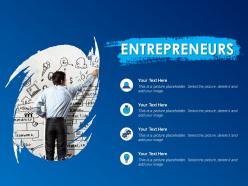
Entrepreneurs sample PPT presentation is a uniquely designed piece of art. This formal business presentation template is a combination of versatile designing elements. The PPT template can be used to introduce company human resources, productivity, product and services. The blue colored business layout PowerPoint slide includes an incredible slide design of exclusive background and layout. The clean and high-definition picture quality of PPT icons is ideal for demonstrating the company profiles, company objectives, the services and the challenges of the company. It is one of the best introductory platforms for company profile and objectives. The modern design of the entrepreneur business presentation infographic is a tool to impress the audience with easy to use company profile. The formal business presentation PPT slide design is sufficient to accommodate any type of business demonstration. Company profile ppt presentation can also be used to make an entire presentation using a single platform as provided by us. Breathe deep and easy with our Entrepreneurs Sample Ppt Presentation. They allow you to take a break.
People who downloaded this PowerPoint presentation also viewed the following :
Entrepreneurs sample ppt presentation with all 5 slides:
Our Entrepreneurs Sample Ppt Presentation get them eager to accredit you. They will happily endorse your ideas.
FAQs for Entrepreneurs
Honestly, the biggest thing I've noticed is how fast successful entrepreneurs bounce back from failures. Like, they don't sit around moping - they pivot or try something new. Persistence is huge too, but they're smart about quitting the stuff that isn't working. Most people I know have "amazing" ideas but never actually test them with real customers (drives me crazy). The successful ones are comfortable making decisions without having all the info. They focus on solving actual problems, not just building something cool. Quick test: how fast do you go from idea to getting feedback? Speed beats perfection every time.
Honestly, you've gotta stop overthinking and just start talking to real people. Find 20-30 folks who might actually have the problem you think exists - but here's the thing, don't fish for the answers you want to hear. Let them tell you what sucks about their day. Once you know the problem's legit, throw together something super basic to test if people would actually pay for your solution. I learned this the hard way - always hunt for paying customers before you build anything fancy. The market doesn't lie, but you have to actually listen to what it's saying.
Innovation is what stops you from being just another business fighting over scraps. You need something that makes customers pick you over the competition - and honestly, competing on price alone is a nightmare for your bottom line. It doesn't have to be some crazy tech breakthrough either. Sometimes the best innovations are super simple, like making your process smoother or just creating a better experience. The real trick is staying curious about everything. Always be asking "what if we tried this differently?" That mindset will keep you ahead while others get stuck doing the same old thing.
Honestly, networking is like having a cheat code for business growth. You'll meet customers, partners, and potential investors that you'd never find through random cold emails. People start referring business to you once they actually know and trust you. Plus you get all the inside scoop on what's happening in your industry - which is honestly half the battle sometimes. The trick is actually helping other people first instead of just talking about yourself constantly. I'd start with joining one industry group or hitting up some local entrepreneur meetups. Even if the first few are awkward, you'll get the hang of it.
Honestly, you've got a few solid routes here. Bootstrapping means using your own cash - keeps you in control but slows things down. Angels and VCs throw bigger money at you, though they'll want equity and probably a board seat. Crowdfunding works amazing for consumer stuff (seriously, some of those campaigns blow up overnight). Bank loans let you stay in charge but your credit better be decent. VCs take forever to decide, angels move way faster. Figure out how much you actually need first, then decide what control you're cool with giving up.
Honestly, you gotta find that sweet spot between being reckless and being too cautious. Figure out your biggest threats first - cash flow issues, losing key partners, market shifts, whatever keeps you up at night. Build some protection around those. I've watched founders either blow everything on wild bets or get so scared they never make a move. Keep some cash on hand, obviously. Map out backup plans for your top few risks. Multiple revenue streams help too when you can swing it. Just make sure you're betting smart, not gambling blind. And yeah, know your limits - when it's time to change course or step back.
Dude, it's wild how your brain just switches modes. Problems become puzzles to solve instead of walls blocking you. Quick decisions with whatever info you have? Yeah, that becomes normal. Failure stops feeling personal - more like "ok that didn't work, next." The whole risk thing gets easier too. My favorite part is how you stop asking "what if this fails?" and start thinking "how do I test this fast?" Everything breaks down into little experiments. Oh, and that overthinking spiral most people get stuck in? Way less of that happens when you're in entrepreneur mode.
Dude, automation is a lifesaver for all that boring stuff that kills your day. Invoicing, inventory, customer emails - there's software for basically everything now. I'm still kicking myself for not discovering this earlier lol. Start with QuickBooks for accounting and maybe Zapier to connect your apps together. CRM systems are solid too if you're juggling lots of leads. My advice? Pick like 2-3 things that actually bug you the most instead of going crazy trying to automate your entire business right away. That never works out well.
Honestly, figure out what you actually stand for first - like your core values and what sets you apart. Then nail down your voice and look, and DON'T change it every few weeks (I swear, some people rebrand monthly and wonder why no one remembers them). Pick maybe 2-3 platforms max and actually show up there consistently. Tell stories that hit people in the feels instead of just rattling off features. Customer testimonials are gold, and behind-the-scenes stuff works too. Oh, and authenticity beats perfect every time - people can smell fake from a mile away. Your audience needs to see the same you repeatedly before it clicks.
Dude, just focus on 3-5 metrics that actually tell you if your business is working. Revenue, customer acquisition cost, cash flow - those are your bread and butter. SaaS? Track monthly recurring revenue. Retail? Inventory turnover matters way more than follower count. I swear, half the founders I know get obsessed with vanity metrics that look cool but mean nothing. Even a basic Google Sheet works fine at first - honestly mine was ugly as hell but it did the job. Check your numbers weekly and stick to it. You want data that helps you decide stuff, not just impress investors with fancy graphs.
Honestly? Start with a problem that actually matters to people. Hook them right away in your exec summary, then back everything up with real data - not just what you think might happen. Keep those financial projections grounded because investors have seen every trick in the book. Show you know who you're up against and why someone would pick you over them. The story part is huge - you want people to care, but also prove you're not just dreaming. Oh, and seriously keep it under 20 pages. I've seen 40-page business plans that nobody reads past page 3.
Honestly, figure out what you actually stand for first - then hire people who get it, even if their resume isn't perfect. I've seen too many companies hire "culture fits" who are just smooth talkers though, so be careful there. Make your decisions transparent, celebrate the good stuff as a team, and create space where people can disagree without getting fired. Don't be that founder who preaches work-life balance while sending emails at midnight. The biggest thing? Start thinking about this stuff from day one. Culture doesn't just magically happen.
Honestly? You're gonna hit three big walls: money running out, finding customers who actually buy your stuff, and just being exhausted from doing literally everything yourself. The imposter syndrome hits different when it's your name on the business. Here's what saved my sanity - talk to real people about your idea before you build some fancy product. Track every penny from day one (seriously, obsess over this). Don't be a hero trying to do it all alone. Find other entrepreneurs to vent to, they get it. Oh, and you'll probably pivot at least once. That's normal, not failure.
Dude, get a mentor ASAP. They've already screwed up all the stuff you're about to screw up, so you can skip those expensive lessons. Plus they know people - like, connections you wouldn't even think to ask for. I dragged my feet on this for way too long and regret it. When everything's falling apart (and it will), having someone who gets it makes such a difference. Don't just look in your exact field either. Sometimes the best advice comes from totally unexpected places. Just reach out to people doing cool stuff.
Look, you've gotta stay on top of what's happening - customer habits change, new competitors pop up, regulations shift. Build flexibility into your business from day one instead of panicking later when everything hits the fan (and trust me, it will). Keep your fixed costs lean and diversify how you make money. Having direct customer relationships is huge because you can test stuff quickly. Oh, and actually look at your numbers regularly - like, really look at them and do something about what they're telling you. Most people just collect data and ignore it.
-
Good research work and creative work done on every template.
-
Great experience, I would definitely use your services further.