


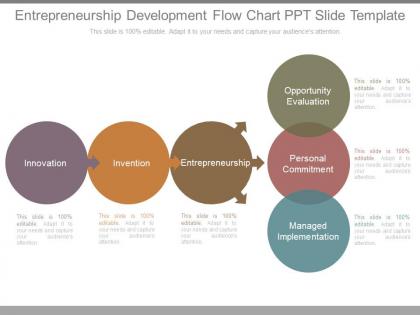
Entrepreneurship development flow chart ppt slide template




Try Before you Buy Download Free Sample Product
 Impress Your
 Audience
 100%
100% Editable
 Save Hours
 of Time


Attain your crowning glory with our Entrepreneurship Development Flow Chart Ppt Slide Template. Accomplish better than your best with their assistance.
People who downloaded this PowerPoint presentation also viewed the following :
Entrepreneurship development flow chart ppt slide template with all 7 slides:
Our Entrepreneurship Development Flow Chart Ppt Slide Template create a halo effect. Everyone will feel blessed by your thoughts.




FAQs for Entrepreneurship development flow chart
Honestly? The successful ones I know all bounce back from failures without losing their minds. That's probably the biggest thing. They're always curious too - constantly asking "what if we tried this instead?" Problem-solving becomes second nature since you'll spend most days putting out fires anyway. Having vision matters a lot - spotting opportunities others walk right past and explaining them so people actually get it. Oh, and they're not reckless but they will take smart risks. If something's clearly not working, they'll pivot fast instead of being stubborn about it. Start small with side projects to practice this stuff.
Honestly, entrepreneurship is like throwing a stone in a pond - the ripples go everywhere. New businesses create jobs and bring competition that keeps everyone sharp. Fresh ideas solve real problems, sometimes creating whole new industries. Success stories attract investors and motivate others to take the leap too. Tax revenue from growing companies funds schools and roads. Oh, and established businesses hate the competition but it's good for consumers. If you're working on policy stuff, focus on cutting red tape instead of just handing out grants. That actually works better long-term.
So incubators and accelerators are like support systems for startups - they give you mentorship, resources, and connections when you're just starting out. Incubators work with you longer and help develop ideas from scratch. Accelerators are more intense, like startup bootcamp that fast-tracks growth in short programs. Honestly, they're game-changers. You get experienced mentors, workspace, sometimes funding, and access to investor networks (which is huge). My friend went through one last year and said the connections alone were worth it. If you're thinking about applying, definitely check out their alumni success stories first and make sure they actually know your industry.
Honestly, most governments overthink this. Cut the red tape first - make business registration actually simple instead of a nightmare. The paperwork alone kills half the good ideas before they start. Then tackle funding through grants or loan guarantees, maybe connect startups with investors. Build some co-working spaces and mentorship programs so entrepreneurs aren't just sitting alone in their apartments going crazy. Oh, and here's a wild idea - actually ask local business owners what sucks most about starting up. I bet you'll hear "bureaucracy" and "can't get money" every single time.
Honestly? Money's gonna be your biggest headache. Finding investors who actually understand what you're trying to build is like dating - lots of mismatches before you find "the one." You'll also need to prove people actually want your thing before you blow through all your cash. Testing constantly, pivoting when stuff doesn't work. Competition's rough too since bigger companies have way more resources and customers already locked in. Oh, and hiring good people is a nightmare right now. Start small, test everything early, and definitely build relationships before you desperately need them. That last part saved my butt more times than I can count.
Dude, networking is honestly everything when you're starting a business. Like, I can't stress this enough - the people you meet will make or break you. You'll find mentors who actually know what they're talking about, investors with deep pockets, and customers who'll spread the word. Other entrepreneurs become your lifeline when you're about to lose your mind (which happens more than you'd think). I've seen so many random conversations turn into game-changing partnerships. Don't just collect contacts though - build real relationships where people genuinely want you to win. Hit up some local meetups or entrepreneur groups to start.
Innovation drives entrepreneurship because it creates opportunities that weren't there before. Look at smartphones - they basically birthed entire industries overnight. When you innovate, entrepreneurs get the building blocks for new businesses. Plus it helps existing ones stay relevant when markets shift (which happens constantly these days). The trick is creating spaces where your entrepreneurs can mess around with ideas without fear of failing. I'd start by pushing more creative problem-solving in whatever programs you're running now. Also try connecting your innovators with people who might actually want to partner up and build something together.
Track your core financials first - revenue growth, profit margins, cash flow. Then add customer metrics like acquisition cost, lifetime value, and retention (retention's honestly way more valuable than most people think). Monthly active users and conversion rates matter too depending on your business. Don't go crazy with data though. Pick maybe 5-7 metrics that actually move the needle for you specifically. I'd set up a simple dashboard and check it weekly - that way you can catch problems early instead of scrambling later. Way better than drowning in spreadsheets you never look at.
Watch your metrics like a hawk - they'll scream at you before anything goes really wrong. Don't freak out and blow up your whole business model though (I've watched friends do this, it's painful). Try small tweaks first. Maybe your pricing's off, or you're talking to the wrong customers. Test one thing at a time. Honestly, half the time founders think they need to pivot when they just need to listen better. Your customers will literally tell you what's broken if you ask them. Keep what's working, fix what isn't. Simple as that.
Honestly, you need both the techy stuff and old-school business basics. Data analytics and social media marketing are pretty much non-negotiable now - most of your competition is probably still figuring this out. But don't sleep on soft skills either. Being adaptable is huge since everything changes so fast (I swear there's a new platform every week). Communication skills matter more than ever with remote teams everywhere. Critical thinking helps you filter through all the digital BS and find real opportunities. Pick one tool you suck at and just master it this month.
Dude, funding can literally make or break you. I've watched so many solid ideas crash just because founders ran out of cash before they could get traction. You'll spend all your time stressing about payroll instead of actually building something people want. The runway is everything - gives you space to mess up, pivot, hire decent people. Whether you bootstrap or chase investors, figure out your money strategy super early. Honestly? More startups die from empty bank accounts than crappy products. Don't be one of them.
Look, figure out your core values first - they'll guide you when money gets tight and you're tempted to make sketchy choices. Your business touches tons of people: customers, employees, suppliers, even your neighborhood. Don't lie about pricing or what your product actually does. Pay people fairly and keep workplaces safe. I know it sounds preachy, but cutting corners usually bites you later. Data privacy matters too if you're collecting info. Honestly? Being upfront builds way more trust than trying to maximize every penny. Short-term profits aren't worth tanking your reputation over.
Honestly, you should definitely find a mentor if you can. They'll help you dodge all those rookie mistakes that cost people tons of money and time. The network access alone is worth it - doors open way faster when someone vouches for you. Plus entrepreneurship gets pretty isolating sometimes (nobody really gets why you're stressed about payroll at 2am lol). Even just grabbing coffee with someone who's built a business before can be huge. Check out SCORE or just reach out to people in your space. Most successful entrepreneurs actually love helping - their egos enjoy it.
Look, tech is basically a game-changer for starting businesses now. Cloud services mean you don't need huge upfront costs anymore. Social media lets you reach customers worldwide from your couch. And honestly? Half the stuff that used to need whole teams can now be automated. New business models keep popping up too - apps, SaaS, all that fintech stuff. It's pretty crazy that a laptop gets you further than those old brick-and-mortar setups ever did. Just don't get caught up chasing every shiny new tool though. Focus on what actually fixes problems for the people you're trying to reach.
Your cultural background totally changes how you do business. Americans love the solo founder thing - just go for it, right? But in places like Japan or Korea, it's way more about consensus and family connections. Even pitching investors works differently depending where you are. Some cultures are super direct, others think that's rude as hell. Religious stuff matters too, plus how people view failure (spoiler: very differently). Honestly, I learned this the hard way when I tried using my usual approach overseas. Before you expand anywhere new, just spend time figuring out their business culture first.
-
Excellent template with unique design.
-
Unique and attractive product design.