

Evacuation Procedure In Case Of Fire At Hotel Training Ppt




Try Before you Buy Download Free Sample Product
 Impress Your
 Audience
 100%
100% Editable
 Save Hours
 of Time


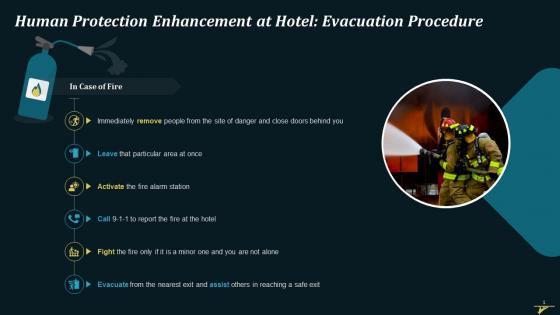
This slide showcases the standard operating procedures to be followed in case of a fire at a hotel.
People who downloaded this PowerPoint presentation also viewed the following :
Evacuation Procedure In Case Of Fire At Hotel Training Ppt with all 19 slides:
Use our Evacuation Procedure In Case Of Fire At Hotel Training Ppt to effectively help you save your valuable time. They are readymade to fit into any presentation structure.

















FAQs for Evacuation Procedure In Case Of Fire At
So you'll want clear exit routes and meeting spots mapped out, plus everyone needs to know their job. Post evacuation maps everywhere - but seriously, keep them updated because I've seen places with maps showing exits that got walled over years ago. Run drills regularly so it becomes automatic. Short ones work fine, people just need the muscle memory. Figure out how you'll do headcount and talk to emergency crews when they show up. Keep everything simple since nobody thinks straight when stuff hits the fan. Test it every few months and tweak things whenever your layout changes.
Start with walking through your actual space - look at exits, stairwells, where people sit. Map out the real threats you'd face: fires, floods, whatever natural disasters hit your area. Don't forget about employees who might need help evacuating. Honestly, building age matters more than people think. Also consider industry-specific stuff like chemical spills if that applies. External risks are huge too - earthquake zones, flood areas, all that. Once you've got a clear picture of your vulnerabilities, then design routes and procedures that actually fit your building instead of copying some random template online.
Honestly, training your staff is what separates a smooth evacuation from total mayhem. People freeze up without it - I've watched employees just stand around looking lost during drills, which is scary to think about in a real emergency. Your team needs to know their exits, where to meet up outside, and who helps others get out. Run drills every few months so it becomes second nature. When adrenaline kicks in, you want people moving automatically, not stopping to think. Oh, and definitely update everyone if you change procedures - nothing worse than outdated info during a crisis.
Hey! So for evacuation tech, mobile apps are clutch - they'll send alerts and show the safest routes in real-time. Digital signs and PA systems work great for instant updates. Occupancy sensors track who's still inside, which is honestly pretty cool tech. IoT stuff can monitor air quality too, though that might be overkill depending on your building. My advice? Pick maybe 2 or 3 things that actually make sense for your space. And definitely test everything regularly - you don't want people fumbling around with new tech during an actual emergency.
Definitely run them monthly if possible, quarterly at minimum. Switch up the timing though - don't always do Tuesday at 2pm or whatever. Those random Friday afternoon ones are actually the best test of whether people really know the evacuation routes. Time everything and jot down where people get confused or bottlenecks happen. Throw in some scenarios where main exits are blocked too. Oh, and do a quick team huddle right after each drill while everyone still remembers what happened. The whole point is making it so routine that people don't even have to think about it.
Definitely start with color-coded maps showing your main and backup exits - stick them in hallways, break rooms, anywhere people actually stop to look around. Walking new hires through the real routes beats just pointing at wall posters any day. Plan for blocked exits too since emergencies love to mess with your best-laid plans. Quarterly drills help make it muscle memory rather than something people have to figure out while panicking. Honestly, the goal is making evacuation feel totally automatic. Short sentences work. When stress hits, nobody's got time to think about directions.
Dude, you've gotta think about this ahead of time. Figure out who needs extra help - mobility issues, can't see/hear well, cognitive stuff. Pair everyone up with a buddy because honestly, going it alone during an emergency is scary for anyone. Make sure your escape routes work for wheelchairs too. Keep lists updated of who needs what (I know, more paperwork). Both visual AND sound alarms are key since people notice different things. Oh, and here's the thing most people skip - actually ASK these folks what they need. They'll tell you way better than any manual will. Don't just assume you know what works.
Hit up your local fire marshal first - they're the ones who actually know what's required where you are. Building codes are all over the place between different areas, so don't assume what worked at your old job will work here. Trust me on this one! Your city's emergency management office is another good stop. Oh, and check if there's any weird industry stuff that applies to your business specifically. Honestly, getting info straight from these people beats trying to figure it out yourself. If they'll do a walkthrough, even better - they catch things you'd totally miss.
Honestly, post-drill debriefs are where you'll get the best stuff since it's all fresh in people's heads. Anonymous surveys work great too - people are way more honest when they don't have to put their name on it. Focus groups can dig deeper into specific problems, though they take more time to set up. Oh, and if your company has one of those feedback platforms, might as well use it. Or just throw up a suggestion box somewhere. Really though? Start simple. Send out a quick survey after your next drill with like 3-4 questions about what felt off or unsafe. You'd be surprised how much useful feedback you'll get.
Look, once a year is the official rule but that's honestly cutting it close. I'd check them whenever you change your office layout or get new people. After drills too - that's when you catch the weird stuff nobody thought of. Had a friend whose company waited two years and their "fire exit" led to a locked storage closet... awkward. Just set a phone reminder so you don't forget. Building changes? Staff turnover? Update it then. Don't just write it once and shove it in a drawer somewhere.
Set up multiple ways to reach people - PA system, emails, texts, plus floor wardens for face-to-face contact. That last one's actually super important since some folks tune out when they're deep in work mode. Don't just yell "evacuate!" Be specific about where they should go. Oh, and make sure someone's assigned to talk with firefighters when they show up. Redundancy is everything here because honestly? Technology loves to crap out at the worst possible moments. You'll want backups for your backups.
So definitely keep your contact lists updated in a few different spots - digital AND printed copies. I learned this the hard way when our system crashed last year! Each team member needs a primary contact plus a backup, with their relationship info and extra phone numbers. People switch jobs constantly and never tell HR their new numbers, so review everything quarterly. Oh, and pick specific people ahead of time to talk with families, media, whoever - you don't want random staff handling that mess during an emergency. Laminate those contact cards and give them to your floor wardens too.
Honestly, your team's gonna copy whatever you do during evacuations. Stay calm and follow the procedures yourself - people notice that stuff. Don't be the leader barking orders from your office while everyone else files out. You need to be visible and actually walk the routes with them. Trust me, if you're grabbing coffee and chatting too, they'll think it's no big deal. Learn those evacuation procedures inside and out so you can guide people confidently. Short version: lead by example, stay present, and don't just assume people will listen if you're not showing them it matters.
Honestly, you've gotta practice different nightmare scenarios - not just the basic fire drill everyone sleepwalks through. Run drills where exits are blocked, lights go out, whatever could realistically go wrong. Train several people on safety duties because Murphy's Law guarantees your main guy will be on vacation during an actual emergency. Set up backup meeting spots too since your primary one might be compromised. The whole point is making people think instead of just following a script. Oh, and those "what if" discussions during training? They're clutch for building real problem-solving skills when everything hits the fan.
Start with your local fire department - seriously, they'll walk through your building for free and actually know their stuff. OSHA has evacuation guidelines that aren't terrible once you decode the bureaucratic nonsense. Check FEMA's website too, they've got templates and checklists. Your insurance company might do risk assessments as part of your coverage (worth asking anyway). Professional consultants cost money but they're solid if you can swing it. I'd hit up all the free resources first, see what you're missing, then figure out if you need to bring in the pros.
-
Love how there are no boring templates here! The design is fresh and creative, just the way I like it. Can't wait to edit and use them for my extended projects!
-
Wow! The design and quality of templates on SlideTeam are simply the best.