


Devising A Fire Evacuation Strategy Training Ppt




Try Before you Buy Download Free Sample Product
 Impress Your
 Audience
 100%
100% Editable
 Save Hours
 of Time


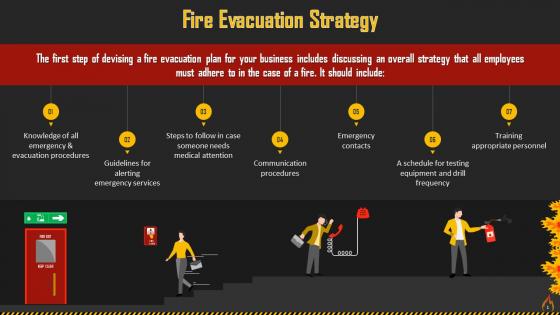
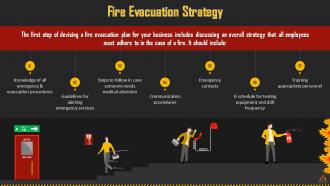
This slide discusses Step 1 of creating a fire evacuation plan. The first step of devising a fire evacuation plan for business includes discussing an overall strategy that all employees must adhere to in the case of a fire.
People who downloaded this PowerPoint presentation also viewed the following :
Devising A Fire Evacuation Strategy Training Ppt with all 17 slides:
Use our Devising A Fire Evacuation Strategy Training Ppt to effectively help you save your valuable time. They are readymade to fit into any presentation structure.









FAQs for Devising A Fire Evacuation
Key components include clear evacuation routes, designated assembly points, regular fire drills, emergency communication systems, and trained fire wardens. These elements work together by ensuring swift personnel movement, maintaining accountability during evacuations, and enabling coordinated emergency responses, with many organizations finding that comprehensive strategies significantly reduce evacuation times and enhance overall workplace safety.
Organizations ensure clear communication during fire emergencies through multiple channels including public address systems, mobile alerts, visual alarms, designated wardens, and backup communication methods. These systems work by providing redundant messaging pathways, establishing clear evacuation routes, and assigning trained personnel to guide employees, with many finding that regular drills and integrated communication platforms significantly reduce confusion and evacuation times.
Training and drills enhance fire evacuation readiness by familiarizing occupants with escape routes, emergency procedures, and safety protocols, while identifying potential bottlenecks and coordination issues. Through regular practice sessions, organizations streamline response times, reduce panic-induced errors, and ensure staff can execute evacuations efficiently, with many finding that consistent drills significantly improve overall emergency preparedness and life safety outcomes.
Evacuation routes should incorporate wide corridors, ramp systems, tactile guidance strips, visual and audible alarm systems, and designated refuge areas with two-way communication devices. These accessibility features enable safe egress by accommodating wheelchairs and mobility aids, providing clear wayfinding for visually impaired individuals, and ensuring comprehensive alert systems reach all occupants, ultimately delivering inclusive safety protocols that protect every building user during emergencies.
Technologies to enhance fire evacuation procedures include smart alarm systems, real-time monitoring sensors, mobile alert applications, automated voice guidance systems, and integrated building management platforms. These solutions streamline evacuation by providing instant notifications, optimized route guidance, and centralized emergency coordination, with hospitals, schools, and corporate facilities finding that automated systems significantly reduce response times while enhancing overall safety outcomes.
Common challenges in high-rise fire evacuations include overcrowded stairwells, elevator restrictions, limited visibility from smoke, communication breakdowns, and mobility assistance for disabled occupants. These obstacles significantly impact evacuation timing and safety outcomes, with many building managers finding that strategic planning, enhanced communication systems, and regular drills ultimately streamline emergency responses and minimize risks.
Signage and visual aids support efficient evacuation by providing clear directional guidance, identifying emergency exits, and displaying critical safety information in multiple languages and formats. These visual systems enable faster decision-making during high-stress situations, reduce confusion in smoke-filled environments through illuminated markers, and ensure compliance with accessibility standards, ultimately delivering streamlined evacuations and enhanced occupant safety across diverse building types.
Regular training sessions, visual aids like evacuation maps and signage, mandatory drills, digital communications, and role-specific responsibilities ensure comprehensive employee familiarity with evacuation procedures. Organizations across sectors like manufacturing, healthcare, and retail enhance preparedness through interactive workshops, mobile alerts, and designated floor wardens, ultimately delivering faster response times and improved safety outcomes during emergencies.
Local fire codes inform evacuation strategy development by establishing minimum exit requirements, occupancy limits, signage standards, and emergency lighting specifications. These regulations provide the foundational framework for compliance, while organizations enhance strategies through risk assessments, staff training protocols, and regular drills, ultimately delivering safer workplaces and faster emergency response times.
Clear pathways during fire emergencies enable rapid, safe evacuation by preventing bottlenecks, reducing panic, and ensuring accessibility for emergency responders and individuals with mobility challenges. These unobstructed routes streamline evacuation procedures, minimize injuries from falls or crushing, and ultimately deliver faster emergency response times, with many organizations finding that well-maintained pathways significantly reduce evacuation times and enhance overall safety outcomes.
Workplace fire risk assessments involve systematically examining potential ignition sources, combustible materials, escape routes, fire detection systems, and employee training protocols. Through comprehensive facility walkthroughs, equipment inspections, and safety audits, organizations can identify electrical hazards, blocked exits, and inadequate suppression systems, ultimately enabling proactive hazard mitigation and enhanced workplace safety.
Psychological factors include panic response patterns, decision-making under stress, crowd behavior dynamics, familiar route preferences, and authority figure compliance tendencies. These considerations enable emergency planners to design clearer signage systems, strategic exit placement, and comprehensive training protocols, with many organizations finding that addressing human behavioral patterns significantly improves evacuation efficiency and reduces workplace safety risks.
Loud noises and alarms enhance evacuation effectiveness by providing clear alerts, cutting through ambient noise, and triggering immediate response behaviors, while excessive volume can cause panic or hearing damage. Through strategic sound design, organizations in hospitals, schools, and office buildings balance urgency with clarity, ultimately delivering faster evacuation times and improved safety outcomes.
Post-evacuation follow-up actions include conducting thorough debriefings with staff and wardens, analyzing evacuation timing and bottlenecks, reviewing communication effectiveness, and documenting equipment performance issues. Organizations should survey participants for feedback, update evacuation plans based on identified gaps, schedule additional training for areas needing improvement, and test revised procedures, with many facilities finding that systematic post-evacuation analysis significantly enhances future emergency preparedness and response efficiency.
Evacuation strategies adapt through tailored exit routes, signage systems, communication protocols, and occupant training based on building complexity and usage patterns. Commercial buildings require sophisticated alarm networks, designated wardens, and staggered evacuation procedures, while residential buildings focus on simplified escape routes and family reunification plans, with both ultimately delivering faster emergency response and enhanced occupant safety.
-
Superb! The innovative and inspiring template designs provide an edge to the presentation.
-
Definitely a time saver! Predesigned and easy-to-use templates just helped me put together an amazing presentation.