


Office Fire Emergency Evacuation Plan




Try Before you Buy Download Free Sample Product
 Impress Your
 Audience
 100%
100% Editable
 Save Hours
 of Time


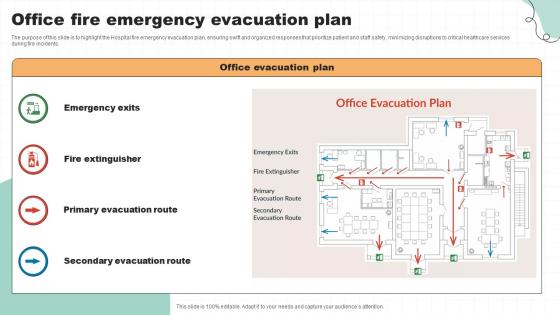
The purpose of this slide is to highlight the Hospital fire emergency evacuation plan, ensuring swift and organized responses that prioritize patient and staff safety, minimizing disruptions to critical healthcare services during fire incidents.
People who downloaded this PowerPoint presentation also viewed the following :
Office Fire Emergency Evacuation Plan with all 9 slides:
Use our Office Fire Emergency Evacuation Plan to effectively help you save your valuable time. They are readymade to fit into any presentation structure.








FAQs for Office Fire
Essential elements include clearly marked escape routes, designated assembly points, employee responsibilities, emergency contact information, and regular drill schedules. These components work together by ensuring swift evacuations, minimizing confusion during emergencies, and maintaining regulatory compliance, with many organizations finding that comprehensive plans significantly reduce response times and enhance overall workplace safety.
Fire drills should be conducted quarterly at minimum, with many organizations implementing monthly drills to maintain peak readiness and staff confidence. Regular practice enables employees to respond instinctively during emergencies, identifies potential bottlenecks in evacuation routes, and ensures new staff members are properly trained, ultimately delivering faster response times and enhanced workplace safety across all operational areas.
Key roles include fire wardens to guide evacuation routes, floor monitors to ensure complete area clearance, designated assistants for mobility-impaired colleagues, communication coordinators, and assembly point managers to conduct headcounts. These assignments streamline emergency response by distributing responsibilities, reducing confusion, and ensuring systematic building clearance, with many organizations finding that clearly defined roles significantly reduce evacuation times while enhancing overall safety outcomes.
Technology enhances office fire evacuation plans through automated alarm systems, real-time monitoring sensors, mobile alert applications, digital evacuation route displays, and cloud-based communication platforms. These systems streamline emergency response by providing instant notifications, tracking occupant locations, and enabling coordinated evacuation procedures, with many organizations finding that integrated technologies significantly reduce response times while improving overall safety outcomes.
**INPUT**: What specific training is necessary for employees regarding fire safety and evacuation procedures? **OUTPUT**: Essential fire safety training includes evacuation route familiarization, fire extinguisher operation, alarm recognition, emergency communication protocols, and assembly point procedures. These comprehensive programs enhance workplace safety by reducing evacuation times, minimizing panic responses, and ensuring coordinated emergency responses, with many organizations finding that regular drills and role-specific training ultimately deliver improved safety outcomes and regulatory compliance. **Word count: 58 words**
An office fire evacuation plan should accommodate individuals with disabilities through designated evacuation assistants, accessible evacuation routes, visual and audible alarm systems, areas of refuge on multi-story buildings, and specialized evacuation equipment like evacuation chairs. These comprehensive measures ensure equal safety protection by providing multiple communication methods, alternative escape routes, and personalized assistance protocols, ultimately delivering inclusive emergency preparedness that protects all employees regardless of physical capabilities.
Effective fire evacuation signage includes illuminated exit signs, directional arrows, floor markings, emergency maps, and digital displays with real-time updates. These visual systems work alongside PA announcements, mobile alerts, and designated floor wardens to streamline communication, with many organizations finding that combining multiple methods ensures comprehensive coverage and faster evacuations during critical situations.
Leadership ensures fire evacuation plan adherence through regular training sessions, mandatory drills, and clear accountability structures across all organizational levels. By implementing quarterly assessments, updating procedures based on building changes or regulatory requirements, and integrating evacuation protocols into onboarding processes, organizations maintain compliance while enhancing employee safety preparedness.
Common pitfalls include inadequate exit route planning, insufficient employee training, poor signage placement, overlooking disabled accessibility, and failing to designate assembly points. These oversights can create dangerous bottlenecks during emergencies, with many organizations finding that regular drills, clear communication protocols, and updated floor plans ultimately deliver faster evacuations and enhanced workplace safety compliance.
Emergency exits should be assessed through clear signage audits, unobstructed pathway inspections, adequate lighting evaluations, and accessibility compliance checks for disabled employees. These assessments involve examining sight lines from workstations, testing emergency lighting systems, and ensuring exits meet ADA requirements, with many organizations finding that regular quarterly reviews enhance evacuation efficiency and employee safety confidence.
Backup communication systems should include public address systems with battery power, two-way radios for floor wardens, emergency notification apps, visual alarm systems, and megaphones for manual announcements. These redundant systems ensure critical information reaches all occupants even if primary communications fail, with many organizations finding that multiple communication channels significantly improve evacuation response times and overall safety outcomes.
Employee feedback can be incorporated through post-drill surveys, focus groups, safety committee meetings, and anonymous suggestion systems that capture real-world insights about evacuation routes, procedures, and potential obstacles. Through regular collection and analysis of this input, organizations streamline their emergency protocols, enhance safety compliance, and ensure evacuation plans remain practical and effective, ultimately delivering improved workplace safety and regulatory adherence.
Fire evacuation plans must comply with local fire codes, building regulations, OSHA workplace safety standards, ADA accessibility requirements, and municipal emergency ordinances. These regulations vary by jurisdiction and building type, with healthcare facilities, schools, and high-rise offices facing stricter requirements, ultimately ensuring legal compliance while enhancing employee safety and minimizing liability risks.
Office fire evacuation plans should be reviewed annually and tested through drills at least twice yearly, with many organizations conducting quarterly drills to ensure optimal preparedness and compliance with safety regulations. These regular assessments enable companies to identify procedural gaps, update emergency contacts and routes, and enhance employee response times, ultimately delivering safer workplaces and reduced liability risks.
**INPUT**: What type of documentation should be maintained regarding fire drills and evacuation performance? **OUTPUT**: Fire drill documentation should include evacuation times, participation records, identified bottlenecks, equipment functionality reports, and corrective action plans. These comprehensive records enable organizations to track performance improvements, ensure regulatory compliance, and enhance safety protocols, with many institutions finding that detailed documentation streamlines emergency preparedness and delivers measurable risk reduction. [Word count: 54 words]
-
I had them make a presentation for an office retirement party. They were very helpful in understanding what we wanted and delivered the perfect presentation. Highly recommended!
-
Out of the box and creative design.