

Emergency response plan for workplace




Try Before you Buy Download Free Sample Product
 Impress Your
 Audience
 100%
100% Editable
 Save Hours
 of Time


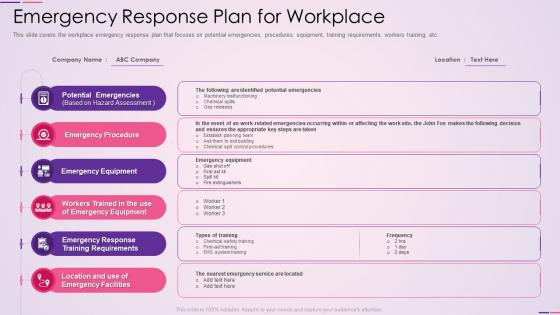
This slide covers the workplace emergency response plan that focuses on potential emergencies, procedures, equipment, training requirements, workers training, etc.
People who downloaded this PowerPoint presentation also viewed the following :
Emergency response plan for workplace with all 6 slides:
Use our Emergency Response Plan For Workplace to effectively help you save your valuable time. They are readymade to fit into any presentation structure.





FAQs for Emergency response
Four key things to focus on: communication plan, supplies, evacuation routes, and paperwork. Get at least 72 hours of water, food, meds, flashlights, batteries - the usual stuff. Don't forget copies of your ID, insurance docs, bank info. Most people totally overlook that part. Map out where you'll meet family members if cell towers go down, plus backup contact numbers. Practice your evacuation routes too - sounds boring but it's worth it. Oh, and actually update this thing every six months or it becomes completely useless. I learned that the hard way when half our emergency contacts had moved!
First thing - figure out what disasters actually hit your area. That neighbor who's been around forever? Talk to them, they know way more than Google. Then look at your specific stuff: medications, pets, elderly relatives, mobility issues. All that changes what you need to prep for. Map out where you go daily too - work, school pickup, whatever. I swear people only think about zombie apocalypse scenarios when really it's flooding or power outages that'll get you. Make a basic list of your vulnerabilities and update it once a year.
Dude, communication can make or break an emergency situation. Your phone might be useless if towers go down, so you need backups. Two-way radios are solid, satellite phones if you've got the budget. Ham radio's overkill unless you're really into that stuff. Write down important contacts - don't just rely on your phone's memory. Everyone should know the plan ahead of time. We actually test our family's setup twice a year (sounds nerdy but whatever). Short version: have multiple ways to reach people and actually practice using them before shit hits the fan.
Dude, you've gotta do way more than just reading those dusty policy manuals. Run drills every few months - fires, medical stuff, evacuations, whatever applies to your place. Everyone needs to know their job and escape routes cold. Those yearly safety talks are basically useless, honestly. Try tabletop exercises instead where teams actually walk through scenarios. Train your first aid people and emergency coordinators extra hard. The whole point is making it second nature so people don't freeze up when things go sideways. Oh, and make attendance mandatory - there's always that one person who tries to skip out.
So you'll need water first - gallon per person daily, at least 3 days worth. Non-perishable food, flashlight, battery radio, first aid stuff and any meds you take regularly. Waterproof containers are clutch for storage. That ice storm last winter taught me this lesson the hard way! Important documents and cash too, plus don't forget pet supplies if you have them. I actually set reminders when daylight saving hits to swap out expired food and dead batteries. Otherwise you'll totally forget - I always did before I started doing that. Keep everything somewhere you can actually reach it when the power's out.
Honestly, tech has made emergency prep so much better these days. You can get real-time alerts when disasters are coming your way, plus there are apps that help you find family members and store copies of important docs in the cloud. GPS tracking is clutch too. What's really cool is how communities can coordinate evacuations and resources through emergency platforms now - way more organized than before. Oh, and some communication apps still work even when cell towers go down, which is wild. Download your local emergency app first and set up those automated alerts. Those extra few minutes of warning? Total game changer.
So three big things to focus on: communication, training, and toughening up infrastructure. First, get emergency alert systems that don't crap out when the power dies - trust me on this one. Regular disaster drills are huge, plus training neighborhood teams beforehand. Hospitals, shelters, communication networks all need strengthening. Oh and build those partnerships with local businesses and nonprofits now, not during the crisis. Honestly though, start with a vulnerability assessment first. Figure out what'll actually hit your area hardest, then spend money accordingly. Makes way more sense than just throwing resources everywhere.
Honestly, don't make emergency planning this separate scary thing - just bake it into what you're already doing. Figure out your most critical business stuff first, then build backup plans right into your regular procedures. Your team will forget everything unless you actually practice, so do that regularly. I always tell people to put emergency contacts and backup suppliers directly in their normal workflows - makes it way more likely you'll actually use them when things go sideways. Oh, and test one piece of your plan every quarter with real scenarios. Sounds boring but it works way better than hoping for the best.
Honestly, the biggest thing is how people's brains just shut down when stuff hits the fan. Stress and panic make everyone freeze up or do dumb things - I've watched coworkers completely lose it over way smaller problems. Practice runs with your family are huge though. Go through scenarios, figure out who does what ahead of time. Write everything down so nobody has to think too hard when adrenaline's pumping. Kids obviously handle stress differently than adults, same with older relatives. The whole point is making it automatic, you know? Your brain won't be firing on all cylinders during an actual emergency.
Honestly, drills are like a reality check for your emergency plans. You think everything's solid on paper, then you run a simulation and realize nobody knows where the backup server is. They're great for catching communication breakdowns and spotting those weird bottlenecks you'd never think of. I always tell people to treat them like debugging - except messier and with more people panicking. Short ones work fine, don't overcomplicate it. The real magic happens in the debrief afterward when everyone admits what actually went wrong. That's when you update your procedures and maybe discover Jim from IT has been doing everything backwards for months.
City prepping is all about bugging out fast or hunkering down when stuff breaks. Rural? You're basically on your own since help takes forever to get there. Cities are a nightmare with packed escape routes and people losing their minds, but at least ambulances exist nearby. Out in the country you need way more supplies - think weeks not days - plus generators and radios because you'll be cut off. Oh and the timeline's totally different. City people stock 72 hours worth of gear, rural folks better have 1-2 weeks minimum. Honestly depends where you live though.
Map out what YOUR family actually needs first - wheelchairs, pet carriers, backup meds, all that stuff. Give everyone specific jobs based on what they can handle. Your teen grabs the emergency bag while you help grandma, whatever works. Oh and don't forget the random things like anxiety meds for pets or medical equipment - my friend totally forgot about her mom's oxygen tank once! Plan multiple escape routes since some won't work with mobility aids. Practice twice a year minimum because honestly, people panic and forget everything when it's real.
So FEMA's got free online courses that are actually pretty decent - way better than I expected tbh. Red Cross does workplace training you can tailor to your team. Definitely hit up your local emergency management office though, they're super helpful and know what disasters you're likely to face in your area. Oh, and check if your industry has specific resources since generic emergency prep can miss important stuff. I'd probably start with FEMA's site first, then call the local folks. They love helping with this kind of thing.
So basically blast it out on all your socials at once - Twitter, Facebook, Insta, whatever. Have templates written ahead of time because trust me, you don't want to be crafting perfect sentences when stuff's hitting the fan. Twitter's honestly your strongest play here since people actually go there for news (not just scrolling through their cousin's vacation pics). Keep posts super clear with actual steps people can take. Hashtags help too so folks can find your updates. Oh and definitely figure out who's posting what beforehand - you don't want three people posting different info.
Honestly, the best partnerships happen when you mix resources smartly. Private companies have the money and tech gear, while public agencies handle regulations and emergency coordination. My neighbor works in emergency management and says the real magic happens during joint training - everyone stops duplicating effort once they actually talk to each other. Set up formal agreements before chaos hits though, not during. Communication networks, supply chains, that kind of stuff works way better when it's planned ahead. Call your local emergency management office first - they'll know what partnerships already exist and where you'd fit in.
-
Topic best represented with attractive design.
-
Innovative and Colorful designs.