

Workplace Emergency Action Plan For Chemical Spills




Try Before you Buy Download Free Sample Product
 Impress Your
 Audience
 100%
100% Editable
 Save Hours
 of Time


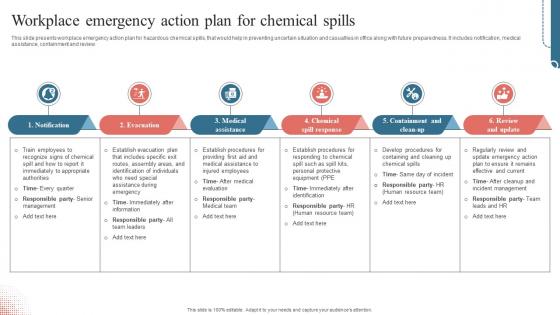
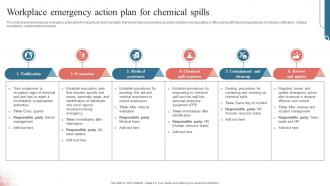
This slide presents workplace emergency action plan for hazardous chemical spills, that would help in preventing uncertain situation and casualties in office along with future preparedness. It includes notification, medical assistance, containment and review.
People who downloaded this PowerPoint presentation also viewed the following :
Workplace Emergency Action Plan For Chemical Spills with all 6 slides:
Use our Workplace Emergency Action Plan For Chemical Spills to effectively help you save your valuable time. They are readymade to fit into any presentation structure.





FAQs for Workplace Emergency Action Plan
Look, you basically need four things: immediate response steps, how to contain it, evacuation stuff, and who to call. Position spill kits everywhere and make sure people actually know where they are - seems obvious but you'd be surprised. Write down all the emergency contacts beforehand because nobody remembers phone numbers when they're panicking. Keep the whole plan super simple since stressed people can't handle complicated instructions. Oh and do practice drills every few months or your team will just stand there staring at each other when something actually happens. Trust me on that one.
Start with listing all the chemicals you use, store, or move around - then grab the hazard data sheets for each one. Map out where everything's located and think through worst-case scenarios. I'd tackle this by department since doing it all at once is pretty brutal. Look at how much you're storing, what's near drains or water, ventilation setup, how many people are nearby. Check your local regs too - some stuff has reporting requirements. Oh, and definitely hit your riskiest chemicals first, then work down from there.
Your crew needs solid training on spotting spills, containing them, and cleanup for whatever chemicals you've got on site. PPE requirements always seem to confuse people more than the actual cleanup part - weird but true. Make sure they know when to handle things internally versus calling in the pros. First aid basics for chemical exposure are crucial too. Honestly, drills are what really matter. Run them regularly so people don't freeze up when it's real. Also keep those spill kits stocked and accessible. Annual refresher training keeps everyone current, especially when you're bringing in new chemicals.
For your spill kit you'll need chemical-resistant gloves, safety goggles or face shields, and some kind of respiratory gear - N95s work for lighter stuff but you might need actual respirators depending on what you're dealing with. Grab chemical-resistant coveralls or aprons too. Oh, and slip-resistant shoe covers because trust me, you don't want to be slipping around in that mess. Match everything to whatever chemicals you've got. Keep it all somewhere easy to grab and check those expiration dates monthly - learned that one the hard way when our old masks were basically useless during an actual emergency.
Okay so first thing - make contact lists for everyone you'd need to reach. Internal teams, emergency folks, regulators, the community. Don't just rely on one way to contact people though, because Murphy's law is real and your main system will definitely crash when you need it most. Phone trees, mass alerts, social media - have backups for your backups. Pick one person to be THE communicator so you're not sending mixed messages everywhere. Oh and keep those contact lists updated regularly! Store them digitally AND print copies for your emergency kit, because technology loves to fail at the worst times.
You've gotta build those relationships with local emergency teams way before anything goes wrong. Trust me on this one. When chemicals are spreading, the last thing you want is scrambling around trying to figure out who the hell to call. These guys have all the specialized gear and know-how your team probably lacks - plus they know evacuation routes and can get hospitals involved if things get really bad. I've watched too many companies try to go it alone and... yeah, that doesn't end well. Grab their contact info now and loop them into your yearly drills. They're literally your backup when your initial response can't cut it.
Honestly, I'd do tabletop drills quarterly and full-scale ones twice yearly. Tabletops are way easier to set up - just gather everyone and walk through scenarios. You'll spot holes in your plan without the hassle of actual equipment. When you do full drills, break out the spill kits and practice containment (use water, not real chemicals obviously). Mix up your scenarios and locations each time so people don't get too comfortable. The boring part is documenting everything that goes sideways, but that's how you actually improve your procedures. Trust me, making this stuff feel automatic is the whole point - nobody wants their team panicking during a real emergency.
Document absolutely everything - incident forms with the basics (what spilled, how much, when/where), plus photos if you can safely grab them. Get witness statements and timeline all your response steps. Failed equipment? Write that down too. Honestly, the paperwork side is almost worse than the actual spill sometimes. Assign someone specifically to handle documentation during the chaos - trust me on this one. Keep copies of every notification you send to EPA, fire dept, etc. Environmental monitoring data is key if it applies to your situation. Missing documentation will bite you later.
Ugh, compliance is such a headache but you've gotta hit all three levels. Start with your local fire marshal - they're usually cool about explaining what actually applies to you. State environmental office too. Then check EPA stuff federally. Each one has different thresholds and deadlines, which is annoying. Honestly the local folks are your best bet for getting straight answers. Document everything as you go - way easier than scrambling later. Oh and do regular check-ins on your plan because regulations change and you don't want inspectors finding problems first.
Get some absorbent stuff or booms out there ASAP to stop it spreading to drains or water. Work from the outside in - don't just dive into the middle and make it worse. Waterways are your biggest worry since that damage sticks around forever. Take photos while you're dealing with it for the paperwork later. Oh, and make sure everyone knows where the storm drains are ahead of time. Seriously saves your butt when you're scrambling around trying to contain everything.
Do this at least once a year, but honestly? Every 6 months is way better since regs change constantly. Any time you get new chemicals, move storage around, or have people quit - update it then too. Those incident reports from actual emergencies are super valuable, so dig into those when you're reviewing. Run some drills to test everything out and write down what didn't work. I learned this the hard way at my last job - don't just create it and shove it in a drawer somewhere. Treat it like something that actually matters and you'll be golden.
Honestly, start with EPA's free templates - they're actually pretty decent and won't cost you anything. OSHA has some industry-specific stuff too. Your insurance company probably has templates (they hate paying out claims so they're usually helpful with this). Local emergency management folks sometimes do workshops or can sit down with you one-on-one. If you've got really complex needs, environmental consultants are an option, though obviously that'll cost you. I'd just grab the EPA ones first and see how much tweaking they need for your setup.
Assume everything from the spill is hazardous waste until you know for sure. Grab compatible containers for all the contaminated stuff - absorbents, gloves, dirt, whatever. Mixing incompatible chemicals in waste containers is asking for trouble, honestly. Label each one with the chemical name and date. Regular trash pickup won't take this stuff, so call your waste disposal company or environmental consultant. They'll tell you the proper way to get rid of it based on what you spilled. Oh, and keep records of everything you're tossing and where it goes - regulators are obsessed with paperwork.
Dude, get everyone out first - don't be a hero. Once it's safe, stop the source if you can reach it without dying. Grab some absorbent stuff or throw up barriers so it doesn't spread everywhere. Here's the weird trick nobody tells you: start cleanup from the outside and work inward. Check those SDS sheets though because some chemicals are total drama queens and need special treatment. Wear your PPE obviously. Oh, and take pics of everything - trust me, you'll be scrambling for details later when someone wants a report.
Honestly, tech makes such a huge difference for chemical spills. IoT sensors can catch leaks automatically - beats having someone stumble across a disaster hours later. Your response team gets safety data and procedures straight to their phones through mobile apps, which is clutch when you're scrambling. Drones are pretty cool for checking spill size without risking anyone's safety. GPS helps coordinate teams way better too. I'd probably focus on whatever tech fixes your worst current problem first - don't try to do everything at once.
-
The PPT layout is great and it has an effective design that helps in presenting corporate presentations. It's easy to edit and the stunning visuals make it an absolute steal!
-
You guys are life-saver when it comes to presentations. Honestly I cannot do much without your services. Thank you!!!