


Workplace Fire Emergency Action Plan




Try Before you Buy Download Free Sample Product
 Impress Your
 Audience
 100%
100% Editable
 Save Hours
 of Time


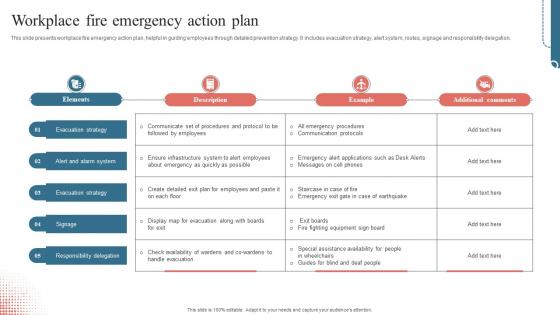
This slide presents workplace fire emergency action plan, helpful in guiding employees through detailed prevention strategy. It includes evacuation strategy, alert system, routes, signage and responsibility delegation.
People who downloaded this PowerPoint presentation also viewed the following :
Workplace Fire Emergency Action Plan with all 6 slides:
Use our Workplace Fire Emergency Action Plan to effectively help you save your valuable time. They are readymade to fit into any presentation structure.





FAQs for Workplace Fire
Dude, you'll want to start by mapping out clear escape routes - like, actually walk through them this week. Get smoke detectors and fire extinguishers everywhere they make sense. Sprinkler systems too if you can swing it. Your staff needs training on what to do when things go sideways, because panic makes people stupid. Pick a meeting spot outside where everyone gathers after evacuating. Oh, and test your smoke detectors regularly - can't tell you how many places I've been where half of them are dead. Training's probably the most overlooked part honestly. People think fire safety is just about equipment, but it's really about people knowing their stuff.
Okay so you need smoke detectors on every floor, plus inside bedrooms and right outside sleeping areas. Don't put them in kitchens or bathrooms though - steam will drive you insane with false alarms. Mount them on ceilings or high up on walls. There's two types: ionization ones catch fast fires, photoelectric are better for slow smoldering stuff. Honestly most people just grab whatever's cheapest but it's worth knowing the difference. Test monthly, change batteries once a year. My neighbor's detector chirped at 3am for like a week before he finally dealt with it - don't be that guy.
Water mist systems are pretty solid right now - they use way less water but create this fine fog that cools everything down and displaces oxygen. Clean agents like FM-200 are clutch too since they won't wreck your electronics or leave a mess behind. Perfect for server rooms and expensive equipment. AI detection is getting crazy good at catching fires before smoke detectors even go off. Actually, that's probably what I'd upgrade first if I were you. The speed difference is nuts and catching things early makes all the difference. Oh, and my buddy who works in building safety swears by the new detection systems.
Most workplaces need fire drills twice yearly, but some places require quarterly ones depending on your industry. Residential buildings usually do them annually - though half the apartment complexes I know barely manage that lol. Make sure everyone actually knows where to go and which exits to use. Mix up your scenarios too - blocked exits, nighttime drills, that kind of thing. People just going through the motions defeats the whole purpose. Your local fire codes will have specific requirements since they vary by building type and location. Oh, and document everything when you do them.
Honestly, fire safety training is a game changer for preventing accidents at work. Your team learns to spot hazards early - like electrical issues or improper storage of flammable stuff. They'll actually know how to use extinguishers correctly instead of just panicking. The evacuation part is huge too because that's where people get trampled or hurt when they don't know the plan. We do ours annually plus random drills, which sounds annoying but muscle memory really does kick in. Keep those exits clear though - I've seen places use them for storage which is just asking for trouble.
Honestly, most house fires come from pretty basic stuff we all do. Don't overload your outlets - I learned that one the hard way when my old apartment kept tripping breakers. Never walk away from the stove, even for "just a minute." Space heaters are sneaky dangerous too, so keep them away from anything that could catch fire. Your dryer vent? Clean it out regularly because lint buildup is weirdly one of the biggest fire risks. Oh, and if your house has older wiring, get an electrician to check it. Smoke detectors on every floor obviously, plus have an escape plan ready.
Honestly, these community fire safety programs are totally worth it. Your neighbors learn stuff like checking smoke detectors and planning escape routes, so everyone's more prepared. People start noticing fire hazards around the neighborhood too – my friend's area does this and they actually caught a sketchy electrical situation before it became a problem. Schools and community centers usually team up with the fire department to run them. Short sessions, but you'll pick up things you didn't know. Check if your fire chief has any coming up, or maybe bug them about starting one if there isn't.
So the must-haves are your turnout gear - jacket, pants, helmet, boots, gloves. Then there's the SCBA, which is basically your breathing apparatus. Honestly that's the most important thing because smoke kills way more people than actual fire does. Your PASS device is crucial too - it goes off if you're not moving for like 30 seconds. Some departments want extra stuff like flash hoods or thermal cameras depending on what you're dealing with. Oh and definitely stay on top of equipment checks. Faulty gear can literally mean the difference between making it home or not.
So it really depends on what kind of business you're dealing with. Office buildings have pretty basic requirements, but manufacturing places? Totally different story - they've got all these rules about hazardous materials and emergency shutdowns. Restaurants and hotels have their own headaches with occupancy limits and evacuation stuff. Don't even get me started on hospitals - like, how do you evacuate an ICU patient anyway? Schools and retail stores each have their own random regulations too. Honestly, just call your local fire marshal. They'll know exactly which codes apply to your specific situation.
So basically, your building materials totally control how fast fires spread and how nasty the smoke gets. Wood, steel, concrete - they all behave differently when things heat up. The newer composite stuff? Some of it's honestly pretty sketchy when it burns. What really gets you though is interior finishes. Carpets and wall coverings can turn a tiny fire into something deadly super quick. My brother learned this the hard way during his kitchen renovation last year. If you're picking materials, definitely check those flame spread ratings and go fire-retardant when you can.
Don't just do one fire safety lesson and call it done. Weave it into different subjects - math kids can figure out evacuation times, science covers how fires actually spread, English does safety posters. Hands-on stuff works way better than lecturing at them. Obviously you need regular drills, but also get local firefighters to come demo things. Let older kids try fire extinguishers on real (controlled) fires - they love that. Build from simple concepts in elementary to more complex stuff later. Oh, and make sure teachers aren't clueless about fire safety before they're teaching it!
Check your extinguishers monthly - honestly takes like 2 minutes once you're used to it. Look for any obvious damage, make sure the pressure gauge shows green, and check that the pin and seal are still there. Mount them properly and don't let stuff pile up in front of them. Get them professionally inspected once a year too. I'd keep a simple log, nothing fancy. Most places just use a basic checklist. Oh and if you spot anything wrong during your monthly check, tag it right away and call your fire safety guy. Don't wait around for the annual service - that's just asking for trouble.
Dude, building design can literally save lives in fires. Exit routes and stairwell placement are huge - you don't want people getting trapped when smoke starts rolling in. Materials make a massive difference too. That cheap wall paneling? Total fire hazard. Fire doors help contain flames to specific areas, which is clutch. Ventilation systems are tricky though - they can either help clear smoke or spread it everywhere depending on the setup. Oh, and pro tip: when you're looking at building plans, actually walk through the evacuation routes yourself. You'd be surprised how many don't make sense when there's actual chaos happening.
Okay first things first - everyone out and safe? Good. Don't even think about running back for your phone charger or whatever, trust me. Call 911 if you haven't, then get your insurance on the phone right away. Snap photos of everything from outside while you wait. Once fire dept says it's cool, board up any openings and throw tarps over holes. Water damage is honestly almost worse than fire damage sometimes, so call a restoration company fast. Oh and start writing down what got wrecked while you can still remember - your brain gets fuzzy about this stuff later.
Honestly, IoT fire safety stuff is pretty game-changing. Smart smoke detectors will ping your phone instantly when something's wrong - and they're actually smart enough to tell the difference between real fires and your kitchen disasters. Temperature sensors and air quality monitors add another layer too. The whole system can automatically trigger sprinklers and emergency lights before you even realize there's danger. You'll get data over time showing patterns and potential issues, which is actually super useful. Start with connected smoke detectors though - easiest install and biggest bang for your buck.
-
Their designing team is so expert in making tailored templates. They craft the exact thing I have in my mind…..really happy.
-
They had the topic I was looking for in a readymade presentation…helped me meet my deadline.