

 0 Comment
 Customer Reviews

Fires are said to cause about $328 billion in damages annually across the globe. There are over 1.5 million reported incidents that lead to hundreds of injuries and deaths every year. While these figures are scary, most fires can be prevented or controlled with proper fire prevention and planning. A good fire safety strategy prepares for readiness, minimizing risks, and protecting people and assets.
Why Is Fire Safety Important?
Fire could strike without warning, typically when no one is prepared. Effective fire safety involves not just fitting and maintaining fire protection systems but also educating people on prevention and response. The most vital aspects of fire safety involve the management of fire hazards as well as emergency fire responses so that everyone is in the best position to face the emergencies.
Fire safety is not a choice; it is a must. Incorporating the most important fire safety equipment and following all the fire safety regulations would help avoid massive losses. Organizations and households that ensure fire safety are better equipped to deal with emergencies and, therefore, better protect everyone involved.
Create a comprehensive fire safety plan through customizable templates offered by SlideTeam to implement it flawlessly. These tools have made the process of meeting fire safety regulations much simpler while making protection effective. Download your templates today and step into a brighter future of safety!
Template 1: Comprehensive Training Curriculum on Fire Safety Training PPT
Ensure workplace safety with the "Comprehensive Training Curriculum on Fire Safety Training PPT." This extensive bundle of 220 slides will cover topics like Introduction to Fire & its Dangers, Classes of Fire & Protection Equipment, Fire Detection & Risk Assessment, and Fire Prevention & Action in Case of Fire. The curriculum is very useful for employees who want to learn all about fire safety, common causes of fires, and preventive measures. This PPT package prepares your team for emergencies and is ideal for raising awareness and encouraging proactive behavior. Download now to improve the fire safety training in your workplace!
[product_image id=828047]
Template 2: Fire and Safety Statistics
The significance of "Fire and Safety Statistics" is presented under the topic of fire safety. These statistics show us the most critical areas which lack awareness and preparedness:
Only fewer than 50% of people are confident about how to use a fire extinguisher, which presents an immense gap in the basic skills of responding to a fire.
Fewer than 50% of the population can report the evacuation routes during a fire emergency, thus suggesting an urgent need for proper training on safety.
Fewer than 25% of the people know where the fire extinguisher is located in their building.
These statistics prove the need for fire safety education and training programs that can ensure lives and property are protected.

Template 3: Introduction to Fire Triangle
The fire triangle is a basic concept of fire safety. This model shows that there are three elements needed to ignite a fire:
Heat: This is the energy source needed to increase the temperature of the material.
Fuel: Any material that burns to fuel the fire.
Oxidizing Agent: Usually oxygen, required to sustain combustion.
Any of these components removed would deny a fire its needed ingredients. Hence, knowledge about the basics of this forms the underpinning for fire suppressions and risk assessment, ensuring better prevention and control measures in emergency cases.

Template 4: Most Common Causes of Fire in a Workplace
The most important aspects of fire cause in the workplace need to be known for the improvement of safety and the prevention of a disaster. The key causes are summarized below on this slide.
Electrical Equipment: Faulty wiring or overloaded circuits may start a fire.
Arson: Intentional fire-setting can be dangerous.
Smoking: Cigarette butts disposed of improperly may start combustibles.
Clutter & Combustibles: Clutter that is built up is a fire hazard.
Old Fire Risk Assessment Norms: Previous norms might miss new risks.
Contractors: External labor may unintentionally create fire hazards.
Human Mistake/Negligence: Any simple mistake, such as leaving equipment on, would lead to fa ire.
This slide will help us identify and eliminate these causes to make the workplace a little safer.

Template 5: Workplace Fire: Statistics
This slide reveals important information about fire occurrences in the workplace and raises awareness of the safety measures required. Some important points include the following:
18% of the warehouse fires occur due to electrical malfunctioning.
31% of office fires happen between 7 PM and 7 AM, resulting in extensive property damage.
Workplace fires cause more than $2.4 billion in property damage each year to American businesses.
These statistics help businesses understand the need to give priority to fire prevention strategies and effective safety measures that reduce risks and protect assets.

Template 6: Key Takeaways of Session on Introduction to Fire & Its Dangers
This PowerPoint slide covers the basics of fire and its dangers, with which people can understand fire science and its causes. What people will take home about it are:
Combustion Types: Knowing the flame and smoldering.
Fire Essentials: Explanation for the fire triangle and the tetrahedron
Common Fire Causes: Some workplace and household risks are caused by electrical equipment, cooking, and heating equipment.
Fire Risk Awareness: Explores human error, negligence, and outdated risk assessment as major contributors.
This slide is essential to make people aware of how fires can be prevented with some proper safety measures.

Template 7: Virtual Reality Fire Safety Training Program
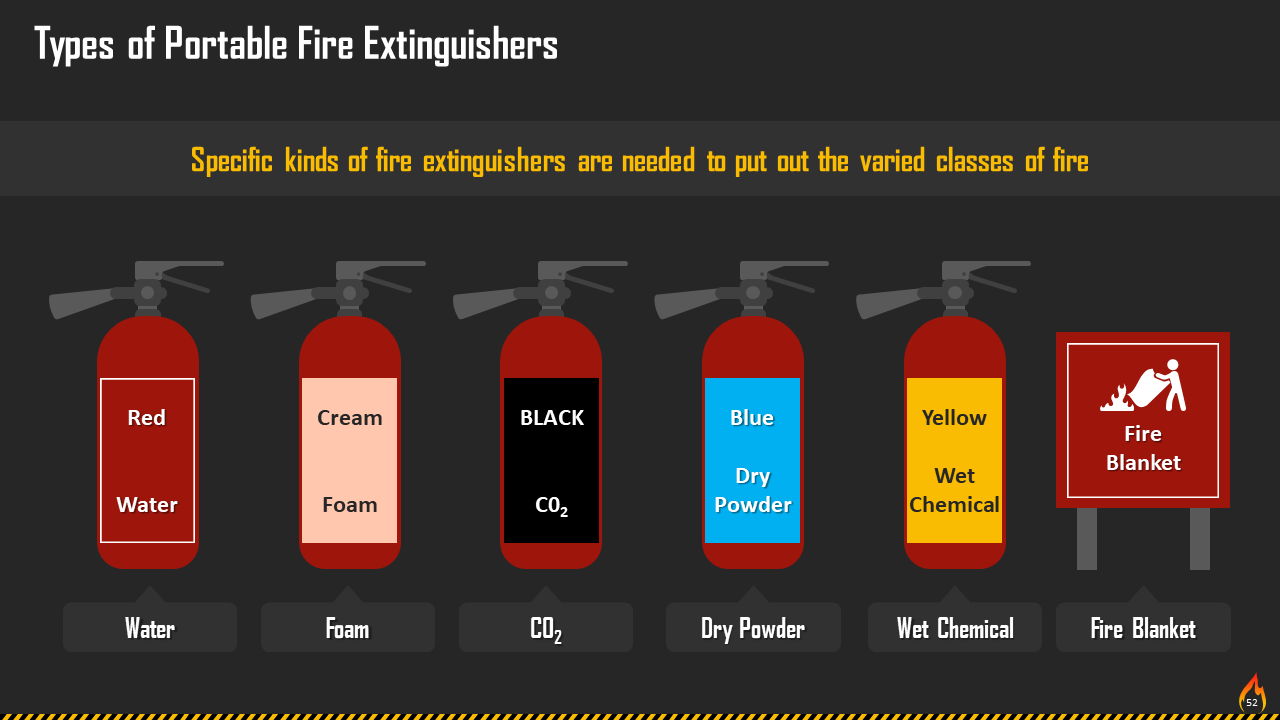
An organized understanding of portable fire extinguishers is necessary for efficient fire safety. Each is specifically designed for particular fire classes to respond appropriately to the various hazards:
Red (Water): For Class A fires, such as those involving wood, paper, and textiles.
Cream (Foam): Effective against Class A and B fires, including those involving flammable liquids.
Black (CO₂): Ideal for electrical fires and flammable liquids.
Blue (Dry Powder): Useful for Class A, B, C, and electrical fires.
Yellow (Wet Chemical): Useful for Class F fires involving cooking oils.
Fire Blanket: Good for smothering small fires and protecting people.
Knowing the right extinguisher type will help control fires quickly and effectively, reducing damage and increasing safety.
Template 8: Virtual Reality Fire Safety Training Program
The "Virtual Reality Fire Safety Training Program" slide is an important tool in designing an effective and immersive fire safety training plan. The slide contains the following key elements:
Module Name: A structured topic for training that enables comprehensive learning.
Content: Detailed information to ensure clarity and preparedness.
Start and End Dates: Clear timelines to track progress.
This slide will help organizations use virtual reality in advanced fire safety training, thereby ensuring higher engagement and retention. This way, teams are always better prepared for real-life fire emergencies, and safety is promoted with minimal risks involved.

Template 9: Fire Safety Management Training Flow Chart
Presenting the "Fire Safety Management Training Flow Chart" slide, a comprehensive tool to enhance fire safety awareness and preparedness. This slide highlights key components of managing fire safety training programs, including:
- Fire Prevention Rules: Educating teams on safety measures to prevent fire occurrences.
- Extinguisher Use Training: Ensuring effective handling of fire extinguishers.
- Record Maintenance: Keeping track of safety audits and compliance checks.
- Documentation: Organizing safety protocols and training materials.
This flow chart simplifies fire safety training management, ensuring systematic implementation and creating a safer environment for everyone.

Template 10: Fire Safety Improvement Plan Checklist
Download a comprehensive "Fire Safety Improvement Plan Checklist" PowerPoint slide to minimize fire risks effectively. This slide offers a detailed checklist of preventive and precautionary actions to enhance fire safety. Key tasks covered include:
- Installing smoke alarms in critical areas.
- Regularly changing smoke alarm batteries and testing their functionality.
- Installing and maintaining fire extinguishers.
- Conducting routine inspections of fire safety equipment.
- Ensuring compliance with fire safety regulations.
This checklist provides a structured approach to improving fire safety, ensuring proactive measures to protect lives and property. It is an essential tool for fostering a safer environment in any setting.

Template 11: Workplace Fire Inspection Safety Checklist
The "Workplace Fire Inspection Safety Checklist" is an essential tool for ensuring fire safety in the workplace. This checklist helps organizations handle and store fire extinguishers safely, ensuring they are easily accessible during emergencies. Key elements include:
- Clearly marked escape routes to facilitate smooth evacuation.
- Properly maintained fire extinguishers to tackle fires promptly.
- Regular inspections to identify and mitigate fire hazards.
Using this checklist enhances workplace preparedness, ensures compliance with fire safety regulations, and reduces risks, safeguarding lives and property. It streamlines fire safety management, making workplaces safer and more efficient.

Wrapping Up
A comprehensive fire safety plan is essential for every organization to ensure the well-being of employees and the protection of assets. Our Top 10 Fire Safety Templates will help you implement effective fire prevention strategies, establish clear evacuation plans, and maintain compliance with safety regulations. These templates simplify creating, managing, and tracking fire safety protocols in your workplace.
SlideTeam's 100% editable PPTs on fire safety are the perfect tools to save time and enhance preparedness. Download the presentation now to elevate your fire safety measures to the next level!