


Strategies For Workplace Fire Prevention And Emergency Response Training Ppt




Try Before you Buy Download Free Sample Product
 Impress Your
 Audience
 100%
100% Editable
 Save Hours
 of Time


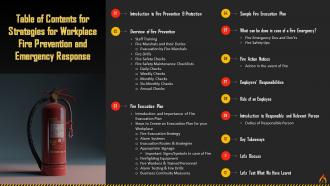
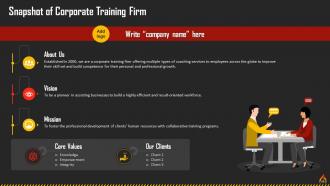
The PPT Training Module on Strategies for Workplace Fire Prevention and Emergency Response covers the essential elements of fire prevention such as Staff Training, Fire Marshals and their Duties, Fire Drills, Fire Safety Checks, and Fire Safety Maintenance Checklists. Next, the PowerPoint Module guides employees through crafting a foolproof Fire Evacuation Plan, covering Fire Evacuation Strategy, Alarm Systems, Evacuation Routes and Strategies, Appropriate Signage, Firefighting Equipment, Fire Wardens and Trained Personnel, Alarm Testing and Fire Drills, and Business Continuity Measures. It even provides a Sample Fire Evacuation Plan to give employees a practical understanding of how these strategies are brought to life. As the PPT Deck progress, Employees learn what to do during a Fire Emergency, with easy-to-follow Dos and Do nots and handy Fire Safety Tips. Understanding the Responsibilities of Employers and Employees in Fire Safet, along with the Duties of a Responsible Person, makes this PwerPoint Training Module an essential tool for businesses of all sizes. It also has Key Takeaways and Discussion Questions related to the topic to make the training session more interactive. The Deck, too, contains PPT slides on About Us, Vision, Mission, Goal, 30-60-90 Days Plan, Timeline, Roadmap, Training Completion Certificate, Energizer Activities, Client Proposal, and Assessment Form.
People who downloaded this PowerPoint presentation also viewed the following :
Content of this Powerpoint Presentation
Slide 4
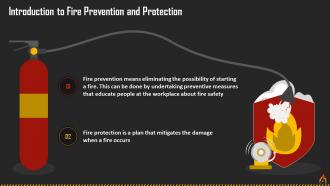
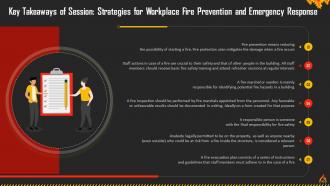
This slide gives the definition of Fire Prevention and Protection. Fire prevention means eliminating the possibility of starting a fire. Fire protection is a plan that mitigates the damage when a fire occurs.
Slide 5
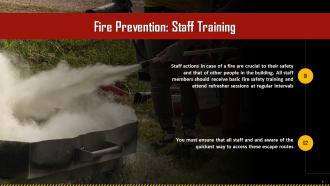
This slide discusses the importance of fire safety training for employees in a workplace. Staff actions in case of a fire are crucial to their safety and that of other people in the building. All staff members should receive basic fire safety training and attend refresher sessions at regular intervals
Slide 6
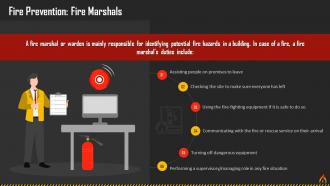
This slide talks about fire marshals in a workplace and also lists their responsibilities. A fire marshal or warden is mainly responsible for identifying potential fire hazards in a building.
Slide 7
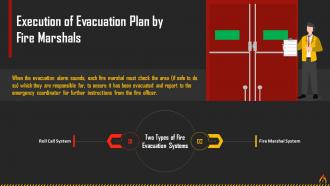
This slide discusses the execution of an evacuation plan by fire marshals in case of a fire emergency. When the evacuation alarm sounds, each fire marshal must check the area (if safe to do so) which they are responsible for, to ensure it has been evacuated and report to the emergency coordinator for further instructions from the fire officer.
Instructor’s Notes:
- Roll call system: In this, it is made sure that everyone has left the building and reached a safe place
- Fire marshal system: In this, the building is split into small manageable areas
Slide 8
This slide talks about the importance of conducting regular fire drills for staff to prevent fires. Once an emergency plan has been created and the staff has been trained in fire safety, it is essential to evaluate its effectiveness. You can do this by performing a fire drill, and these drills must be carried out at least once annually, depending on your fire risk assessment and the number of employees.
Slide 9
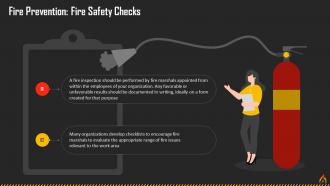
This slide discusses the importance of fire safety checks by fire marshals to help in prevention of fires. A fire inspection should be performed by fire marshals appointed from within the employees of your organization. Any favorable or unfavorable results should be documented in writing on a form created for that purpose.
Slide 10 to 14
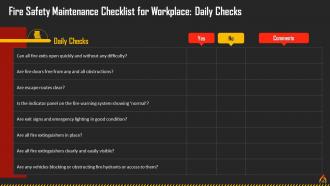
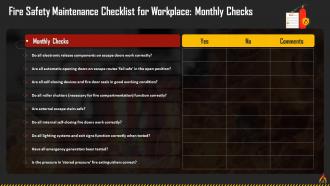
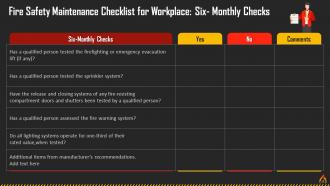
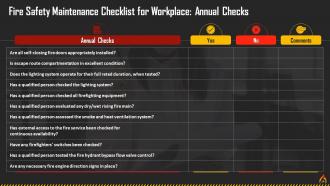
These slides contain daily, weekly, monthly, six-monthly, and annual checklist for Fire Safety Maintenance at a Workplace.
Slide 15
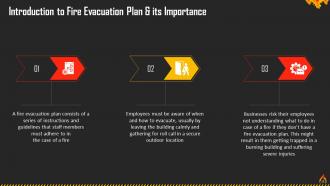
This slide introduces the concept of devising a fire evacuation plan for your workplace. It also talks about its importance. A fire evacuation plan consists of a series of instructions and guidelines that staff members must adhere to in the case of a fire.
Instructor’s Notes: The specifics of a fire evacuation plan will vary depending on the logistical issues and environmental factors specific to your business.
Slide 16
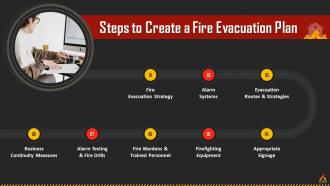
This slide lists the steps to create a fire evacuation plan for your workplace. The steps include devising an overall fire evacuation strategy, the installation & regular servicing of alarm systems, evacuation routes, appropriate signage, firefighting equipment, fire wardens & trained personnel, alarm testing & fire drills, and business continuity measures.
Slide 17
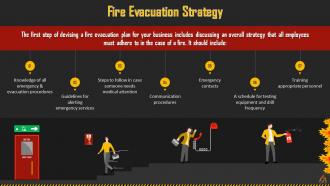
This slide discusses Step 1 of creating a fire evacuation plan. The first step of devising a fire evacuation plan for your business includes discussing an overall strategy that all employees must adhere to in the case of a fire.
Slide 18
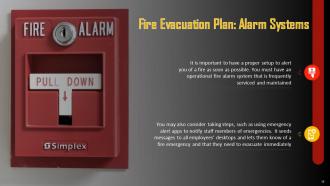
This slide talks about Step 2 of creating a fire evacuation plan. This step focuses on having a good alerting or alarm system. It is important to have a proper setup to alert you of a fire as soon as possible. You must have an operational fire alarm system that is frequently serviced and maintained.
Slide 19
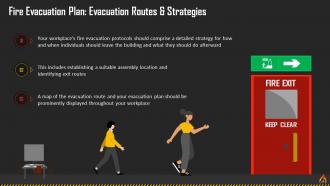
This slide discusses Step 3of creating a fire evacuation plan. It entails forming proper evacuation routes and procedures. Your workplace's fire evacuation protocols should comprise a detailed strategy for how and when individuals should leave the building and what they should do afterward.
Slide 20
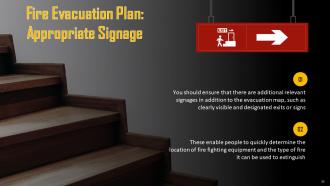
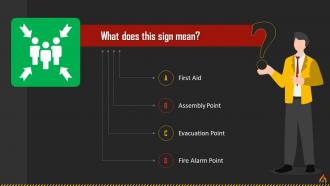
This slide talks about Step 4 of creating a fire evacuation plan. This step discusses the importance of having proper signage. You should ensure that there is additional relevant signage in addition to the evacuation map, such as clear designated exits or sign.
Slide 21
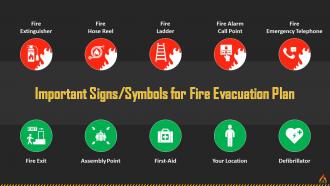
This slide illustrates signs and symbols that are used in the making of a fire evacuation plan.
Slide 22
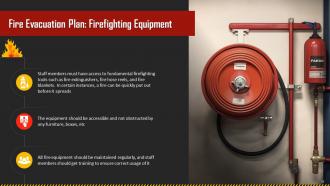
This slide discusses Step 5 of creating a fire evacuation plan. This step entails the importance of having proper firefighting equipment in your workplace. Staff members must have access to fundamental firefighting tools such as fire extinguishers, fire hose reels, and fire blankets. In certain instances, a fire can be quickly put out before it spreads.
Slide 23
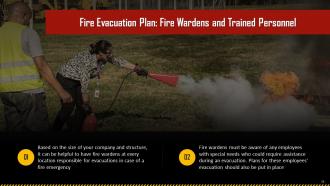
This slide talks about Step 6 of creating a fire evacuation plan. This step discusses about fire wardens and trained staff members. Based on the size of your company and structure, it can be helpful to have fire wardens at every location responsible for evacuations in case of a fire emergency.
Instructor’s Notes: A warden may be required for each floor in organizations that are spread across many levels of an office building.
Slide 24
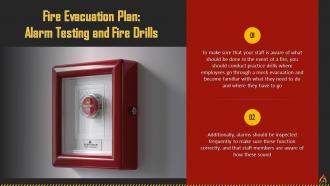
This slide discusses Step 7 of creating a fire evacuation plan. This step ensures testing of fire alarms and talks about the importance of fire drills. To make sure that your staff knows what to do in the event of a fire, you should conduct practice drills, where employees go through a mock evacuation and become familiar with what they need to do and where they have to go.
Slide 25
This slide talks about the last step of creating a fire evacuation plan. This is considering your business continuity measures. Your company will have specific requirements for continuing operations in the case of a fire. In general, you should create contingency plans based on scenario analysis.
Slide 26
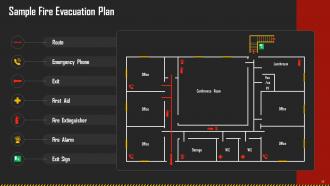
This slide displays a sample fire evacuation plan that can be implemented in a workplace.
Slide 28
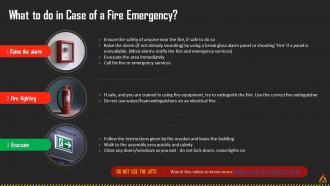
This slide talks about action in case of a fire emergency at the workplace. The first step is to raise an alarm, followed by fighting the fire (if possible and safe), and evacuating the building
Slide 29
This slide highlights the dos and don’ts in case of a fire emergency. You must raise an alarm, immediately go to the nearest exit, gather at an assembly point and remain calm. You must not use the lifts, hide under furniture, block the exits.
Slide 30
This slide shows some tips for fire safety in case of emergency. It is essential to stay calm during a fire emergency and evacuate immediately.
Slide 31
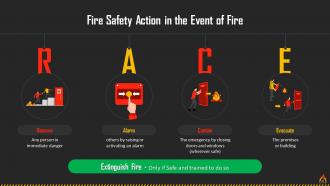
This slide informs us about action in the event of a fire. It depicts a fire safety acronym, RACE, which is short for Remove, Alarm, Contain, and Evacuate.
Slide 32
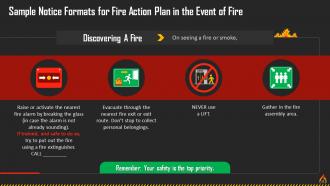
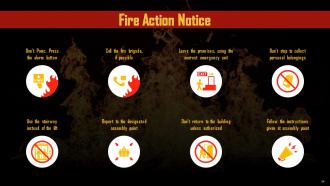
This slide showcases a fire action plan that can be put up at workplaces. This a sample notice format that is completely editable. Modify it according to your office’s geographical location and requirements. It tells people what do in case of a fire emergency.
Slide 33
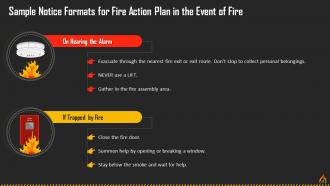
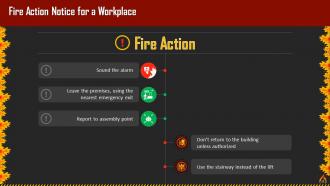
This slide talks about what action is required from people on hearing the fire alarm and if trapped by fire. This a sample notice format that is completely editable. Modify it according to your office’s geographical location and requirements. It tells people what do in case of a fire emergency.
Slide 34
This slide depicts an action plan that tells people what to do in case of a fire emergency. This a sample notice format that is completely editable. Modify it according to your office’s geographical location and requirements.
Slide 35
This slide depicts a sample action plan poster for a workplace that tells people what to do in case of a fire emergency. This is a sample notice format that is completely editable. Modify it according to your office’s geographical location and requirements
Slide 36
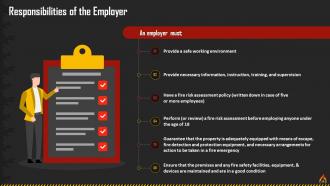
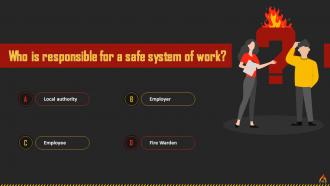
This slide highlights the responsibilities of an employer. An employer must provide a safe working environment, provide necessary information, instruction, training, and supervision.
Slide 37
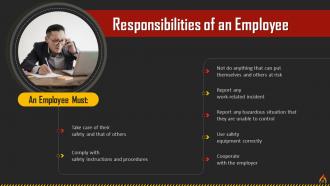
This slide talks about the role and responsibilities of a employee. They must take care of their safety and that of others, comply with safety instructions and procedures.
Slide 38
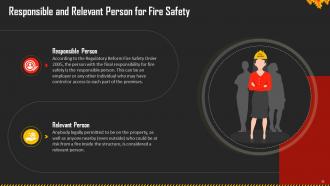
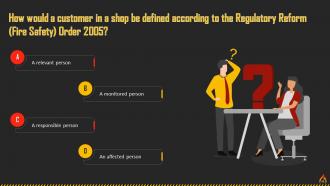
This slide introduces the concept of a responsible and relevant person. A responsible person is someone with the final responsibility for fire safety. Anybody legally permitted to be on the property, as well as anyone nearby (even outside) who could be at risk from a fire inside the structure, is considered a relevant person.
Slide 39
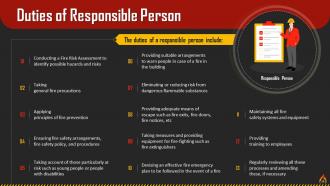
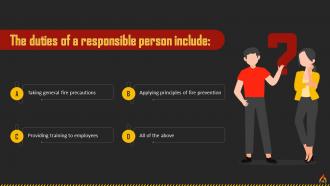
This slide lists the duties of a responsible person. The duties include conducting a fire risk assessment to identify possible hazards and risks, taking general fire precautions, applying principles of fire prevention, and more.
Slide 59 to 74
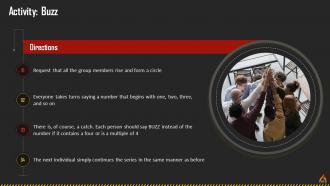
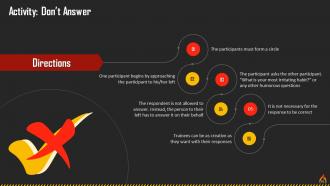
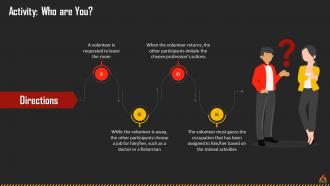
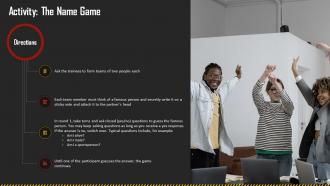
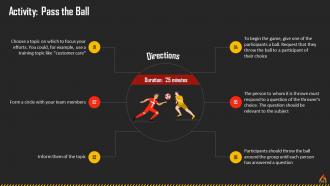
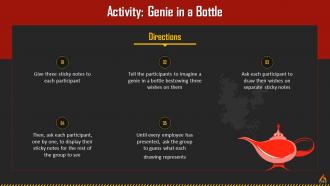
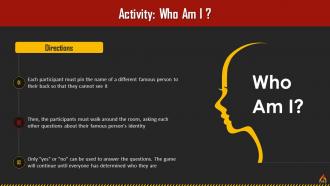
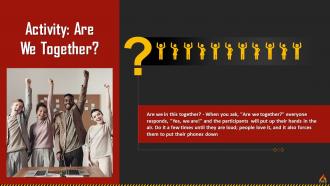
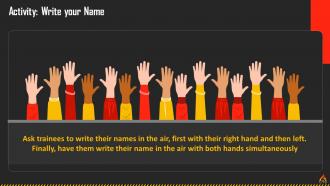
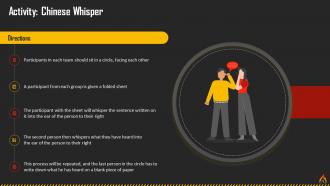
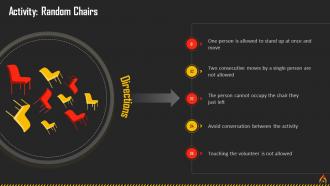
These slides contain energizer activities to engage the audience of the training session.
Slide 75 to 102
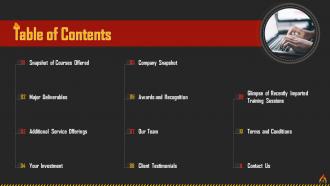
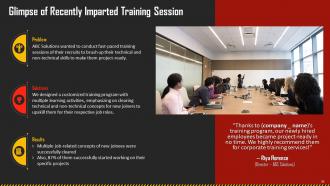
These slides contain a training proposal covering what the company providing corporate training can accomplish for the client.
Slide 103 to 105
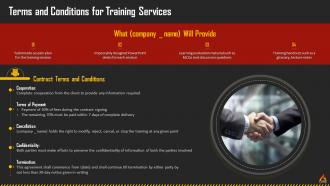
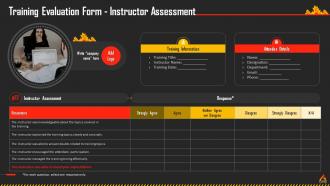
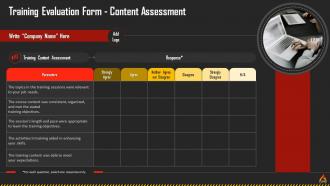
These slides include a training evaluation form for instructor, content and course assessment.
Strategies For Workplace Fire Prevention And Emergency Response Training Ppt with all 110 slides:
Use our Strategies For Workplace Fire Prevention And Emergency Response Training Ppt to effectively help you save your valuable time. They are readymade to fit into any presentation structure.






































FAQs for Strategies For Workplace Fire Prevention And Emergency
Kitchen fires cause like half of house fires - crazy right? Never walk away when you're cooking, that's the big one. Also keep your dryer vents clean and don't overload outlets with sketchy extension cords. Candles and cigarettes start way more fires than people realize. Heating equipment's another major cause. Smoke detectors on every floor, test them monthly (I always forget but you shouldn't). Really just pay attention around anything that gets hot and keep your electrical stuff in decent shape.
Honestly, smoke detectors are lifesavers - they'll wake you up way before you'd ever smell anything. Most people who die in fires actually suffocate from smoke while they're asleep, which is terrifying when you think about it. The alarm gives you those critical few minutes to grab everyone and get out before things go sideways. I'm terrible at remembering to check mine, but I try to do it when we spring forward or fall back with the clocks. That daylight saving thing is annoying but at least it's a good reminder! Test yours monthly and swap the batteries twice a year.
You need two ways out of every room, plus a spot outside where everyone meets up. Most people skip that meeting point thing but it's honestly the most important part - otherwise you're standing there freaking out about who's missing. Figure out who's helping kids or elderly family members ahead of time. Also know where your fire extinguishers are. The annoying part? You should practice every six months, but seriously, when you're panicking your brain goes blank and muscle memory kicks in. Just walk through your routes this weekend and time yourself - might as well start somewhere, right?
Check yours monthly - just peek at the pressure gauge (should be green), make sure the pin's there, and look for any obvious damage. Takes like 30 seconds honestly. Then get them professionally serviced once a year, which most places require anyway. The pros do all the internal stuff you can't see and will recharge it if needed. I keep forgetting to do mine until I see the calendar reminder pop up on my phone lol. Oh and jot down your monthly checks somewhere nearby - inspectors love that paperwork trail and it'll save you from scrambling later.
Honestly, fire safety education is a game changer - it literally saves lives. Kids pick up stuff like stop-drop-roll way faster than adults do, which is kind of hilarious but also awesome. Schools cover the basics, then community programs help reinforce it for whole families. The trick is making it hands-on instead of boring lectures. My cousin's kid still remembers everything from a demo with fake smoke three years ago! You're basically building habits that become automatic. If your workplace isn't doing regular training sessions, that's where I'd start. Even simple stuff makes a real difference.
So basically there's different fire types that need different stuff to put them out. Water's perfect for Class A - that's your normal fires like wood and paper. But don't even think about using water on Class B (gasoline, oil, etc.) because you'll just spread it everywhere. Those need foam or CO2. Same with Class C electrical fires - CO2 or dry chemical only, unless you want to get zapped. Class D is metal fires, which honestly sounds terrifying and I hope you never deal with that, but apparently they make special powder for it. Just double-check your extinguisher matches the fire type before you use it.
Ditch the PowerPoint approach - nobody pays attention anyway. Monthly fire drills are your friend, plus quarterly sessions covering evacuation routes and extinguisher basics. Role-playing scenarios work way better than lectures because people actually remember doing stuff. Oh, and document everything for compliance (annoying but necessary). Each floor needs a designated fire warden to lead evacuations. The more realistic you make these drills, the less people will panic during actual emergencies. Trust me, it's worth the extra effort when someone's life might depend on muscle memory kicking in.
Definitely call your local fire department first - they're way more helpful than you'd expect and would rather help you get it right than deal with emergencies later. Building codes vary tons depending where you are and what type of space you've got. Most places need the basics: exit signs, fire extinguishers, smoke detectors, sprinklers. OSHA stuff applies too if you have employees. Regular inspections are mandatory, plus you'll need to train your staff. Honestly, the fire marshal can make or break your day depending on how prepared you are, so don't wing it.
Dude, smart home stuff is actually legit for fire safety. Those smart smoke detectors will blow up your phone with alerts even when you're at work - plus they tell you which exact room is the problem. Way better than just hoping you'd hear a regular alarm beeping. You can get smart sprinkler systems that kick on automatically, and some hook up to your security to call 911. There are even outlets that'll cut power if they sense something's overheating, which honestly seems like magic to me. The phone notifications are the real game-changer though.
Hey! So basic rule - put them on something that won't catch fire or melt, and keep everything flammable like 12 inches away. Never walk away from a lit candle, even for two seconds (I learned this the hard way lol). Trim the wicks to about 1/4 inch before you light them. Honestly, if you've got pets or little kids running around, just get the fake ones - way less stress. Keep something nearby to put them out with. Oh and this is huge - set a phone alarm to remind yourself to blow them out before bed. I'm terrible at remembering that stuff!
So materials make a huge difference - drywall burns way slower than wood paneling, obviously. Wide hallways and multiple exits are lifesavers though. I've literally seen narrow corridors turn into death traps, it's terrifying. Fire-rated doors buy you time by blocking flames between rooms. Oh, and compartmentalization is key too - breaks up the fire's path. When you're building or renovating, go non-combustible in risky spots. Multiple escape routes aren't optional, trust me on this one.
Honestly, fires totally wreck people mentally. PTSD, anxiety, depression - the whole nightmare combo. Survivors get flashbacks and panic when they smell smoke. Can't sleep either, which makes everything worse. First responders? They're carrying trauma from multiple scenes, and tbh I don't think we talk about that enough. It destroys relationships too since getting back to "normal" feels impossible. My cousin went through this after their apartment fire. Anyway, definitely build mental health support into your emergency plans - counseling referrals, trauma resources, all of it. People need that stuff for real recovery.
Start by figuring out what fire risks your community actually faces - old buildings, wildfire zones, dense housing, whatever. Then hit the big wins: public education campaigns and updating building codes. Community fire drills work great, plus smoke detector programs for folks who can't afford them. Social media awareness campaigns are surprisingly effective (way more than I expected). Wildfire prevention education is crucial if you're near open land. Don't sleep on creating defensible space requirements around properties. Better emergency alert systems make a huge difference too. Oh, and make sure your fire department's properly funded - that's pretty obvious but gets overlooked sometimes.
Okay so first - just get out. Don't grab anything, seriously people do the dumbest things when they panic. If there's smoke, crawl on the floor since that's where the clean air is. Before opening doors, feel them with the back of your hand - hot door means find another way out. Once you're outside, call 911 and meet at whatever spot you planned ahead of time. And I can't stress this enough - don't go back in for anything. That's literally what firefighters train for. You should already have escape routes figured out though, not during the actual fire.
Dude, the new fire tech is wild. Thermal cameras don't cost a fortune anymore, and these AI detection systems can literally spot smoke before your regular alarms even notice. Drones are doing recon flights and dropping suppressants in crazy spots firefighters can't reach. Smart sprinklers target specific areas now and adjust their own pressure. Oh, and the foam they use is way less toxic than the old nasty stuff - which is nice I guess? But seriously, upgrade your building's detection system if you can. We're talking minutes saved, and that's huge when everything's on fire.
-
I'm happy to discover your PowerPoint presentations and templates. They met my expectations precisely. Very innovative!
-
You guys are life-saver when it comes to presentations. Honestly I cannot do much without your services. Thank you!!!