


Workplace Safety To Prevent Industrial Hazards Powerpoint Presentation Slides




Try Before you Buy Download Free Sample Product
 Impress Your
 Audience
 100%
100% Editable
 Save Hours
 of Time


Workplace safety refers to the provision of a safe working environment, with the limitation of elements that can cause damage, injury, and other negative outcomes in the workplace. Check out our professionally designed Workplace Safety to Prevent Industrial Hazards PowerPoint presentation. First, this deck covers the problems related to workplace incidents which include occupational diseases, occupation of fatal and injured employees, and safety violations by employees. Additionally, it covers the causes of accidents, the impact of accidents on employees and organizations. It also highlights why there is a need of workplace safety with detailed objectives. Moreover, this deck covers how to examine risks and hazards, It also lays emphasis on hazard identification and their control measures which includes air compressor hazards and safety guidelines, fire hazards and safety guidelines, Injuries from power tools with safety guidelines, chemical hazards with safety guidelines, and drug and alcohol abuse with safety guidelines. At last, it includes the recommended practices for safety management, penalties for non-compliance, and positive impact of workplace safety in an organization. Download this deck now.
People who downloaded this PowerPoint presentation also viewed the following :
Content of this Powerpoint Presentation
Slide 1: This slide displays the title workplace Safety to Prevent Industrial Hazards.
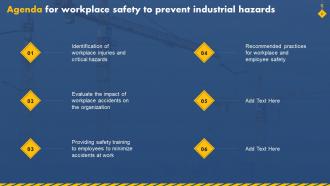
Slide 2: This slide displays the title Agenda for workplace safety to prevent industrial hazards.
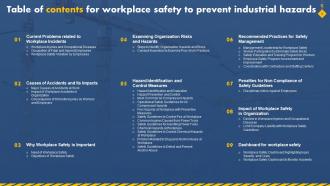
Slide 3: This slide exhibit table of content.
Slide 4: This slide exhibit table of content- Current problems related to workplace incidents.
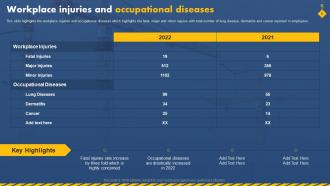
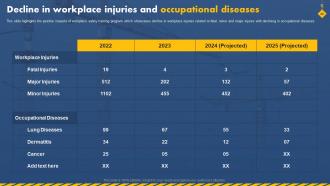
Slide 5: This slide highlights the workplace injuries and occupational diseases.
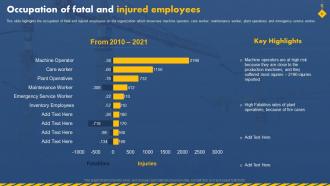
Slide 6: This slide highlights the occupation of fatal and injured employees on the organization.
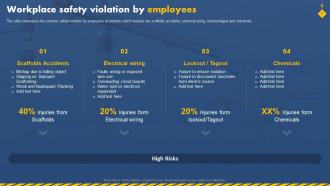
Slide 7: This slide showcases the common safety violation by employees at worksite which includes the scaffolds accidents, electrical wiring, lockout/tagout and chemicals.
Slide 8: This slide exhibit table of content- Causes of accidents and Its impacts.
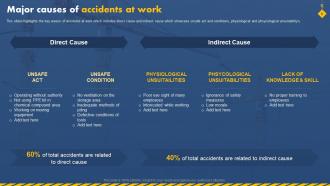
Slide 9: This slides highlights the key reason of accidents at work.
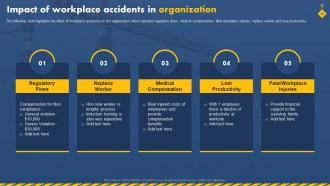
Slide 10: The following slide highlights the effect of workplace accidents on the organization.
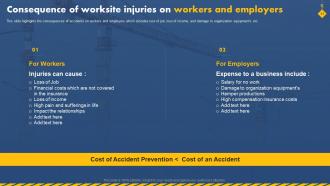
Slide 11: This slide highlights the consequences of accidents on workers and employers.
Slide 12: This slide exhibit table of content- Why workplace safety Is important
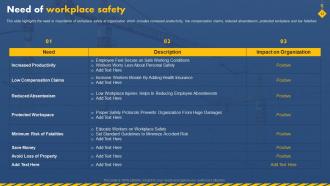
Slide 13: This slide highlights the need or importance of workplace safety at organization.
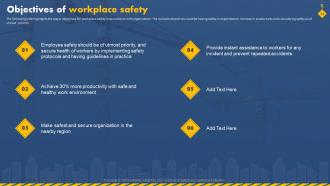
Slide 14: The following slide highlights the major objectives for workplace safety in accordance with organization.
Slide 15: This slide exhibit table of content- Examining organization risk and hazards
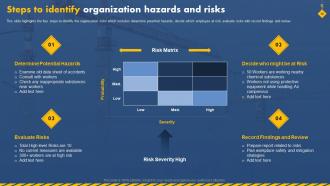
Slide 16: This slide highlights the four steps to identify the organization risks.
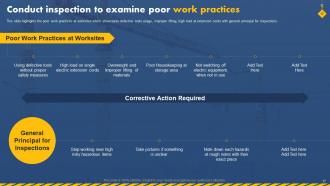
Slide 17: This slide highlights the poor work practices at worksites.
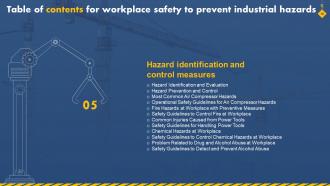
Slide 18: This slide exhibit table of content- Hazard identification and control measures.
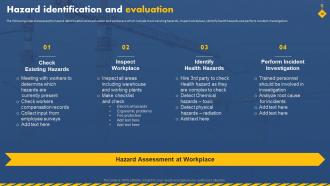
Slide 19: The following slide showcases the hazard identification and evaluation.
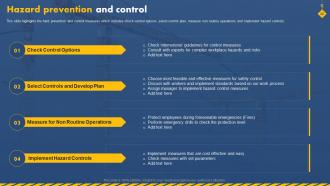
Slide 20: This slide highlights the hard prevention and control measures.
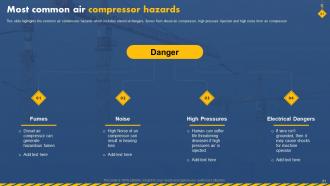
Slide 21: This slide highlights the common air compressor hazards.
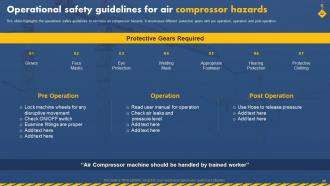
Slide 22: This slides highlights the operational safety guidelines to minimize air compressor hazards.
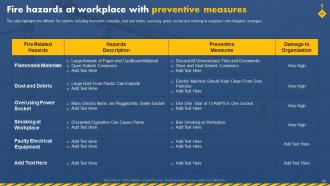
Slide 23: This slide highlights the different fire hazards including flammable materials, dust and debris, overusing power socket.
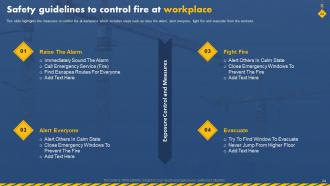
Slide 24: This slide highlights the measures to control fire at workplace.
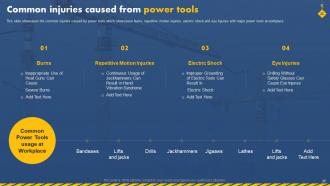
Slide 25: This slide showcases the common injuries caused by power tools.
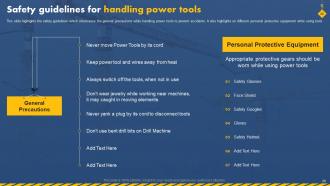
Slide 26: This slide highlights the safety guidelines which showcases the general precautions while handling power tools to prevent accidents.
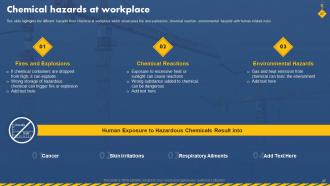
Slide 27: This slide highlights the different hazards from chemical at workplace.
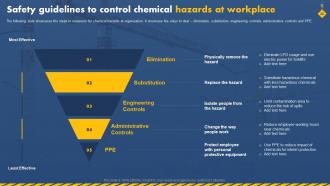
Slide 28: The following slide showcases the steps or measures for chemical hazards at organization.
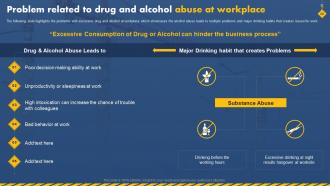
Slide 29: The following slide highlights the problems with excessive drug and alcohol at workplace.
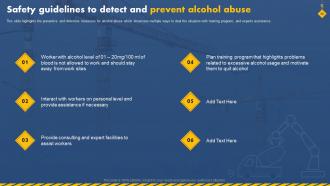
Slide 30: This slide highlights the preventive and detective measures for alcohol abuse.
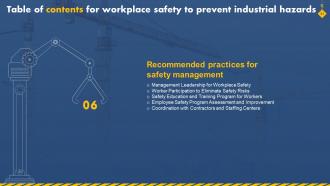
Slide 31: This slide exhibit table of content- Recommended practices for safety management.
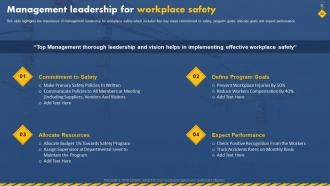
Slide 32: This slide highlights the importance of management leadership for workplace safety.
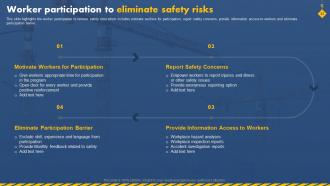
Slide 33: This slide highlights the worker participation to remove safety risks.
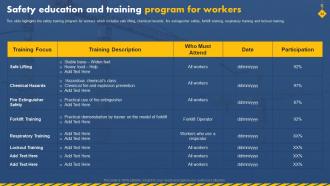
Slide 34: This slide highlights the safety training program for workers.
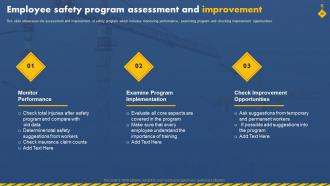
Slide 35: This slide showcases the assessment and improvement of safety program.
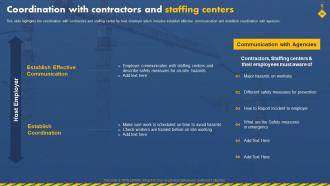
Slide 36: This slide highlights the coordination with contractors and staffing center.
Slide 37: This slide exhibit table of content- Penalties for non compliance of safety guideline
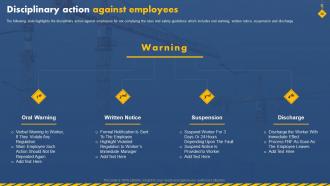
Slide 38: The following slide highlights the disciplinary action against employees for not complying the rules and safety guidelines.
Slide 39: This slide exhibit table of content- Impact of workplace safety In organization.
Slide 40: This slide highlights the positive impacts of workplace safety training program which showcases decline in workplace injuries.
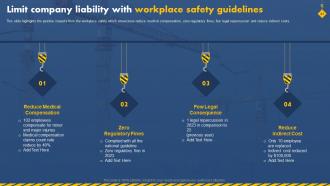
Slide 41: This slide highlights the positive impacts from the workplace safety.
Slide 42: This slide exhibit table of content- Dashboard for workplace safety.
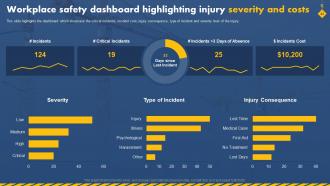
Slide 43: This slide highlights the dashboard which showcase the critical incidents, incident cost, injury consequence, type of incident and severity level of the injury.
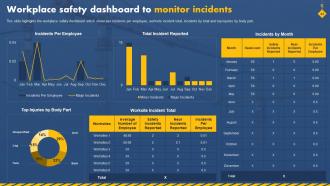
Slide 44: This slide highlights the workplace safety dashboard.
Slide 45: This slide presents title for additional slides.
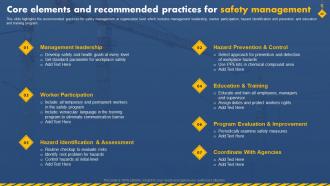
Slide 46: This slide highlights the recommended practices for safety management at organization level.
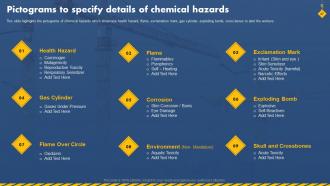
Slide 47: This slide highlights the pictograms of chemical hazards.
Slide 48: This slide presents your company's vision, mission and goals.
Slide 49: This slide depicts posts for past experiences of clients.
Slide 50: This slide exhibit Timeline.
Slide 51: This slide display Blub or idea.
Slide 52: This slide shows puzzle for displaying elements of company.
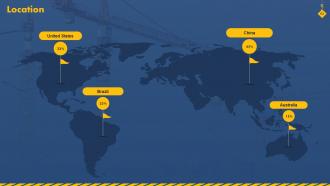
Slide 53: This slide display Location.
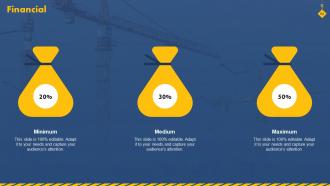
Slide 54: This slide showcase financial.
Slide 55: This slide exhibits yearly profits stacked line graph for different products.
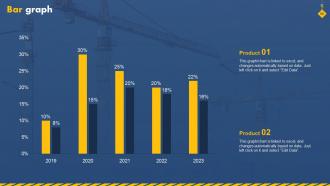
Slide 56: This slide displays yearly bar graph for different products.
Slide 57: This is thank you slide & contains contact details of company like office address, phone no., etc.
Workplace Safety To Prevent Industrial Hazards Powerpoint Presentation Slides with all 62 slides:
Use our Workplace Safety To Prevent Industrial Hazards Powerpoint Presentation Slides to effectively help you save your valuable time. They are readymade to fit into any presentation structure.






FAQs for Workplace Safety To Prevent Industrial Hazards
So you need four main things covered. Hazard identification procedures first - make sure everyone knows what dangers to watch for in their areas. Emergency response plans come next, and I'm talking real detailed stuff, not just "call 911" nonsense. Don't forget mandatory training for everyone plus refresher courses throughout the year. Last thing is incident reporting that actually works - people won't report if they're scared of getting in trouble. Honestly, the biggest mistake is letting your policy sit in some dusty binder. Review it regularly and get input from your team to keep it useful.
Honestly, make it everyone's thing, not just the boss's problem. Get leadership actually walking around wearing hard hats - people pay attention to that stuff. Those safety meetings where someone drones through PowerPoint? Skip it. Do real scenarios instead. Here's the key part though - don't punish people for pointing out hazards, actually reward them for speaking up. Your team knows the dangers way better than management does anyway, so let them help write the rules. Oh and start small - pick one thing they've been complaining about and fix it this week.
Honestly, training is huge for workplace safety - it's your best shot at preventing accidents. You've got to teach people how to spot hazards and use equipment properly. Here's the thing though - nobody remembers stuff from reading a manual once (learned that the hard way). Regular practice sessions work way better. Focus on your biggest problem areas first and build training around those specific risks. Oh, and keep updating it because outdated safety info is pretty much useless. People retain hands-on training so much better than just theoretical stuff.
Honestly, tech makes safety compliance so much less of a headache. Those wearable devices are pretty slick - they'll monitor air quality, noise, even catch if someone takes a fall. Safety apps are game-changers too. Your team can report stuff instantly, pull up protocols right away, and get alerts when hazards show up. Oh, and they automate training tracking which saves tons of time. My buddy's company uses one that schedules safety checks automatically. Just don't pick something that'll bog everyone down with extra paperwork - that defeats the whole point.
So the big ones are slips, falls, and trips - honestly falls cause like a third of all workplace injuries which is nuts. Bad desk setup will mess up your back and wrists over time. Then you've got chemical exposure and getting hurt by equipment. Most of this stuff is super preventable though. Keep walkways clear, lift with your legs not your back, wear whatever safety gear they give you. Oh and always follow lockout procedures when working on machines - that one's huge. Do a quick look around your workspace sometime, you'll probably notice things you missed before.
Look, you gotta jump on every incident right away - even the tiny stuff that seems stupid. Get witness statements while people still remember, then dig deeper than just "who screwed up." What I mean is, figure out why your system let it happen in the first place. Document everything and make actual action plans with real deadlines. Oh, and here's the big one - your team has to feel safe reporting this stuff without getting thrown under the bus. I've watched companies ignore the small incidents, then they're all surprised pikachu face when something major hits. No reports = you're basically gambling with safety.
So OSHA basically sets the minimum standards for most workplaces, but it really depends on your industry. Construction has crazy strict fall protection rules compared to like, regular offices. Healthcare places have to deal with bloodborne pathogen stuff, and manufacturing usually needs machine guarding plus hazcom training. Some states have their own OSHA programs too which can add extra requirements - honestly it gets complicated fast. I'd definitely check OSHA's industry pages for your specific sector. Worth talking to a safety pro too since missing something important could bite you later.
First thing - walk through your workplace with your team. They'll spot stuff you miss since they're there every day. Document what you find and figure out which risks need fixing ASAP vs later. Honestly, the hardest part isn't finding problems, it's getting people to actually care about them. Share everything through meetings and put up visual reminders around the office. Rate each risk by how likely it is and how bad it could be. Don't forget to circle back in a few weeks - sometimes people just ignore safety stuff if you're not checking on it.
Honestly, the trick is making them feel like it's their thing, not just corporate BS being shoved down their throats. Regular meetings where people can actually speak up work wonders - nobody likes being talked *at* for an hour. Competitions are surprisingly effective too; turns out adults still love winning stuff. Your training needs to match what they're actually doing daily, not some random slideshow. Oh, and management has to walk the walk - if the boss ignores safety rules, good luck getting buy-in from anyone else. Maybe try one interactive thing next meeting and see how it goes?
Yeah, so when someone's dealing with stress or anxiety at work, their focus gets totally shot. Makes sense, right? You're more likely to mess up safety protocols or have accidents when your brain's elsewhere. Fatigue kicks in too, plus slower reaction times - super dangerous around machinery. Most companies barely touch on this in safety training, which is ridiculous honestly. But workplaces that actually support people's mental health? They see way fewer physical accidents too. I'd definitely push for stress management programs or mental health resources if you can. Protects everyone in the long run.
Dude, you're gonna be surprised how much you're already bleeding money on preventable accidents. Safety investments literally pay for themselves within a year or two through productivity gains alone. Your insurance premiums drop, workers' comp claims disappear, and people actually stick around longer when they don't think you're trying to kill them. Honestly, some of the best ROI stories I've heard come from companies that just started giving a damn about safety. Track what you're spending on incidents right now - the number's probably way higher than you think. Plus you dodge those reputation-crushing lawsuits that can seriously mess up your budget.
Honestly, the numbers don't lie - start with incident rates and workers' comp claims. Near-miss reports are gold too since they show you problems before someone gets hurt. I always tell people to survey their teams because workers will straight up tell you if the training sucks or if they actually feel safer. Participation rates matter, but here's the thing - the real test is watching if people follow protocols when they think nobody's looking. That's where you see if it's actually working. Pick maybe 2-3 metrics that fit your workplace and check them monthly. Don't overcomplicate it.
Honestly, leadership makes or breaks safety culture. Good managers actually follow the rules themselves and don't push productivity over safety - that's when people feel comfortable speaking up about problems. I've worked places where bosses just talked about safety but didn't really care, and you could tell from how many accidents happened. The best leaders invest in decent training and equipment. They also make sure you won't get in trouble for reporting issues (which is huge, honestly). Try pushing for regular safety meetings where management shows up and actually pays attention. That's usually a good sign they're not just going through the motions.
So an ergonomic assessment is basically someone checking out your workspace to see what's gonna mess up your body over time. They watch how you sit, move around, lift stuff - looking for those repetitive motions that'll bite you later. Honestly, it's so much smarter to be proactive about this stuff. You get real advice on tweaking your chair height, where to put your monitor, desk setup, all that. My back's been bugging me lately so I'm actually thinking about getting one done. Way better than waiting until you're in serious pain, you know?
Dude, safety stuff really does make a difference. Your team feels way more valued when they're not constantly watching their backs for hazards. Honestly, it's kind of a no-brainer - people just work better when they aren't stressed about getting injured. Fewer accidents means you're not dealing with constant downtime and worker comp headaches either. Plus turnover drops because who wants to stick around somewhere dangerous? I'd start by just asking your employees what scares them safety-wise. You'll probably hear things you never even thought about. When people can focus on actual work instead of dodging problems, productivity takes care of itself.
-
These stunning templates can help you create a presentation like a pro.
-
The designs are very attractive and easy to edit. Looking forward to downloading more of your PowerPoint Presentations.