


Manual For Occupational Health And Safety Powerpoint Presentation Slides




Try Before you Buy Download Free Sample Product
 Impress Your
 Audience
 100%
100% Editable
 Save Hours
 of Time


Grab our insightfully created template on the Manual for Occupational Health and Safety Workplace safety that addresses the significance of security at the workspaces. Our Workplace Safety deck covers workplace problems, including occupational diseases, the occupation of fatal and injured employees, and employee safety violations. Additionally, it covers the causes of accidents and their impact on employees and organizations. Further, our occupational well being and security module highlight the need for workplace safety with detailed objectives. Moreover, it demonstrates how to assess risks and hazards and focuses on hazard identification and control procedures. The control measures include air compressor and safety guidelines, fire hazards and safety guidelines, Injuries from power tools with safety guidelines, etc. At last, it comprises the recommended practices for safety management, penalties for non compliance, and its positive impact. Download this 100 percent editable presentation and get access to our highly researched and skillfully designed product.
People who downloaded this PowerPoint presentation also viewed the following :
Content of this Powerpoint Presentation
Slide 1: This slide introduces Manual for Occupational Health and Safety. Commence by stating Your Company Name.
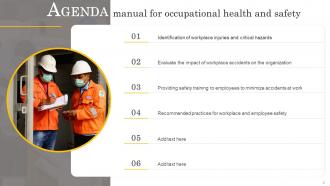
Slide 2: This slide depicts the Agenda of the presentation.
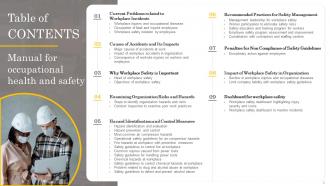
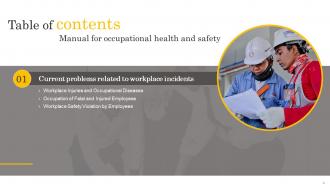
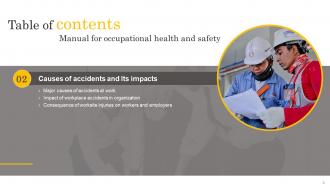
Slide 3: This slide incorporates the Table of Contents.
Slide 4: This slide showcases the Title for the Topics to be covered in the next template.
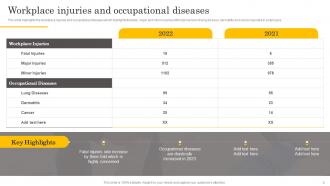
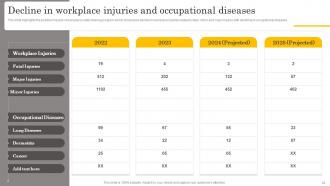
Slide 5: This slide highlights the workplace injuries and occupational diseases which highlights the fatal, major and minor injuries with total number of lung disease, dermatitis and cancer reported in employees.
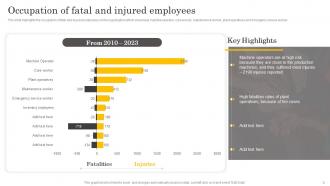
Slide 6: This slide reveals the occupation of fatal and injured employees on the organization which showcase machine operator, care worker, maintenance worker, plant operatives and emergency service worker.
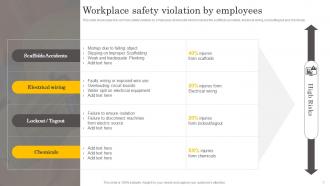
Slide 7: This slide elucidates the common safety violation by employees at worksite.
Slide 8: This slide mentions the Heading for the Contents to be discussed further.
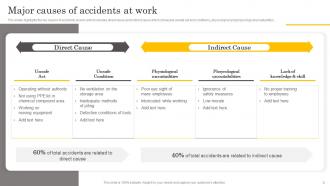
Slide 9: This slides states the key reason of accidents at work which includes direct cause and indirect cause.
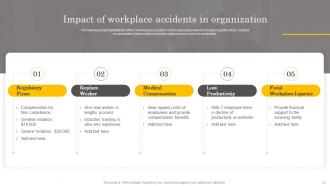
Slide 10: This slide shows the Impact of workplace accidents in organization.
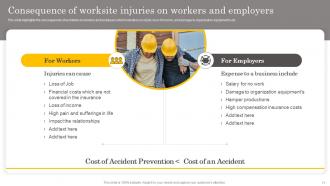
Slide 11: This slide indicates the consequences of accidents on workers and employers which includes loss of job, loss of income, and damage to organization equipment's etc.
Slide 12: This slide contains the Title for the Ideas to be discussed further.
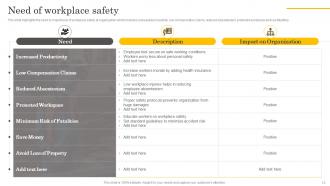
Slide 13: This slide focuses on the Need of workplace safety.
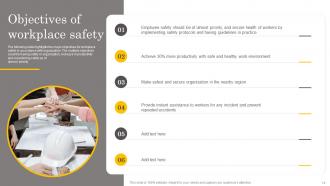
Slide 14: The following slide highlights the major objectives for workplace safety in accordance with organization.
Slide 15: This slide elucidates the Heading for the Components to be covered in the upcoming template.
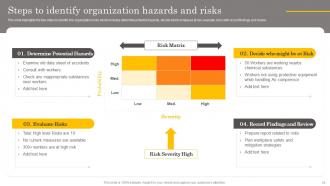
Slide 16: This slide incorporates the four steps to identify the organization risks.
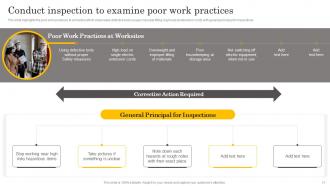
Slide 17: This slide deals with the poor work practices at worksites which showcases defective tools usage, improper lifting, high load at extension cords with general principal for inspections.
Slide 18: This slide exhibits the Title for the Contents to be covered next.
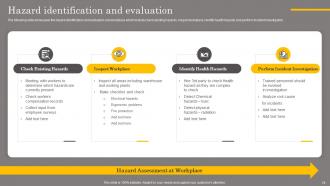
Slide 19: The following slide showcases the hazard identification and evaluation and workplace which includes check existing hazards, inspect workplace, etc.
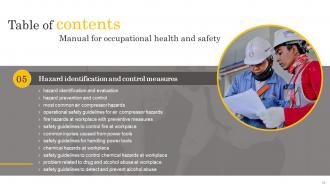
Slide 20: This slide focuses on the hard prevention and control measures.
Slide 21: This slide highlights the common air compressor hazards.
Slide 22: This slide displays Operational safety guidelines for air compressor hazards.
Slide 23: This slide showcases the different fire hazards including flammable materials, dust and debris, overusing power socket and smoking at workplace with mitigation strategies.
Slide 24: This slide reveals the measures to control fire at workplace which includes steps such as raise the alarm, alert everyone, fight fire and evacuate from the worksite.
Slide 25: This slide presents the Common injuries caused from power tools.
Slide 26: This slide highlights the safety guidelines which showcases the general precautions while handling power tools to prevent accidents.
Slide 27: This slide states the different hazards from chemical at workplace which showcases fire and explosions, chemical reaction, environmental hazards with human related risks.
Slide 28: The following slide showcases the steps or measures for chemical hazards at organization.
Slide 29: The following slide elucidates the problems with excessive drug and alcohol at workplace which showcases the alcohol abuse leads to multiple problems and major drinking habits that creates issues for work.
Slide 30: This slide mentions the preventive and detective measures for alcohol abuse which showcase multiple ways to deal the situation with training program, and experts assistance.
Slide 31: This slide incorporates the Heading for the Ideas to be covered in the forth-coming template.
Slide 32: This slide signifies the importance of management leadership for workplace safety which includes four key steps commitment to safety, program goals, allocate goals and expect performance.
Slide 33: This slide portrays the worker participation to remove safety risks which includes motivate workers for participation, report safety concerns, provide information access to workers and eliminate.
Slide 34: This slide highlights the safety training program for workers.
Slide 35: This slide showcases the assessment and improvement of the safety program.
Slide 36: This slide indicates the coordination with contractors and staffing center by host employer which includes establish effective communication and establish coordination with agencies.
Slide 37: This slide deals with the Title for the Topics to be discussed next.
Slide 38: The following slide talks about the disciplinary action against employees for not complying the rules and safety guidelines.
Slide 39: This slide exhibits the Title for the Topics to be covered in the following template.
Slide 40: This slide shows the Decline in workplace injuries and occupational diseases.
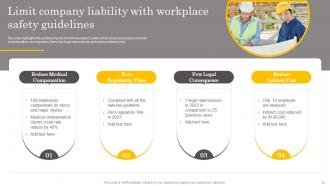
Slide 41: This slide mentions the positive impacts from the workplace safety which showcases reduce medical compensation, zero regulatory fines, few legal repercussion and reduce indirect costs.
Slide 42: This slide indicates the Heading for the Contents to be discussed further.
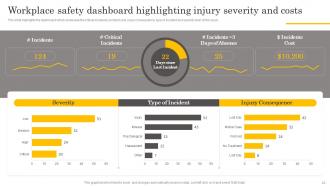
Slide 43: This slide represents the dashboard which showcases the critical incidents, incident cost, injury consequence, type of incident and severity level of the injury.
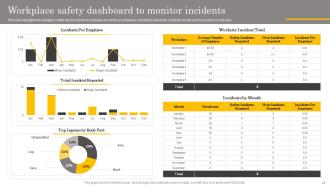
Slide 44: This slide highlights the workplace safety dashboard, presenting the incidents per employee, worksite incident total, incidents by total and top injuries by body part.
Slide 45: This is the Icons slide containing all the Icons used in the plan.
Slide 46: This slide is used to depict some Additional information.
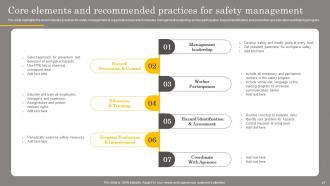
Slide 47: This slide displays the Core elements and recommended practices for safety management.
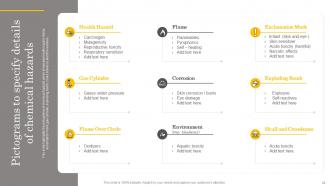
Slide 48: This slide highlights the pictograms of chemical hazards which showcase health hazard, flame, gas cylinder, exploding bomb, etc.
Slide 49: This slide contains the Clustered column chart.
Slide 50: This slide exhibits information related to the Financial topic.
Slide 51: This slide shows a Magnifying glass for minute details.
Slide 52: This slide elucidates the organization's Mind map.
Slide 53: This is the Puzzle slide with related imagery.
Slide 54: This slide includes the Post it notes for reminders and deadlines.
Slide 55: This slide depicts the Company's Timeline.
Slide 56: This is the Idea generation slide for encouraging innovative ideas.
Slide 57: This is the Thank you slide for acknowledgement.
Manual For Occupational Health And Safety Powerpoint Presentation Slides with all 62 slides:
Use our Manual For Occupational Health And Safety Powerpoint Presentation Slides to effectively help you save your valuable time. They are readymade to fit into any presentation structure.
-
Manual for Occupational Health and Safety
-
Agenda Manual for Occupational Health and Safety
-
Manual for occupational health and safety
-
Manual for occupational health and safety
-
Workplace injuries and occupational diseases
-
Occupation of fatal and injured employees
-
Workplace safety violation by employees
-
Manual for occupational health and safety
-
Major causes of accidents at work
-
Impact of workplace accidents in organization
-
Consequence of worksite injuries on workers and employers
-
Manual for occupational health and safety
-
Need of workplace safety
-
Objectives of workplace safety
-
Manual for occupational health and safety
-
Steps to identify organization hazards and risks
-
Conduct inspection to examine poor work practices
-
Manual for occupational health and safety
-
Hazard identification and evaluation
-
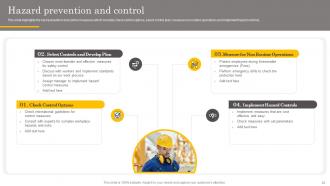
Hazard prevention and control
-
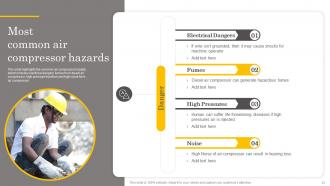
Most common air compressor hazards
-
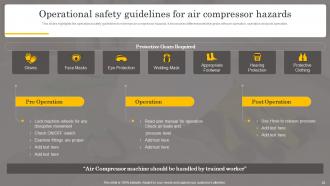
Operational safety guidelines for air compressor hazards
-
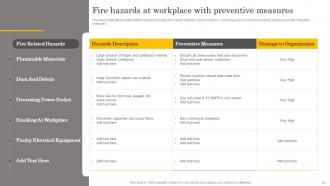
Fire hazards at workplace with preventive measures
-
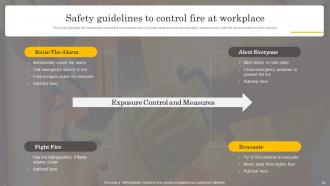
Safety guidelines to control fire at workplace
-
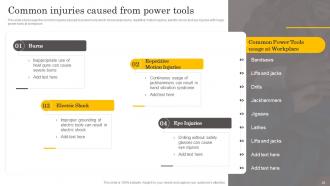
Common injuries caused from power tools
-
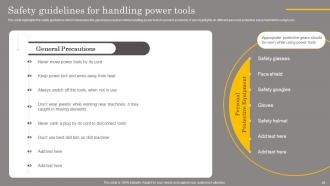
Safety guidelines for handling power tools
-
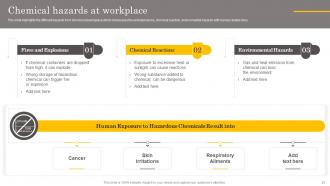
Chemical hazards at workplace
-
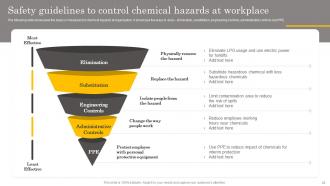
Safety guidelines to control chemical hazards at workplace
-
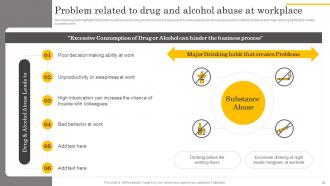
Problem related to drug and alcohol abuse at workplace
-
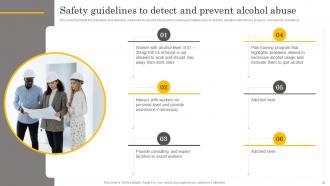
Safety guidelines to detect and prevent alcohol abuse
-
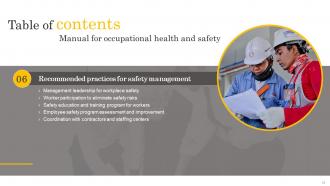
Manual for occupational health and safety
-
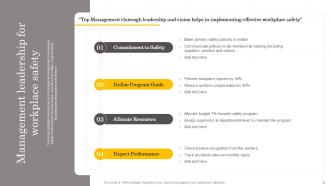
Management leadership for workplace safety
-
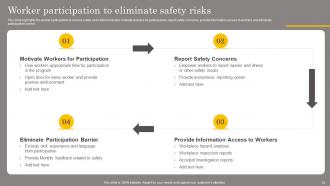
Worker participation to eliminate safety risks
-
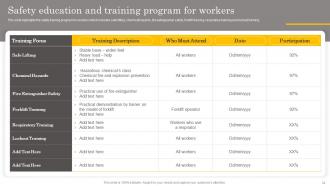
Safety education and training program for workers
-
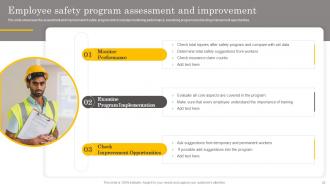
Employee safety program assessment and improvement
-
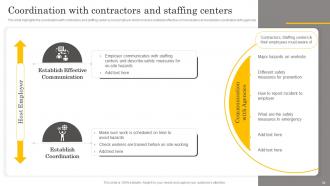
Coordination with contractors and staffing centers
-
Manual for occupational health and safety
-
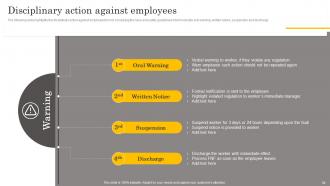
Disciplinary action against employees
-
Manual for occupational health and safety
-
Decline in workplace injuries and occupational diseases
-
Limit company liability with workplace safety guidelines
-
Manual for occupational health and safety
-
Workplace safety dashboard highlighting injury severity and costs
-
Workplace safety dashboard to monitor incidents
-
Icons slide
-

Additional slides
-
Core elements and recommended practices for safety management
-
Manual for Occupational Health and Safety
-
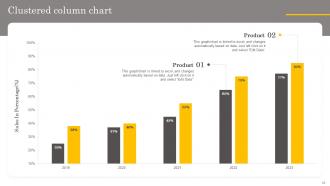
Clustered column chart
-
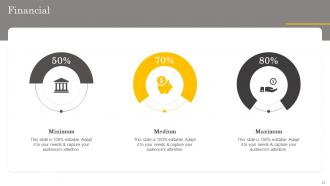
Financial
-
Magnifying glass
-
Mind map
-
Puzzle
-
Post it notes
-
Timeline
-
Idea generation
-

Manual for Occupational Health and Safety
-

-

-

-

-

FAQs for Manual For Occupational Health And Safety
Start with getting leadership on board - seriously, if management doesn't care, you're fighting an uphill battle. You'll need solid hazard identification, employee training that actually sticks, and a reporting system where people aren't scared to speak up. Regular safety inspections are clutch too. Skip the boring manual approach though - make policies people can actually understand and follow. When incidents happen, dig deep to figure out why. I'd audit what you've got now first and tackle the worst gaps. Also make sure incident investigations are thorough, not just box-checking exercises.
Yeah, it totally depends on what kind of work you're doing. Construction workers are dealing with falls and heavy equipment, healthcare has all those biological hazards plus lifting patients constantly. Office jobs? More about bad ergonomics and stuffy air - though honestly, some of those desk setups are brutal on your back. Manufacturing is its own nightmare with machinery and chemicals everywhere. Start by just walking around and spotting what could actually hurt someone. Then fix the big stuff first - like proper ventilation systems. Training and policies come next. PPE is basically your backup plan when everything else fails. Don't skip the risk assessment part though.
Look, your coworkers are literally what makes safety work - management can draft fancy policies all day but it's meaningless if people on the floor don't care. You gotta speak up about sketchy stuff you see and actually follow the rules, even when they're annoying. The real game-changer is when everyone feels safe reporting close calls without getting thrown under the bus. Hold each other accountable, ya know? I've seen too many places where safety is just some poster on the wall. Start doing the right thing yourself and others usually follow. Your team has way more power than you think.
Start by walking around your workplace with the people who actually do the job every day - they spot hazards you'd never think of. Write down everything: machinery, chemicals, but also weird stuff like bad lighting or repetitive tasks. At each spot, ask "what could go wrong here?" Then use a basic risk matrix to score how likely and how bad each risk could be. Tackle the scary high-risk stuff first, obviously. Oh, and don't forget to update this regularly when things change. The whole point is getting everyone involved, not just filling out forms nobody reads.
Respiratory problems are the worst - all that dust and chemical crap really gets to you. Skin issues and hearing loss are super common too, plus repetitive strain stuff from doing the same motions constantly. Honestly, PPE is your best friend even if it's annoying to wear. Good ventilation makes a huge difference, and I'd definitely try to take breaks when you can (though I know deadlines suck). Oh, and check your workspace setup - bad ergonomics will wreck your back eventually. Just look around your area first and figure out what's actually risky for you specifically, then tackle those things first.
Dude, ergonomics seriously cuts down on workplace injuries. Your employees won't be dealing with constant back pain or repetitive strain stuff when workstations actually fit how people move. Fewer sick days, way less workers' comp drama. I mean, it sounds super obvious but you'd be surprised how many places ignore this. Ask your team what's bugging them after their shifts - they'll tell you exactly what needs fixing. My buddy's company did this and their injury reports dropped like crazy. It's one of those things that just makes sense once you see the numbers.
So you've got OSHA at the federal level, then whatever your state requires on top of that. State rules can actually be tougher, which is kind of annoying but makes sense. Regular safety training is a must, plus you'll want someone designated as your safety officer if you can swing it. Keep incident logs updated and make sure everyone has proper protective gear. Oh, and workplace inspections - do them consistently. Honestly though, being proactive beats scrambling after something goes wrong. Document what you're doing, fix hazards right away, and maybe start with a full safety audit to see where you're at now.
So there's actually a ton of tech that can help with workplace safety. Wearable sensors track things like air quality and if someone's getting too tired. AI cameras spot risky behavior as it happens. Oh, and VR training is honestly pretty awesome - workers can practice sketchy situations without getting hurt. You've also got IoT stuff monitoring equipment so it flags problems before things break down and cause accidents. Mobile apps make reporting incidents way faster too. I'd say just pick one thing that tackles your worst safety issue first, then expand once you see how it goes. Don't try to do everything at once.
Start with a safety audit to figure out your biggest risks first. Then build three main programs around that: basic safety orientation for everyone, job-specific training for different roles, and emergency procedures. The emergency training is honestly what trips people up most but it's crucial. Supervisors need their own separate training on how to handle incidents and reporting - learned that one the hard way. Generic safety videos are pretty much useless, so make everything specific to your actual workplace. Oh, and don't skip the refresher sessions because people definitely get lazy about safety over time.
So there's two types of metrics you'll want to watch. The obvious stuff is injury rates, workers comp claims, lost time - but that's all after-the-fact data. Way better to track leading indicators like training completion rates, how often people report near-misses, and safety audit scores. Near-miss reporting is honestly the best metric because it means people actually trust the system enough to speak up. Do quarterly safety culture surveys too - sometimes the numbers look good but employees hate the program, you know? Start with baseline measurements, then just track trends over time.
So psychological safety is basically about stress, burnout, that gnawing workplace anxiety, mental fatigue - you know the drill. Mental health check-ins help a ton. Same with stress management training and building environments where people actually feel safe to speak up without getting thrown under the bus. Work-life balance policies are pretty much non-negotiable these days. Here's the thing though - mental health incidents cost just as much as someone breaking their arm on the job. I'd start with employee surveys to figure out where your stress hotspots are, then build solutions around those specific problems.
First things first - get medical help if anyone's hurt. After that, you've got 24 hours to document everything (and trust me, the paperwork sucks but you can't skip it). Take photos, talk to witnesses, file reports with your safety authority. Here's the thing though - don't just check boxes and move on. Actually dig into what caused it. Get your team involved in figuring out solutions. Update your safety protocols based on what you learn. I've seen too many places treat accidents like isolated incidents when they're usually symptoms of bigger issues. Make sure everyone knows about any changes you implement.
Dude, culture beats policies every single time when it comes to workplace safety. If your boss actually cares about safety (versus just pretending to), people will follow the rules and speak up about problems. But in a crappy environment where everyone's stressed and scared? That's accident city right there. Short sentences work better sometimes. You can't just talk about safety - you have to show it matters through your actions. I've seen this play out so many times. The companies that really walk the walk? Their people actually look out for each other instead of cutting corners.
Look, don't overthink this - most injuries happen from stuff we should've seen coming anyway. Free wins first: do weekly safety chats, make simple checklists for spotting hazards, get people reporting close calls. Buy PPE that actually fits right (sounds obvious but you'd be surprised). Keep first aid stocked and where people can find it. Here's the thing though - consistency beats fancy every time. Just pick 2-3 things this month and stick with them instead of trying to fix everything. That whole "boil the ocean" approach never works. Your workers will thank you for keeping it real.
Mental health is massive right now - companies are finally taking it seriously. Wearable safety tech is everywhere too, plus remote work changed everything about safety protocols. The climate stuff caught me off guard honestly, but heat stress prep is becoming essential. You'll want to get ahead of problems instead of just reacting after things go wrong. Data analytics can help spot risks early. Oh, and definitely expand your safety teams beyond the usual suspects - bring in mental health people and IT folks. I'd start with a quick audit to see what gaps you have.
-
Great templates that you can use in your next keynote or conference. They are perfect for quick and visually-engaging delivery.
-
The best and engaging collection of PPTs I’ve seen so far. Great work!