


Recommended Practices For Workplace Safety Powerpoint Presentation Slides




Try Before you Buy Download Free Sample Product
 Impress Your
 Audience
 100%
100% Editable
 Save Hours
 of Time


It is important to prioritize workplace safety to prevent incidents and protect employees. The Recommended Practices for Workplace Safety PowerPoint presentation offers valuable insights on the subject. The presentation begins by highlighting the problems related to workplace incidents, including occupational diseases, injuries, fatalities, and safety violations by employees. It emphasizes the need for workplace safety and outlines its objectives. The deck also covers the causes of accidents and their impact on employees and organizations. It offers guidance on how to examine risks and hazards in the workplace, including hazard identification and control measures. The presentation includes detailed information on air compressor hazards and safety guidelines, fire hazards and safety guidelines, injuries from power tools with safety guidelines, chemical hazards with safety guidelines, and drug and alcohol abuse with safety guidelines. Moreover, the deck provides recommended practices for safety management, penalties for non compliance, and the positive impact of workplace safety on an organization. By following the guidelines in this presentation, organizations can improve workplace safety and protect their employees from harm. Download this deck now to learn more about workplace safety and how to prevent industrial hazards.
People who downloaded this PowerPoint presentation also viewed the following :
Content of this Powerpoint Presentation
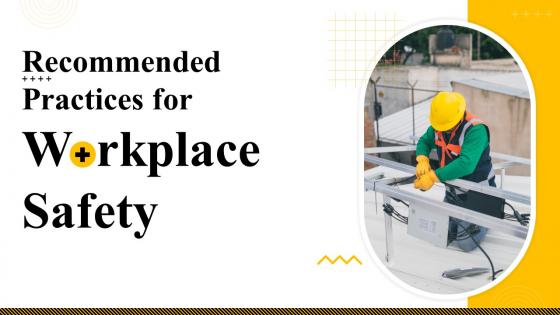
Slide 1: This slide introduces Recommended Practices for Workplace Safety. State your company name and begin.
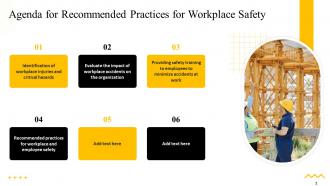
Slide 2: This slide states Agenda of the presentation.
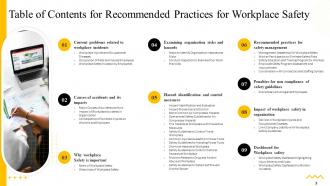
Slide 3: This slide shows Table of Content for the presentation.
Slide 4: This slide highlights title for topics that are to be covered next in the template.
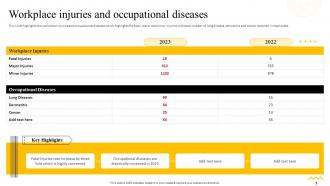
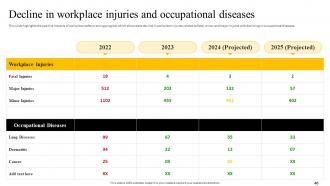
Slide 5: This slide displays the workplace injuries and occupational diseases.
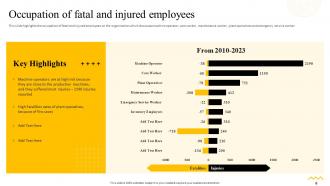
Slide 6: This slide highlights the occupation of fatal and injured employees on the organization.
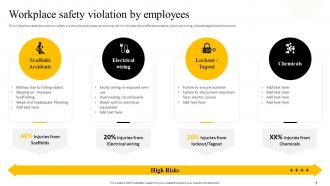
Slide 7: This slide showcases the common safety violation by employees at worksite which includes the scaffolds accidents, electrical wiring, lockout/tagout and chemicals.
Slide 8: This slide exhibit table of content- Causes of accidents and Its impacts.
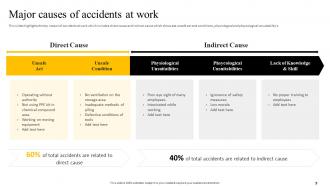
Slide 9: This slides highlights the key reason of accidents at work.
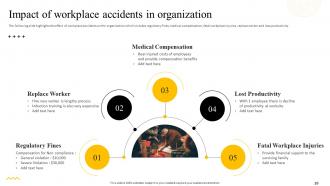
Slide 10: The following slide highlights the effect of workplace accidents on the organization.
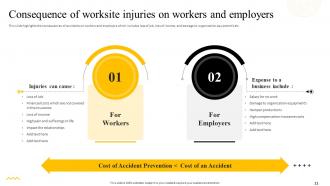
Slide 11: This slide highlights the consequences of accidents on workers and employers.
Slide 12: This slide exhibit table of content- Why workplace safety Is important
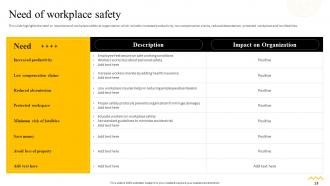
Slide 13: This slide highlights the need or importance of workplace safety at organization.
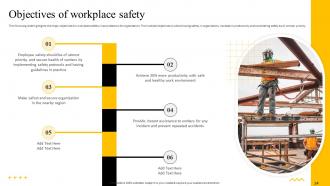
Slide 14: The following slide highlights the major objectives for workplace safety in accordance with organization.
Slide 15: This slide exhibit table of content- Examining organization risk and hazards
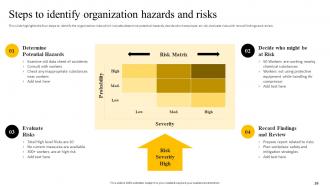
Slide 16: This slide highlights the four steps to identify the organization risks.
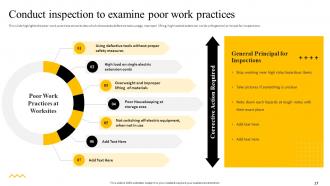
Slide 17: This slide displays the poor work practices at worksites.
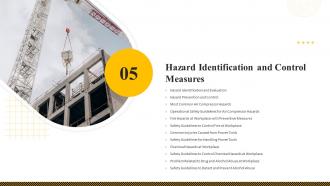
Slide 18: This slide exhibit table of content- Hazard identification and control measures.
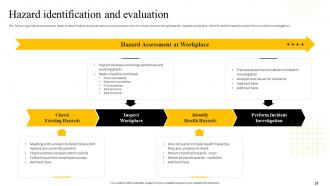
Slide 19: The following slide showcases the hazard identification and evaluation.
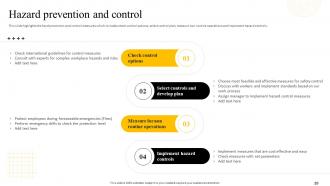
Slide 20: This slide highlights the hard prevention and control measures.
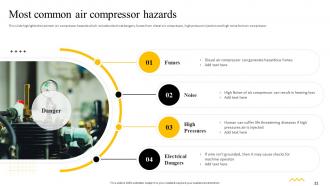
Slide 21: This slide displays the common air compressor hazards.
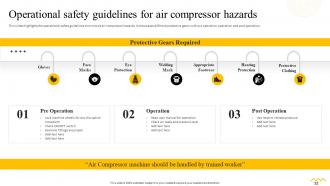
Slide 22: This slides highlights the operational safety guidelines to minimize air compressor hazards.
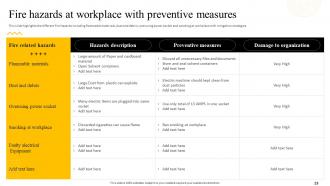
Slide 23: This slide displays the different fire hazards including flammable materials, dust and debris, overusing power socket.
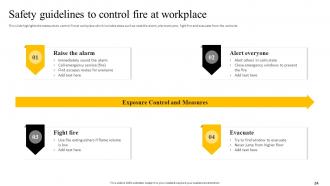
Slide 24: This slide highlights the measures to control fire at workplace.
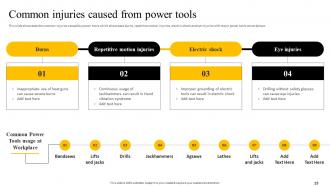
Slide 25: This slide showcases the common injuries caused by power tools.
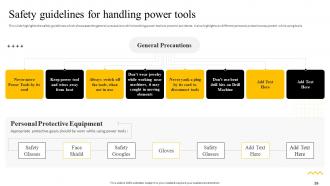
Slide 26: This slide highlights the safety guidelines which showcases the general precautions while handling power tools to prevent accidents.
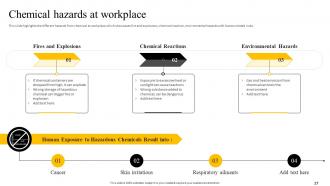
Slide 27: This slide highlights the different hazards from chemical at workplace.
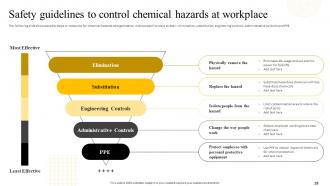
Slide 28: The following slide showcases the steps or measures for chemical hazards at organization.
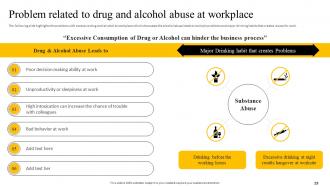
Slide 29: The following slide highlights the problems with excessive drug and alcohol at workplace.
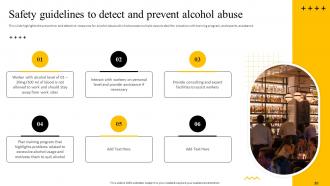
Slide 30: This slide highlights the preventive and detective measures for alcohol abuse.
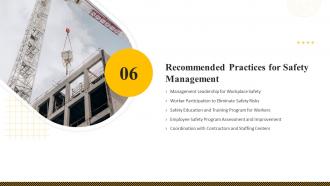
Slide 31: This slide exhibit table of content- Recommended practices for safety management.
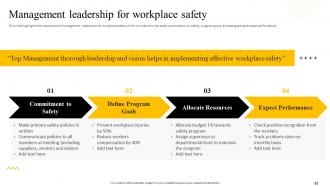
Slide 32: This slide highlights the importance of management leadership for workplace safety.
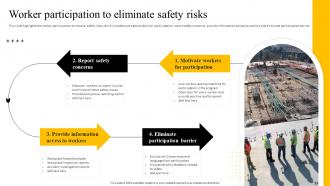
Slide 33: This slide highlights the worker participation to remove safety risks.
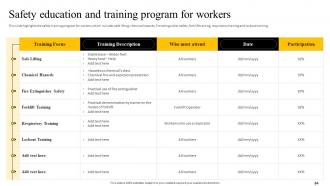
Slide 34: This slide highlights the safety training program for workers.
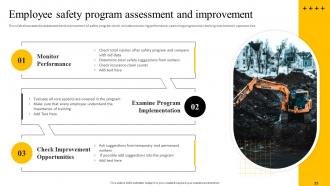
Slide 35: This slide showcases the assessment and improvement of safety program.
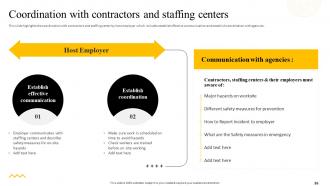
Slide 36: This slide highlights the coordination with contractors and staffing center.
Slide 37: This slide exhibit table of content- Penalties for non compliance of safety guideline
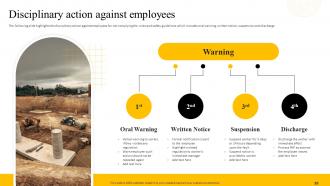
Slide 38: The following slide highlights the disciplinary action against employees for not complying the rules and safety guidelines.
Slide 39: This slide exhibit table of content- Impact of workplace safety In organization.
Slide 40: This slide highlights the positive impacts of workplace safety training program which showcases decline in workplace injuries.
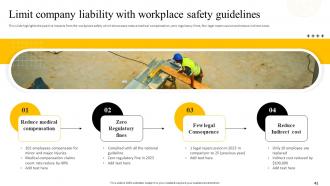
Slide 41: This slide displays the positive impacts from the workplace safety.
Slide 42: This slide exhibit table of content- Dashboard for workplace safety.
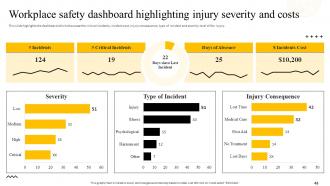
Slide 43: This slide highlights the dashboard which showcase the critical incidents, incident cost, injury consequence, type of incident and severity level of the injury.
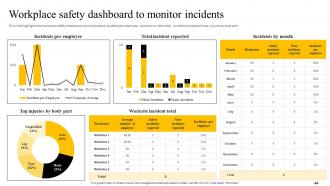
Slide 44: This slide displays the workplace safety dashboard.
Slide 45: This slide is titled as Additional Slides for moving forward.
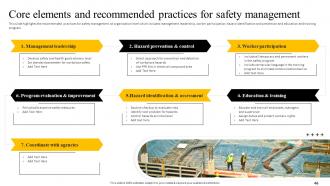
Slide 46: This slide highlights the recommended practices for safety management at organization level.
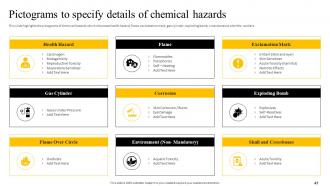
Slide 47: This slide highlights the pictograms of chemical hazards.
Slide 48: This is About Us slide to show company specifications etc.
Slide 49: This is Our Team slide with names and designation.
Slide 50: This slide depicts Venn diagram with text boxes.
Slide 51: This is Our Goal slide. State your firm's goals here.
Slide 52: This slide provides 30 60 90 Days Plan with text boxes.
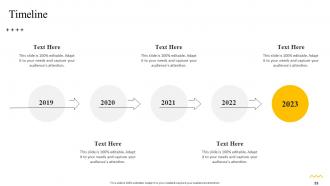
Slide 53: This is a Timeline slide. Show data related to time intervals here.
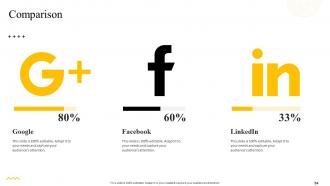
Slide 54: This is a Comparison slide to state comparison between commodities, entities etc.
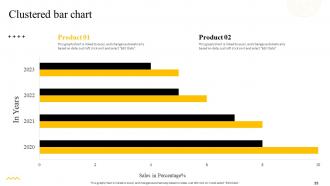
Slide 55: This slide provides Clustered bar chart with two products comparison.
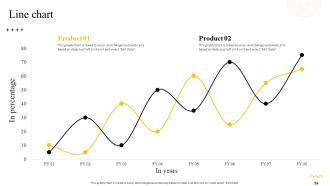
Slide 56: This slide describes Line chart with two products comparison.
Slide 57: This is a Thank You slide with address, contact numbers and email address.
Recommended Practices For Workplace Safety Powerpoint Presentation Slides with all 62 slides:
Use our Recommended Practices For Workplace Safety Powerpoint Presentation Slides to effectively help you save your valuable time. They are readymade to fit into any presentation structure.





FAQs for Recommended Practices For Workplace Safety
You'll want to start with hazard identification and employee training - those are non-negotiables. Set up clear safety policies and some kind of incident reporting system too. Regular inspections help catch stuff before it becomes a problem. Emergency procedures are obviously important. Honestly, the training piece makes the biggest difference because people need to actually understand why they're following these rules, not just what they are. Oh, and assign someone to own this whole thing - policies without accountability just collect dust. Do a walkthrough first to see what hazards you're actually dealing with, then build everything around those specific risks.
Stop waiting for accidents to happen - you've gotta be proactive about this stuff. Do regular walkthroughs where you're actually hunting for problems, not just wandering around. Your workers will spot risks way better than management since they deal with everything daily. I'd get them involved ASAP. Look at your incident reports and near-misses for patterns. Monthly safety audits help too. Oh, and whenever you change equipment or processes? That's when new hazards love to sneak in. Make hazard identification someone's real job, not just an afterthought.
Dude, training really is everything for workplace safety. Your team needs to know how to use equipment right and spot potential problems before they happen. When people actually understand what they're doing, accidents drop big time - plus everyone's less stressed out. Don't just do it once during orientation though, that's kinda useless honestly. Focus on your riskiest areas first and make it ongoing. I've seen places where they thought one training session would cover them for years... spoiler alert: it doesn't work that way. You'll notice the difference pretty fast.
Honestly, wearable devices are pretty amazing for workplace safety. They track air quality, noise, temperature - even your heart rate to catch when you're getting too stressed or tired. Some will literally alert you if there's a gas leak or dangerous equipment nearby, which is wild. The data helps spot safety issues you'd probably miss otherwise. My advice? Don't go crazy with it right away. Start small with basic monitors in your riskiest areas first. See how people actually use them before you invest in the fancy stuff. Your team might hate them or love them - you won't know until you try.
Yeah, so OSHA sets the basic stuff, but different industries get way more complicated. Construction has all these fall protection rules and confined space protocols. Healthcare deals with bloodborne pathogen standards - that's a whole mess. Manufacturing needs machine guarding and lockout procedures. Honestly? The regulations are pretty overwhelming when you first look at them. Your industry association probably has checklists though that actually make sense. I'd figure out your OSHA classification first, then grab their specific guidelines. Way easier than trying to sort through all the general safety stuff - trust me on that one.
Honestly, it all comes down to what management actually rewards vs. what they say they care about. When leadership truly puts safety first - not just in meetings but day-to-day - people feel safe reporting problems and won't rush through important checks. But if everyone's getting praised for being the fastest, well... safety protocols become more of a suggestion, you know? I've seen it happen so many times. Watch what behaviors actually get rewarded. People will always follow the incentives, even if the poster on the wall says something totally different.
Honestly, just start by actually asking your team how they're doing - like really doing, not just work stuff. Most managers suck at spotting burnout before it's too late. Set up regular one-on-ones and make it safe for people to admit when they're overwhelmed. Mental health days are a game changer if you can swing it. Train your managers to watch for warning signs too. Oh, and those employee assistance programs? They're worth it. Sometimes people just need permission to take an actual lunch break. The flexible work thing helps a ton - even small adjustments matter.
So basically they check out your whole desk setup to see what's messing with your body. Monitor height, chair, how you're sitting - all that stuff. Most people (myself included lol) have awful posture and don't even know it. They catch things like repetitive stress before it becomes carpal tunnel or back problems. Seriously, those issues sneak up on you. If you're feeling any soreness or weird aches, just ask HR about getting one done. They're usually free and way better than dealing with months of pain down the road.
People think accidents only happen to careless workers, but that's complete BS. I've seen super careful people get hurt because equipment failed or management didn't fix obvious hazards. Don't rely on just wearing your hard hat either - PPE is your backup plan, not your main protection. "We've always done it this way" is probably the most dangerous phrase in any workplace. Oh, and report those close calls! Nobody's trying to get you fired, they're trying to stop someone from actually getting crushed next time.
Look, get medical help first if anyone's hurt - that's obvious. Then document everything like crazy: photos, witness statements, all of it. I know documentation feels tedious but trust me, you'll need it later. Get your safety team involved and hit those reporting deadlines. Here's the thing though - don't turn it into a witch hunt. Figure out what actually went wrong, fix the root problem, and share what you learned. Most importantly, people won't report stuff if they think they'll get thrown under the bus for it.
Get yourself a decent chair and make sure your monitor's at eye level - trust me on this one. Clear boundaries between work/life are huge for preventing burnout. Mental health stuff actually impacts your physical safety more than you'd think when you're home all day. Keep your walkways clutter-free and get a good surge protector (learned that the hard way). Oh, and ventilation matters way more than I initially realized. The biggest thing though? Check in with yourself regularly about what's actually working - your body's pretty good at telling you when something's off.
Here's what I'd do - actually show up to those safety meetings instead of sending someone else. Walk around and talk to people on the floor about what they're seeing. The big game-changer is making sure workers can report problems without getting blamed for it. Too many places just slap up some posters and think they're done, which is honestly ridiculous. Give people real training, not just videos they sleep through. Celebrate the wins publicly when safety goes well. And here's the thing - never let anyone think production deadlines matter more than people going home safe. Trust me, frontline workers know where the real issues are.
Mix up planned inspections with random walk-throughs - that's your sweet spot. Get frontline workers involved too since they actually see what's happening daily. Use checklists, yeah, but tell auditors to trust their gut if something feels weird. Honestly, some of the best catches come from that "hmm, this doesn't look right" feeling. Rotate who's doing the audits so you're not getting blind spots. Oh, and digital tracking helps spot patterns over time. But here's the thing - if you don't follow up fast and make real changes, people will just start going through the motions.
Just ask them first - seriously, don't guess what people need. Anonymous surveys work great for stuff like physical limitations, language barriers, cultural things. Some folks won't speak up otherwise. Make your safety training available in different languages and formats. Update equipment so it actually works for everyone (shocking concept, right?). Your managers need to get that safety isn't the same for everybody. Oh, and set up regular check-ins where people can voice concerns without getting in trouble later.
Dude, unsafe workplaces absolutely wreck people's mental health. Your employees are constantly stressed about getting hurt, which makes them anxious and unfocused - then boom, more accidents happen because they can't concentrate. Depression's pretty common too. The worst part? That stress doesn't just stay at work. People take it home, can't sleep, lose trust in their bosses. Honestly, the mental damage usually sticks around way longer than physical injuries do. If you're seeing these red flags with your team, fix the safety issues now and maybe get some counseling resources lined up.
-
What an exhaustive collection of templates you guys have there in slideteam. Impressive!!!
-
Requested a complete pitch deck. Delivered immediately and with high quality well researched content.