


Safety Program For Construction Site Powerpoint Presentation Slides




Try Before you Buy Download Free Sample Product
 Impress Your
 Audience
 100%
100% Editable
 Save Hours
 of Time


Safety Program for Construction Site helps real estate companies prevent and minimize the risks that can cause loss of workers lives, property damage, and loss of reputation. This PPT deck can assist managers in civil engineering firms in drafting and deploying a health and safety plan for workers to make the building sites safer. The PowerPoint module includes a business portfolio of the construction company and a performance snapshot for recent civil engineering projects on the schedule performance index SPI, cost performance index CPI, and injuries incurred. Then it highlights the significant issues faced by the real estate firm due to poor safety at the construction site, such as legal ramifications and claims for compensation. Additionally, the PPT deck covers in detail the multiple goals of the construction site safety program, such as setting up a safety department, conducting hazard impact analysis, implementing control measures for working at heights, electrocution prevention, excavation and trenching injuries avoidance, and impart safety training. Moreover, it shows a budget plan for the construction site safety program, potential barriers to its implementation, and its impact on building construction site safety in terms of fewer accidents, lesser legal repercussions, and enhanced brand reputation. At last, it includes dashboards to monitor construction site injuries and safety program performance. Download our 100 percent editable and customizable deck to know more in detail.
People who downloaded this PowerPoint presentation also viewed the following :
Content of this Powerpoint Presentation
Slide 1: This slide introduces Safety Program for Construction Site. State your company name and begin.
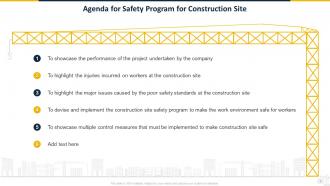
Slide 2: This slide states Agenda of the presentation.
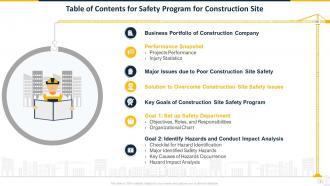
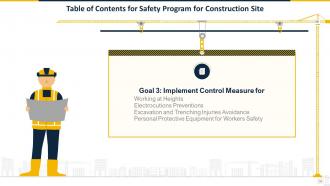
Slide 3: This slide shows Table of Content for the presentation.
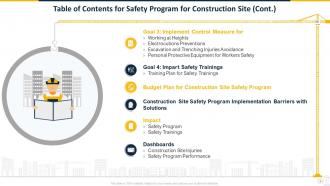
Slide 4: This is another slide continuing Table of Content for the presentation.
Slide 5: This slide highlights title for topics that are to be covered next in the template.
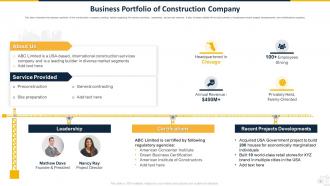
Slide 6: This slide presents Business Portfolio of Construction Company.
Slide 7: This slide highlights title for topics that are to be covered next in the template.
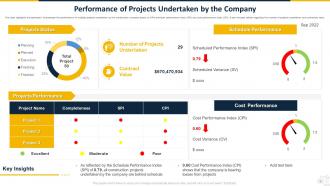
Slide 8: This slide displays Performance of Projects Undertaken by the Company.
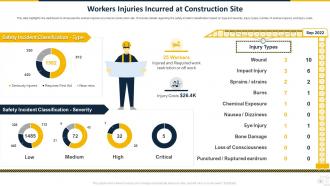
Slide 9: This slide represents Workers Injuries Incurred at Construction Site.
Slide 10: This slide highlights title for topics that are to be covered next in the template.
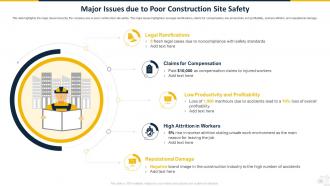
Slide 11: This slide showcases Major Issues due to Poor Construction Site Safety.
Slide 12: This slide highlights title for topics that are to be covered next in the template.
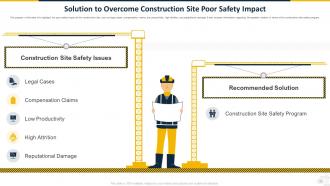
Slide 13: This slide shows Solution to Overcome Construction Site Poor Safety Impact.
Slide 14: This slide highlights title for topics that are to be covered next in the template.
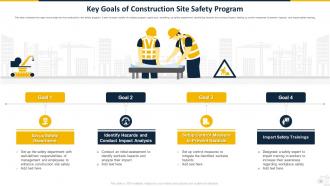
Slide 15: This slide presents Key Goals of Construction Site Safety Program.
Slide 16: This slide highlights title for topics that are to be covered next in the template.
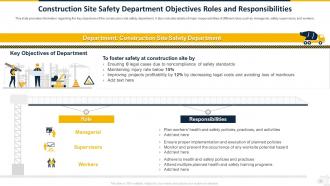
Slide 17: This slide displays key objectives of the construction site safety department.
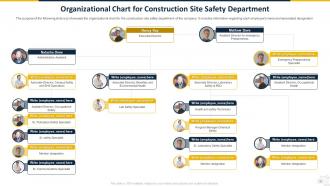
Slide 18: This slide represents Organizational Chart for Construction Site Safety Department.
Slide 19: This slide highlights title for topics that are to be covered next in the template.
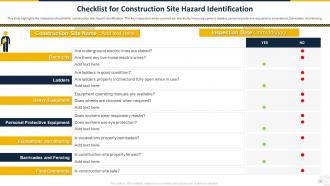
Slide 20: This slide showcases Checklist for Construction Site Hazard Identification.
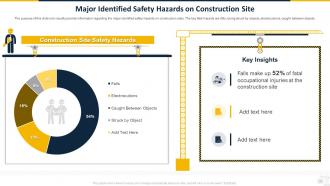
Slide 21: This slide shows Major Identified Safety Hazards on Construction Site.
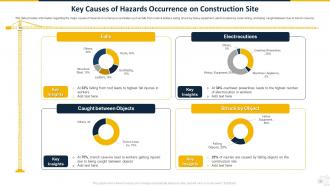
Slide 22: This slide presents Key Causes of Hazards Occurrence on Construction Site.
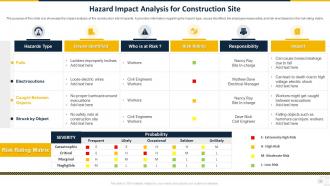
Slide 23: This slide displays Hazard Impact Analysis for Construction Site.
Slide 24: This slide highlights title for topics that are to be covered next in the template.
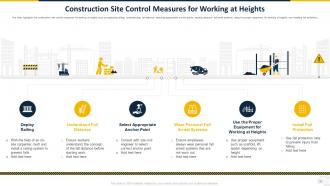
Slide 25: This slide represents Construction Site Control Measures for Working at Heights.
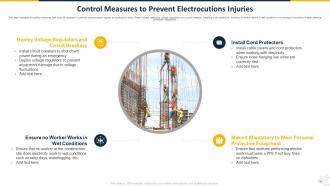
Slide 26: This slide showcases Control Measures to Prevent Electrocutions Injuries.
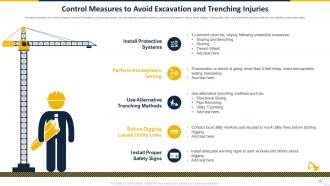
Slide 27: This slide shows Control Measures to Avoid Excavation and Trenching Injuries.
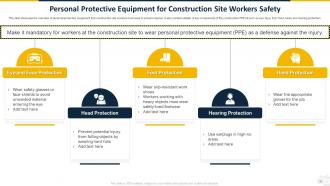
Slide 28: This slide presents Personal Protective Equipment for Construction Site Workers Safety.
Slide 29: This slide highlights title for topics that are to be covered next in the template.
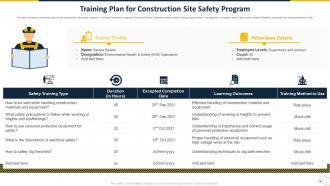
Slide 30: This slide displays Training Plan for Construction Site Safety Program.
Slide 31: This slide highlights title for topics that are to be covered next in the template.
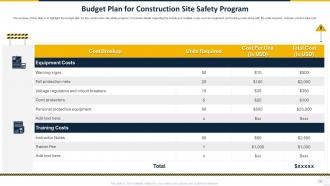
Slide 32: This slide represents Budget Plan for Construction Site Safety Program.
Slide 33: This slide highlights title for topics that are to be covered next in the template.
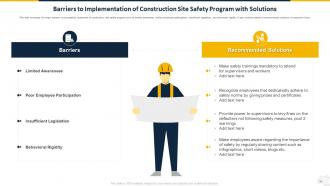
Slide 34: This slide showcases Barriers to Implementation of Construction Site Safety Program with Solutions.
Slide 35: This slide highlights title for topics that are to be covered next in the template.
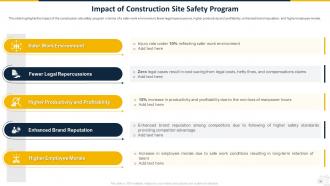
Slide 36: This slide shows Impact of Construction Site Safety Program.
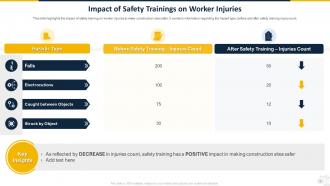
Slide 37: This slide presents Impact of Safety Trainings on Worker Injuries.
Slide 38: This slide highlights title for topics that are to be covered next in the template.
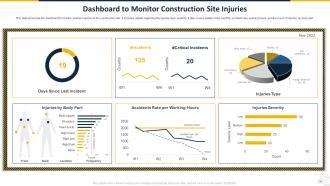
Slide 39: This slide displays Dashboard to Monitor Construction Site Injuries.
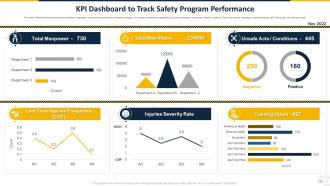
Slide 40: This slide represents KPI Dashboard to Track Safety Program Performance.
Slide 41: This slide contains all the icons used in this presentation.
Slide 42: This slide is titled as Additional Slides for moving forward.
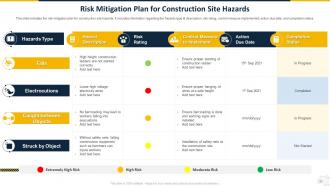
Slide 43: This slide showcases Risk Mitigation Plan for Construction Site Hazards.
Slide 44: This is About Us slide to show company specifications etc.
Slide 45: This slide provides 30 60 90 Days Plan with text boxes.
Slide 46: This slide displays Mind Map with related imagery.
Slide 47: This is a Financial slide. Show your finance related stuff here.
Slide 48: This slide displays Hierarch chart with text boxes.
Slide 49: This slide represents Stacked chart with two products comparison.
Slide 50: This slide contains Puzzle with related icons and text.
Slide 51: This is Our Goal slide. State your firm's goals here.
Slide 52: This is Our Mission slide with related imagery and text.
Slide 53: This is a Timeline slide. Show data related to time intervals here.
Slide 54: This slide depicts Venn diagram with text boxes.
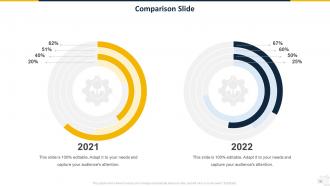
Slide 55: This is a Comparison slide to state comparison between commodities, entities etc.
Slide 56: This slide shows Post It Notes. Post your important notes here.
Slide 57: This is an Idea Generation slide to state a new idea or highlight information, specifications etc.
Slide 58: This slide displays Bulb and Idea.
Slide 59: This slide showcases Spokes with additional textboxes.
Slide 60: This slide shows Flow Chart with related imagery.
Slide 61: This slide presents Pyramid with text boxes.
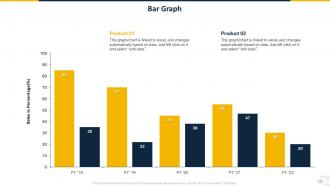
Slide 62: This slide presents Bar chart with two products comparison.
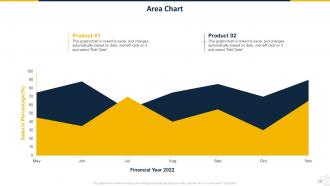
Slide 63: This slide depicts Area chart with two products comparison.
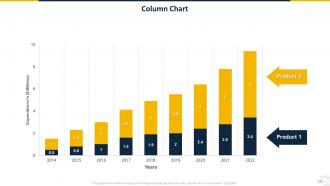
Slide 64: This slide displays Column chart with two products comparison.
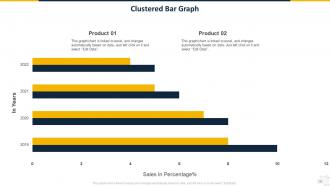
Slide 65: This slide provides Clustered Bar chart with two products comparison.
Slide 66: This is a Thank You slide with address, contact numbers and email address.
Safety Program For Construction Site Powerpoint Presentation Slides with all 71 slides:
Use our Safety Program For Construction Site Powerpoint Presentation Slides to effectively help you save your valuable time. They are readymade to fit into any presentation structure.











FAQs for Safety Program For Construction Site
Start with hazard identification and risk assessment - that's your foundation. Then focus on training workers thoroughly, doing regular safety inspections, and setting up incident reporting that actually works. Daily toolbox talks are huge, plus weekly site walkthroughs to spot problems before they blow up. The reporting system can't be complicated or people just won't bother using it. I'd honestly audit what you've got first, then tackle your biggest weak spots. Training's probably where most companies mess up - you really can't overdo it when it comes to PPE and equipment protocols.
Walk through your whole site and spot the dangerous stuff - fall hazards, electrical issues, heavy equipment areas, chemicals, you know the drill. It's basically like hunting for problems before they bite you. Write down what you find, then figure out how likely and how bad each risk could be. Your crew should definitely help with this since they're out there every day and catch things you won't. Some risks need fixing tomorrow, others can wait a bit. Oh, and don't forget to update everything when conditions change - sites are always evolving.
Dude, safety training makes such a huge difference - I've literally watched sites drop their accident rates by 60% when they actually stick with it. Your crew gets way better at spotting hazards and using equipment right. The tricky part? You can't just do one session and call it done (even though that's what everyone wants to do, let's be honest). New hires need solid orientation, then you gotta keep doing monthly safety talks or whatever works. It's kinda annoying but your insurance will probably give you better rates for it too.
So regulations are your starting point - OSHA, local codes, all that stuff gives you the bare minimum to cover. Don't try to wing it (trust me on this one). Fall protection, hazard communication, the whole nine yards has to be in there. Compliance dictates your training schedules and what equipment you need. Here's the thing though - meeting regulations is just step one. Once you've got that foundation, add your site-specific risks and company policies on top. That's what actually keeps your crew safe, not just checking boxes.
Honestly, you gotta get everyone invested in safety, not just dump it on management. Those toolbox talks? Make them actual discussions where people can voice concerns instead of just sitting through another boring lecture. Your supervisors need to walk the walk too - workers pick up on corner-cutting real quick. Peer recognition is huge. Give out awards when someone spots a hazard or helps a coworker stay safe. But here's the thing - people won't speak up about dangerous stuff if they're scared of getting in trouble for it. Oh, and definitely get your crew involved in writing the safety procedures. When they help create the rules, they'll actually follow them.
First thing - figure out what hazards you're actually dealing with. Hard hats for stuff falling overhead, safety glasses for flying debris, steel-toed boots when you're around heavy materials. Make sure it all meets OSHA standards and check the manufacturer specs. Daily inspections are huge though - I can't stress this enough. Don't be like my old coworker who kept using cracked safety glasses because "they weren't that bad." Just replace damaged gear, period. Clean everything regularly and store it right so it doesn't fall apart on you. Honestly, just make a simple checklist and actually use it every day.
Daily toolbox talks are your best friend here - they really work for hitting the important stuff and covering whatever hazards you're dealing with that day. Throw in some visual stuff too like signs and videos, especially if you've got people who pick things up better that way. Hands-on demos are huge though - way better than just talking at people about how to use equipment properly. Oh, and if your crew speaks different languages, definitely get materials translated. The key is mixing it up so nobody zones out. Always leave time for questions during meetings because someone will have one.
Smart hard hats are pretty cool - they'll catch falls and spot when someone's getting too tired. GPS trackers help you find people fast during emergencies. Honestly, some of these wearables are almost too high-tech for construction, but the gas sensors that alert for dangerous fumes are worth it. They vibrate when workers get too close to machinery or enter sketchy areas. Fall detection devices are a solid starting point. You can always add more sensors later based on what kind of hazards your site actually deals with. Way better than constantly yelling at people to be careful.
Do daily walkthroughs - start of shift and after lunch when everyone's getting back to it. Hit the sketchy spots first: scaffolding, electrical, excavation areas. Honestly, bring a checklist or you'll definitely forget something when you're in a hurry. Take photos of everything with timestamps, even small stuff that looks "fixable later" (spoiler: it never gets fixed). Let your crew know the schedule so they can clean up their areas beforehand - nobody likes surprises. Oh, and stay consistent with timing. Random checks are fine too, but regular ones actually get people thinking about safety instead of just reacting to it.
Honestly, just go digital - mobile apps or basic online forms work great. Keep them super short though, nobody's writing a novel after an accident. Just the basics: what, when, where, plus whatever they did right after. I'd train supervisors to check in within 24 hours max. The real trick? Show people their reports actually matter by fixing stuff they flag. Makes it way easier when workers start reporting close calls and small issues instead of waiting until someone gets seriously hurt. Trust me, simple beats comprehensive every time.
Definitely start with OSHA's email alerts - they're actually pretty good about sending updates when regs change. Their website has all the official stuff too. I'd also check out AGC and CPWR for industry resources. Honestly, Construction Dive is solid for news - way better than scrolling through boring government sites all day. Your state might have extra OSHA requirements, so bookmark that page. Oh, and set up a Google alert for "construction safety regulations" - catches random stuff you might miss. Trade mags like ENR cover this too but they're hit or miss sometimes.
Get your subs to safety orientation before they even touch the site - this is non-negotiable. They need to know YOUR protocols, not just wing it with whatever they usually do. Contract language should spell out safety compliance and what happens if they screw up. Include them in toolbox talks and meetings too. Honestly, the real key is staying on top of them with spot checks - people get lazy fast. Oh, and give them direct access to your safety guy so problems don't fester. Regular check-ins will save you headaches later.
Dude, it all comes down to leadership honestly. Your safety culture literally starts with you and flows down to everyone else. I've watched supervisors cut corners on jobsites - and surprise, the whole crew follows suit. You gotta walk the walk, not just talk about it. Hold those safety meetings, but actually listen when workers bring up concerns. Don't let tight deadlines become an excuse for shortcuts either. Provide decent training and resources. Tomorrow, just walk around and ask people what safety issues they're seeing. You'll be surprised what they tell you when they know you're genuinely listening.
Look, mental health isn't separate from safety - it's literally part of it. During your toolbox talks, ask people how they're actually doing. Construction stress is no joke and stressed workers make bad calls. Get an employee assistance program going, and train your supervisors to spot when someone's struggling. The whole "tough guy" thing needs to die - asking for help should be normal. Oh, and check your scheduling too. Half the time safety incidents happen because people are burned out from crazy hours and impossible deadlines.
Falls, electrocution, getting struck by stuff, and caught-in accidents - that's your big four. Falls are the worst killer, like a third of all deaths. Good PPE helps but honestly, half the battle is just getting people to actually follow safety rules. Always check your scaffolding before climbing up. Keep the electrical work for certified guys only. Those morning safety huddles work pretty well too - just five minutes to talk through what could go wrong that day. Oh and lockout/tagout around machinery, can't skip that. Main thing is making sure workers don't get yelled at for reporting sketchy situations.
-
The way SlideTeam professionals work is exceptional. Thanks for being so helpful!
-
“Love it! I was able to grab an exciting proposal because of SlideTeam.”