


Project safety management in the construction industry powerpoint presentation slides




Try Before you Buy Download Free Sample Product
 Impress Your
 Audience
 100%
100% Editable
 Save Hours
 of Time


Safety management ensures the sound health of workers and prevents different types of hazards at construction sites. This PowerPoint presentation covers details on Project Safety Management in the Construction Industry by using BIM software. The agenda for this ppt is to identify risks and reduce accidents to improve site productivity and project ROI. It also talks about demonstrating safety practices and giving the impact of safety practices or programs on business. The presentation starts with an executive summary, including implications of using BIM and mobile tools in a construction company. Further, it covers types of practices and new strategies used to promote safety on projects. This PPT also depicts the impact of safety practices and programs in the construction business. This PowerPoint deck further includes communication and training strategies for the new project safety management system. Additionally, it covers influencing factors driving the adoption of safety management programs and Factors Encouraging Future Investment in More Extensive Safety Management Practices. It also covers BIM Functions for Improving Safety, Use of Mobile Devices on the Jobsite as safety strategies, and implementation. Lastly, this presentation covers construction safety practices and the effect of the new project safety management program on companies. You can visualize stats on the factors encouraging safety management practices. Organize safety training for Jobsite workers with our project safety management template. Get access and download it now.
People who downloaded this PowerPoint presentation also viewed the following :
Content of this Powerpoint Presentation
Slide 1: The slide displays the title of the project i.e. 'Project Safety Management in the Construction Industry' and your Company name.
Slide 2: This slide explains the agenda for the project.
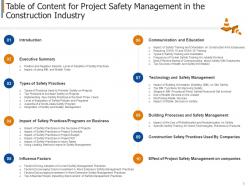
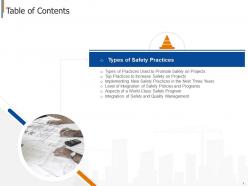
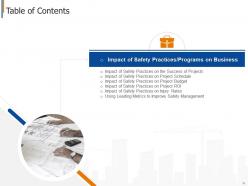
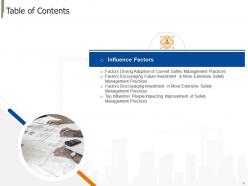
Slide 3: This slide showcases the table of contents for the project.
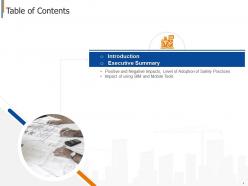
Slide 4: This slide presents the title for introduction and executive summary.
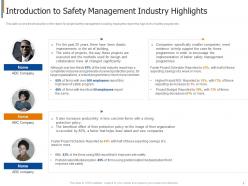
Slide 5: This slide covers the introduction of the report for project safety management including employees report this high level of safety program etc.
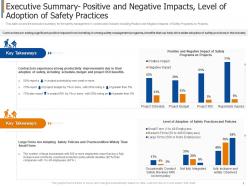
Slide 6: This slide covers the executive summary for the safety management in construction industry including Positive and Negative Impacts of Safety Programs on Projects.
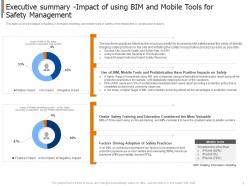
Slide 7: This slide covers the impact of Building information modeling and mobile tools in safety of the employees in construction industry.
Slide 8: This slide exhibits the title for types of safety practices.
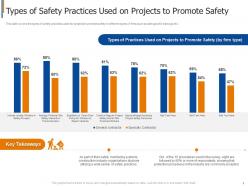
Slide 9: This slide covers the types of safety practices used for projects to promote safety in different types of firms such as site specific trainings etc.
Slide 10: This slide covers the strategies under each safety management practices such as promoting a safety culture, site specific training, variation by using BIM etc.
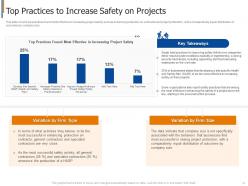
Slide 11: This slide covers top practices found most effective in increasing project safety such as enhancing protection on contracts and project protection, with a comparatively equal distribution of outcomes.
Slide 12: This slide covers the implementation of new Safety Practices and Policies for the next three years based on firms size and firm type.
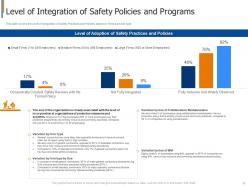
Slide 13: This slide covers the Level of integration of Safety Practices and Policies based on firms size and type.
Slide 14: This slide covers the Aspects of a World-Class Safety Program according to general Contractors, Specialty Contractors and BIM users.
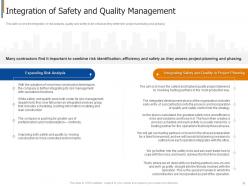
Slide 15: This slide covers the integration of risk analysis, quality and safety to be critical as they determine project scheduling and phasing.
Slide 16: This slide displays the title for impact of safety practices on business.
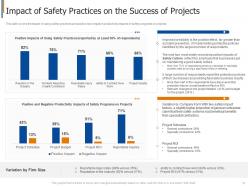
Slide 17: This slide covers the impact of using safety practices and positive and negative productivity impacts of safety programs on projects.
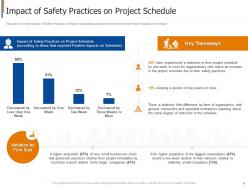
Slide 18: This slide covers the Impact of Safety Practices on Project Schedule according to those that reported Positive impacts on Schedule
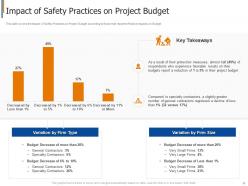
Slide 19: This slide covers the Impact of Safety Practices on Project Budget according to those that reported Positive impacts on Budget.
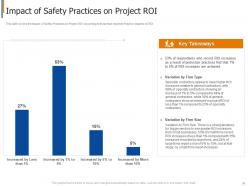
Slide 20: This slide covers the Impact of Safety Practices on Project ROI according to those that reported Positive impacts on ROI.
Slide 21: This slide covers the Impact of Safety Practices on Project Injury Rates according to reduced injury rates.
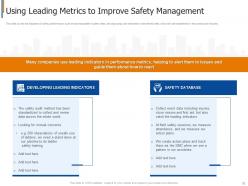
Slide 22: This slide covers the indicators of safety performance, such as total recordable incident rates, and days away and restricted or transferred rates, which are well established in the construction industry.
Slide 23: This slide presents the title for influence factors.
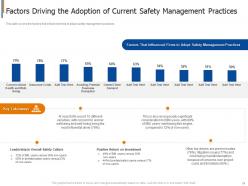
Slide 24: This slide covers the factors that influenced firms to adopt safety management practices.
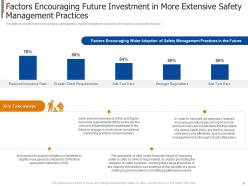
Slide 25: This slide covers the factors encouraging wider adoption of safety management practices in the future of construction industry.
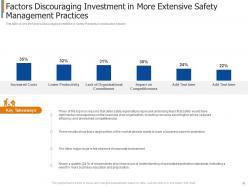
Slide 26: This slide covers the Factors Discouraging Investment in Safety Practices in construction industry.
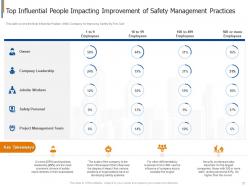
Slide 27: This slide covers the Most Influential Position Within Company for Improving Safety By Firm Size.
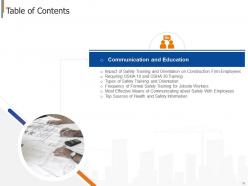
Slide 28: This slide exhibits the title for communication and education.
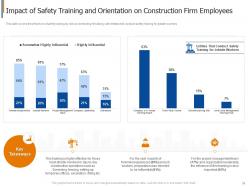
Slide 29: This slide covers the influence of safety training by role at contracting firm along with entities that conduct safety training for jobsite workers.
Slide 30: This slide covers the Influence of Safety Training By Role at Contracting Firm.
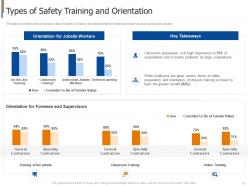
Slide 31: This slide covers the Level of Use and Value of Modes of Training for onsite workers, Foremen and Supervisors in construction industry.
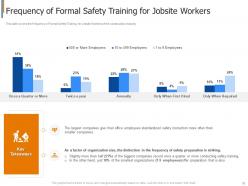
Slide 32: This slide covers the Frequency of Formal Safety Training for Jobsite Workers of the construction industry.
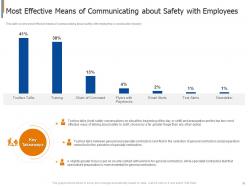
Slide 33: This slide covers most effective means of communicating about safety with employees in construction industry.
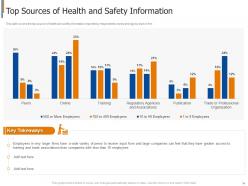
Slide 34: This slide covers the top source of health and safety information reported by respondents varies strongly by size of firm.
Slide 35: This slide displays the title for technology and safety management.
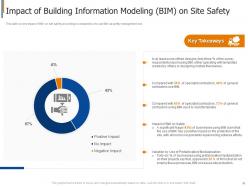
Slide 36: This slide covers impact of BIM on site safety according to companies who use BIM as safety management tool.
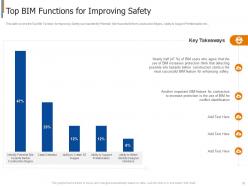
Slide 37: This slide covers the Top BIM Function for Improving Safety such as Identify Potential Site Hazards Before Construction Begins, Ability to Support Prefabrication etc.
Slide 38: This slide covers Stages in the BIM Process at Which Construction Safety Professionals Get Involves along with Variation by Use of Prefabrication/ Modularization.
Slide 39: This slide depicts that Mobile devices have become a common feature on jobsites, integrated in the workflow of a project.
Slide 40: This slide covers the Staff Using Mobile Devices on the working site such as superintendents, senior management etc.
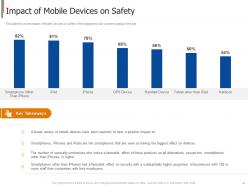
Slide 41: This slide the covers Impact of Mobile Devices on Safety of the employees and workers working in the site.
Slide 42: This slide presents the title for building processes and safety management.
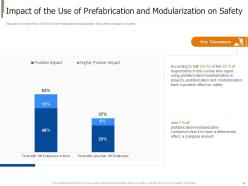
Slide 43: This slide covers the Firms That Find That Prefabrication/ Modularization Has a Positive Impact on Safety.
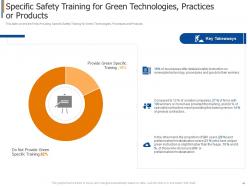
Slide 44: This slide covers the Firms Providing Specific Safety Training for Green Technologies, Processes and Products.
Slide 45: This slide exhibits the title for construction safety practices.
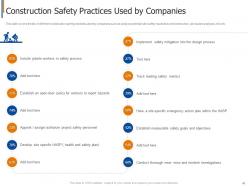
Slide 46: This slide covers the list of different construction safety practices used by companies such as analyze potential site safety hazards in preconstruction, job hazard analysis (JHA etc.
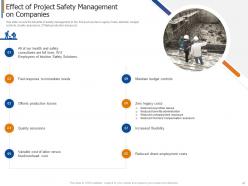
Slide 47: This slide covers the benefits of safety management to the firm such as Zero Legacy Costs, Maintain budget controls, Quality assurance, Offsets production losses etc.
Slide 48: This is the icons slide for the project.
Slide 49: This slide presents title for additional slides.
Slide 50: This slide displays the vision, mission and goals of the company.
Slide 51: The slide showcases about the company, its client's values and premium services provided.
Slide 52: This slide showcases the team members associated to project with names and designation.
Slide 53: This slide describes the posts for past experiences and feedbacks from the clients.
Slide 54: The slide displays the puzzle related to the company.
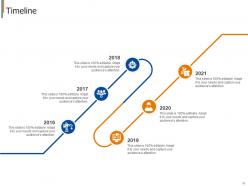
Slide 55: This slide demonstrates the yearly timeline of the company and its success.
Slide 56: This slide displays the timeline of the company.
Slide 57: This sllide explains the roadmap of the company.
Slide 58: This slide presents the idea generated by the company.
Slide 59: This slide showcases the goals of the company.
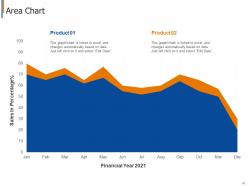
Slide 60: This slide exhibits the monthly sales area charts for products. The charts are linked to Excel.
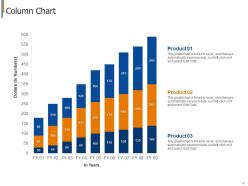
Slide 61: This slide presents the yearly dollars column charts for the products. The graphs are linked to Excel.
Slide 62: This is the thank you slide and contains contact details of the company like email address, phone no., etc.
Project safety management in the construction industry powerpoint presentation slides with all 62 slides:
Use our Project Safety Management In The Construction Industry Powerpoint Presentation Slides to effectively help you save your valuable time. They are readymade to fit into any presentation structure.













FAQs for Project safety management in the construction industry
So you'll need hazard ID and risk assessment first - that's your foundation. Then build out safety procedures, training programs, and incident reporting systems. Emergency response plans too, obviously. Most people totally slack on inspections though because they're boring as hell, but don't skip them. Your safety plan can't just sit there collecting dust either - update it as things change. Oh and assign specific people to handle safety stuff, otherwise everyone assumes someone else is doing it. Get that risk assessment knocked out early, then everything else falls into place around it.
Don't just sit around waiting for something bad to happen - get ahead of it. Walk the site thoroughly and get your crew involved in spotting hazards since they catch stuff you'll miss. Look back at similar jobs you've done before, hit up industry safety databases, and do regular walks. Subcontractors are goldmines for this - they've seen some crazy stuff and love sharing horror stories that'll make you think twice. Honestly, the weekly safety check-ins are what really matter though. Projects change fast and new risks pop up constantly, so you can't just do it once and call it good.
Training your team is honestly the most important thing you can do for project safety. I mean, it's literally what stands between you and a disaster. Your crew needs to know how to spot hazards and handle emergencies - otherwise you're just hoping nothing goes wrong. Make it hands-on and relevant to what they'll actually face out there. Classroom stuff is fine, but they need to practice the real scenarios. Oh, and don't just do it once at the beginning - keep refreshing it. I've watched too many projects go sideways because someone skipped proper training.
There's so much cool tech for construction safety now! Wearable sensors track vitals and catch falls automatically. Air quality monitors and noise sensors give you real-time data. I'm obsessed with drones though - they inspect dangerous spots without risking anyone, plus the footage looks amazing for project docs. Your crew can report hazards instantly through mobile apps with photos and GPS. AI cameras spot missing hard hats and other unsafe stuff. Honestly, digital dashboards are a lifesaver for tracking everything in one spot. Don't go crazy though - pick one or two things first and build from there.
Make it everyone's thing, not just the safety guy's problem. Your team leads gotta walk the walk and shut down sketchy stuff right away when they spot it. Sure, do the official briefings, but honestly? Those random hallway convos are what really matter. People need to feel safe calling out hazards without getting their heads bitten off. Set up anonymous reporting too - some folks won't speak up otherwise. Oh, and celebrate the wins publicly! Treat near-misses like teachable moments instead of witch hunts. We started doing quick "safety moments" at meeting kickoffs and it actually helps keep it front of mind.
Honestly, get your whole team together first - like actually in one room because you'll miss stuff flying solo. Walk through everything and write down what could go wrong, how likely it is, and what damage it'd cause. Use a simple matrix to rank them by priority. The tricky part is you can't just do this once at the start and call it done. New problems pop up as you go, so schedule check-ins throughout the project. Oh, and assign someone specific to own each risk - none of that "we'll keep an eye on it" nonsense that never works.
Dude, safety stuff can seriously mess you up legally. Criminal charges, huge fines, lawsuits - all on the table if someone gets injured. As a PM, you could face personal liability, especially with negligence involved. Companies get hit with regulatory penalties and workers' comp claims too. I actually know PMs who've lost their certifications over this. Oh, and wrongful death suits are brutal - nobody wants that headache. Document everything, do your risk assessments, and don't skip protective measures. Honestly, cutting corners just isn't worth the legal nightmare you'll face later.
Communication breakdowns are honestly the worst when it comes to safety stuff. Mix up your approach - use visuals, translate things if your team speaks different languages, and make it a real conversation instead of just talking at people. I swear half the accidents I've seen happen because someone was too embarrassed to speak up. Regular safety check-ins help a ton. People need to feel safe asking questions without looking dumb. Follow up too - just because you said something doesn't mean it actually clicked. The whole thing works better when it feels casual and normal, not like some corporate presentation nobody wants to sit through.
You'll want both leading and lagging indicators. Leading ones are like safety training completion rates, near-miss reports, audit scores - basically stuff that predicts problems before they happen. Lagging indicators are your actual incident rates, lost-time injuries, workers' comp claims. Honestly, near-miss reports are gold because they show people actually feel comfortable speaking up. Also grab some employee feedback through surveys or just casual check-ins. Oh, and don't go crazy with metrics at first - pick 3 or 4 solid ones so you're not drowning in spreadsheets.
Honestly, it depends totally on what industry you're in. Construction is all about hard hats and OSHA stuff, while IT projects are more worried about hackers and data breaches. Healthcare? Don't even get me started - the paperwork for patient safety and HIPAA compliance is insane. Manufacturing focuses on machinery safety, financial services cares about fraud prevention. My advice? Figure out who regulates your industry first, then work backwards from their safety rules. Each project's different though, so you'll need to tweak things based on your specific situation and deadlines.
Honestly, I'd go with monthly or quarterly audits depending on how risky your project is. Three things to focus on: dig into incident reports and close calls, actually check if people are following safety rules (not just writing them down), and get real feedback from your crew about what's bugging them safety-wise. Random spot checks work way better than scheduled ones - people act different when they know you're coming. Document everything and make action plans for problems you find. Oh, and this is crucial - actually follow through on fixing stuff. Otherwise you're just doing busy work that doesn't keep anyone safer.
Here's the thing - incident reports give you actual data on what's really going wrong, not just what you thought might happen. Track everything, including near-misses (those are gold mines honestly). Look for patterns quarterly and dig into the real causes, not just surface-level stuff. Your team won't report anything if they're scared of getting blamed though, so fix that culture first. Most companies keep making the same mistakes because they don't actually learn from this data. Use what you find to update your safety protocols and training - it's way more effective than guessing what might go wrong next time.
Look, your team's gonna watch everything you do way more than what you say. Skip safety protocols once under pressure? That's your new standard, no matter what's in the manual. I've watched solid safety plans completely fall apart because leadership wouldn't fund proper training or equipment. Honestly, some managers talk a big game but fold the second there's a budget crunch. You control the resources and set the real expectations. If you don't actually back up safety when it costs time or money, your people will notice fast. Model what you want to see - it's really that simple.
Honestly, getting people actually invested in safety makes a huge difference. When stakeholders help build the safety plans instead of just getting handed rules, they're way more likely to follow them. Makes sense, right? They'll also spot hazards you might totally miss since they see things from different angles. The trick is making it actually two-way - listen to what they're worried about and work their ideas into your plans. Don't just talk at them. I'd start with whoever has the most influence and get them in on safety conversations early. Oh, and keep everyone updated when things change or they'll feel left out again.
Dude, the tech stuff is getting wild - AI sensors can actually predict hazards before they happen, which is pretty mind-blowing. Wearables track everything now too, like if someone's getting too tired or exposed to nasty stuff. Mental health is becoming a bigger deal in safety planning, not just the physical risks. Remote work totally changed how teams handle safety protocols together. Oh, and sustainability keeps getting mixed into safety requirements more (honestly kind of makes sense). I'd start small - figure out what tech actually fits your budget and current projects instead of going crazy with everything at once.
-
Great experience, I would definitely use your services further.