Safety Management System For Construction Project

Rating:
90%
Safety Management System For Construction Project
Slide 1 of 6
Favourites Favourites

Try Before you Buy Download Free Sample Product

Audience Impress Your
Audience
Editable 100%
Editable
Time Save Hours
of Time
The Biggest Sale is ending soon in
0
0
:
0
0
:
0
0
Rating:
90%
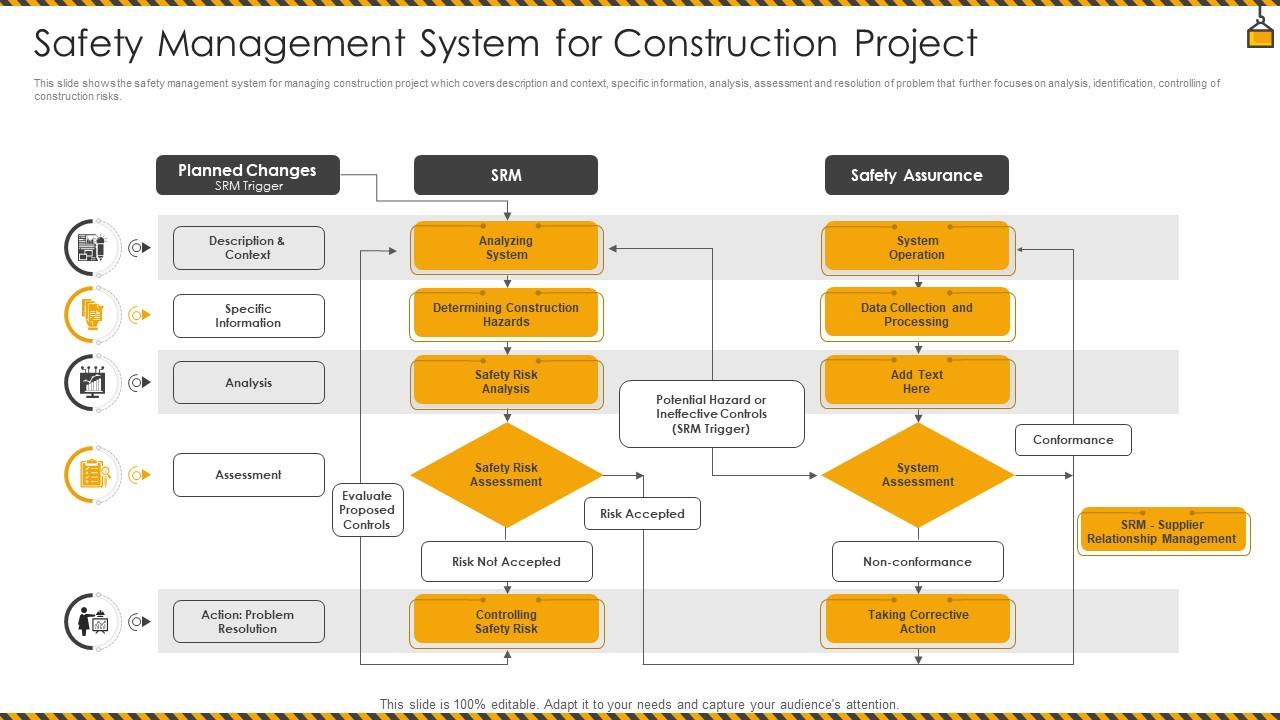
This slide shows the safety management system for managing construction project which covers description and context, specific information, analysis, assessment and resolution of problem that further focuses on analysis, identification, controlling of construction risks. Introducing our Safety Management System For Construction Project set of slides. The topics discussed in these slides are Management, Analysis, Assessment. This is an immediately available PowerPoint presentation that can be conveniently customized. Download it and convince your audience.

FAQs for Safety Management System

Look, there are four main things you need to nail down. First, get your safety policy straight - that's your leadership setting expectations. Risk management is the meat and potatoes though - actually finding hazards and dealing with them. Then there's safety assurance, which is basically checking if you're genuinely safer or just going through the motions (honestly, most places just check boxes). Safety promotion handles training and building that culture thing everyone's obsessed with. I'd figure out which one's your biggest weakness first and tackle that.

So basically, a Safety Management System gets everyone aligned on what safety looks like instead of just winging it. You're not waiting around for accidents to happen before fixing problems - you're actually spotting risks early. Makes safety everyone's job, not just dumping it all on one person (which never works anyway). You'll have real processes for people to report sketchy stuff, investigate when things go wrong, and - this is key - learn from close calls instead of ignoring them. I'd start by looking at what you're already doing safety-wise and figuring out what's missing.

Look, risk assessment is where everything starts with your SMS. You can't manage what you don't know exists, so first you gotta map out all the ways things could go sideways. Then rank them - what's likely to happen vs what would totally wreck your day if it did. This feeds into literally everything else: your controls, safety goals, where you spend money. I've seen too many places just throw random safety stuff everywhere hoping it works. Way better to be systematic about it. Start with identifying your hazards, then build your action plan around the biggest risks.

Start with 5-7 metrics you'll actually check regularly - don't go overboard tracking everything. I'd focus on safety training completion rates, near-miss reports, and audit results plus your injury rates. Trends matter way more than individual numbers, honestly. Employee engagement scores from safety surveys are huge too since that's what really drives behavior. Monthly dashboards work well for year-over-year comparisons. Oh, and seriously - I've watched companies obsess over single metrics when the bigger picture is what counts. Culture stuff takes time to show up in the data though.

Honestly, the biggest pain is gonna be your team fighting you on it. Nobody wants more paperwork or new systems to learn. Getting different departments to actually talk to each other with the SMS data? Good luck with that mess. Training always takes forever too - like double whatever timeline you're thinking. Here's what worked for me though: pick one small department first. Get them some quick wins so you can wave those around when other teams start complaining. And seriously, make the interface stupid simple from the start. People won't use it if it's clunky, doesn't matter how good your data is.

Look, once a year is the absolute minimum - but honestly that's kinda lazy. Big stuff like new regulations or incidents? Review immediately, don't wait around. I've watched companies get totally blindsided because they were too rigid about their yearly schedule. Quarterly check-ins work way better for catching small problems early. Your SMS should feel alive, not like some dusty binder you ignore. Oh, and schedule your next review date today - seriously, do it now. Then set up those trigger points so you'll actually update things when major changes hit.

So you'll want to cover the four main areas: safety policy, risk management, safety assurance, and safety promotion. Train everyone on hazard identification, incident reporting, and your procedures. Honestly, SMS training can get pretty intensive - there's a lot to cover. But that's kind of the whole point, right? You're building a culture where safety is everyone's job. Do initial training for new hires plus annual refresher sessions. The real goal isn't just compliance though. People need to actually get how they fit into the bigger safety picture. I'd start by figuring out what training gaps you've got right now.

Tech can totally transform your SMS game. Start with real-time monitoring - you'll get instant alerts when safety metrics go sideways. Predictive analytics are clutch for catching problems early. Mobile apps make incident reporting so much easier for field teams (seriously, no more paperwork disasters). Automated workflows keep follow-ups from getting buried. Digital dashboards give leadership clear visibility into trends, which honestly should've been standard years ago. Pick whatever's driving you crazy right now - maybe data collection or reporting - and start there. Don't try to fix everything at once.

Honestly, the trick is making people feel like their input actually matters instead of just checking boxes. Set up anonymous reporting - nobody wants to worry about getting in trouble for speaking up. But here's the thing: you HAVE to respond to what they tell you, otherwise they'll stop bothering. I've seen places tie safety participation into performance reviews as a positive thing, which works pretty well. Small rewards for near-miss reports help too. Regular meetings where you actually listen instead of just talking at them. Start with one feedback method, then really celebrate those first few wins so people see you're serious about it.

So basically, regulations are your starting point - they're the bare minimum you have to hit. Figure out which ones actually apply to your industry first (aviation vs healthcare have totally different rules, for example). Then build your SMS around those required pieces like reporting structures, training schedules, documentation standards. Some get really picky about investigation timelines too, which is honestly kind of annoying but whatever. I'd tackle the regulatory checklist first, then add whatever extra safety stuff your company wants on top. Way easier than trying to retrofit compliance later.

Honestly, you really need to get your procedures written down. When your experienced guys aren't there, everyone's basically winging it otherwise. I've seen teams fall apart because they relied on Bob's memory or whatever - not smart when safety's involved. Documentation keeps everyone on the same page and covers your butt during audits too. New hires will actually know what they're doing instead of guessing. If something does go sideways, at least you can show inspectors you had proper controls. Start with your most critical stuff first though.

So basically you just swap out the risks and controls to match whatever industry you're in. Construction guys focus on fall protection and equipment stuff. Healthcare is all about infection control - makes sense, right? Aviation has crazy strict reporting (honestly overkill sometimes), while manufacturing zeroes in on machinery lockout procedures. Food service? They're obsessed with contamination prevention. The SMS backbone stays the same though. I'd start by listing your top 5 industry risks first, then build everything around those. Way easier than trying to force a generic template.

Look, continuous improvement stops your SMS from just collecting dust. You're always finding weak spots, tweaking procedures after real incidents happen, and updating risk assessments as you figure out how things actually work (not how you thought they'd work). Regular reviews are huge - track your safety numbers and actually listen when your team gives feedback. Otherwise you end up with safety protocols that look good on paper but don't prevent jack. It also keeps you current with new regulations and what other companies are doing. Make it systematic though, don't just wing it.

Honestly? Your SMS is toast without leadership backing it up. Leaders need to actually show up - asking safety questions in meetings, following their own procedures, spending money on safety decisions even when budgets are tight. Employees can smell fake commitment from a mile away. I've seen this happen where executives just delegate everything down the chain and wonder why nobody cares. Short sentences work here: get leadership visibly involved first. Otherwise you're just creating another pointless paperwork system that everyone will ignore.

Look, your SMS is only as good as how well people actually talk to each other. Safety info has to flow both ways - up AND down the chain. Your team needs to hear about procedures, sure, but they also need a way to tell you when something's sketchy. I've seen companies with amazing safety protocols that nobody follows because communication sucks. Regular briefings help, but honestly? Skip the corporate jargon and ask your people what they actually need to know. How do they want updates - email, toolbox talks, whatever works. Make it two-way or you're just shouting into the void.

Ratings and Reviews

90% of 100
Review Form
Write a review
Most Relevant Reviews
  1. 100%

    by Daryl Silva

    I discovered this website through a google search, the services matched my needs perfectly and the pricing was very reasonable. I was thrilled with the product and the customer service. I will definitely use their slides again for my presentations and recommend them to other colleagues.
  2. 80%

    by Edgar George

    Thank you SlideTeam for such an excellent service.

2 Item(s)

per page: