

Project Risk Powerpoint Presentation Slides





Try Before you Buy Download Free Sample Product
 Impress Your
 Audience
 100%
100% Editable
 Save Hours
 of Time


Build a professional project Risk PowerPoint Presentation in a couple of minutes. All you have to do is download our pre-designed business risk plan presentation slides. With the help of this risk management PPT templates, project managers can give a presentation to their senior management regarding the risks involved during the implementation of the project. It entails PPT graphics on risk assessment matrix, risk management plan, risk tracker, risk analysis, risk response plan, risk response matrix etc. With the help of above-mentioned components, one can easily demonstrate the risk aspects involved in the project. We have thoroughly covered every aspect of business risk management and included the best PowerPoint presentation designs. Our project risk assessment PowerPoint presentation can be used for the related terms like risk analysis, threat response plan, risk management, risk register, project risk management plan, threat management process, business operation risk management, risks to project, threat reward etc. We have best risk break down structure PPT model. Boost your management team with our project risk management PowerPoint presentation. Forge connections that bind the group with our Project Risk Powerpoint Presentation Slides. It helps generate cohesive forces.
People who downloaded this PowerPoint presentation also viewed the following :
Content of this Powerpoint Presentation
Slide 1: This slide introduces Project Risk with an imagery.
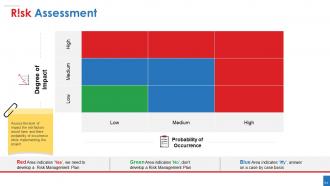
Slide 2: This slide shows Risk Assessment matrix with probability of occurence. Green Area indicates ‘No’, don’t develop a Risk Management Plan. Red Area indicates ‘Yes’, we need to develop a Risk Management Plan. Blue Area indicates ‘iffy’, answer on a case by case basis. Assess the level of impact the risk factors would have and there probability of occurrence while implementing the project.
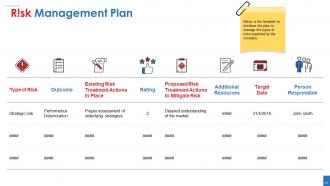
Slide 3: This slide shows a Risk Management Plan. The template lists down the plan to manage the types of risks expected by the company.
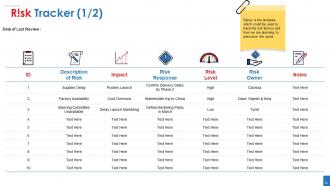
Slide 4: This slide presents a Risk Tracker. It can be used to track the risk factors and planning to overcome the same.
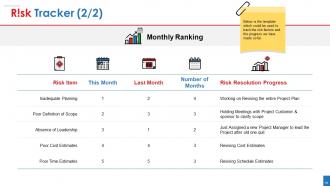
Slide 5: This slide also presents a Risk Tracker. It can be used to track the risk factors and the progress made so far.
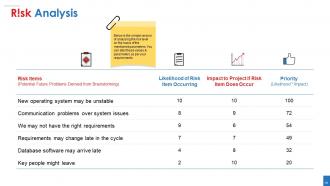
Slide 6: This is a Risk Analysis slide. Analyse the risk level on the basis of the mentioned parameters. You can alter these values & parameters as per your requirements.
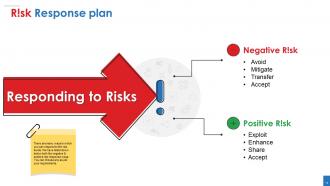
Slide 7: This slide presents a Risk Response plan divided into Negative and Positive Risk. Negative R!sk (Avoid, Mitigate, Transfer, Accept) Positive R!sk (Exploit Enhance Share Accept) There are many ways in which you can respond to the risk levels. We have listed down below both the negative & positive risk response ways. You can choose any as per your requirements.
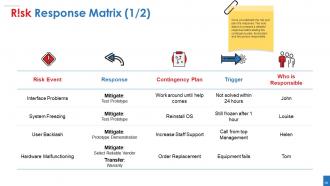
Slide 8: This slide presents a Risk Response Matrix. Once you estimate the risk and plan the response. The next step is to prepare a detailed response matrix stating the contingency plan, its duration and the person responsible.
Slide 9: This is a Coffee Break slide to halt. You can change the slide content as per need.
Slide 10: This slide presents Charts & graph to proceed forward.
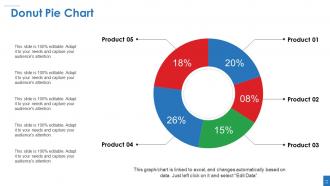
Slide 11: This is Donut Pie Chart slide for product/entity comparison etc.
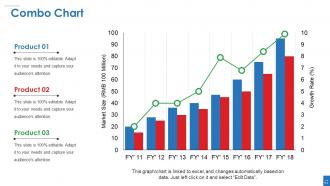
Slide 12: This is a Combo Chart slide for product/entity comparison etc.
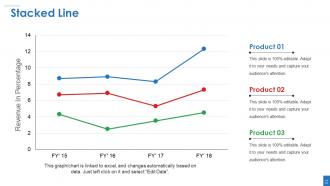
Slide 13: This is a Stacked Line graph slide for product/entity comparison etc.
Slide 14: This slide is titled Additional Slides to move forward.
Slide 15: This is Our Mission slide. State your mission here.
Slide 16: This is Our Team slide with name, designation and image boxes. State team specifications here.
Slide 17: This is an About Us slide. State team/company specifications here.
Slide 18: This is an Our Goal slide. State goals here.
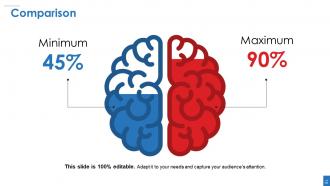
Slide 19: This is a Comparison slide for comparing entities/products etc.
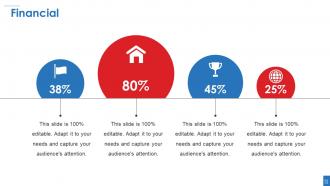
Slide 20: This is a Financial scores slide. State financial aspects here.
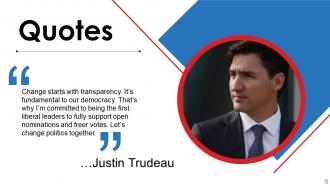
Slide 21: This is a Quotes slide for conveying company beliefs, messages etc.
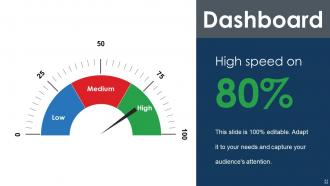
Slide 22: This is a Dashboard slide with High, Medium and Low as parameters to be shown.
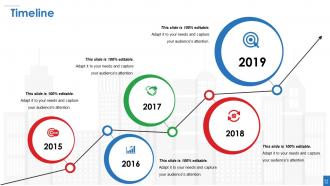
Slide 23: This is a Timeline slide to present growth, milestones etc.
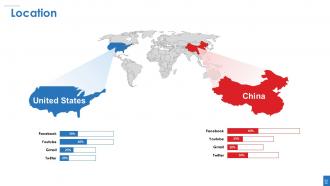
Slide 24: This is a Location slide of a world map image to show global growth, presence etc.
Slide 25: This is a Venn diagram image slide to show information, specifications etc.
Slide 26: This is Our Target slide. State company targets etc. here.
Slide 27: This is a Mind Map image slide to show information, specifications etc.
Slide 28: This is a Silhouettes image slide to show people related information, specifications etc.
Slide 29: This is a Bulb/Idea image slide to show innovative aspects, information, specifications etc.
Slide 30: This is a Magnifying Glass image slide to show information, specifications etc.
Slide 31: This is a Thank you slide with Address #street number, city, state, Contact Numbers, Email Address.
Project Risk Powerpoint Presentation Slides with all 31 slides:
Our Project Risk Powerpoint Presentation Slides are delightfully affordable. Guaranteed to bring a grin to your face.





FAQs for Project Risk
So basically you wanna start by listing out what could go wrong, then figure out how likely each thing is and how bad it'd mess you up. Prioritize the scary stuff first. Then make a plan for each risk - like what you'll do if it actually happens. Here's the thing though - most people do all that upfront work and then totally forget about it. Big mistake. You gotta keep checking back on your risk list throughout the whole project because new stuff pops up. I learned this the hard way on my last project when we didn't update our risk register for like 3 months. Being proactive saves you so much stress later, trust me.
Look, both types help you dodge those "wait, what just happened?" disasters. Qualitative stuff is great for quick sorting - high impact, low probability, whatever. Gets you focused on the right fires first. Then quantitative dives into actual dollars and timeline padding, which honestly your stakeholders will love seeing. I'd say start broad with qualitative to spot your major headaches, then crunch numbers on anything that could tank the whole thing. You'll end up with realistic plans instead of wishful thinking. Plus you won't be scrambling when Murphy's Law kicks in.
You definitely need other people weighing in on risks - seriously, project managers miss so much stuff. Finance folks will catch budget red flags you'd never think of. End users? They'll point out usability nightmares waiting to happen. Operations teams know exactly where implementation gets messy (trust me on this one). Plus these people have seen projects blow up before and know the office politics that could tank yours. Actually, the more different departments you get involved early, the better your risk list becomes. Set up some workshops with key people from each area - it's worth the extra meetings upfront.
Honestly, good communication is your best bet for keeping project risks from blowing up. Most disasters happen because people are working with old info or just don't understand what's expected. Weekly check-ins are a game changer - I can't stress this enough. Set up a shared risk tracker that everyone can jump into and update. The key is making your team comfortable flagging problems early, even the small stuff. Once people start speaking up about potential issues, you'll catch things way before they turn into real headaches.
Honestly, just start with brainstorming - get different people in the room because they'll catch stuff you'd never think of. SWOT analysis and risk checklists work well too, those three cover most bases. If you know someone who's tackled similar projects, definitely pick their brain. Super helpful. Also dig through your project docs and question your assumptions - risks love to hide there. Oh, and don't make this harder than it needs to be. A simple brainstorm session plus a basic checklist will spot the obvious stuff you'd kick yourself for missing later.
So basically you make a simple grid - probability on one side, impact on the other. Plot your risks and focus on the scary top-right corner first. I always start by brain-dumping every risk I can think of, then rate how likely each one is and how badly it'll mess up your timeline, budget, whatever. Honestly, don't try to fix everything at once or you'll go crazy. Pick maybe 3-5 of the worst ones and actually create plans for those. Oh, and make sure someone's watching each risk - can't just write it down and forget about it.
So there's basically four ways to handle risks. **Avoid** them completely by changing your whole approach. **Mitigate** by doing stuff upfront to lower the chances or impact. **Transfer** it - like getting insurance or making it the vendor's headache instead of yours. Or just **accept** it if dealing with the risk costs more than the actual problem would. Honestly, the transfer option is pretty underrated. Match each strategy to how bad the risk actually is and what you can afford to do about it. Go through your risk list, figure out what's realistic for each one, then pick whatever makes the most financial sense.
Dude, external stuff will absolutely wreck your project if you're not watching for it. Market shifts, new regulations, economic weirdness - none of that was probably in your original risk plan. Our supply chain got completely hammered last year and we were scrambling. You've got to look beyond just internal problems. Set up Google alerts for industry news or whatever. Stay tight with your stakeholders so they tip you off early. I always pad my timelines now because markets are just... unpredictable? The big thing is making this a regular habit, not something you do once during planning.
Honestly, the worst thing you can do is treat it like a box-checking exercise. Get your whole team involved - that quiet dev might catch something huge everyone else missed. I've seen projects tank because they only planned for the obvious risks. Also, don't just write stuff down and ignore it. Your risk register needs regular updates as things change. Weekly 15-minute check-ins work great for this. The other trap? Planning responses that sound good on paper but are totally unrealistic when shit actually hits the fan. Be honest about what you can actually pull off.
Just bake it right into your sprint stuff instead of treating it like some separate process. During planning, throw in 10 minutes to chat about what might blow up with your upcoming stories. Your standups and retros? Perfect spots for quick risk check-ins. Most teams already do this without calling it "risk management" tbh. Try adding a simple risk board next to your kanban - way easier to see what's brewing. Oh, and skip the heavy docs nonsense. Keep it collaborative and light. Maybe start by tossing one risk question into your next retro and see what happens.
Honestly, I'd focus on just a few metrics that actually matter. Track how often your identified risks happen versus what you expected. When they do hit, measure the damage - did it match your predictions? My favorite is checking if your prevention stuff worked - like, did those safety measures actually reduce the odds like you hoped? Also time how fast you recover from problems. Oh and definitely watch your budget variance from risk events, though that one's kinda obvious. Don't go crazy measuring everything though - pick 2-3 that make sense for your project and stick with those consistently.
So basically, AI can crunch through tons of old project data and catch risk patterns you'd totally miss. Like, it'll predict what's most likely to go wrong based on your team size, timeline, budget - all that stuff. The algorithms keep getting smarter at spotting issues before they blow up into real problems. Schedule delays, going over budget, not having enough people, you know? You can even run those "what if" scenarios to see how different choices might pan out. Honestly though, I'd start small - maybe just pick one type of risk and test a tool there first.
Your risk register is like an early warning system for your project. Update it weekly and bring it up in team meetings so stuff doesn't slip through the cracks. I've watched too many projects get hit by problems that were spotted months ago but never properly tracked - it's painful to see. Give each risk an owner and set review dates. Weekly updates work pretty well in my experience. Don't just create it once and abandon it somewhere. Treat it more like checking your project's pulse regularly, and you'll spot trouble before it actually becomes trouble.
Definitely dig into your old projects for risk patterns! Check what caught you off guard before and which fixes actually worked vs the ones that seemed smart but totally bombed. I keep notes on this stuff because honestly we forget the messy details super fast. Those "oh hell no, never again" moments? Turn them into actual prevention steps for next time. Go through your post-mortems and add new risk categories you discovered the hard way. Then tweak your probability guesses based on real data from similar work you've done - way better than just winging it.
Definitely work on both the technical stuff and people skills. Monte Carlo analysis and decision trees are solid for actually putting numbers on risks - those frameworks really do help. Communication is massive though since you're constantly translating scary technical details for executives who just want the bottom line. I can't tell you how many project managers I've worked with who totally bomb at stakeholder management and wonder why everything falls apart. Oh, and learn how to run good risk workshops - facilitation skills matter more than you'd think. Maybe grab a basic risk cert first if you don't have one already.
-
Amazing product with appealing content and design.
-
Helpful product design for delivering presentation.