


Risk Identification Process Powerpoint Presentation Slides





Try Before you Buy Download Free Sample Product
 Impress Your
 Audience
 100%
100% Editable
 Save Hours
 of Time


Showcase planned methods of hazard analysis with our content ready Risk Identification Process Powerpoint Presentation Slides. The hazard awareness process PowerPoint complete deck has forty-five PPT slides like risk management introduction, types of risks, risk categories, stakeholder’s management and engagement, risk appetite and tolerance, procedure, risk management plan, risk identification, risk register, risk assessment, risk analysis, risk response plan, risk response matrix, risk control matrix, risk items tracking, tools and practices, risk impact & profitability analysis, risk mitigations strategies, plans, qualitative and quantitative risk analysis, etc. All PowerPoint templates of risk assessment steps presentation are fully editable, edit them as per your specific project needs. The same risk management presentation deck can also be used to portray topics such as risk analysis, risk appetite, business continuity, risk-based auditing, hazard analysis, risk analysis, risk assessment and so on. Download this professionally designed risk management plan presentation deck to mitigate the risk. Our Risk Identification Process Powerpoint Presentation Slides are magnetic in nature. They will draw the right people to your cause.
People who downloaded this PowerPoint presentation also viewed the following :
Content of this Powerpoint Presentation
Slide 1: This slide introduces Risk Identification Process. State Your Company Name and begin.
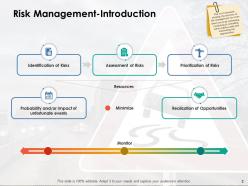
Slide 2: This slide presents Risk Management Introduction describing- Identification of Risks, Assessment of Risks, Prioritization of Risks.
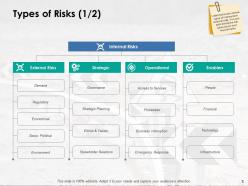
Slide 3: This slide shows Types of Risks describing Internal and External risks.
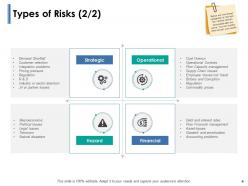
Slide 4: This is another slide on Types of Risks describing- Strategic, Operational, Hazard and Financial risks.
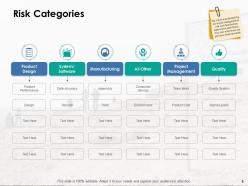
Slide 5: This slide showcases Risk Categories which includes- Product Design, System/ Software, Manufacturing, Project Management, Quality and all other.
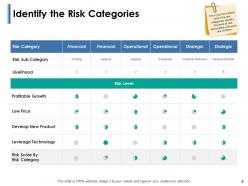
Slide 6: This slide represents Identify the Risk Categories with risk level and other sub categories.
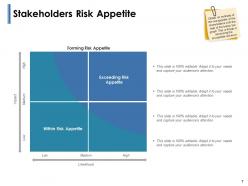
Slide 7: This slide displays Stakeholders Risk Appetite describing risk appetite with the help of bar graph.
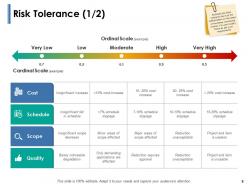
Slide 8: This slide shows Risk Tolerance on a scale describing risk from very low to very high.
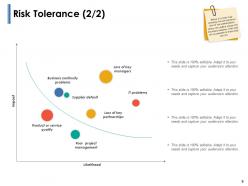
Slide 9: This is another slide on Risk Tolerance describing risk tolerance limit of stakeholders.
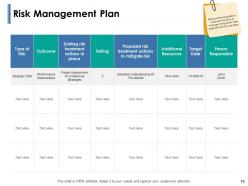
Slide 10: This slide presents Risk Management Plan describing- Type of Risk, Outcome, Existing Risk Treatment Actions in Place, Rating, Proposed Risk Treatment Actions to Mitigate risk, Additional Resources, Target Date and Person Responsible.
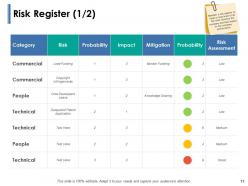
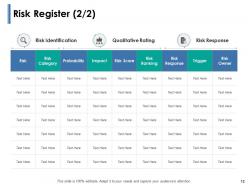
Slide 11: This slide displays Risk Register with- Category, Risk, Probability, Impact, Mitigation and Risk assessment.
Slide 12: This is another slide displaying Risk Register with related text boxes.
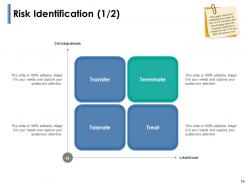
Slide 13: This slide represents Risk Identification with a graph that shows the likelihood and impact of risk on the company and the strategy which the company might opt to mange the risk.
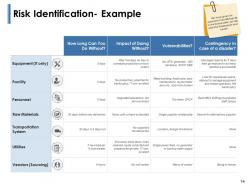
Slide 14: This slide showcases Risk Identification- Example describing Time period, Impact of Doing, Vulnerabilities and Contingency in case of a disaster.
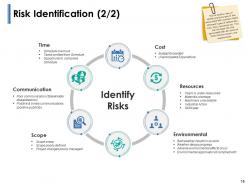
Slide 15: This is another slide on Risk Identification describing factors like cost, time, resources etc.
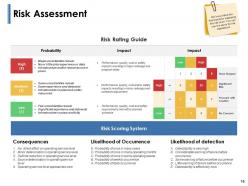
Slide 16: This slide shows Risk Assessment describing Risk Rating Guide with probability and impact along with Risk scoring system describing Consequences, Likelihood of Occurrence and Likelihood of detection.
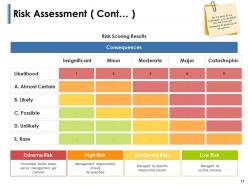
Slide 17: This is another slide continuing Risk Assessment, with this you can obtain the risk score and determine its likelihood of occurrence.
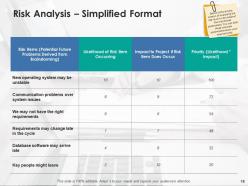
Slide 18: This slide presents Risk Analysis – Simplified Format with related table and text boxes. You can alter these values & parameters as per your requirements.
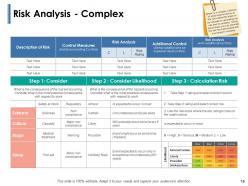
Slide 19: This slide displays Risk Analysis- Complex. This is a complex version of analysing the risk level. Follow the described steps to calculate risk.
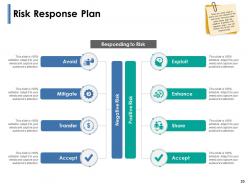
Slide 20: This slide represents Risk Response plan describing positive and negative ways of responding to the risk levels.
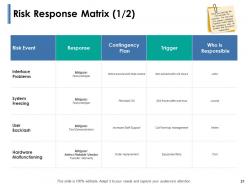
Slide 21: This slide showcases Risk Response Matrix stating the contingency plan, its duration and the person responsible.
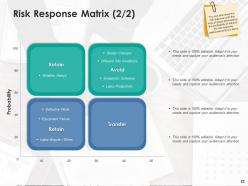
Slide 22: This is another slide showcasing Risk Response Matrix with the help of graph describing the probability of risk and the risk response associated with it.
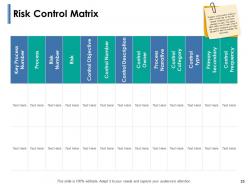
Slide 23: This slide shows Risk Control Matrix. This matrix helps you to keep a log of the control measures you have decided to take to manage the risk levels.
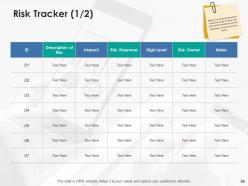
Slide 24: This slide presents Risk Tracker which could be used to track the risk factors and how we are planning to overcome the same.
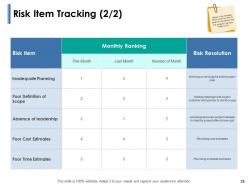
Slide 25: This is another slide presenting Risk Item Tracking which could be used to track the risk factors and the progress we have made so far.
Slide 26: This slide displays Risk Identification Process Icons.
Slide 27: This slide reminds about a 15 minutes coffee break.
Slide 28: This slide is titled Additional slides for moving forward.
Slide 29: This is a Venn slide with text boxes to show information.
Slide 30: This is Our Target slide. State your targets here.
Slide 31: This is a Timeline slide to show information related with time period.
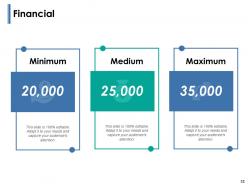
Slide 32: This is a Financial slide. Show your finance related stuff here.
Slide 33: This slide is titled as Post it. Post your important notes here.
Slide 34: This is Our Mission slide with related imagery and text.
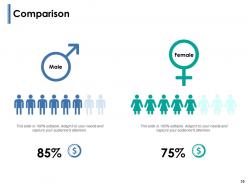
Slide 35: This is a Comparison slide to state comparison between commodities, entities etc.
Slide 36: This slide shows Mind Map for representing entities.
Slide 37: This is Meet Our team slide with names and designation.
Slide 38: This is a Silhouettes slide to show people specific information etc.
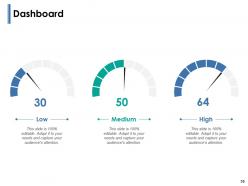
Slide 39: This slide shows Dashboard with text boxes.
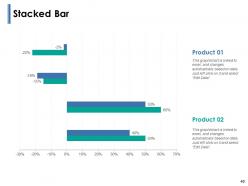
Slide 40: This slide displays Stacked Bar chart with two products comparison.
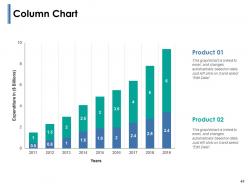
Slide 41: This slide presents Column Chart for comparing two different products.
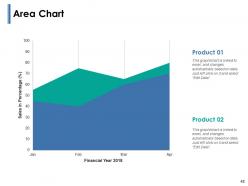
Slide 42: This slide presents Area chart with two products comparison.
Slide 43: This is a Bulb or Idea slide to state a new idea or highlight specifications/information etc.
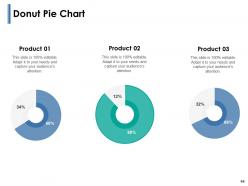
Slide 44: This slide shows Donut Pie Chart with data in percentage.
Slide 45: This is a Thank You slide with address, contact numbers and email address.
Risk Identification Process Powerpoint Presentation Slides with all 45 slides:
Use our Risk Identification Process Powerpoint Presentation Slides to effectively help you save your valuable time. They are readymade to fit into any presentation structure.




FAQs for Risk Identification Process
Honestly, it's not that complicated. Get your team together and just brainstorm everything - internal stuff, external threats, operational headaches, whatever pops up. Document each one with what might trigger it and how bad it could get. Sort them into buckets like financial, operational, compliance (you know the drill). Then rate how likely they are and how much damage they'd do. Don't get too in the weeds at first - you can always go back and tweak things. I'd definitely pull in people from other departments though, they'll catch blind spots you totally missed. Priority ranking comes last based on your ratings.
Mix up who you invite - different departments, junior and senior people, various thinking styles. Pick a specific focus like "Q1 launch risks" so you don't end up discussing every possible thing that could go wrong in the universe. Try "what if" scenarios to get ideas flowing. Have someone write down everything, not just the obvious stuff. The quiet people often catch things everyone else misses, so make sure they feel comfortable speaking up. Oh, and actually follow up within a week to sort through it all - otherwise you'll just have wasted everyone's time with another pointless meeting.
Honestly, old project data is like your best friend for spotting risks early. I always check previous project reports first - seriously saves me hours later. Look for patterns: did budgets always blow up? Were certain vendors constantly late? Technical stuff that kept breaking? Dig through those post-mortem reports and team feedback from similar projects. Even the informal stuff helps. The trick is building your own little database or checklist from all this. Way better than starting from scratch every single time. Trust me, you'll thank yourself later when you catch something everyone else missed.
Look, stakeholders will spot risks you'd never see coming. Customers, vendors, other departments - they all have blind spots you don't. Ask them "what keeps you up at night about this?" instead of boring checklist questions. You'll catch operational and tech risks that seem obvious once someone points them out. Gets them invested too, which honestly saves you headaches later. I learned this the hard way on a project last year. Set up those conversations early though - don't wait until you're already locked into decisions.
Start with brainstorming sessions and expert interviews during planning. Risk registers are honestly a game-changer - I swear by them. Mix in checklists and SWOT analysis as things move forward. During execution, assumption analysis and what-if scenarios work great, plus regular stakeholder check-ins. Root cause analysis helps when problems actually hit. Different project phases need different approaches, so stay flexible but systematic. Oh, and set up those recurring risk meetings - makes identification automatic instead of something you forget about until it's too late.
Tech tools are honestly game-changers for spotting risks you'd miss otherwise. AI platforms can crunch through tons of data and catch patterns that would take forever to find manually. Predictive analytics are pretty wild too - they'll flag stuff before it even becomes a problem. Risk management software pulls everything into one place and uses algorithms to highlight your blind spots. Real-time dashboards keep you updated as things change. Oh, and definitely start with automated data collection first - don't try to do everything at once or you'll overwhelm your team. Then add the fancy analytics once everyone's comfortable.
Honestly, it depends a lot on what industry you're in. Healthcare has to worry about patient safety and HIPAA stuff - they can't mess around with that. Tech companies? Totally different world. They're all about cyber threats and moving fast, even if things break sometimes. The regulatory stuff shapes everything too. Like, healthcare moves super slow (which makes sense when people's lives are at stake), but tech embraces that whole "fail fast" thing. Your company's risk tolerance matters a ton here. I'd look at what frameworks other companies in your space are using first - gives you a good starting point.
Track your coverage first - are you catching risks everywhere or missing whole chunks? Speed matters too. How fast do you spot new risks before they hit? The "miss rate" is brutal but honest - basically all the stuff that blindsided you even with your fancy process. I'd start there actually, look at last quarter's surprises and figure out what slipped through. Also watch your escalation patterns and how current your risk register stays. Quality of updates tells you if people actually care or they're just checking boxes.
Oh man, culture totally screws with risk identification. Some cultures hint at problems instead of just saying them outright - drives me crazy honestly. Then you've got power distance issues where people won't challenge their boss even when they spot huge red flags coming. What's wild is how different groups see the same situation - one team thinks it's catastrophic while another's like "meh, we got this." Anonymous feedback tools are your friend here. Create different ways for people to share concerns. You need multiple channels because otherwise you're flying blind with half the picture.
Honestly, most teams get tunnel vision and just see the obvious stuff. The sneaky risks? Totally missed. Plus people are weird about sharing "dumb" concerns or they just nod along with whoever's been there longest. Try getting someone from outside to poke holes in your plan. SWOT analysis helps too, though it sounds boring. Make sure nobody feels stupid for speaking up - that's huge. Anonymous submissions work surprisingly well since people will actually say what they're thinking. Oh, and treat it like brainstorming, not some formal presentation where everyone's trying to impress each other. Way more honest that way.
Honestly, SWOT analysis is pretty solid for catching risks you'd totally miss otherwise. You know how it works - strengths, weaknesses, opportunities, threats. The weaknesses part alone will show you where you're vulnerable internally, and threats obviously point out external stuff coming at you. What's cool is it gets everyone on your team thinking about risks from totally different perspectives. I've watched teams suddenly go "oh crap, we never thought about that" during these sessions. Super worth doing with your stakeholders when you're mapping out what could go wrong.
Honestly, just make a simple grid - probability vs impact, both high/medium/low. Takes like 5 minutes and works every time. Focus on the stuff that's both likely to happen AND would really mess things up if it did. Those are your no-brainers to tackle first. After that, think about your timeline and what you can actually handle right now. Sometimes a medium-risk thing becomes urgent just because you're short-staffed or whatever. Don't stress about making it perfect though - you can always shuffle priorities around as things change.
So scenario analysis basically forces you to think through "what if" situations instead of just guessing at risks. You walk through stuff like "what happens if our main supplier crashes" or "what if rates jump 3%." It's like stress-testing your plans, which honestly sounds boring but actually works. Different scenarios show you risk chains you wouldn't normally see - things that seem fine until one domino falls. Pick maybe 3-4 scenarios that could realistically happen but push your thinking. Don't go crazy with like 15 scenarios though, you'll burn out your team.
Honestly, regulations are kind of a blessing in disguise for risk management. They make you look at stuff you'd probably ignore otherwise. Healthcare has to worry about data privacy, banks get hit with operational risk requirements - the regulators have basically seen every possible way things can go wrong. Your process gets way more thorough, though it takes forever since you're juggling compliance boxes AND actual business risks. I'd start by figuring out what regulations hit your industry hardest. Then map those to the risk areas they want covered. It's tedious but you'll catch way more potential problems.
You really can't skip the monitoring piece - I learned that the hard way. Things shift crazy fast these days. New threats, business changes, processes getting tweaked. What looked totally fine three months ago? Could be a disaster waiting to happen now. Monthly check-ins work way better than quarterly ones, trust me on this. Get some automated alerts running if you can. The key is catching when your old assumptions don't make sense anymore. I've watched too many teams get blindsided because they thought their risk assessment from last quarter was still good. It usually isn't.
-
Appreciate the research and its presentable format.
-
It saves your time and decrease your efforts in half.
-
Really like the color and design of the presentation.
-
Awesome presentation, really professional and easy to edit.