

Risk Analysis Powerpoint Presentation Slides




Try Before you Buy Download Free Sample Product
 Impress Your
 Audience
 100%
100% Editable
 Save Hours
 of Time


Identify and assess the factors that threaten the success of the project by employing this Risk Analysis Powerpoint Presentation Slides. Highlight the plans to manage the types of risks expected by using professionally designed Risk management plan PPT templates. Identify the types of risks associated with the project using the risk identification process PowerPoint complete deck. You can also showcase the framework for assessing the risk level with the aid of the readily available risk assessment PPT graphics. You can showcase the risk score and determine its likelihood of occurrence. Use the parameters present in the risk analysis table and analyze the risk level. Demonstrate the steps to calculate the risk and its certainty utilizing the business risk PPT slides. Mention how to respond to the risk by highlighting positive and negative risk factors. Reduce the effects of the risks by incorporating risk management strategies. Thus curb and manage the risk of your company by downloading this risk mitigation plan PPT Presentation.
People who downloaded this PowerPoint presentation also viewed the following :
Content of this Powerpoint Presentation
Slide 1: This slide introduces Risk Analysis. State Your Company Name and begin.
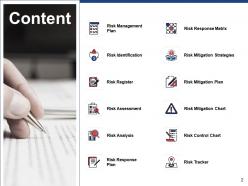
Slide 2: This slide shows content of the presentation.
Slide 3: This slide presents Risk Management Plan describing- Type of Risk, Outcome, Existing Risk Treatment Actions in Place, Rating, Proposed Risk Treatment Actions to Mitigate risk, Additional Resources, Target Date and Person Responsible.
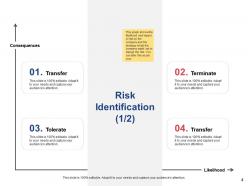
Slide 4: This slide represents Risk Identification with a graph that shows the likelihood and impact of risk on the company and the strategy which the company might opt to mange the risk.
Slide 5: This is another slide on Risk Identification describing factors like cost, time, resources etc.
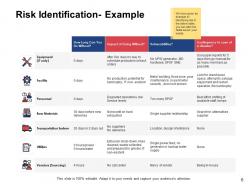
Slide 6: This slide showcases Risk Identification- Example describing Time period, Impact of Doing, Vulnerabilities and Contingency in case of a disaster.
Slide 7: This slide shows Risk register to keep a close track of all the risks faced by the company and their impact on the company performance.
Slide 8: This slide shows Risk Assessment describing Risk Rating Guide with probability and impact along with Risk scoring system describing Consequences, Likelihood of Occurrence and Likelihood of detection.
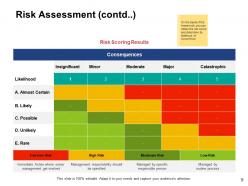
Slide 9: This is another slide continuing Risk Assessment, with this you can obtain the risk score and determine its likelihood of occurrence.
Slide 10: This slide presents Risk Analysis – Simplified Format with related table and text boxes. You can alter these values & parameters as per your requirements.
Slide 11: This slide displays Risk Analysis- Complex. This is a complex version of analysing the risk level. Follow the described steps to calculate risk.
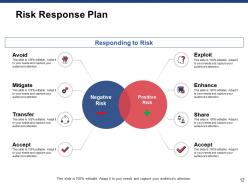
Slide 12: This slide represents Risk Response plan describing positive and negative ways of responding to the risk levels.
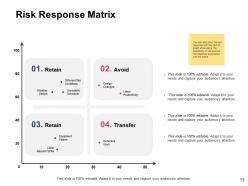
Slide 13: This slide showcases Risk Response Matrix with the help of graph describing the probability of risk and the risk response associated with it.
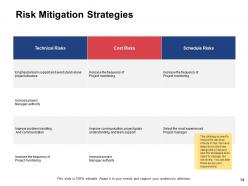
Slide 14: This slide presents Risk Mitigation Strategies describing Technical, cost and scheduled risks.
Slide 15: This slide shows Mitigation Strategy with related imagery and text.
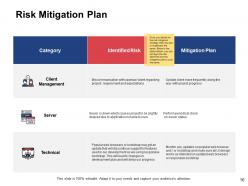
Slide 16: This slide displays Risk Mitigation Plan in a tabular form.
Slide 17: This slide showcases Risk Mitigation Chart with likelihood and impact of risk.
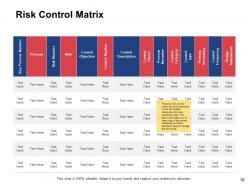
Slide 18: This slide shows Risk Control Matrix. This matrix helps you to keep a log of the control measures you have decided to take to manage the risk levels.
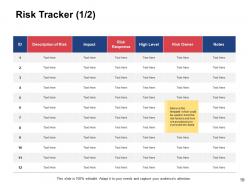
Slide 19: This slide presents Risk Tracker which could be used to track the risk factors and how we are planning to overcome the same.
Slide 20: This is another slide presenting Risk Item Tracking which could be used to track the risk factors and the progress we have made so far.
Slide 21: This slide displays Risk Analysis Icons.
Slide 22: This slide is titled Additional slides for moving forward.
Slide 23: This is Meet Our team slide with names and designation.
Slide 24: This is About Us slide to show company specifications etc.
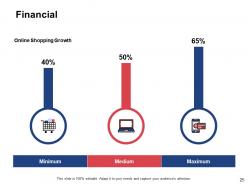
Slide 25: This is a Financial slide. Show your finance related stuff here.
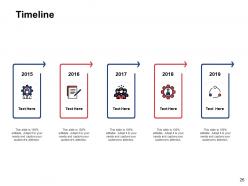
Slide 26: This is a Timeline slide to show information related with time period.
Slide 27: This slide is titled as Important Notes. Post your notes here.
Slide 28: This is a Puzzle slide with text boxes.
Slide 29: This is a Location slide with maps to show data related with different locations.
Slide 30: This is an Idea or Bulb slide to state a new idea or highlight information, specifications etc.
Slide 31: This slide shows Stock Chart with two products comparison.
Slide 32: This is a Thank You slide with address, contact numbers and email address.
Risk Analysis Powerpoint Presentation Slides with all 32 slides:
Use our Risk Analysis Powerpoint Presentation Slides to effectively help you save your valuable time. They are readymade to fit into any presentation structure.













FAQs for Risk Analysis
So you need four main things: figure out what could go wrong, assess how likely/bad each thing would be, plan how to deal with them, and keep monitoring everything. Someone needs to own each risk too - otherwise nothing gets done. Honestly, the monitoring part is where most people mess up because risks change all the time. Just start with a simple spreadsheet that tracks probability, impact, and who's responsible for each one. Don't overthink it at first. You can always make it fancier later, but getting the basics down and reviewing them regularly will save you from most disasters.
Here's what works best - start with qualitative stuff like risk matrices to get the big picture fast. Expert judgment helps you figure out what could actually go wrong. Once you've got that mapped out, pick your biggest risks and hit those with the heavy quantitative analysis. Monte Carlo simulations, probability calculations, all that fun math stuff. Honestly, trying to quantify everything right off the bat is just a waste of time. Run both approaches at the same time if you can swing it - way faster than doing them one after the other. The qualitative work basically tells you where to spend your number-crunching energy.
Dude, visuals are a game-changer for risk stuff. Heat maps and tornado charts make all those boring spreadsheet numbers actually make sense. I swear, nothing kills a meeting faster than someone droning through text-heavy slides - executives just zone out completely. Monte Carlo simulations look way cooler as charts too. Start simple though, even basic probability matrices work wonders. Your team will actually get what the big risks are instead of squinting at rows of data. Visual dashboards show patterns instantly and help non-tech people understand how different risks connect. It's like night and day honestly.
Honestly, just make a simple grid - probability on one side, impact on the other. Throw your risks on there and see what jumps out. The high-prob, high-impact stuff is obvious, but those "unlikely but would totally destroy us" scenarios? Yeah, don't sleep on those either. Give everything a number so you're not just winging it based on feelings. Pick your top 5-10 worst ones and start there. Also factor in what your company can actually handle right now - no point planning for risks you can't afford to address anyway. Check back every few months since things change. Way better than just hoping for the best.
Honestly, the biggest mistake is getting way too attached to historical data - black swans don't care about your past trends. Cherry-picking info that backs up your gut feeling is another trap I see constantly. Don't look at risks like they're separate things either. They connect and make each other worse, which sucks but it's reality. Also, numbers aren't everything - sometimes stakeholders worry about stuff that's hard to quantify but still matters. Oh, and definitely have someone who didn't build your model tear it apart. Fresh eyes catch the blind spots.
Here's the thing - you can't just copy-paste risk frameworks between industries. Finance is all about credit risk, market swings, and staying compliant with SOX or Basel III. Healthcare? Totally different beast. Patient safety comes first, then you've got HIPAA, device failures, clinical trials gone wrong. The basic tools are the same (those probability/impact grids we all love to hate), but everything else shifts. Your risk categories, thresholds, reporting - it all changes. Finance teams lose sleep over quarterly numbers while healthcare folks prioritize keeping patients alive. Pretty different stakes. My advice? Map out your industry's regulations and figure out what your stakeholders actually care about before building anything.
Dude, Monte Carlo simulation is where it's at - @RISK or Crystal Ball will blow your mind for the quantitative stuff. Excel risk matrices are totally fine for simpler qualitative work though. There's also GRC platforms like Resolver if you want something fancier, but honestly they can be overkill. Primavera Risk Analysis is solid if you're already doing project scheduling. Python's everywhere now too for custom models - I've been meaning to learn it better myself. My take? Just start with whatever you already know and don't overthink it.
So scenario planning is basically stress-testing your risk analysis with different "what if" situations. You map out realistic contexts - like supply chain problems hitting during a recession, or losing a major client when new regulations drop. Way more useful than just listing risks by themselves, honestly. The big win? You'll catch those domino effects and risk interactions that regular analysis totally misses. I'd probably start with 3-4 realistic scenarios next time you're doing risk assessment. It's one of those things that sounds boring but actually gives you solid insights.
So here's what I'm seeing everywhere right now - AI predictive analytics is huge, and real-time risk monitoring instead of those boring annual reports we used to suffer through. Climate risk stuff is basically mandatory now across most industries. ESG isn't optional anymore either, it's baked into everything. Behavioral risk analysis got massive after the pandemic (I mean, who predicted toilet paper hoarding?). Honestly, continuous assessment is where it's at these days. You should probably pick up at least one AI risk tool soon - like this quarter if you can swing it.
Start with surveys, interviews, or focus groups to get different perspectives on what risks actually matter. Customers will spot things your internal team totally misses - they see operational stuff way differently than investors do. Map out which stakeholder groups get hit by each risk, then reach out accordingly. Don't just do this once at the beginning either. Set up regular check-ins throughout your analysis. Oh, and ask each group what keeps them awake at night about your organization - you'll be surprised what comes up.
Look, you can't just analyze risks once and forget about it - that's like getting a physical then ignoring your health for three years. Threats change constantly. New vulnerabilities show up out of nowhere, business stuff shifts around, and suddenly your risk analysis is useless. Honestly, I've seen too many companies get burned this way. Set up some automated alerts if you can swing it, but at minimum do quarterly reviews. Better than scrambling when everything's on fire. It's your early warning system - catches problems while you can still do something about them instead of when you're already screwed.
Look, risk analysis stops you from making decisions based on pure guesswork. You can actually compare what might go wrong against what you'll probably gain. Plus it shows you stuff you didn't even think about before. Honestly, the spreadsheets are mind-numbing but whatever - it beats wasting money on ideas that sound brilliant until they implode. The real trick? Don't just create the analysis and forget about it. Actually use what you learned to decide where your time and cash should go. Way better than crossing your fingers and hoping things work out.
Honestly, the biggest thing is making sure you're not screwing over vulnerable people - that's where most risk analyses become total disasters ethically. Who's actually benefiting from your work vs who might get hurt by whatever decisions come next? Be upfront about your assumptions and methods so people can follow your logic. Don't just chase short-term gains if it means ignoring long-term damage to communities. Also, transparency matters way more than most analysts think. Ask yourself if you're putting profit ahead of people's actual wellbeing, because that's usually where things go wrong.
Your cultural background totally changes how risky something feels to you. I've noticed this so much working with international teams - what seems fine to one person feels terrifying to another. Some cultures are way more cautious, others dive right into uncertainty. It affects whether you're thinking about just yourself or the whole group, plus how much you actually trust the system. Time horizons are different too, like short-term vs long-term thinking. When you're doing risk stuff with your team, definitely get different viewpoints in the room and talk through what "acceptable" even means to everyone.
So here's what works - lead with the bottom line first. What does this actually mean for their decisions? Charts and heat maps are your friend because nobody wants to stare at spreadsheets all day. Skip the jargon completely. Talk about budget impact, timelines, stuff they genuinely care about. Real scenarios beat abstract probabilities every time - like, tell them a story they can picture. Always mention how confident you are in the numbers so they know if it's solid or just your best guess. Oh, and don't just dump problems on them. Give clear options with the trade-offs spelled out. That's honestly the biggest thing.
-
Great designs, Easily Editable.