

Concept Of Risk Management Powerpoint Presentation Slides




Try Before you Buy Download Free Sample Product
 Impress Your
 Audience
 100%
100% Editable
 Save Hours
 of Time


Showcase the ways to minimize the threats related to business activities or tasks by using our Concept Of Risk Management PowerPoint Presentation Slides. You can showcase the types of internal and external risks with the aid of the financial risk management presentation template. Use process risk PowerPoint graphic to improve the cost overruns and poor capacity management. You can identify the risk categories and enhance the financial growth of your organization with the help of this risk assessment plan presentation slide. Take the assistance of risk assessment PPT theme to display the strategies that help to reduce the risk involved in specific projects. Employ an operational risk management PowerPoint layout and highlight the steps that decrease the impact of losses. You can outline the various factors that lower the cost of compliance with the help of the risk management ppt. Therefore, download our ready-to-use financial risk assessment presentation template and provide training on how to control hazards or risks.
People who downloaded this PowerPoint presentation also viewed the following :
Content of this Powerpoint Presentation
Slide 1: This slide introduces Concept of Risk Management. State your Company Name and begin.
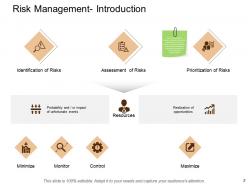
Slide 2: This slide shows Risk Management- Introduction describing- Identification of Risks, Assessment of Risks, Prioritization of Risks.
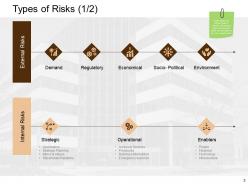
Slide 3: This slide shows Types of Risks describing External, Strategic, operational and enables risks.
Slide 4: This is another slide on Types of Risks describing- Strategic, Operational, Hazard and Financial risks.
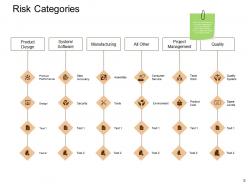
Slide 5: This slide showcases Risk Categories which includes- Product Design, System/ Software, Manufacturing, Project Management, Quality and all other.
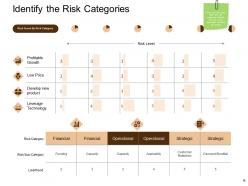
Slide 6: This slide represents Identify the Risk Categories with risk level and other sub categories.
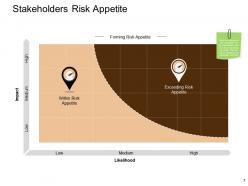
Slide 7: This slide shows Stakeholders Risk Appetite in graphical form.
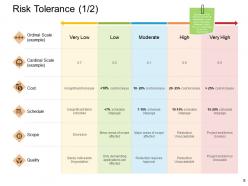
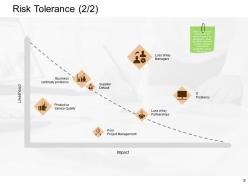
Slide 8: This slide shows Risk Tolerance on a scale describing risk impact from very low to very high.
Slide 9: This is another slide on Risk Tolerance showing the risk tolerance limit of the stakeholders.
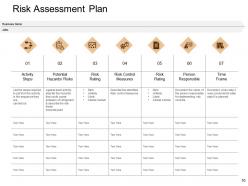
Slide 10: This slide presents Risk Assessment Plan in tabular form.
Slide 11: This slide displays Concept of Risk Management Icons.
Slide 12: This slide reminds about 15 minutes Coffee Break.
Slide 13: This slide is titled as Additional Slides for moving forward.
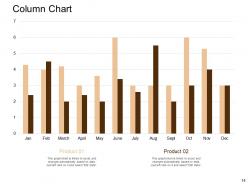
Slide 14: This slide shows Column Chart with two products comparison.
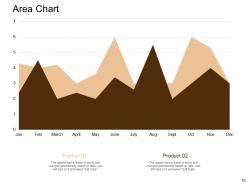
Slide 15: This slide presents Area Chart with two products comparison.
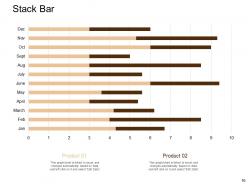
Slide 16: This slide displays Stack Bar with two products comparison.
Slide 17: This is Our Mission slide with related imagery and text.
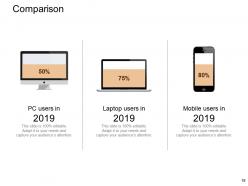
Slide 18: This is a Comparison slide to state comparison between commodities, entities etc.
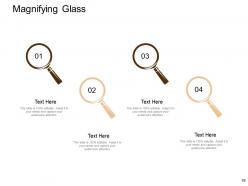
Slide 19: This slide shows Magnifying Glass to highlight information.
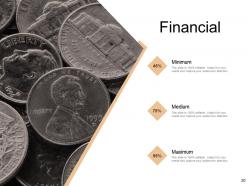
Slide 20: This is a Financial slide. Show your finance related stuff here.
Slide 21: This is a Timeline slide to show information related with time period.
Slide 22: This is Our Team slide with names and designation.
Slide 23: This is an Idea Generation slide to state a new idea or highlight information, specifications etc.
Slide 24: This is a Thank You slide with Address# street number, city, state, Contact Number, Email Address.
Concept Of Risk Management Powerpoint Presentation Slides with all 24 slides:
Use our Concept Of Risk Management Powerpoint Presentation Slides to effectively help you save your valuable time. They are readymade to fit into any presentation structure.







FAQs for Concept Of Risk Management
Okay so you'll want four main things: figuring out what could go wrong, assessing how bad each thing would be, making plans to deal with the worst ones, and then checking in regularly. Don't just grab some template online - those are pretty much garbage. Map out risks that actually apply to your situation. Once you've got that, rank them by how likely they are and how much damage they'd do. Focus your energy on the big scary ones first. Oh and definitely set up some kind of regular review schedule because this stuff changes all the time. Honestly, just start with a basic spreadsheet before you go buying expensive software.
Honestly, just start by mapping out everything your business does and think through what could blow up at each stage. Pull people from different teams into this - finance folks are weirdly good at imagining worst-case scenarios, it's like their superpower. Make a simple grid ranking stuff by how likely it is vs how much it'd hurt if it happened. Cover the obvious internal stuff like equipment dying or key people quitting, but don't sleep on external threats either. Regulatory changes can blindside you. Schedule regular check-ins to update your list because new risks pop up constantly.
Dude, risk perception is basically how scared something makes you feel vs. what's actually likely to happen. Like, we freak out about plane crashes but keep eating garbage food that'll probably kill us way faster. Your brain's weird like that - it focuses on dramatic, rare stuff instead of boring everyday dangers. Everyone's different too based on what they've been through. I swear, half our bad decisions come from this. Next time you're stressed about something, just pause and think: am I being logical here or just letting my anxiety run the show?
Honestly, just build this stuff into your project from the start. During planning, figure out what could go wrong and decide who's handling what. I keep a risk list that we update every team meeting - super tedious but trust me, it works. Buffer time and extra budget? Non-negotiable. Weekly check-ins with your team are clutch here. Problems come up early when you can actually do something about them. Way better than scrambling when everything's on fire. The whole point is making it routine instead of reactive.
Honestly, I'd go with both if you can swing it. Numbers are solid - executives love that stuff and you get precise probability data. But gathering all that historical data? Total pain if you don't already have it sitting around. Qualitative's way quicker though. You capture those expert gut reactions that spreadsheets totally miss, especially with weird new risks. Problem is it gets pretty subjective fast. Most people start with the quick qualitative scan to spot everything, then dive deep with numbers on the big scary ones where you've actually got decent data. Works pretty well in my experience.
Look, the basic risk management process is the same across industries - identify, assess, mitigate, monitor. But what risks you actually worry about? Totally different story. Healthcare obsesses over patient safety and compliance stuff. Finance lives and breathes credit risk and market swings. Manufacturing can't sleep if their supply chain's vulnerable (one factory goes down, millions lost). Tech companies are paranoid about cyber attacks while construction firms barely think about it. Honestly, I'd start by figuring out which risks actually matter in your space first. The tools change but that core cycle doesn't.
Honestly, the automated detection stuff is pretty incredible - AI catches patterns you'd never spot manually. I'd start with whatever's eating up most of your time right now, maybe compliance tracking or something similar? Real-time dashboards are clutch for seeing problems as they pop up. You can set up predictive analytics to catch issues before they blow up, which has saved my butt more than once. The automated reporting is nice too since it keeps everyone in the loop without you having to constantly update spreadsheets. Don't try to automate everything at once though - that's a recipe for chaos.
Here's the thing about stakeholder communication in risk management - you literally can't do it without everyone being in the loop. Different risks hit different people, so you need their perspective to even spot half the problems coming your way. When stuff inevitably goes sideways, stakeholders who already know your game plan will back your moves way faster. I've seen too many teams get burned by keeping executives in the dark until crisis mode hits. Then you're stuck explaining your strategy while the building's on fire, which is... not ideal. Keep people updated on new risks and how the old ones are changing. Short bursts work better than massive reports nobody reads anyway.
Track your incident rates and how fast you're responding to stuff. The real test? Compare actual losses against what you planned for - super boring but tells you everything. Near-misses are honestly where you'll find the best intel on what's breaking down. I'd check these numbers every quarter, maybe sooner if things get weird. Response times matter too - are you catching problems earlier than last year? Don't just go with your gut when tweaking strategies. Let the data do the talking, even when it's not what you want to hear.
Honestly, the resistance to change thing is brutal - I've watched entire teams just pretend new risk protocols don't exist for months. Resource constraints hit hard too. You'll deal with departments doing risk assessment completely differently, plus that annoying "we're too busy for this" attitude everywhere. Getting leadership on board is huge, otherwise you're screwed from the start. Oh, and communication between teams? Usually a mess that makes everything ten times harder. Start with just one department though. Get some wins there first, then spread out. Way easier than trying to change everything at once.
Look, you've gotta figure out what could blow up in your face before it actually happens. Map out your biggest vulnerabilities - money stuff, operations, reputation, whatever keeps you up at night. Then write up some basic playbooks for handling your worst-case scenarios. Yeah, it's boring prep work, but trust me on this one. When shit hits the fan, you don't want to be googling "crisis management tips" at 2am. Practice these scenarios with your team regularly so they're not deer-in-headlights when it matters. Updates are crucial too since risks change.
So compliance is basically your starting point for risk management - covers the bare minimum to avoid getting slapped with fines. But here's the thing, just ticking those boxes won't cut it anymore. Regulations help you spot the big industry risks that everyone's worried about, which is useful I guess. You need way more than that though. Map out what you're already required to do, then look at your actual risk profile. I bet you'll find tons of gaps where compliance doesn't even touch the real problems your business faces.
So basically you want to dig through your company's old data - claims, financial hits, supply chain mess-ups, whatever applies to your business. Look for patterns that happened before things went sideways. Honestly, it's like being a detective but more boring. Grab about 3-5 years worth of incident data and run some basic trend analysis on it. You don't need fancy stats, just spot what usually comes before the bad stuff. That way you can actually prepare instead of scrambling when everything hits the fan. Oh, and update your predictions regularly as new data rolls in.
So risk appetite is your big picture comfort level - like "yeah, we'll take moderate risks for 15% growth." Risk tolerance gets into the weedy details and actual limits. Honestly, most companies mess this up because leadership doesn't communicate clearly enough. You end up with different departments making completely random risk choices that don't match up at all. I always think of it like being hungry (appetite) versus what you'll actually put in your mouth (tolerance). Both matter, and your team needs to know where you stand on both or things get chaotic fast.
So basically, risk management acts like your early warning system for sustainability stuff. You can catch environmental and social problems before they totally blow up on you. Map out your biggest ESG risks first - supply chain issues, climate impacts, new regulations, whatever. Then build action plans around those. Honestly, investors are obsessed with this right now, so it's actually helping your bottom line too. The whole point is spotting these things early so you can adjust your business practices. Makes you way more resilient long-term instead of just scrambling when problems hit.
-
Awesome use of colors and designs in product templates.
-
Really like the color and design of the presentation.