


Introduction To Risk Management Powerpoint Presentation Slides





Try Before you Buy Download Free Sample Product
 Impress Your
 Audience
 100%
100% Editable
 Save Hours
 of Time


Demonstrate that you are genuinely a champion with our Introduction To Risk Management Powerpoint Presentation Slides. You will definitely earn the garlands.
People who downloaded this PowerPoint presentation also viewed the following :
Content of this Powerpoint Presentation
Benefits and risks are the two faces of the same opportunity.
It is reported that by the year 2032, the global risk management market size will reach USD 35.9 billion. Risks that businesses and individuals combat can come in any shape and size. They can be as small as new software not working correctly or as big as the same software, leading to backdoor hacking and causing the organization to lose all its data.
Monitor risks and threats endangering your organization with our dedicated templates.
In 2024, traditional risk management methods alone are no longer sufficient in shielding organizations. With AI and ML overpowering us in every field, we are seeing significant changes in risk management. As a result, the existing system must be upgraded to tackle the new threats that could compromise our security and well-being.
Explore our ready to use templates to ease escalation and report issues first-hand.
Risk Management PowerPoint Presentation Slides
Using this complete deck, you can showcase the importance of risk management in your organization and help you plan and execute robust risk management. Let’s explore the best of what these slides offer.
Template 1 Introduction
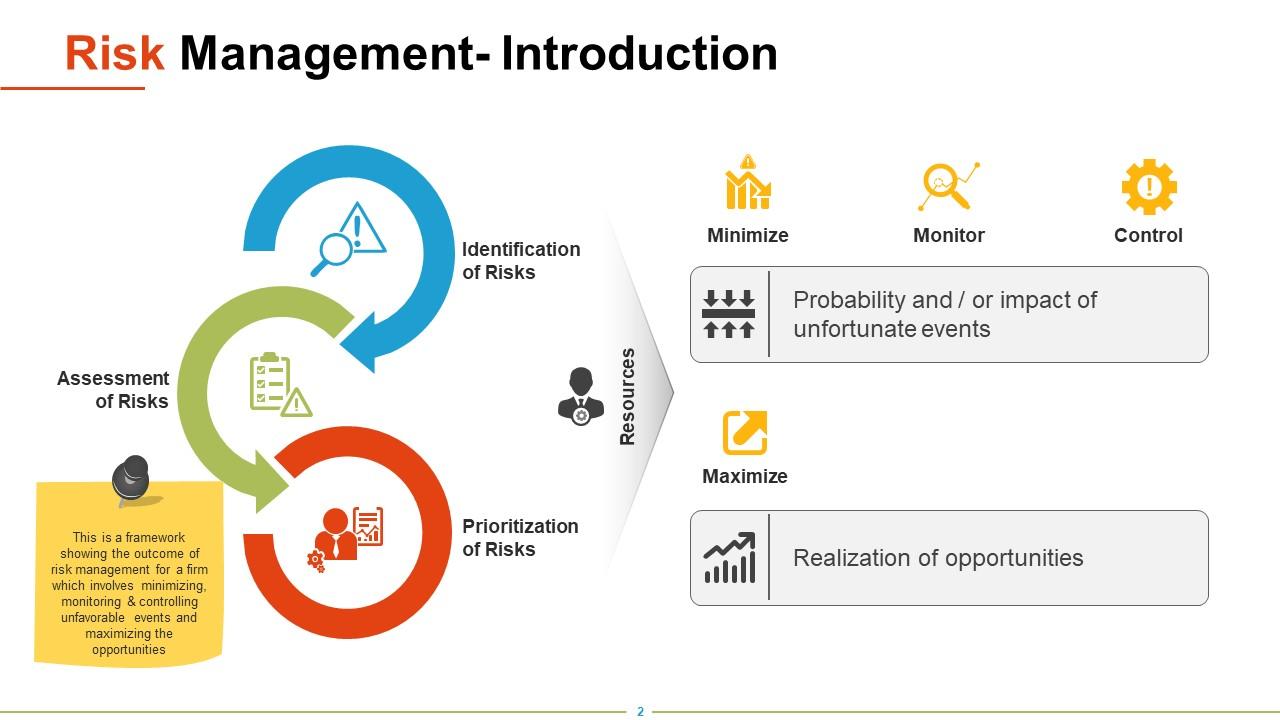
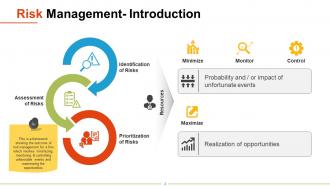
The very first presentation slide of this complete deck features an introduction to the topic that defines all the critical aspects of risk management. You can share the probability and impact of a given risk in various work segments with this presentation layout. In addition, the diagram showcases the risk management cycle and its implementation within the organization.
Template 2: Types Of Risks
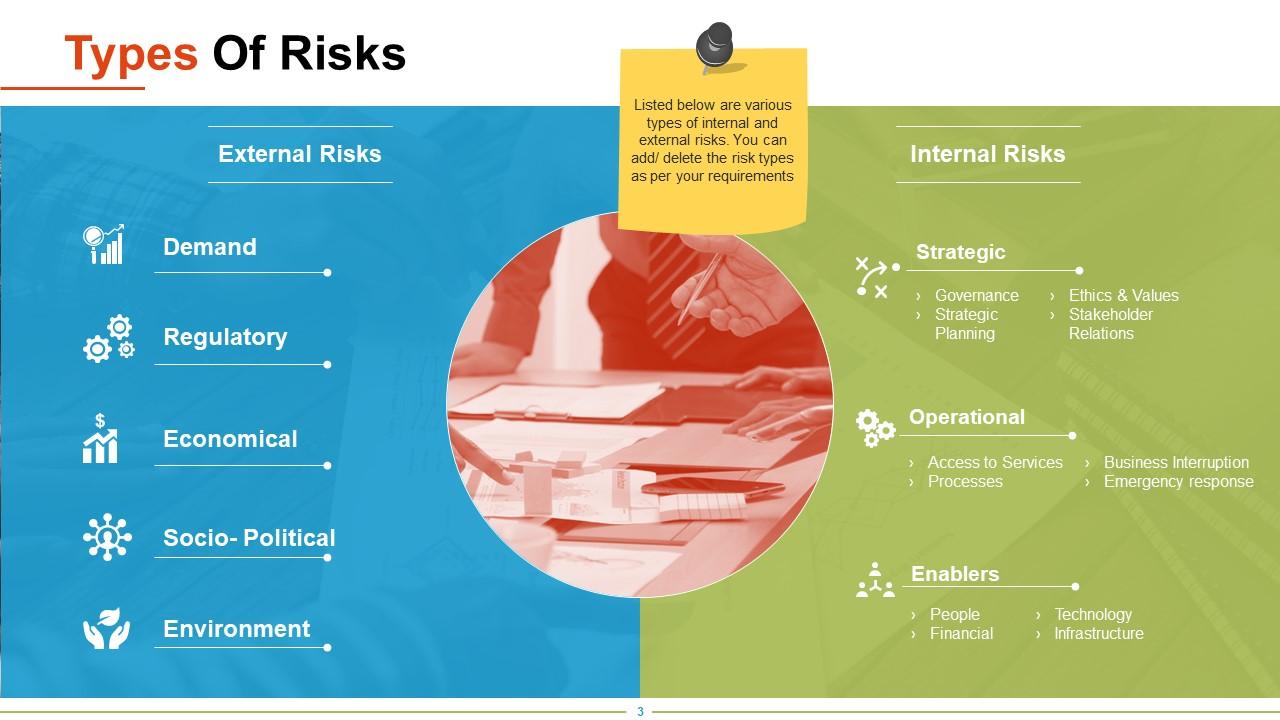
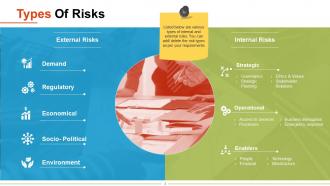
In the given slide, you can highlight various risks endangering your organization. There are two types of risks that every organization needs to prepare for: the external risks and the internal risks. With this PPT Template, you can mention relevant risks associated with your business under these two categories. From this PPT Template, your audience and team members will get to know the difference between internal and external risks. You can then explain how these risks should be handled to minimize the damage.
Template 3: Types Of Risks
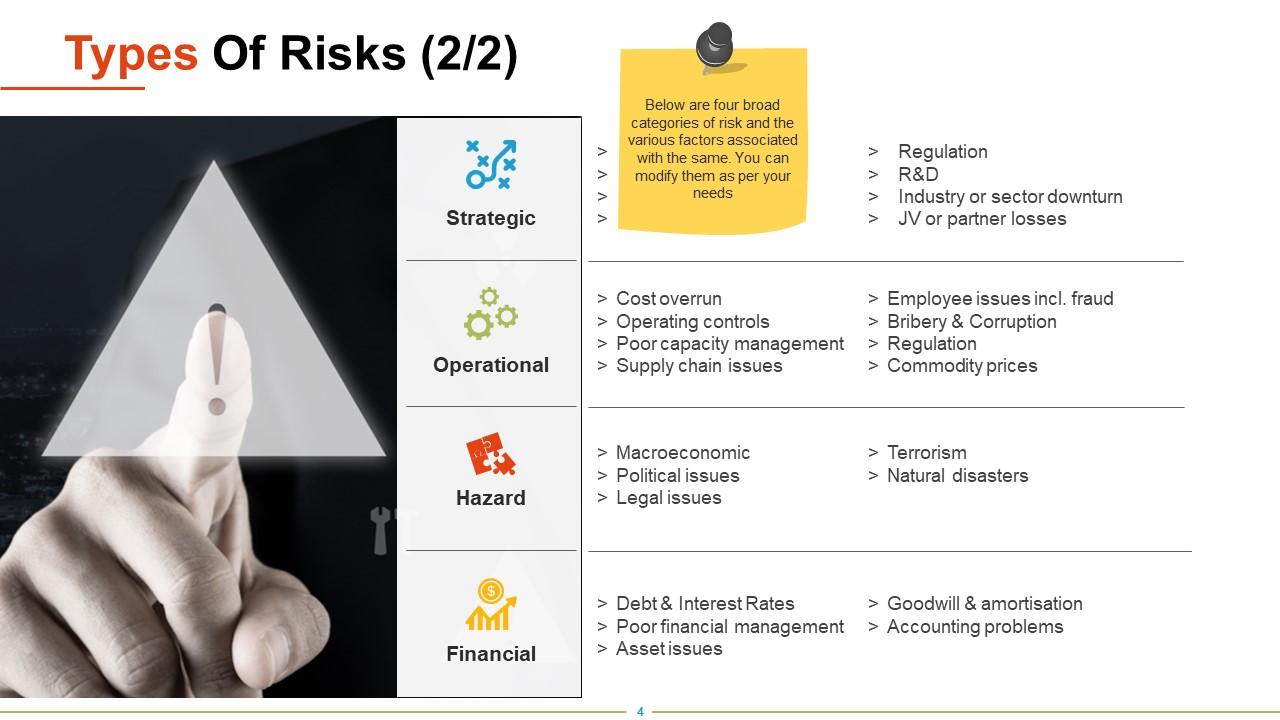
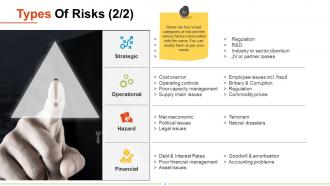
Using this PPT Layout, you can further explain the strategic, operational, hazard, and financial risks to your team members. For example, strategic risks associated with regulations could include R&D, industry downturn, specific fields of work, etc. Furthermore, this PPT Slide also helps you share insights on how poor capacity management, issues in the supply chain, bribery, and corruption could lead to operational risks for the organization. Educating your team members about these risks will allow them to finish their tasks correctly and on a given deadline to maintain the organization’s reputation in the competitive market. Downloading this PPT Template will help you accomplish this.
Template 4: Risk Categories
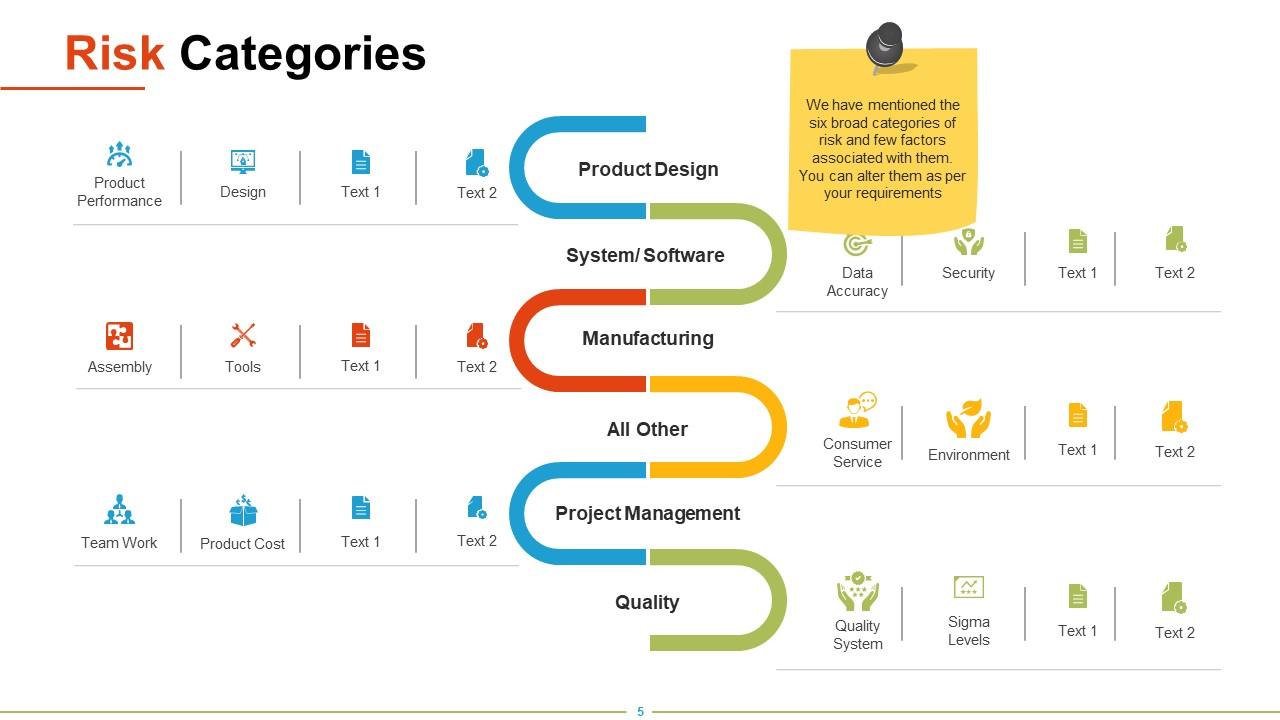
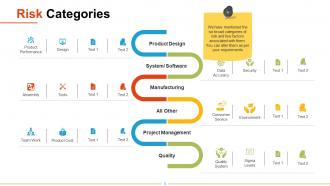
Just like innovation can be found anywhere if you look hard for it, if you try to look for risks in the simplest of your organizational work, you will find them. Using this PPT Layout, you can inform all the teams working individually on the project about the risks associated with their work and the precautionary steps that they need to take to keep their component of the project risk-free.
Template 5: Identifying Risk Categories
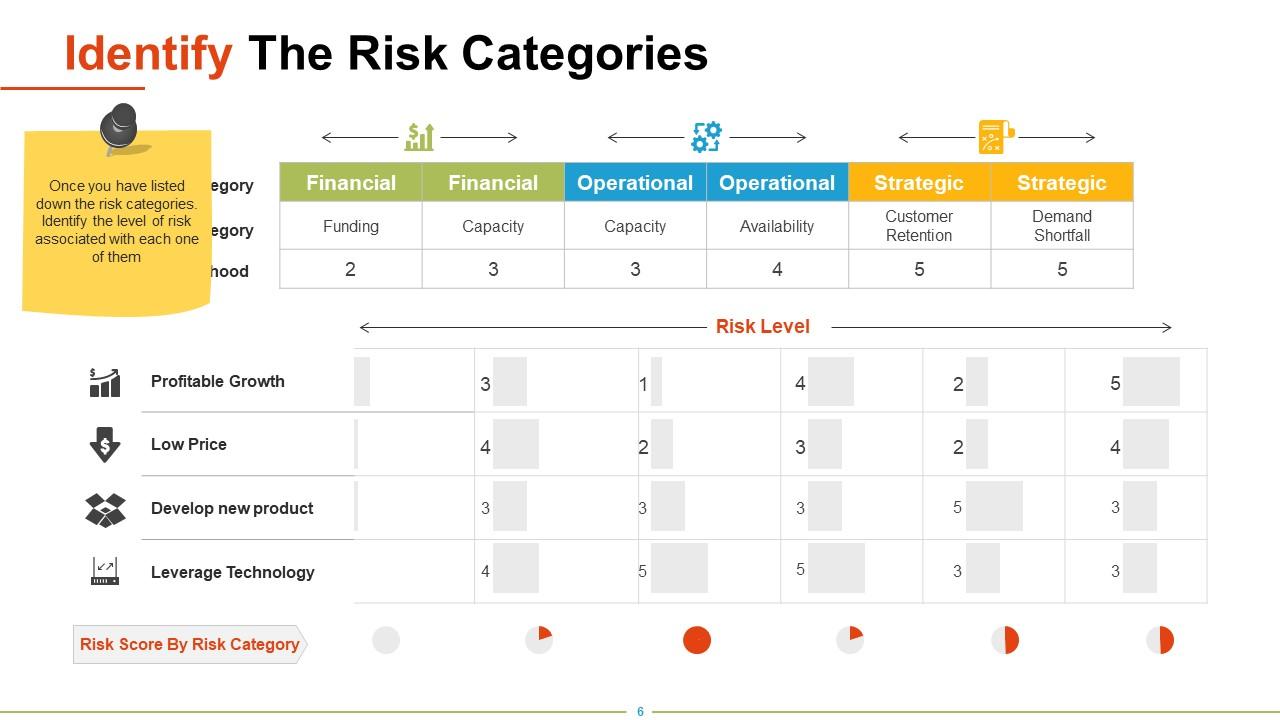
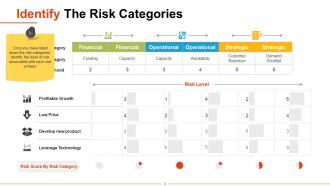
Download this PPT Design to share findings about how various risks impact your organization and the cumulative risk score. Use this presentation layout to highlight the areas such as customer retention and shortfall in demand for products or services, along with others that are most likely to suffer if the risk management protocol fails
to respond on time.
Template 6: Stakeholders Risk Appetite
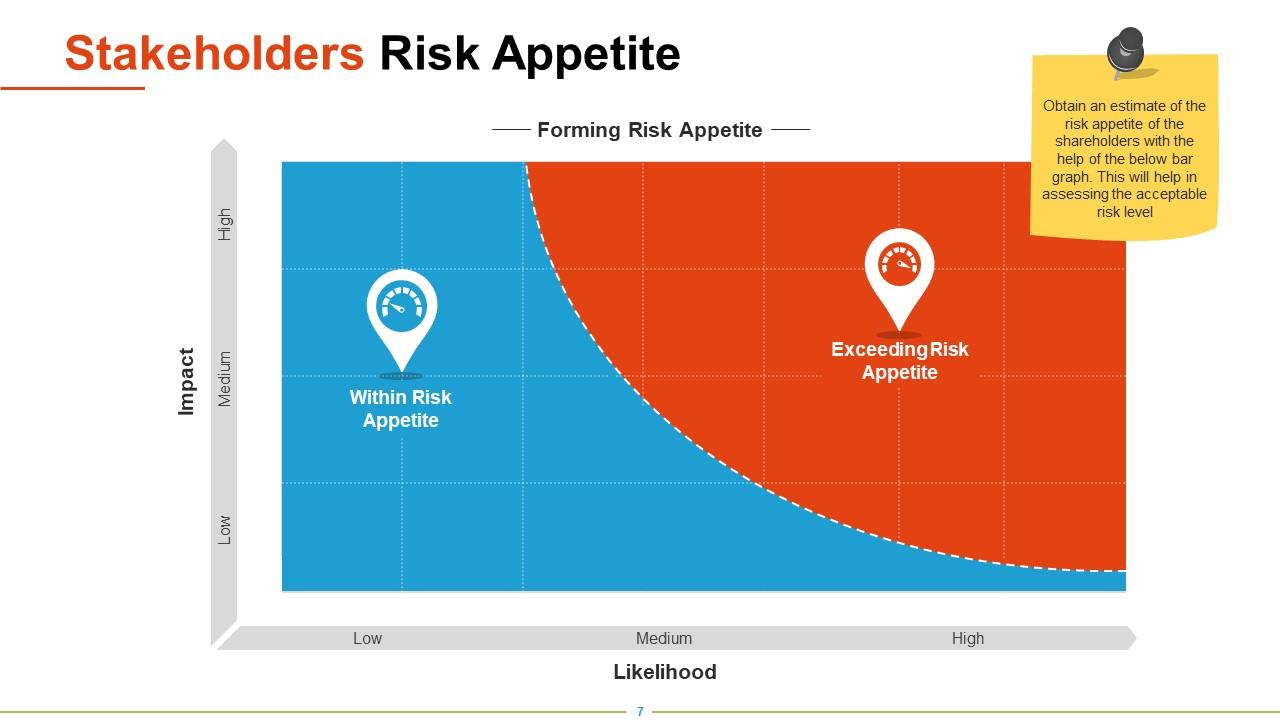
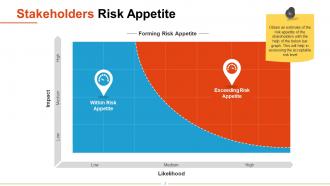
One agenda that needs to be brought up in board meetings is the risk appetite and tolerance that a company can take. Risk appetite is the amount of risk an organization or investors are willing to take to reach revenue goals. Risk appetite differs for different organizations; simultaneously, it is one of the most complex parts of risk management and its implementation. With this presentation design, you can demonstrate which ideas, projects, expansions, and all the other workings of the organization fall within the risk appetite and which exceed the risk appetite. Using this PPT Prest, stakeholders can decide whether or not they should be moving ahead with projects that exceed risk appetite.
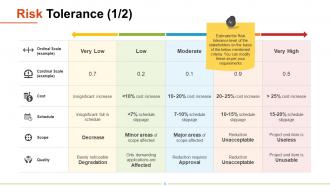
Template 7: Risk Tolerance
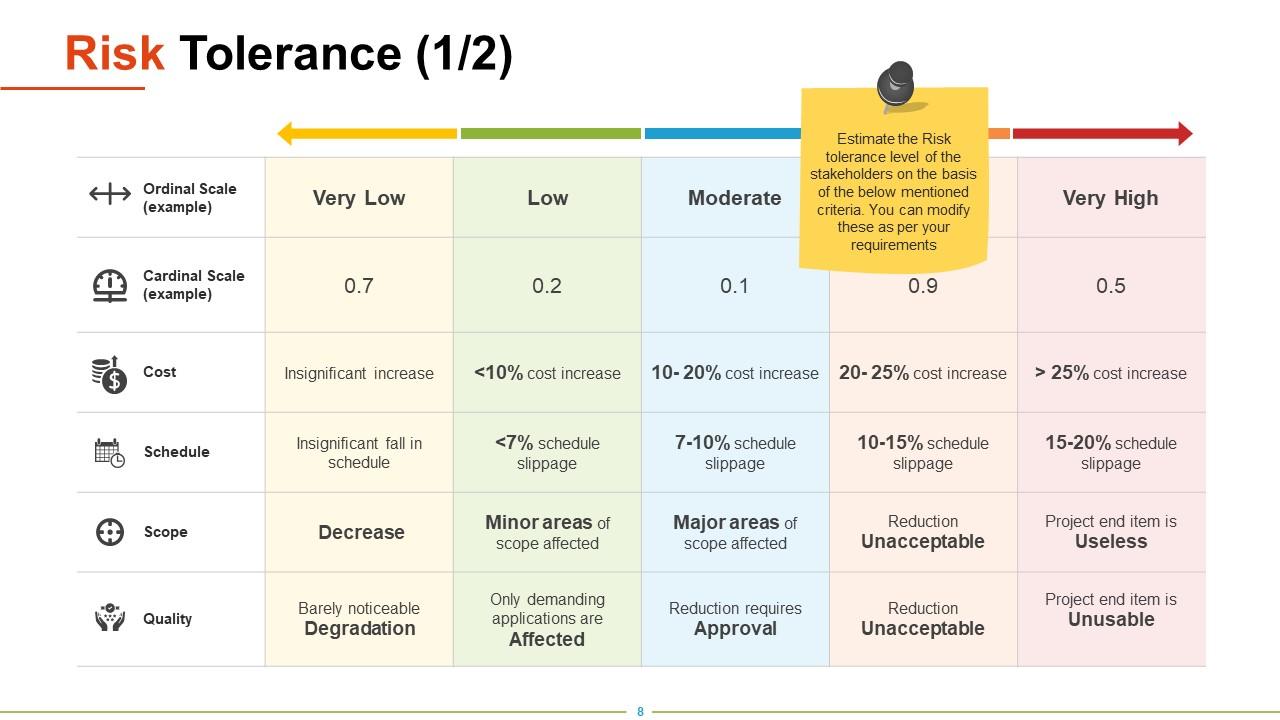
Risk tolerance is the measure that defines how much investors are willing to endure the volatility in the value of an investment. Using this PPT Slide, an individual can show the entire team how volatile the given risks are so they can devise an action plan to minimize them without affecting the organization's productivity. This PPT Layout features a table to represent the ordinal and cardinal scale of the risk along with the cost that needs to be put on it to minimize its effect. Moreover, you can also add areas of impact apart from those mentioned in the PPT Template.
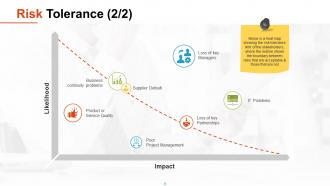
Template 8: Risk Tolerance Graph
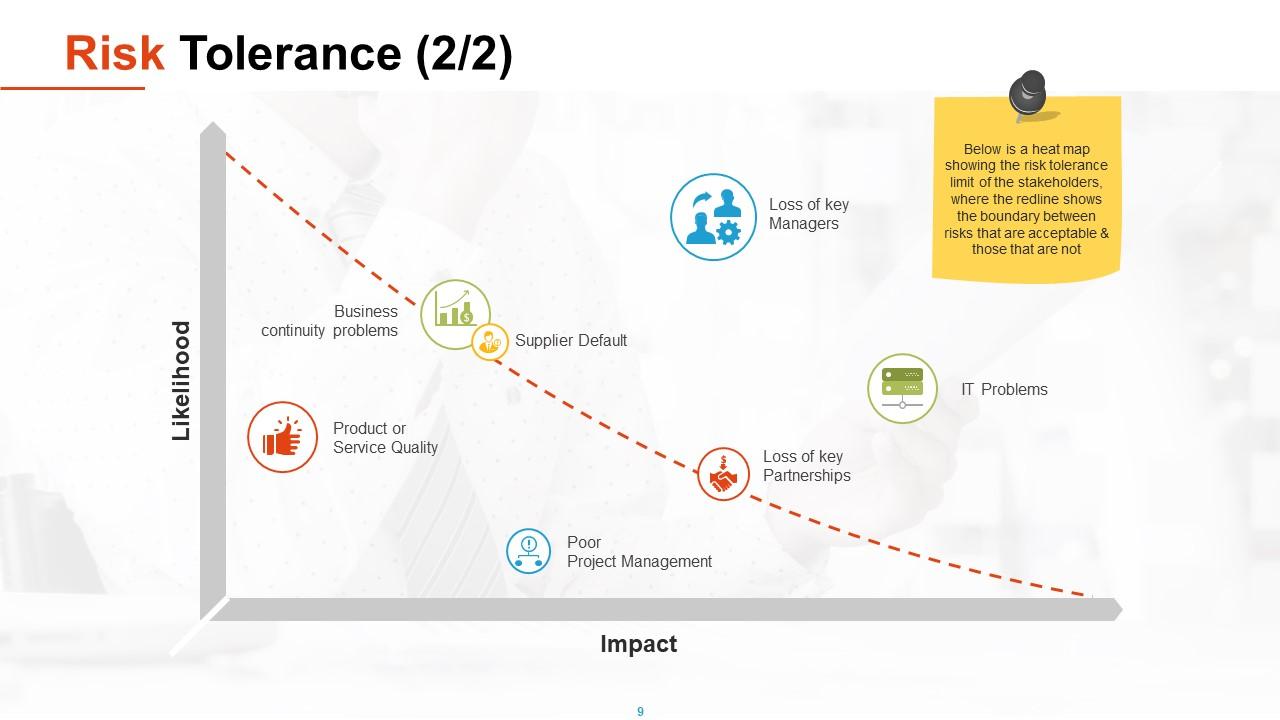
If the table is not your thing and you want some other way to differentiate the different tasks for risk tolerance, then we have got you covered with this PPT Template. Here, you can find graphs that showcase various risks associated with the working of an organization and how their impact, along with the likelihood, stacks up in the risk tolerance. The dotted red line on the graph showcases the boundary of the graph; risks present below it are considered acceptable risks, meaning they are not too harmful to the organization's work. On the other hand, risks above the dotted line are unacceptable, meaning team leads and managers need to find ways to eradicate them, or these risks can potentially cause an organization to halt its smooth working.
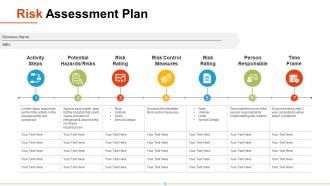
Template 9: Risk Assessment Plan
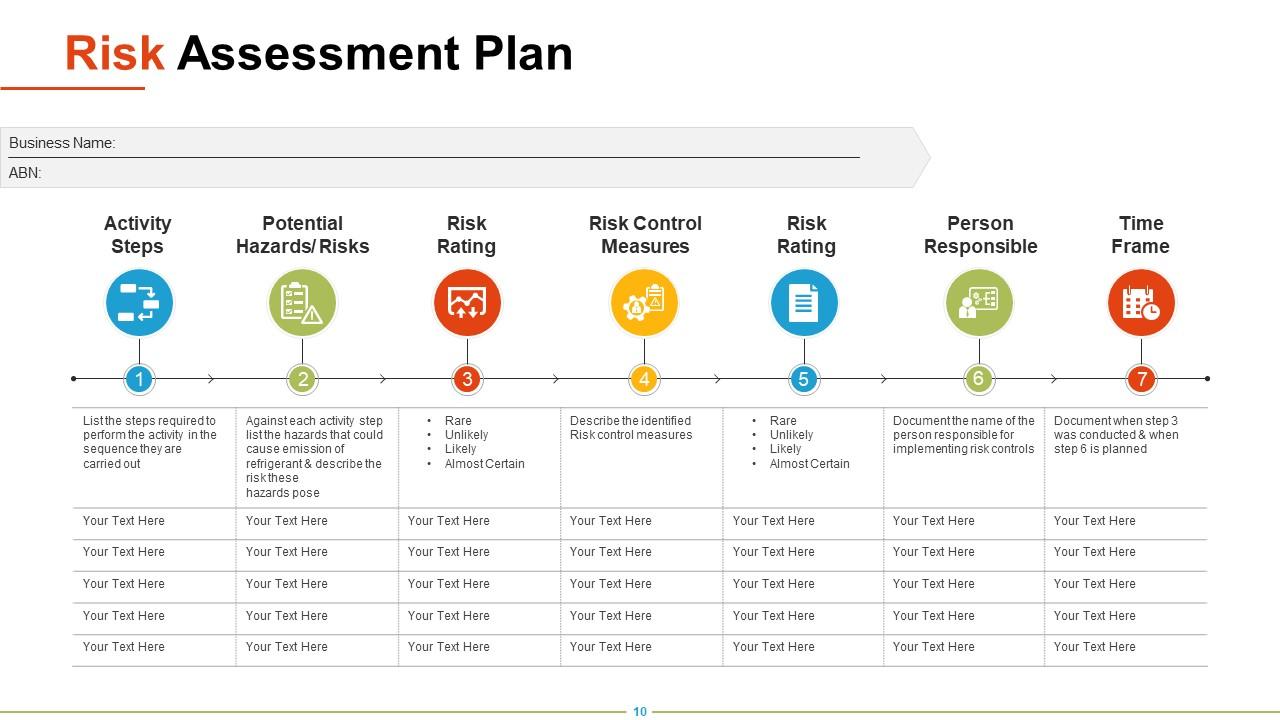
The final slide of this PowerPoint Presentation is where you start showcasing plans to minimize or completely eradicate them from the system. This is a crucial presentation template that every risk management presentation needs to have as it defines what needs to be done to control risks in the given timeframe. Moreover, here, you can add names and the designation of your team member working as a first line of defense when the risk exceeds its tolerance limit. Using this PPT Slide, you are providing a fail-proof solution to the organization and ending your risk management presentation on a positive note.
Conduct inspections and plan these effectively with our ready to use presentation designs.
Strengthen Your Defense
These PPT Templates were the highlights of this complete deck. Using this content-ready PPT Presentation, you will have a sound risk detection, alleviation, and aversion system that will further pave the way for business growth and improved client satisfaction.
Introduction To Risk Management Powerpoint Presentation Slides with all 25 slides:
Display genuine interest in identifying the cause with our Introduction To Risk Management Powerpoint Presentation Slides. Be able to investigate the incident.

FAQs for Introduction To Risk Management
Okay so you'll need five main pieces: figuring out what risks you're facing, assessing how bad they could be, planning your responses, keeping an eye on things, and having clear ownership. Honestly the first step - just listing everything that could go sideways - is kind of a nightmare but you gotta do it. Score each risk on likelihood and impact, whatever scale makes sense. Then decide if you'll avoid it, reduce it, insure against it, or just live with it. Don't forget regular check-ins so nothing sneaks up on you. Keep it simple at first - you can always get fancier later.
Here's what I'd do - get everyone together for brainstorming sessions. Different departments catch stuff you'll totally miss. Look back at past screw-ups and near-misses, plus check what's happening in your industry. The tedious compliance stuff? Actually super important because that's where problems love to lurk. I'd also chat with stakeholders regularly and do those SWOT things (though honestly, half the time they're just busywork). Set up meetings every few months to talk through this stuff. And write it all down! I swear, the risks you don't document are the ones that'll bite you later.
Honestly, risk assessment is just thinking ahead about what could screw up your project. List out the stuff that might go wrong, then figure out how likely each thing is and how bad it'd be. Do this early when you're planning everything out. I always go with my gut on this - if something's bugging you about the project, write it down. You don't want to be that person crossing their fingers hoping everything works out perfectly. Check back on your list regularly too, because projects change and new problems pop up. It's basically professional worrying, but it actually saves your butt.
So grab a risk matrix and plot everything by impact vs probability. The high-high combos? Those are your fire drills - throw money and attention at them first. Medium stuff needs some basic controls and regular check-ins. But honestly, the low-low risks aren't worth stressing over unless you're swimming in extra budget (which, let's be real, who is?). Focus on what'll actually mess with your operations or cost you serious money. I'd say pick your worst 3-5 risks and hammer those first. Everything else can wait in line.
Cyber attacks are probably the scariest right now - ransomware can literally shut you down overnight. Supply chain issues, regulatory changes, and financial stuff like credit/market swings are huge too. Oh, and don't forget operational risks: losing key people, natural disasters, social media blowups that tank your reputation. What's wild is how everything connects now. One problem triggers three others. My boss learned this the hard way last year. Map out your worst 5-7 scenarios and actually plan responses. Crossing your fingers isn't gonna cut it when things go sideways.
Compliance basically becomes your starting point for risk management, which kinda sucks but whatever. You're stuck building around what regulators want first, then adding your own stuff on top. New data privacy rules drop? Financial reporting changes? You've gotta retrofit everything to meet those standards before you can even think about what actually makes sense for your business. I've seen companies scramble when they're caught off guard by new regulations - it's a nightmare. The trick is trying to stay ahead of regulatory changes so you're not completely screwed when they hit.
Look into GRC platforms - those governance/risk/compliance tools are seriously worth it. ServiceNow and MetricStream are solid options, or something simpler like Riskalyze if you're not dealing with crazy complexity. Data analytics stuff helps you catch problems early, which is huge. Honestly? Even a decent spreadsheet beats winging it, but automated dashboards make life so much easier. Monte Carlo simulations sound fancy but they're actually pretty useful for the heavy-duty analysis. I'd say start small with whatever fits your budget - you can always upgrade once you figure out what you actually need.
Honestly, just track your incident rates - are you dealing with fewer big problems over time? Speed matters too; how fast do you catch new risks and actually do something about it. Near-miss reports are weird because more reports usually means people are more aware (which is good). Cost-wise, compare what incidents cost you versus prevention spending. Your risk assessments should show improvement if things are working. The tricky part is making sure your overall risk is dropping even as you grow the business - that's the real win. I'd pick maybe 2-3 things that actually matter for your situation and stick with tracking those consistently.
Look, first thing you gotta do is figure out who needs what info - your employees aren't gonna need the same updates as customers or whoever regulates your industry. Pick specific people to handle messaging because mixed signals during a crisis? Total nightmare. Draft some templates ahead of time for the usual stuff that goes wrong. Set up how things get escalated and when you'll send updates. Oh, and run practice scenarios - sounds boring but you'll be glad you did. When everything's falling apart, you want simple messages and clear approval processes already in place. Speed matters way more than perfection.
Look, good risk management is basically your crystal ball for making better decisions. You're thinking about expanding into new markets or launching something? Figure out what could blow up first and how likely that actually is. Don't get me wrong - you can't avoid every risk, and honestly you shouldn't try to. But knowing which gambles are worth it? That's gold. The trick is baking this stuff into your planning from day one instead of scrambling when things go sideways. Trust me, it makes your whole strategy so much stronger.
Alright so quantitative risk analysis is all about the hard numbers - percentages, dollar figures, statistical stuff. Gets you super precise results but honestly gathering all that data can be brutal. Qualitative is way more chill - you're just ranking things as high/medium/low risk based on gut feel and experience. Most people I know actually mix both approaches. Start with qualitative to spot your major risks fast, then crunch the numbers on whatever seems scariest. Qualitative's perfect when you're short on time or don't have solid data yet. Just pick whatever fits your situation and timeline.
Yeah, culture totally changes how companies handle risk! Like in Germany and Japan, they're super thorough - endless documentation and detailed frameworks for everything. Other places are way more chill about uncertainty and just wing it (honestly sometimes that works better anyway). Power dynamics matter too. Hierarchical cultures? All risk decisions flow through the top brass. More equal societies let teams make those calls themselves. Oh, and definitely scope out these cultural differences before you try rolling out any risk system across different regions - saves you so many headaches later.
Honestly, AI-powered risk analytics and ESG stuff are taking over everything right now. Climate risk went from zero to "CEO panic mode" in like two years - it's crazy how fast that happened. Cyber resilience frameworks are huge too, especially with all the ransomware attacks lately. Most companies are ditching those old siloed approaches for real-time dashboards that actually predict problems. Supply chain mapping became essential after COVID broke everything. Oh, and definitely audit your current tech first - see what you can automate for risk detection, then start building climate scenarios into your planning. Trust me on that order.
Don't treat crisis management like some separate beast - weave it right into your normal risk stuff. Map out your biggest nightmare scenarios first, then build actual playbooks for each one. Communication chains, who decides what, where resources go. Those tabletop exercises? Actually pretty useful once you get past the corporate buzzword vibe. Your crisis team needs to see the whole picture so they catch domino effects before they spiral. Oh, and whenever you update your risk assessments, revisit those crisis plans too. They should basically talk to each other constantly.
You can't spot every risk on your own - different people notice different problems and have totally different comfort levels with risk. Getting stakeholders involved early gives you way better intel on what might blow up. Trust me, I've seen solid plans get torpedoed because someone important felt left out of the process. They also know stuff about day-to-day operations that you'd never think of. Oh, and the buy-in factor is huge - if they help build the plan, they'll actually follow it. Keep checking with your key people throughout, not just when you're done.
-
amazing
-
Unique research projects to present in meeting.
-
The Designed Graphic are very professional and classic.