


Safety Operations And Procedures In The Workplace Powerpoint Presentation Slides




Try Before you Buy Download Free Sample Product
 Impress Your
 Audience
 100%
100% Editable
 Save Hours
 of Time


A safe workplace will not only reduce the risk of accidents happening, but it can also improve productivity as a result. Grab our professionally designed Safety Operations and Procedures in the Workplace template. It addresses workplace accidents, like occupational diseases, the employment of fatal and wounded workers, and employee safety violations. Our Workplace Safety deck discusses the factors contributing to accidents and how they affect companies and workers. With specific goals, it also emphasizes the necessity of job safety. Additionally, it explains how to evaluate dangers and hazards. Our Hazard Identification and Evaluation PPT also focuses on hazard recognition and response strategies, including fire hazards and safety guidelines, power tool injuries and safety guidelines, chemical and safety guidelines, etc. Finally, it discusses the suggested procedures for safety management, the consequences of non compliance, and the advantages of workplace safety for a company. Get access to this powerful template now.
People who downloaded this PowerPoint presentation also viewed the following :
Content of this Powerpoint Presentation
Slide 1: This slide introduces Safety Operations and Procedures in the Workplace. Commence by stating Your Company Name.
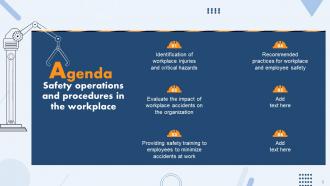
Slide 2: This slide depicts the Agenda of the presentation.
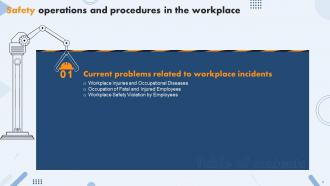
Slide 3: This slide incorporates the Table of contents.
Slide 4: This slide elucidates the Title for the Topics to be covered further.
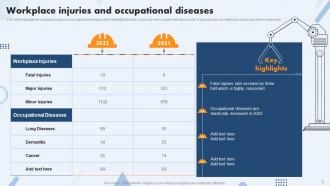
Slide 5: This slide highlights the workplace injuries and occupational diseases.
Slide 6: This slide includes Occupation of fatal and injured employees.
Slide 7: This slide showcases the common safety violation by employees at worksite.
Slide 8: This slide indicates the Heading for the Components to be discussed next.
Slide 9: This slide states the Major causes of accidents at work.
Slide 10: This slide covers the Impact of workplace accidents in organization.
Slide 11: This slide depicts the Consequence of worksite injuries on workers and employers.
Slide 12: This slide exhibits the Title for the Ideas to be covered in the following template.
Slide 13: This slide portrays the Need of workplace safety.
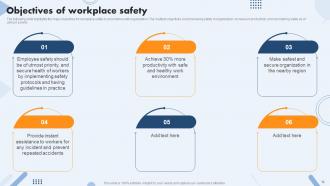
Slide 14: This slide displays the Objectives of workplace safety.
Slide 15: This slide highlights the Heading for the Ideas to be discussed in the forth-coming template.
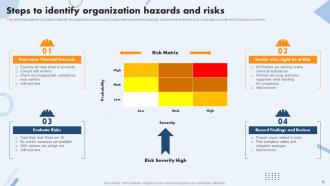
Slide 16: This slide incorporates the Steps to identify organization hazards and risks.
Slide 17: This slide states the poor work practices at worksites.
Slide 18: This slide elucidates the Title for the Components to be covered in the following template.
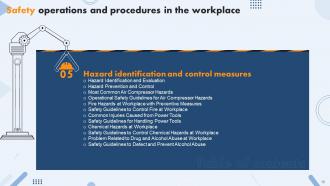
Slide 19: This slide deals with the Hazard identification and evaluation.
Slide 20: This slide talks about Hazard prevention and control.
Slide 21: This slide lists the Most common air compressor hazards.
Slide 22: This slide focuses on the Operational safety guidelines for air compressor hazards.
Slide 23: This slide highlights the different fire hazards.
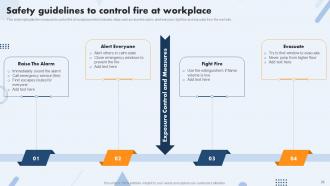
Slide 24: This slide depicts Safety guidelines to control fire at workplace.
Slide 25: This slide showcases the common injuries caused by power tools.
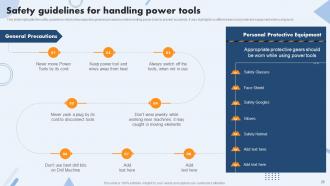
Slide 26: This slide reveals the Safety guidelines for handling power tools.
Slide 27: This slide presents the Chemical hazards at workplace.
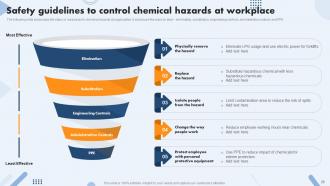
Slide 28: This slide displays the Safety guidelines to control chemical hazards at workplace.
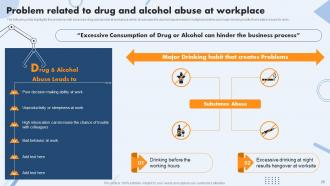
Slide 29: The following slide highlights the problems with excessive drug and alcohol at workplace.
Slide 30: This slide talks about the Safety guidelines to detect and prevent alcohol abuse.
Slide 31: This slide indicates the Heading for the Topics to be discussed next.
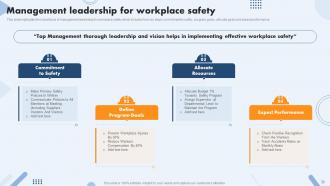
Slide 32: This slide emphasizes on Management leadership for workplace safety.
Slide 33: This slide deals with the Worker participation to eliminate safety risks.
Slide 34: This slide showcases the assessment and improvement of safety program.
Slide 35: This slide displays the Safety education and training program for workers.
Slide 36: This slide focuses on the Coordination with contractors and staffing centers.
Slide 37: This slide indicates the Title for the Ideas to be covered further.
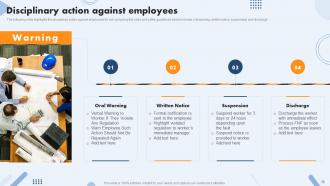
Slide 38: This slide addresses the Disciplinary action against employees.
Slide 39: This slide mentions the Heading for the Ideas to be discussed next.
Slide 40: This slide highlights the positive impacts of workplace safety training program.
Slide 41: This slide presents the positive impacts from the workplace safety.
Slide 42: This slide shows the Title for the Topics to be covered in the upcoming template.
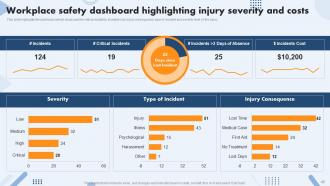
Slide 43: This slide represents the Workplace safety dashboard highlighting injury severity and costs.
Slide 44: This slide talks about the Workplace safety dashboard to monitor incidents.
Slide 45: This is the Icons slide containing all the Icons used in the plan.
Slide 46: This slide is used for depicting Additional information.
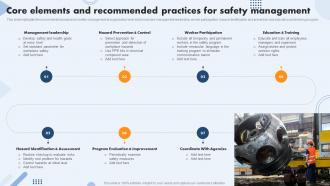
Slide 47: This slide includes the Core elements and recommended practices for safety management.
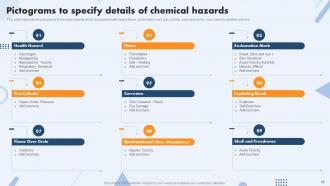
Slide 48: This slide highlights the pictograms of chemical hazards.
Slide 49: This slide depicts the company's vision, mission, and goals.
Slide 50: This is the About us slide. State your organizational information here.
Slide 51: This slide elucidates information related to the Financial topic.
Slide 52: This is Our Goal slide for showcasing the firm's long-terms goals.
Slide 53: This slide displays the Timeline.
Slide 54: This is Meet our team slide for showcasing information related to the team members.
Slide 55: This slide represents the Mind map.
Slide 56: This is the Puzzle slide with related imagery.
Slide 57: This is the Thank You slide for acknowledgement.
Safety Operations And Procedures In The Workplace Powerpoint Presentation Slides with all 62 slides:
Use our Safety Operations And Procedures In The Workplace Powerpoint Presentation Slides to effectively help you save your valuable time. They are readymade to fit into any presentation structure.



























FAQs for Safety Operations And Procedures In The Workplace
Honestly, focus on these four things: spotting hazards before they bite you, proper training (skip those awful corporate videos), getting people to actually report close calls, and doing regular safety checks. Your leadership has to walk the talk - nobody cares if the boss doesn't. I'd start with a walkthrough this week. What could mess someone up here? People won't speak up about near-misses if they think they'll get in trouble, so that culture piece is huge. Oh, and keep your audits fresh - things change fast.
Do monthly walk-throughs of your workplace - I know it sounds boring but you'll catch stuff like wet floors or broken equipment before someone gets hurt. Write everything down and figure out which risks are actually serious vs minor annoyances. Yeah, the documentation sucks but you need it to spot patterns later. For each hazard, come up with a real fix - could be better lighting, new safety gear, or just training people properly. Your team should feel comfortable reporting new problems when they see them. Honestly, the biggest thing is making it a regular habit instead of some annual thing everyone forgets about.
Dude, training your employees is honestly a game changer for safety. When people actually know how to use equipment and spot potential problems, accidents drop way down. Confidence goes up too - makes sense when you think about it. Plus you'll stay on the right side of regulations (nobody wants those headaches). I'd say start with whatever areas seem riskiest in your workplace. Even just a couple hours of focused training makes a real difference. Oh, and once people get into the habit of thinking about safety, it kind of becomes automatic.
Honestly, the key is getting everyone bought in, not just the bosses. People need to feel safe reporting stuff without getting thrown under the bus - otherwise they'll just keep quiet. Skip those useless monthly meetings where everyone zones out. Do quick huddles instead where you talk about real incidents that happened. Your leadership has to actually follow the rules too - I've seen so many places where the executives ignore their own policies and wonder why nobody cares. Oh, and definitely celebrate when someone spots a hazard or suggests something better. Way more effective than yelling at people after something goes wrong.
Honestly, the worst myth is thinking accidents only happen to reckless people. That's BS - even super careful workers get hurt when equipment fails or hazards aren't managed right. PPE gets way too much credit too. It's your backup plan, not the solution. Oh, and don't get me started on how companies treat safety training like some annoying checklist item. I've watched managers just phone it in completely. Here's the thing though - real safety isn't about blaming individuals when stuff goes wrong. You need to fix the actual systems that are broken.
Honestly, the tech stuff for workplace safety is getting pretty impressive these days. Smart helmets and vests can monitor your vitals and even detect if you fall - which sounds a bit Big Brother-ish but is actually super useful. There's apps now that'll send instant alerts about hazards in your area, plus you can report incidents right away. The GPS tracking thing is clutch if something goes wrong and responders need to find you fast. Oh, and some devices monitor for toxic gases or crazy temperatures too. I'd say figure out what your main safety risks are first, then see what tech might help with those specific problems.
So basically you gotta keep everyone safe at work - identify hazards, train people, follow OSHA rules. Document injuries and keep safety records (ugh, paperwork). Give employees proper safety gear and maintain equipment. Honestly, most states pile on extra requirements too, so definitely check what applies to you. When accidents happen, investigate them. The whole thing is about being ahead of problems instead of scrambling after. Oh, and save all your safety documentation - if something bad goes down, you'll need proof you weren't just winging it.
Track both sides - what's already happened (incident rates, workers' comp claims, near-miss reports) and what's happening now (training completion, hazard reports from employees, audit results). Honestly, the forward-looking stuff matters way more since it actually predicts problems. Employee surveys are huge too - they'll tell you if your safety protocols are just paperwork or actually useful. Oh, and don't go crazy with metrics at first. Pick maybe 3-4 that matter most and check them monthly. You can always add more later once you get the rhythm down.
Okay so three big things to nail down: your setup, security stuff, and not going crazy at home. Get decent lighting and a chair that won't destroy your spine - I learned this the hard way! For the tech side, use your VPN for work stuff and keep everything updated. Oh and maybe don't handle confidential files at Starbucks lol. The hardest part is honestly the boundaries thing. Having set hours helps, plus a dedicated work spot if you can swing it. Don't just skip lunch because you're home either. I'd say pick your worst problem and tackle that first.
Honestly, you gotta get a decent emergency plan together first - fires, medical stuff, bad weather, whatever could hit your workplace. Everyone should know where to go and what to do. Yeah, drills are boring as hell but they actually save lives when things get crazy. Stock up on supplies and keep your contact info current. Here's the big thing though - pick specific people to be in charge during emergencies. Trust me, you don't want everyone panicking and nobody knowing who's calling the shots. Maybe set up a team meeting soon to go over what you've got now?
Make a solid checklist covering your high-risk spots and regulations first. Most areas need monthly checks, but machinery and chemical storage? Weekly for sure. Mix up who does the inspections - you get tunnel vision seeing the same stuff every day, trust me. Take photos of everything and rank fixes by how dangerous they are. Here's the thing though - audits are pointless if you don't actually fix what's broken. Set real deadlines for corrections. Track them until they're done. Otherwise you're just making fancy lists nobody cares about.
Dude, here's the thing - when people aren't scared to speak up, they'll actually tell you about safety problems. Like that wobbly ladder or sketchy wiring everyone's been working around. But if they think they'll get blamed or look dumb? They just stay quiet and hope nothing bad happens. I've seen this so many times - teams where nobody wants to be "that person" who reports stuff. Then boom, preventable accident. The key is how you react when someone does raise a concern. Don't be the manager who shoots the messenger, you know? Just say thanks and fix it.
Look, high-risk industries are all about layering your safety stuff - PPE, hazard assessments, emergency plans, training that actually gets updated. Depending on what you're dealing with, you'll need lockout/tagout procedures, confined space protocols, maybe ventilation systems. The paperwork is honestly brutal sometimes but whatever, it saves lives. Don't just treat it like checking boxes though. Make safety actually matter to people day-to-day. I'd start by figuring out your three worst hazards first. Build solid procedures around those, then work outward from there.
Try safety surveys and suggestion boxes - but make them anonymous or people won't be honest about real problems. Safety committee meetings work too, just make sure workers actually get to talk. I'd also do walkabouts where employees can show you hazards as they happen. The biggest thing though? You have to follow through and tell people what you changed based on their input. Otherwise it's just for show and everyone knows it. Oh, and start simple - just ask your team what scares them most safety-wise right now.
So the big things happening right now are mental health programs, tech stuff, and figuring out safety for hybrid teams. Companies are finally putting real money into stress management and psychological safety training - took them long enough! Remote ergonomics and cybersecurity training are as critical as the usual safety stuff now. Wearable devices and AI monitoring are exploding too, though some of it feels a bit Big Brother to me. I'd start with auditing your mental health resources first, then update policies for remote workers. Just preventing burnout pays for itself.
-
Thrilled to see several customizable templates catering various verticals and industries.
-
“Excellent information with easy access.”