


Workplace Safety Management Hazard Prevention And Control Powerpoint Presentation Slides




Try Before you Buy Download Free Sample Product
 Impress Your
 Audience
 100%
100% Editable
 Save Hours
 of Time


Workplace safety refers to the provision of a safe working environment, with the limitation of elements that can cause damage, injury, and other negative outcomes in the workplace. Check out our professionally designed Workplace Safety Management Hazard Prevention and Control PowerPoint presentation. First, this deck covers the problems related to workplace incidents which include occupational diseases, occupation of fatal and injured employees, and safety violations by employees. Additionally, it covers the causes of accidents, the impact of accidents on employees and organizations. It also highlights why there is a need of workplace safety with detailed objectives. Moreover, this deck covers how to examine risks and hazards, It also lays emphasis on hazard identification and their control measures which includes air compressor hazards and safety guidelines, fire hazards and safety guidelines, Injuries from power tools with safety guidelines, chemical hazards with safety guidelines, and drug and alcohol abuse with safety guidelines. At last, it includes the recommended practices for safety management, penalties for non compliance, and positive impact of workplace safety in an organization. Download this deck now.
People who downloaded this PowerPoint presentation also viewed the following :
Content of this Powerpoint Presentation
Slide 1: This slide introduces Workplace safety Management Hazard Prevention and Control. State your company name and begin.
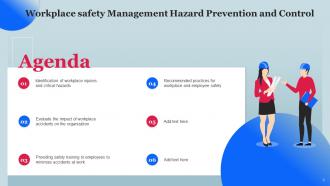
Slide 2: This slide states Agenda of the presentation.
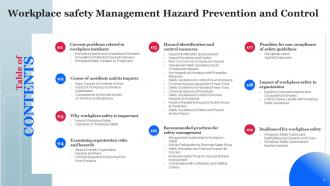
Slide 3: This slide shows Table of Content for the presentation.
Slide 4: This slide highlights title for topics that are to be covered next in the template.
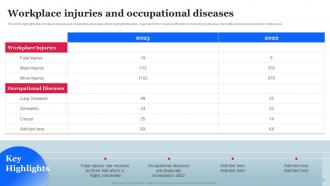
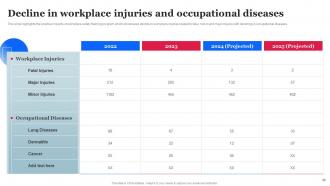
Slide 5: This slide highlights the workplace injuries and occupational diseases.
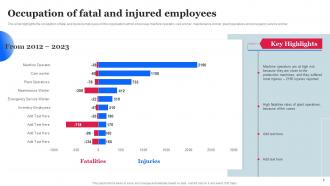
Slide 6: This slide highlights the occupation of fatal and injured employees on the organization.
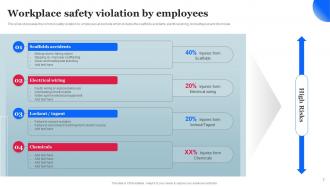
Slide 7: This slide showcases the common safety violation by employees at worksite which includes the scaffolds accidents, electrical wiring, lockout/tagout and chemicals.
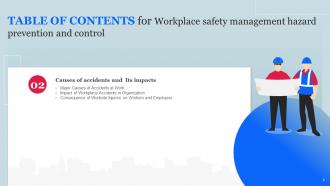
Slide 8: This slide exhibit table of content- Causes of accidents and Its impacts.
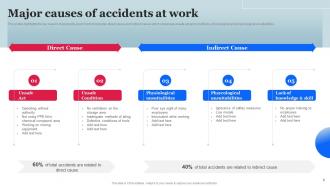
Slide 9: This slides highlights the key reason of accidents at work.
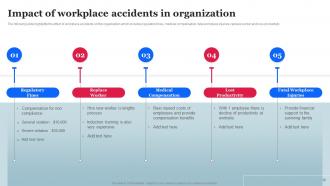
Slide 10: The following slide highlights the effect of workplace accidents on the organization.
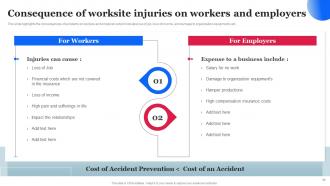
Slide 11: This slide highlights the consequences of accidents on workers and employers.
Slide 12: This slide exhibit table of content- Why workplace safety Is important
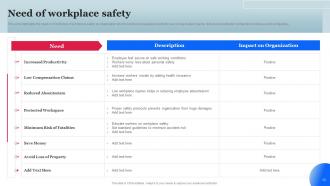
Slide 13: This slide highlights the need or importance of workplace safety at organization.
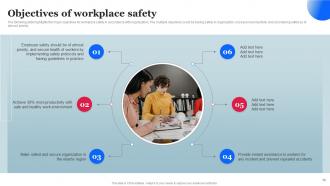
Slide 14: The following slide highlights the major objectives for workplace safety in accordance with organization.
Slide 15: This slide exhibit table of content- Examining organization risk and hazards
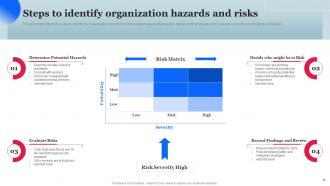
Slide 16: This slide highlights the four steps to identify the organization risks.
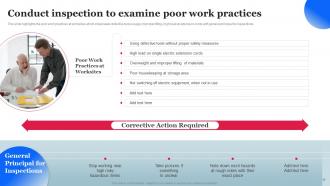
Slide 17: This slide highlights the poor work practices at worksites.
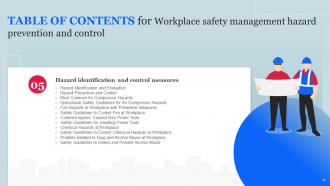
Slide 18: This slide exhibit table of content- Hazard identification and control measures.
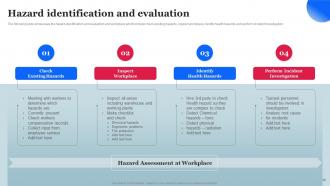
Slide 19: The following slide showcases the hazard identification and evaluation.
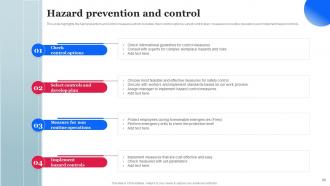
Slide 20: This slide highlights the hard prevention and control measures.
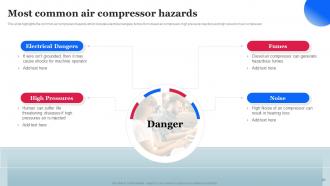
Slide 21: This slide highlights the common air compressor hazards.
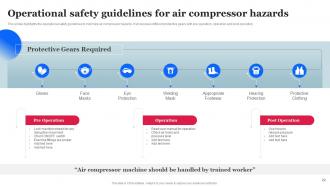
Slide 22: This slides highlights the operational safety guidelines to minimize air compressor hazards.
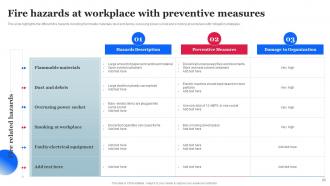
Slide 23: This slide highlights the different fire hazards including flammable materials, dust and debris, overusing power socket.
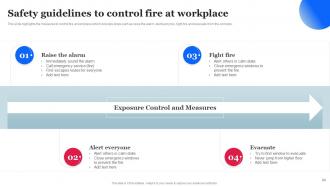
Slide 24: This slide highlights the measures to control fire at workplace.
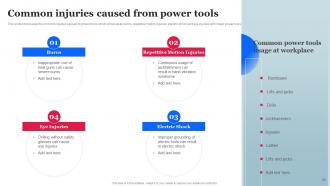
Slide 25: This slide showcases the common injuries caused by power tools.
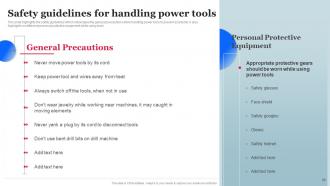
Slide 26: This slide highlights the safety guidelines which showcases the general precautions while handling power tools to prevent accidents.
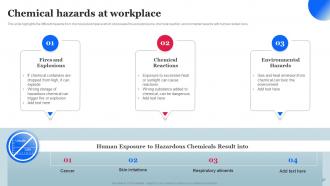
Slide 27: This slide highlights the different hazards from chemical at workplace.
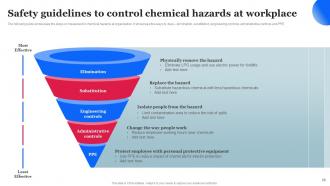
Slide 28: The following slide showcases the steps or measures for chemical hazards at organization.
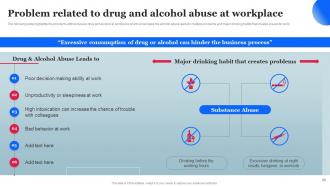
Slide 29: The following slide highlights the problems with excessive drug and alcohol at workplace.
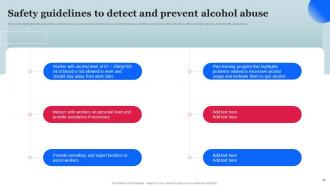
Slide 30: This slide highlights the preventive and detective measures for alcohol abuse.
Slide 31: This slide exhibit table of content- Recommended practices for safety management.
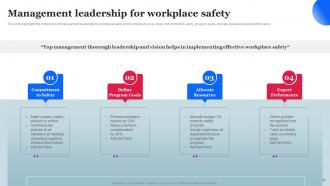
Slide 32: This slide highlights the importance of management leadership for workplace safety.
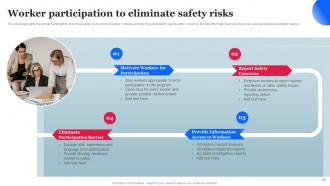
Slide 33: This slide highlights the worker participation to remove safety risks.
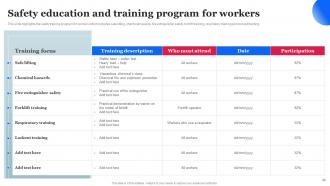
Slide 34: This slide highlights the safety training program for workers.
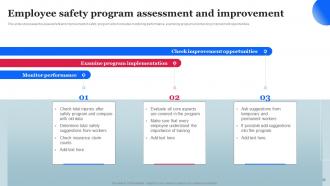
Slide 35: This slide showcases the assessment and improvement of safety program.
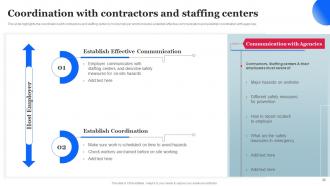
Slide 36: This slide highlights the coordination with contractors and staffing center.
Slide 37: This slide exhibit table of content- Penalties for non compliance of safety guideline
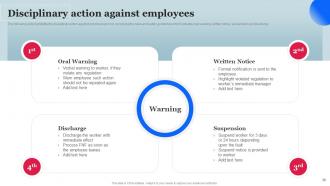
Slide 38: The following slide highlights the disciplinary action against employees for not complying the rules and safety guidelines.
Slide 39: This slide exhibit table of content- Impact of workplace safety In organization.
Slide 40: This slide highlights the positive impacts of workplace safety training program which showcases decline in workplace injuries.
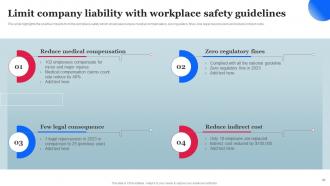
Slide 41: This slide highlights the positive impacts from the workplace safety.
Slide 42: This slide exhibit table of content- Dashboard for workplace safety.
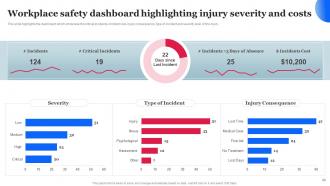
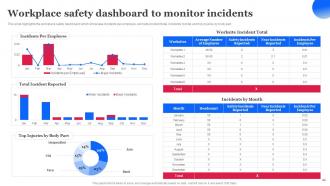
Slide 43: This slide highlights the dashboard which showcase the critical incidents, incident cost, injury consequence, type of incident and severity level of the injury.
Slide 44: This slide highlights the workplace safety dashboard.
Slide 45: This slide contains all the icons used in this presentation.
Slide 46: This slide is titled as Additional Slides for moving forward.
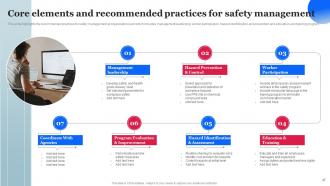
Slide 47: This slide shows Core elements and recommended practices for safety management.
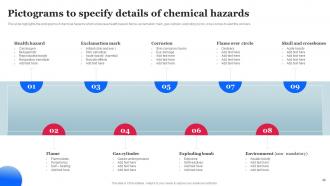
Slide 48: This slide presents Pictograms to specify details of chemical hazards.
Slide 49: This slide showcases Magnifying Glass to highlight information, specifications etc
Slide 50: This slide depicts Venn diagram with text boxes.
Slide 51: This is Our Goal slide. State your firm's goals here.
Slide 52: This slide contains Puzzle with related icons and text.
Slide 53: This slide shows Post It Notes. Post your important notes here.
Slide 54: This is an Idea Generation slide to state a new idea or highlight information, specifications etc.
Slide 55: This slide provides 30 60 90 Days Plan with text boxes.
Slide 56: This is a Thank You slide with address, contact numbers and email address.
Workplace Safety Management Hazard Prevention And Control Powerpoint Presentation Slides with all 61 slides:
Use our Workplace Safety Management Hazard Prevention And Control Powerpoint Presentation Slides to effectively help you save your valuable time. They are readymade to fit into any presentation structure.






FAQs for Workplace Safety Management Hazard Prevention And Control
Honestly, start with an audit of what you've got now - find your biggest gaps first. Four things really matter: leadership that actually shows up (not just emails safety reminders), getting employees involved, identifying hazards before they bite you, and constantly improving. Your system needs regular risk assessments, policies people can actually understand, solid training, and incident reporting that won't get anyone in trouble. Oh and employee feedback is massive - way more than most places realize. The whole point is baking safety into daily culture instead of treating it like some boring checklist item.
Anonymous surveys are your best bet - people actually tell the truth when they're not worried about getting in trouble. Look through your incident reports for patterns too. Walk around with different employees and watch what really happens vs what's supposed to happen. Focus groups work great because frontline people usually know exactly what's messed up. Oh, and when you find problems, dig into the "why" instead of just slapping a band-aid on it. Those perception surveys honestly reveal way more than you'd expect.
Training your team is honestly huge for preventing accidents. New hires should get safety training right away, then everyone needs refresher sessions yearly (or every few months if you're dealing with dangerous stuff). People get lazy or forget things - it just happens. Plus regulations change all the time. I'd track your incident rates to see if you need more frequent sessions. When's the last time your team had formal safety training? Might be longer than you think. That's probably a good place to start checking.
So basically, IoT sensors can track air quality, equipment vibrations, all that stuff in real time. When something's wrong - like someone walks into a danger zone or machinery starts getting wonky - you get alerts immediately. The AI learns patterns over time and actually predicts problems before they happen, which is honestly kind of wild. Wearable tech can also monitor your crew's heart rate and exhaustion levels. I'd say start with some basic environmental sensors in your riskiest spots first. Don't go crazy with a full rollout right away.
Oh man, you really don't want to mess around with safety violations. OSHA will absolutely crush you with fines - we're talking thousands per incident, and that's before anyone even gets hurt. If there's an actual accident? Lawsuits, potential criminal charges, the whole nightmare. Honestly, the paperwork side is annoying but you've got to stay on top of it. Regular audits, proper training sessions, document literally everything. I'd set up some kind of calendar system to track when inspections are due, equipment needs checking, all that boring but necessary stuff. Trust me, it's way less painful than dealing with the alternative.
Honestly, you've got to hit people from multiple angles or it just doesn't sink in. Ditch those boring policy manuals - nobody reads that stuff anyway. Go with visuals instead: infographics, quick videos, anything that actually grabs attention. Regular safety meetings help, but make them interactive so people can ask real questions. Train your supervisors to bring it up daily too. The thing is, you can't just tell someone "wear your hard hat" - you need to show them why it matters, maybe walk through some scenarios together. Oh, and don't save all this for day one. Keep talking about it regularly.
You want both leading and lagging indicators - gives you the complete picture. Lagging stuff includes injury rates, workers' comp claims, lost time incidents, near-miss reports. But honestly? Leading indicators are way more useful since they catch problems early. Track safety training completion, hazard reports, audit scores, how engaged people are in safety meetings. Employee feedback on safety culture matters too - sometimes the soft stuff tells you more than numbers. Oh, and actually review this monthly and do something about the trends. I've seen too many companies just file reports and forget about them.
So basically, instead of just putting up more safety signs (which let's be honest, nobody reads anyway), behavioral safety gets your people actually involved in spotting problems. They start calling out unsafe stuff and recognizing good behaviors. It's pretty cool - incidents drop because everyone's watching out for each other instead of just following rules mindlessly. People feel way more engaged since their voices matter. Oh, and definitely train some safety champions first who can show others what you're going for. The whole culture shift thing really works when people buy in.
Honestly, start with a solid risk assessment - figure out what could actually hurt people first. Get everyone proper safety training, but make it regular, not just a one-time thing. Good PPE is worth the money, trust me on that one. The biggest game-changer though? Making sure people feel safe speaking up about sketchy stuff without getting blamed. Most accidents happen because someone noticed something fishy but didn't say anything. Oh, and teach your team to spot hazards before they blow up into real problems. Building that kind of culture takes time but it's everything.
Dude, stressed workers are accident-prone workers. When someone's overwhelmed or burnt out, they're not paying attention to hazards - they're just trying to survive the day. I've watched this happen so many times. Your brain can't focus on safety protocols when you're mentally checked out, you know? Good mental health support changes everything. Employees start communicating better about risks instead of staying quiet. They actually follow procedures rather than taking shortcuts. Honestly, most companies totally miss this connection. Just start checking in with people regularly and offer some mental health resources. It's probably the easiest safety fix you'll ever make.
Jump on this while everything's still fresh - get witnesses talking separately and snap photos before anyone cleans up. Don't go after individuals though, that just makes everyone shut down. Pull in people from different departments since they'll catch stuff you won't. The "5 Whys" thing actually works - keeps you from stopping at the obvious answer. Honestly, I've seen too many investigations that just turn into reports nobody reads. Document everything but make sure someone owns the follow-up with real deadlines, or you're just wasting everyone's time.
Honestly, you've gotta get people involved in making the rules, not just following them. Safety committees work great - rotate folks from different departments so everyone gets a voice. Let them spot the hazards and come up with fixes themselves. Those suggestion boxes are kinda useless tbh, but regular meetings where people can actually speak up? Game changer. The key is giving them real power over their workspace. When your team helps write the procedures, they'll actually stick to them. Start simple - ask what safety stuff annoys them most and then do something about it.
Honestly, remote work safety is such a weird challenge because you can't just walk around checking if people have decent chairs or proper lighting. Most companies are doing virtual ergonomic checks now - basically video calls where someone walks you through your setup. A lot of places offer equipment stipends too, which is smart. Having employees fill out home workspace checklists helps, though let's be real, some people will just check boxes. The mental health check-ins matter more than you'd think. It's really about teaching people to spot their own hazards since you can't be there watching.
Get people from different departments to be your safety champions - they'll trust someone from their own team way more than some corporate memo. Translation is huge too, so make sure training materials work in multiple languages. I'd also set up regular feedback sessions where people can actually speak up without worrying about getting in trouble. Monthly safety walks with mixed teams help build those connections across cultures. The whole point is showing everyone their safety matters equally. Oh, and use examples that actually make sense for different backgrounds - generic scenarios don't land the same way.
Dude, leadership makes or breaks safety culture. If you don't visibly care about it, your team won't either. Actions matter way more than policies - walk around, ask about concerns, then actually do something when people bring stuff up. Don't be the manager who skips PPE for "just a quick visit" (everyone sees that BS). Your people copy what you do, not what you say. Make safety part of regular conversations instead of just dragging it out during boring annual training. Show genuine care and they'll follow your lead.
-
Wow! The design and quality of templates on SlideTeam are simply the best.
-
Eye-catching PPT designs, outstanding team, and best customer service. I’m a super satisfied customer here!