Health And Safety Training Matrix Implementation Of Safety Management Workplace Injuries
Try Before you Buy Download Free Sample Product
Audience
Editable
of Time
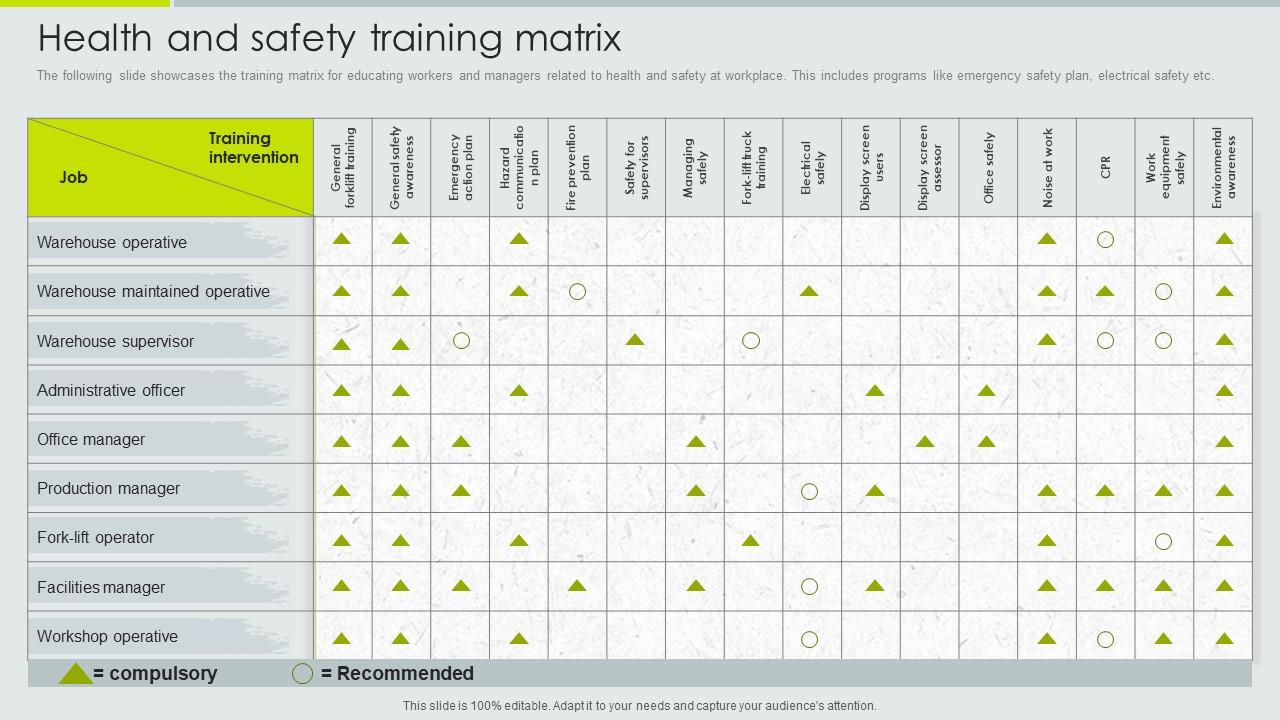
The following slide showcases the training matrix for educating workers and managers related to health and safety at workplace. This includes programs like emergency safety plan, electrical safety etc.
People who downloaded this PowerPoint presentation also viewed the following :
Health And Safety Training Matrix Implementation Of Safety Management Workplace Injuries with all 6 slides:
Use our Health And Safety Training Matrix Implementation Of Safety Management Workplace Injuries to effectively help you save your valuable time. They are readymade to fit into any presentation structure.
FAQs for Health And Safety Training Matrix Implementation Of Safety
You'll need the basics first - employee names, their roles, what training they need to complete, and whether they've actually done it. Track completion dates and renewal deadlines too since some stuff expires yearly while other certs last three years. I'd also note the training format (online vs in-person) and who's running it. Oh, and if your workplace has different skill levels for the same training, add competency fields. Honestly I see people go way overboard with this - just start with a simple spreadsheet. You can always make it fancier later once you figure out what actually matters for your team.
Start with figuring out what training everyone's actually done and what's expired - basically audit your records first. I'd also ask employees directly where they think the gaps are, honestly they usually nail it better than management does. Map all that against your workplace hazards and what regulations you're dealing with. The goal is making a simple matrix showing who needs what training by when. That way you can tackle the most critical stuff first instead of just randomly scheduling things. Makes the whole process way less overwhelming and you'll actually see progress.
Start with everyone - front-line staff, management, contractors, even visitors who need training. Map out what each person actually does, not just their job title. Equipment operators need different training than the guy handling hazardous materials, you know? Team leads and safety coordinators always get forgotten but they're super important. Don't overlook who's actually delivering the training and tracking who's compliant. Honestly, the "in-between" roles are where most companies mess up. Just make sure anyone walking into your workplace has clear requirements based on their real responsibilities.
Update it yearly at minimum, but don't stop there. Regulatory changes? New equipment? Someone gets hurt because training was lacking? Refresh that matrix right away. Quarterly reviews work well - I'd honestly set a reminder or you'll forget (speaking from experience lol). Also loop your safety folks in when making changes. Too many places treat these like static documents and then wonder why they bomb audits. It's gotta be something you actually maintain, not just create once and leave sitting there collecting digital dust.
Track completion rates and quiz scores first - that's the obvious stuff. But here's what actually matters: test people again like 3 weeks later to see if they retained anything. Incident reports are huge too because if your training's decent, accidents should drop. I always do feedback surveys since sometimes training looks good on paper but feels totally irrelevant to workers. Don't try measuring everything though - pick 2-3 things that match your goals and stick with them consistently.
Honestly, a training matrix is such a game changer for staying compliant. It tracks who's trained on what and when certs expire, so you'll spot gaps way before any auditor shows up. Maps out exactly what training each role needs - no more guessing what maintenance guy Bob actually requires. The automated reminders are clutch because stuff always slips through otherwise. Best part? You can generate compliance reports instantly instead of hunting through random files for hours (been there, not fun). Just set it up once and let it do the heavy lifting for you.
Honestly, the worst part is managers treating it like busywork they can ignore. You'll start with this perfect matrix, then someone changes roles or new compliance stuff comes out and nobody updates it. Suddenly it's garbage. Tracking who actually finished training vs who claims they did? Good luck with that mess. Small teams love saying "we don't need this, we're only 12 people" - which is kinda fair I guess. My take: keep it dead simple at first, just the must-have roles. Pick someone to own the updates monthly or you're screwed. Trust me on that part.
Honestly, getting a good learning management system changed everything for us. You can automate all that tracking stuff and get alerts before certifications expire. Mobile access is clutch - people can knock out training whenever instead of coordinating schedules (which was always a headache). Real-time completion tracking means you actually know who's current without digging through spreadsheets. The reporting features make audits way smoother too. Best part? Integration with HR keeps everything synced automatically. Way less admin work, more time for the stuff that matters. Just make sure whatever system you pick plays nice with your current setup.
Honestly, skip the generic templates - they're pretty much worthless. Start with a hazard assessment of your actual workplace first. Construction? Focus on fall protection and equipment safety. Healthcare needs bloodborne pathogen stuff and patient handling. Food service is all about burns and food safety. Map your real workplace risks to the training modules. Your people will actually pay attention when the training relates to what they deal with every day. I mean, why waste time on irrelevant content that nobody remembers anyway? Build it around the hazards they're actually facing.
First thing - figure out what safety training each person actually needs based on their specific job and any certs they already have. Don't dump everything on them day one (learned that the hard way). Spread the mandatory stuff out over their first month or two. Get them a safety buddy who knows the ropes. The job-specific training comes after they've got the basics down. Oh, and definitely set up those automatic reminders in whatever system you use - people forget refresher dates constantly. Just make sure you're tracking completion dates so you can catch any gaps before they become problems.
Honestly, employee feedback is your best bet for keeping that training matrix current. Get it through surveys, post-training evals, casual conversations - whatever works. Like when someone says the confined space training was way too theoretical or they're struggling with new safety gear, that's exactly what you need to hear. They're out there doing the actual work, so they spot the gaps you might miss. Use their input to tweak how often you run sessions, update materials, maybe even add whole new sections. Oh, and here's the thing - you've got to actually do something with what they tell you. People will stop being honest if nothing ever changes.
Start with completion rates - that's your foundation. Check knowledge retention with before/after tests, plus see how long people actually remember stuff (because let's be honest, most training is forgotten by Tuesday). Time-to-competency for new hires is huge too. Incident rates before vs after training tell you if it's actually working. Course ratings matter - nobody learns from training they can't stand. I'd probably set up a simple dashboard and review quarterly so you can catch patterns. Oh, and track how sticky the knowledge is over time, not just immediately after.
So basically, a training matrix shows you exactly who knows what when incidents happen. You can spot the scary gaps fast - like when you realize your night shift guy never learned root cause analysis (yikes). It tracks when people need refreshers too, which honestly saves your butt later. The cool thing is that well-trained staff actually write better incident reports because they're not scared of messing up and they know what details actually matter. I'd start by just writing down what certifications your incident team already has.
Oh man, leadership is everything with training programs. Seriously, I've watched amazing safety matrices completely tank because management didn't care. Your leaders need to actually show up and participate - not just send an email saying "training is mandatory" then disappear. Without their buy-in, good luck getting the time and resources you need. People pick up on whether leadership thinks it matters or if it's just another box to check. The programs that actually work? Those happen when managers are visibly involved from the start and hold people accountable. Makes all the difference between a training matrix that sits on a shelf versus one that genuinely improves safety.
Set up dedicated columns for cross-dept training stuff. So like, marketing people who need basic lab safety or warehouse protocols - list all that out. Color-coding is honestly a game changer here, trust me. Include when they finished training, renewal dates, and which teams actually need what. The tricky part is mapping out who needs training from other departments and tracking completion dates. I'd start with the departments that work together most - that's usually where the biggest gaps are. Makes it super obvious at a glance what's missing.
-
“Excellent information with easy access.”
-
SlideTeam is my go-to resource for professional PPT templates. They have an exhaustive library, giving you the option to download the best slide!