


Guidelines And Standards For Workplace Safety Powerpoint Presentation Slides




Try Before you Buy Download Free Sample Product
 Impress Your
 Audience
 100%
100% Editable
 Save Hours
 of Time


Workplace safety refers to the provision of a safe working environment, with the limitation of elements that can cause damage, injury, and other negative outcomes in the workplace. Check out our professionally designed Guidelines and Standards for Workplace Safety PowerPoint presentation. First, this deck covers the problems related to workplace incidents which include occupational diseases, occupation of fatal and injured employees, and safety violations by employees. Additionally, it covers the causes of accidents, the impact of accidents on employees and organizations. It also highlights why there is a need of workplace safety with detailed objectives. Moreover, this deck covers how to examine risks and hazards, It also lays emphasis on hazard identification and their control measures which includes air compressor hazards and safety guidelines, fire hazards and safety guidelines, Injuries from power tools with safety guidelines, chemical hazards with safety guidelines, and drug and alcohol abuse with safety guidelines. At last, it includes the recommended practices for safety management, penalties for non compliance, and positive impact of workplace safety in an organization. Download this deck now.
People who downloaded this PowerPoint presentation also viewed the following :
Content of this Powerpoint Presentation
Slide 1: This slide displays the title Guidelines and Standards for Workplace Safety.
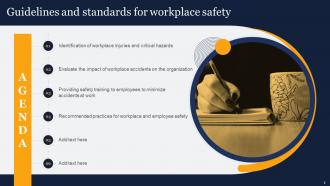
Slide 2: This slide displays the title AGENDA.
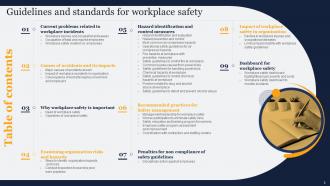
Slide 3: This slide exhibit table of content.
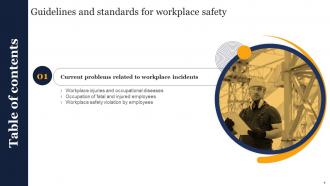
Slide 4: This slide exhibit table of content- Current problems related to workplace incidents.
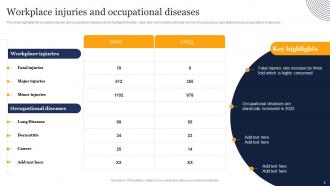
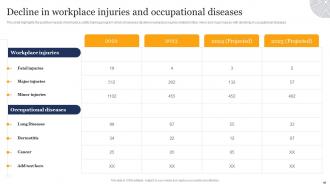
Slide 5: This slide highlights the workplace injuries and occupational diseases.
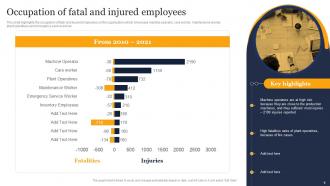
Slide 6: This slide highlights the occupation of fatal and injured employees on the organization which showcase machine operator, care worker, maintenance worker,
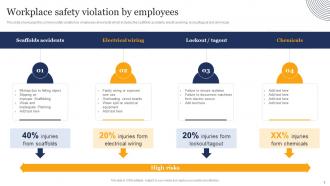
Slide 7: This slide showcases the common safety violation by employees at worksite which includes the scaffolds accidents, electrical wiring, lockout/tagout and chemicals.
Slide 8: This slide exhibit table of content- Causes of accidents and its impacts
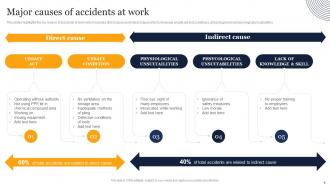
Slide 9: This slides highlights the key reason of accidents at work which includes direct cause and indirect cause.
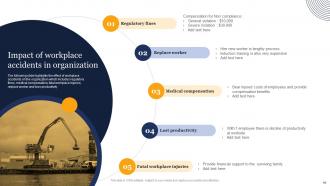
Slide 10: The following slide highlights the effect of workplace accidents on the organization.
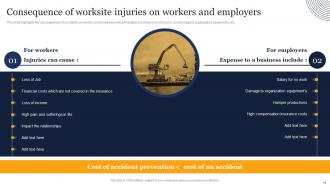
Slide 11: This slide highlights the consequences of accidents on workers and employers.
Slide 12: This slide exhibit table of content- Why workplace safety is important.
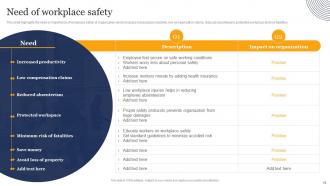
Slide 13: This slide highlights the need or importance of workplace safety at organization.
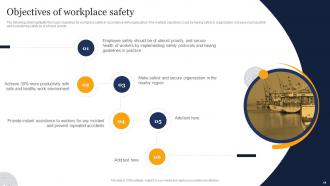
Slide 14: The following slide highlights the major objectives for workplace safety in accordance with organization.
Slide 15: This slide exhibit table of content- Examining organization risk and hazards.
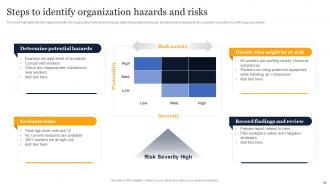
Slide 16: This slide highlights the four steps to identify the organization risks.
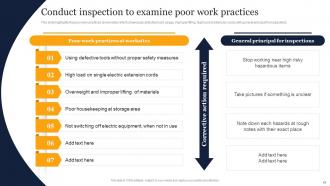
Slide 17: This slide highlights the poor work practices at worksites which showcases defective tools usage, improper lifting.
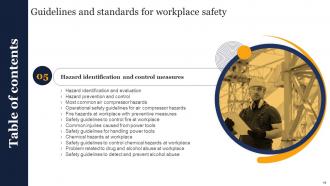
Slide 18: This slide exhibit table of content- Hazard identification and control measures.
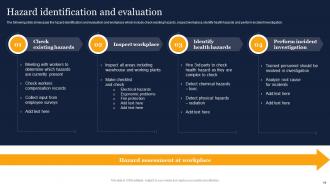
Slide 19: The following slide showcases the hazard identification and evaluation and workplace.
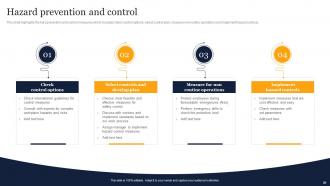
Slide 20: This slide highlights the hard prevention and control measures which includes check control options, select control plan, measure non routine operations.
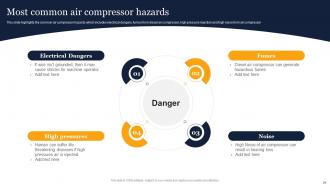
Slide 21: This slide highlights the common air compressor hazards which includes electrical dangers, fumes from diesel air compressor, high pressure injection.
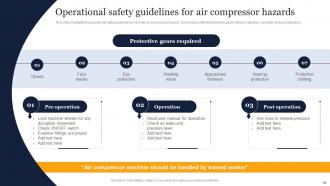
Slide 22: This slides highlights the operational safety guidelines to minimize air compressor hazards.
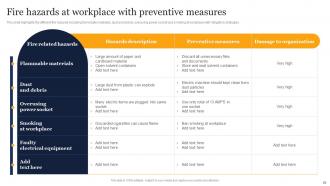
Slide 23: This slide highlights the different fire hazards including flammable materials, dust and debris, overusing power socket.
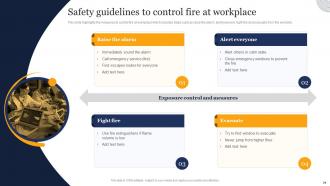
Slide 24: This slide highlights the measures to control fire at workplace.
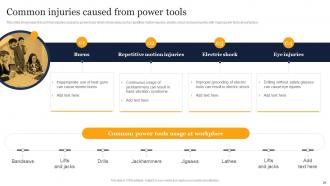
Slide 25: This slide showcases the common injuries caused by power tools which showcases burns, repetitive motion injuries, electric shock.
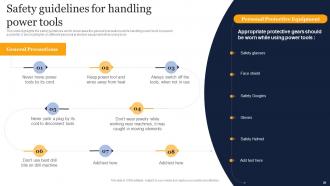
Slide 26: This slide highlights the safety guidelines which showcases the general precautions while handling power tools to prevent accidents.
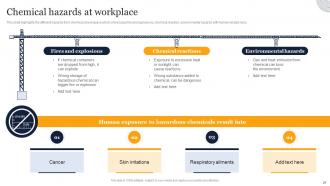
Slide 27: This slide highlights the different hazards from chemical at workplace.
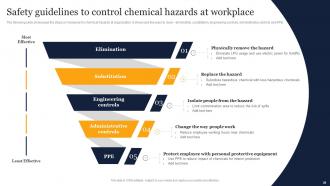
Slide 28: The following slide showcases the steps or measures for chemical hazards at organization.
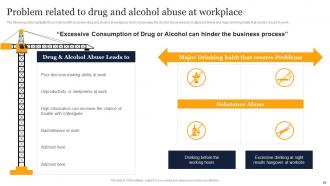
Slide 29: The following slide highlights the problems with excessive drug and alcohol at workplace.
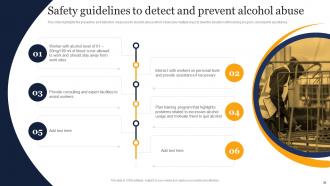
Slide 30: This slide highlights the preventive and detective measures for alcohol abuse which showcase multiple ways to deal the situation.
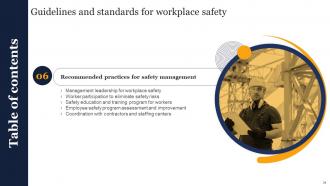
Slide 31: This slide exhibit table of content- Recommended practices for safety management.
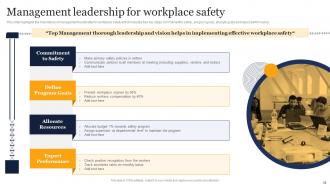
Slide 32: This slide highlights the importance of management leadership for workplace safety.
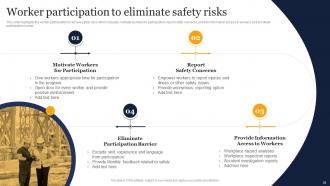
Slide 33: This slide highlights the worker participation to remove safety risks.
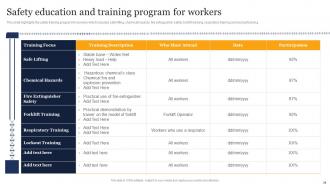
Slide 34: This slide highlights the safety training program for workers.
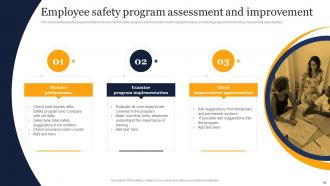
Slide 35: This slide showcases the assessment and improvement of safety program.
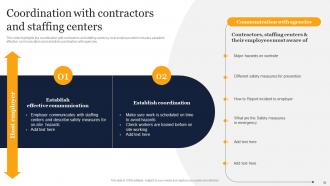
Slide 36: This slide highlights the coordination with contractors and staffing center by host employer.
Slide 37: This slide exhibit table of content- Penalties for non compliance of safety guideline.
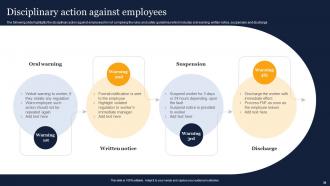
Slide 38: The following slide highlights the disciplinary action against employees for not complying the rules and safety guidelines.
Slide 39: This slide exhibit table of content- Impact of workplace safety in organization.
Slide 40: This slide highlights the positive impacts of workplace safety training program.
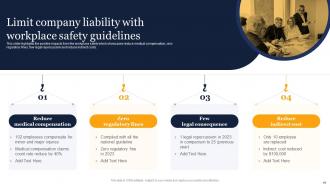
Slide 41: This slide highlights the positive impacts from the workplace safety.
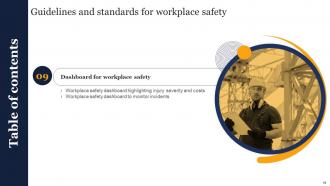
Slide 42: This slide exhibit table of content- Dashboard for workplace safety
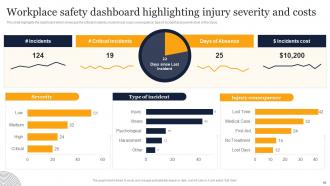
Slide 43: This slide highlights the dashboard which showcase the critical incidents, incident cost, injury consequence, type of incident and severity level of the injury.
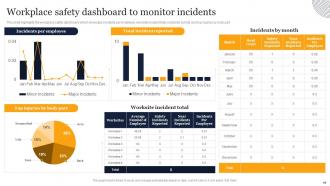
Slide 44: This slide highlights the workplace safety dashboard which showcase incidents per employee, worksite incident total, incidents by total and top injuries by body part.
Slide 45: This slide presents title for additional slides.
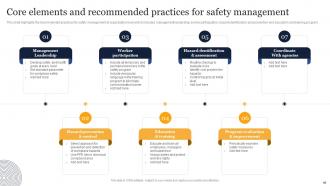
Slide 46: This slide highlights the recommended practices for safety management at organization level.
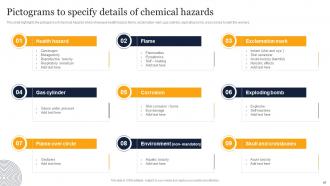
Slide 47: This slide highlights the pictograms of chemical hazards which showcase health hazard, flame, exclamation mark, gas cylinder.
Slide 48: This slide depicts 30-60-90 days plan for projects.
Slide 49: This slide display Magnifying glass.
Slide 50: This slide displays Venn.
Slide 51: This slide shows roadmap of company.
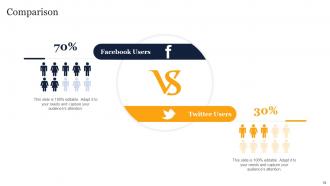
Slide 52: This slide display Comparison of facebook user and twitter user.
Slide 53: This slide display Our target.
Slide 54: This is thank you slide & contains contact details of company like office address, phone no., etc.
Guidelines And Standards For Workplace Safety Powerpoint Presentation Slides with all 59 slides:
Use our Guidelines And Standards For Workplace Safety Powerpoint Presentation Slides to effectively help you save your valuable time. They are readymade to fit into any presentation structure.






FAQs for Guidelines And Standards For Workplace Safety
Honestly, start with a walkthrough this week - you'll spot hazards you probably never noticed. Get your safety policies written down clearly, not buried in some manual nobody reads. Training's huge but don't make it a one-and-done thing because people forget. Regular meetings keep safety fresh in everyone's mind. Oh, and actually designate someone responsible instead of just hoping it works out. Having safety gear accessible is obvious but worth mentioning. The real trick is weaving it into daily routine rather than treating it like paperwork. Make it feel normal, not like extra work.
Honestly, make safety everyone's deal, not just the bosses'. People need to feel safe reporting stuff without getting blamed - nobody talks if they're gonna get fired, right? Skip those mind-numbing monthly meetings. Quick weekly huddles work way better. Definitely celebrate when teams spot hazards or come up with good ideas. Your managers have to follow the exact same rules as everyone else - no exceptions. Oh, and actually DO something when people bring up concerns. Once they see their suggestions matter, they'll keep watching out for each other.
Yeah, training makes a huge difference for safety - I can't stress that enough. You'll see way fewer accidents when people actually know what they're doing with equipment and can spot hazards before they become problems. Places that skip proper training? That's where people get hurt. Plus it builds this culture where everyone's watching out for each other, which is honestly pretty cool to see. Don't make it a one-and-done thing though. Start with an audit of your biggest gaps and tackle the scary stuff first. My old job did this really well and it showed.
Honestly, tech can be a game-changer for workplace safety. IoT sensors are great for tracking air quality and equipment status in real-time. Workers can wear devices that monitor fatigue or detect falls automatically. VR training lets people practice dangerous scenarios safely - I've seen some pretty impressive setups. Mobile apps beat those awful paper incident reports every time. AI cameras can catch unsafe behaviors and ping supervisors instantly. My advice? Don't go crazy with everything at once. Pick your biggest problem area and test one solution there first. Way less overwhelming that way.
Honestly, most workplace injuries come down to slips, falls, repetitive motions, and chemical stuff. The usual suspects, you know? Clear walkways help big time - I can't tell you how many people I've seen eat it on random cables or boxes. Take stretch breaks (your wrists and back aren't invincible), actually read those chemical sheets they post everywhere, and wear whatever safety gear they hand out. Even if it looks dorky. Don't get too comfortable with routine tasks either - that's when accidents happen. Maybe walk around your workspace this week and see what could go wrong?
Track both the stuff that already happened (incident rates, workers comp claims) and the forward-looking metrics like safety training completion and PPE usage rates. Near-miss reports are honestly your best friend - they show problems before someone gets hurt. Your employees know where the sketchy areas are, so definitely survey them regularly. Safety audits help too, but don't go crazy trying to measure everything. Pick maybe 3-4 things you can actually keep up with each month or you'll just burn out on the whole tracking thing.
So it totally depends on what kind of business you're running. OSHA covers the basics, but construction sites have way more hoops to jump through than like a regular office. Manufacturing needs all that machine safety stuff and hazmat training. Healthcare workers gotta do bloodborne pathogen courses - kinda gross but necessary. Food places have their own sanitation rules on top of everything else. Honestly, the fines are insane if you mess up, so don't risk it. Your state's labor department website usually has these handy checklists broken down by industry that'll save you tons of time.
Okay so first things first - get medical help if someone's hurt. Then don't let anyone touch ANYTHING at the scene. I can't tell you how many places I've seen totally botch this by letting people "tidy up" before documenting. Grab your phone and start taking photos of everything - the area, equipment, whatever's involved. Get witness statements while it's all fresh in their heads, you know? Report it to your safety person right away too. Oh and honestly? Every accident is basically a free lesson on what not to let happen again, so treat it that way.
So basically hazard communication is your legal right to know what chemicals you're dealing with at work. Your employer has to give you proper labels, safety data sheets, and training about risks. Pretty straightforward stuff, but honestly super important. Without it you'd just be guessing what might kill you, which is terrifying when you think about it. The whole point is so you can protect yourself and know how to react if something goes sideways. Oh and actually read those boring safety sheets when you get new materials - I know it's tempting to skip them but don't.
Dude, start with a basic self-assessment checklist so people can figure out how bad their setup actually is. Give them money for decent chairs and desks - trust me, the kitchen table thing isn't sustainable long-term. Make sure they've got proper lighting too. Regular breaks are huge for preventing eye strain and all that repetitive motion stuff. Don't forget mental health check-ins either since working alone can mess with people's heads. Honestly, half the battle is just getting folks to treat their home space like a real office instead of wherever they happen to plop down.
Honestly, get your employees involved from different departments first - they're the ones dealing with stuff daily and won't roll their eyes at changes they helped spot. Make a decent checklist hitting physical, chemical, ergonomic, and behavioral hazards. Don't just audit when something breaks (learned that the hard way). Document everything with photos and exact locations, then rank fixes by how urgent and expensive they are. Here's the thing though - actually follow through on recommendations. I've seen too many audits just collect dust. Keep your team updated on progress or they'll assume nothing happened.
Document everything first - photos, dates, times, what exactly happened. Your company probably has a few ways to report this stuff: your boss, HR, anonymous hotline, maybe an online thing. Honestly? Go anonymous if you're worried about blowback. I would. Keep copies of whatever you submit and bug them if they don't get back to you soon. When you write it up, stick to facts instead of getting all emotional about it. Don't just let this slide though - someone could really get hurt.
Dude, the wearable stuff is getting crazy - smart hard hats with collision sensors, wristbands tracking if you're getting too tired. Safety apps are blowing up everywhere. VR training is literally like being in a sci-fi movie (my cousin does crane operator training in VR now, it's wild). There's incident reporting tools, cameras that spot hazards, air quality monitors giving you real-time data. IoT sensors track noise, equipment vibrations - they'll predict accidents before they even happen. Honestly? Just grab a free incident reporting app first. You'll see results in your safety data pretty quick.
Okay so this is actually huge - your mental state totally affects how safe you are at work. When you're stressed or depressed, you're way more likely to mess up or miss dangerous stuff. I've seen it happen. Your brain just isn't as sharp when you're struggling. The flip side? Scary workplaces mess with your head too, creating this awful cycle. You need to push for mental health support AND a place where you can actually speak up about problems. Seriously though, if you're having a hard time mentally, don't tough it out alone - talk to your boss or HR about getting help.
Start with a real safety orientation before they touch anything - emergency procedures, PPE, hazards for their specific job. Don't just make them sign papers though, have them actually show you they know what they're doing. Pair them up with someone experienced for the first week. The check-ins at 30 and 90 days are huge too, keeps it fresh in their minds. Honestly, if safety feels like just another compliance thing, you've already lost them. It's gotta be part of how things actually work there, not some afterthought.
-
You can rely on SlideTeam whenever you run out of designs for your presentation. Thank you so much SlideTeam!
-
They guys always go the extra mile to meet the expectations of their customers. Almost a year has been associated with them.