


RACE For Fire Safety Training Ppt




Try Before you Buy Download Free Sample Product
 Impress Your
 Audience
 100%
100% Editable
 Save Hours
 of Time


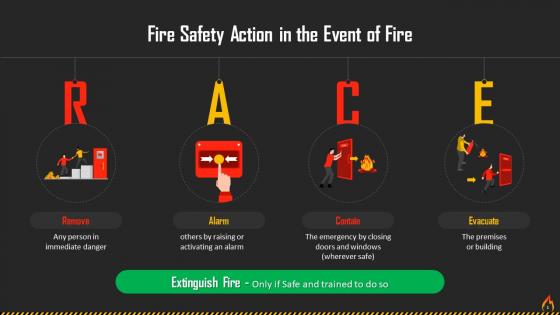
This slide contains information about fire safety acronym, RACE, which is short for Remove, Alarm, Contain, and Evacuate.
People who downloaded this PowerPoint presentation also viewed the following :
RACE For Fire Safety Training Ppt with all 17 slides:
Use our RACE For Fire Safety Training Ppt to effectively help you save your valuable time. They are readymade to fit into any presentation structure.










FAQs for RACE For Fire
Honestly, a few major things really changed how we see race today. The slave trade started it all - people needed to justify enslaving others, so they invented racial hierarchies. Colonialism spread that garbage worldwide with fake "scientific" theories. The Holocaust was the horrifying endpoint of racial pseudoscience taken too far. Then the 60s Civil Rights Movement finally challenged legal segregation and got people talking about systemic racism. Oh, and modern genetics proved race isn't even biological - it's totally made up socially. Those events still shape our policies and attitudes today, so they're worth reading about.
So here's the thing - race and class are totally connected, but it depends where you're looking. The US has crazy wealth gaps between racial groups because of old policies like redlining that kept people from buying homes. European countries deal with different stuff though. Turkish immigrants there face their own economic barriers. Geography really matters here - some places focus more on class divides, others are straight-up about race. But honestly, you can't analyze one without the other since they feed into each other constantly.
So basically race becomes this organizing structure that keeps inequality going through how institutions actually work. Housing's a huge one - all that redlining stuff still affects neighborhoods today. Same with schools getting different funding, healthcare where treatment varies, criminal justice with sentencing gaps. It's wild how connected everything is once you notice it. These aren't just people being biased either - there's actual policies and practices built into systems that create different outcomes. Some groups get advantages while others hit barriers everywhere. Maybe pick one system you deal with regularly and see how these patterns show up there?
Honestly, the media you watch totally messes with how you see different races - even when you don't notice it happening. Like, if certain groups always play criminals or sidekicks (or just aren't there at all), your brain starts thinking that's normal. It's kinda scary how sneaky it is. But here's the thing - when you actually see diverse, real portrayals, it breaks down those weird assumptions we all carry. I've definitely caught myself doing this. Your mind just absorbs whatever it sees on repeat. Try mixing up what you watch and finding different perspectives. It actually changes how you think about people.
Your racial identity definitely affects your mental health in complex ways. Connecting with your community can build serious resilience and self-esteem - that sense of belonging hits different. But discrimination and microaggressions? They'll mess with your head and create real anxiety. Internalized racism is another beast entirely. Honestly, the whole thing can be draining as hell sometimes. Here's what I've noticed though - people with stronger racial identity seem way better at bouncing back from the negative stuff. If you're going through it, definitely try connecting with others who get it. And maybe look into therapists who actually understand your background.
Honestly, I'd start by looking at your hiring - strip out anything that screams bias. Set some real diversity targets for leadership, not just entry level stuff. Employee resource groups help too, but the training part is where most companies mess up. Don't do those boring one-day seminars that nobody remembers. Make it ongoing and actually engaging. Oh, and celebrate different backgrounds genuinely - people can smell fake inclusivity from miles away. Check how promotions really work behind the scenes. Most importantly though? Just ask your team what barriers they're hitting. They'll tell you exactly where to focus first.
Yeah, race absolutely affects healthcare - it's pretty messed up honestly. Black and Latino people die more from heart disease and diabetes compared to white patients. Insurance gaps are a huge issue, plus there just aren't as many good doctors in certain neighborhoods. Even when minorities do have insurance, they often get worse care. Language barriers don't help either, and there's this whole history of medical mistrust (which, let's be real, makes sense given past abuses). Discrimination still happens too. If you're going into healthcare, focusing on culturally aware treatment is crucial.
So colorism basically creates this messed up ranking system where lighter skin gets treated better than darker skin - even within the same racial group. It shows up everywhere. Job interviews, dating apps, even how relatives treat different kids in the family. Media and beauty standards make it worse too. The really toxic part? It splits up communities that are already dealing with racism from the outside. Creates all this internal drama and destroys people's self-worth. Oh and if you're doing any diversity work, don't just focus on race generally - colorism needs its own attention because it's a whole different beast.
Race means totally different things depending where you are. The US obsesses over ancestry and how you look, but Brazil's got like dozens of fluid categories instead. France? They don't even officially track racial data - kinda wild when you think about it. Some Indigenous cultures care way more about clan identity than what we'd call "race." Honestly the whole thing shows how made-up these boundaries really are. So yeah, don't assume everyone sees identity through the same lens as your culture does.
Honestly, start with your curriculum - get diverse voices and perspectives in there so all kids see themselves reflected. Teacher training on implicit bias is huge too. The disciplinary stuff is where you'll probably see the worst disparities (those suspension stats are wild when you break them down by race). Set up mentorship programs and make sure advanced classes aren't just filled with the same demographics. Oh, and actually look at your data regularly - track those achievement gaps so you know if anything's working. It's not rocket science but it takes real commitment.
Dude, reading people's actual stories about race hits so different than like corporate diversity stuff. You're literally inside someone else's reality - feeling what it's like when they have to code-switch at work or deal with microaggressions. It's wild how much more you understand systemic racism when you hear personal experiences vs just reading statistics. Stories help you spot patterns you'd miss otherwise. Plus you develop real empathy, not the fake kind. Start following memoirs, podcasts, or even TikTok accounts from people with different backgrounds than you. Trust me, it'll change how you see everything.
Honestly, globalization makes race stuff way more complicated than you'd think. Sure, people move around more and cultures mix, which breaks down some barriers. But then you've got economic competition that actually makes things worse - like when jobs shift between countries and people get pissed. Social media's wild because it spreads both good movements AND terrible stereotypes super fast. Local racial issues blow up internationally now, which puts pressure on governments to actually do something. If you're doing international work, just pay attention to how global events mess with local dynamics wherever you're operating.
Honestly, it really depends on who's behind the camera or writing the story. When creators just phone it in with lazy stereotypes, yeah, that stuff sticks around and makes things worse. But I've noticed that when you get authentic, complex characters - like actual human beings instead of cardboard cutouts - it can totally change how people see things. The difference is huge between someone writing what they know versus someone just recycling the same tired tropes. I always check out who's actually telling the story these days. Makes all the difference in whether you're getting real representation or just more of the same garbage.
So the big ones are definitely the Civil Rights Act of 1964 and Fair Housing Act of 1968 - those basically changed everything. Employment discrimination, public spaces, housing, you name it. Don't forget the Voting Rights Act from '65 either, that one removed tons of voting barriers. Now we've got hate crime laws and state employment protections building on top of all that. Honestly though, these laws only work when there's actual money for enforcement and people fighting to make sure they're implemented properly. It's kinda wild how recent some of this stuff really is when you think about it.
Oh totally - social movements are basically what force politicians to actually do something about racial issues. Like, the Civil Rights Act happened because of massive protests, not because lawmakers suddenly felt generous. BLM did the same thing with police reform recently. Politicians hate taking controversial stances unless there's serious public pressure. Movements shift what voters care about and make ignoring these issues impossible. Without that grassroots energy pushing from below, most racial justice bills would just die in committee somewhere. Honestly, if you want to predict policy changes, just watch what activists are organizing around.
-
Designs have enough space to add content.
-
“I really like the convenient operation and professionalism I saw on the SlideTeam website. I want to express my regards and appreciation to the team.”