


Concept Of Fire Alarm System Training Ppt




Try Before you Buy Download Free Sample Product
 Impress Your
 Audience
 100%
100% Editable
 Save Hours
 of Time


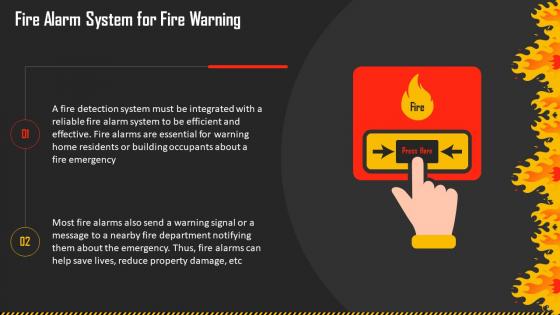
This slide gives an overview of fire alarm systems and their importance. A fire detection system must be integrated with a reliable fire alarm system to be efficient and effective. Fire alarms are essential for warning home residents or building occupants about a fire emergency
People who downloaded this PowerPoint presentation also viewed the following :
Concept Of Fire Alarm System Training Ppt with all 17 slides:
Use our Concept Of Fire Alarm System Training Ppt to effectively help you save your valuable time. They are readymade to fit into any presentation structure.











FAQs for Concept Of Fire Alarm
So there are four main pieces they gotta know: detection stuff like smoke detectors and heat sensors, notification equipment (horns and strobes), the control panel which is basically the brain, and power supply with backup batteries. Manual pull stations too - honestly those get forgotten all the time but they're super important for emergency situations. Each part has different testing rules and ways it can fail. I always tell people to walk through and practice identifying everything first - makes troubleshooting way easier when you're actually on a service call.
So there are a few main types. Ionization detectors catch fast fires really well, while photoelectric ones are better with slow, smoldering stuff. Most places just go with dual-sensor now since it does both - honestly makes sense rather than picking sides. Large spaces sometimes use beam detectors, and there's these crazy sensitive aspirating systems that'll detect smoke before you even notice anything. Which one you need depends on your building layout and what kind of fire risks you've got. Just make sure your staff knows which type you have so they're not caught off guard.
NFPA 72 is gonna be your go-to - that's the main standard for fire alarm installation and testing. Your local building codes matter too though, they're often stricter than the national stuff. IBC sets the baseline for when you actually need systems based on building type and size. There's also NFPA 101 but honestly, all these codes overlap and it gets confusing fast. I always just focus on NFPA 72 first since that covers how everything should actually work day-to-day. Then check with your local AHJ because they'll have their own quirks on top of everything else.
Honestly, training makes a huge difference - your team won't panic or waste time figuring out what to do. They'll spot real emergencies vs false alarms fast. Communication with fire department gets way better too since they know the building layout and can explain hazards clearly. Nobody wants staff wandering around confused at 2am when alarms are blaring! Your people will also know exactly where to look for problems and how to coordinate with first responders. I'd say run practice drills quarterly - sounds like overkill but you'll see response times drop big time.
Look, most people think fire alarms are like smoke detectors - install and forget about them. Wrong. These systems need regular testing and maintenance or they'll fail when you actually need them. Plus, every building's different. Your workplace might have weird zones or specific evacuation routes that aren't obvious. And here's what drives me crazy: people ignore "small" alarms thinking they're false positives. That's dangerous. Get proper training on YOUR specific system. Don't just wing it and hope for the best - you'll regret it later.
So first thing - they can't just assume it's false, that's literally how accidents happen. Have them check the control panel for zone indicators and look around for obvious stuff like burnt toast or steam. Once they've actually confirmed it's a false alarm, then they silence it and figure out what triggered it - maybe reset a detector or clear out smoke. Oh and make sure they write everything down in the system log afterward. The big thing is teaching them that silencing the alarm isn't the same as properly resetting the whole system.
Fire alarms are literally your building's first line of defense - they detect smoke or heat and alert everyone to get out fast. The whole system connects detection, alarms, and sometimes sprinklers too. What's cool is how they link up with other stuff like emergency lights and elevators (elevators automatically go to ground floor). Honestly though, the fanciest system in the world won't help if your people don't know what to do when it goes off. Make sure everyone gets trained on evacuation routes regularly - I've seen too many people just stand around confused when alarms start blaring.
So you can totally connect your fire alarms to other building systems - it's actually pretty cool how it all works together. Fire goes off and boom, your HVAC shuts down so smoke doesn't spread everywhere. Security doors unlock automatically, elevators head straight to the ground floor. Some places even have the lights guide people to exits which honestly seems like overkill but whatever. You'll need systems that can talk to each other though - BACnet works well for this stuff. I'd start by figuring out what you've got now, then see which connections would actually make the biggest difference safety-wise.
Set up scenarios that actually happen - power outages during testing, false alarms from kitchen smoke, trouble codes on the main panel. Night drills are crucial since emergencies always hit at 3am, right? Practice evacuation routes when elevators are out, dealing with people who panic and don't know where to go. Don't forget coordinating with fire crews when they show up. Your team needs to handle both routine checks and those crazy moments when literally everything starts beeping. Those situations get overwhelming fast, so the more they practice, the better they'll react under pressure.
Test your detectors first - use actual smoke or heat to make sure they trigger. Then check every strobe, horn, and speaker in the building works. Walk around everywhere because dead spots are weirdly common and you won't catch them standing in one place. Try testing during different times too - busy hours, quiet periods, whatever. The control panel should show you the right zone info when stuff activates. Honestly, documentation is annoying but you gotta write down what you find. Retest anything that's broken after it gets fixed. The whole point is making sure this thing actually works when people's lives depend on it.
Dude, test your fire alarms monthly - seriously, most people totally blow this off. Check all the detectors, control panels, make sure those backup batteries aren't dead. I found out the hard way when ours crapped out during inspection day... not fun. Get a pro to look at it once a year too. Keep logs of everything you test - I know it's boring but you'll thank me later. Oh, and replace detector heads every 10-15 years even if they're working fine. Always retest after electrical work gets done. Set phone reminders now or you'll definitely forget.
Honestly, commercial training is way more intense than residential stuff. Residential just covers the basics - fire extinguishers, simple evacuation routes, that kind of thing. But commercial? You're dealing with complex alarm panels, zone systems, emergency communication protocols. There's usually fire wardens with specific jobs during evacuations too. Plus they make you do way more drills and paperwork - kind of annoying but whatever. I'd double-check what certification your work actually needs first though. Don't want you sitting through the wrong training!
Definitely dive into AI analytics and multi-sensor fusion for your training. These newer systems blend smoke detection with thermal imaging, air quality sensors, even sound recognition - cuts down false alarms big time. The tech changes so damn fast though, feels like every month there's something new! Also throw in aspirating smoke systems and wireless mesh networks since they're pretty much standard now. Your team needs to get how all this connects with building automation and emergency protocols. I'd say start with hands-on demos of at least two technologies this quarter. Way better than just talking about it.
Get them touching the actual equipment - that's what works. People will zone out if you just lecture at them for an hour. Break into small groups so they can practice pulling alarms and identifying the different sounds. Real evacuation walkthroughs are way better than PowerPoint slides. Honestly, I've sat through too many boring sessions where everyone's half asleep. Throw in some stories about actual fire incidents to wake people up, then get back to the hands-on stuff. Interactive exercises beat lecture-style presentations every time. They need to practice skills they'll actually use when something goes wrong.
Honestly, fire alarm systems are confusing as hell at first, so don't feel bad about it. Break everything down into way smaller pieces instead of cramming it all in. Skip the boring PowerPoint stuff - get your hands on actual equipment and show them how it works. Some people need analogies, others want the technical step-by-step breakdown. Pair struggling folks with someone who's been around longer too. Oh, and definitely schedule extra one-on-one time for questions. I've found that works way better than group sessions sometimes.
-
Awesome use of colors and designs in product templates.
-
Excellent products for quick understanding.