


Definition Of Fire Training Ppt




Try Before you Buy Download Free Sample Product
 Impress Your
 Audience
 100%
100% Editable
 Save Hours
 of Time


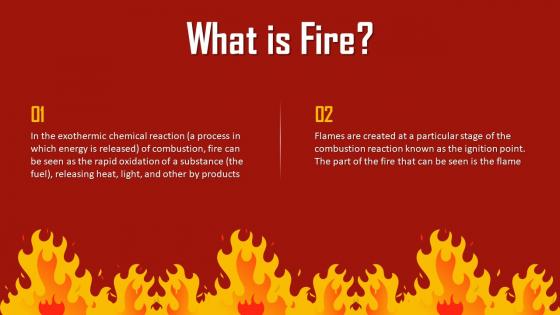
This slide explains the fire which is an exothermic chemical reactiona process in which energy is released of combustion, fire can be seen as the rapid oxidation of a substance the fuel, releasing heat, light, and other byproducts.
People who downloaded this PowerPoint presentation also viewed the following :
Definition Of Fire Training Ppt with all 17 slides:
Use our Definition Of Fire Training Ppt to effectively help you save your valuable time. They are readymade to fit into any presentation structure.








FAQs for Definition Of
Honestly, you need four main things: prevention education, evacuation routes, actual hands-on extinguisher training, and tons of drills. People need to understand how fires spread and know every exit by heart. Don't just show them videos - let them actually use the extinguishers because there's a huge difference between watching and doing. Regular drills are probably the most important part though. I've watched people completely freeze during real alarms, even ones who seemed prepared. Do them quarterly minimum and mix up the scenarios. Oh, and make sure you're not always using the same exit route or people get too comfortable with just one way out.
So fire training totally depends on what kind of workplace you're dealing with. Manufacturing places focus on chemical fires and equipment incidents. Offices? More about evacuations and basic extinguisher stuff. Healthcare gets tricky - they've got to figure out how to move patients who can't walk, which honestly sounds like a nightmare to coordinate. Restaurants spend forever on grease fires, warehouses worry about big incidents with all their stored materials. You basically need to look at what could actually catch fire or cause problems in your specific place, then train for those realistic scenarios instead of generic stuff.
Dude, you really gotta get your team actually doing this stuff, not just watching videos. When there's real smoke and chaos, muscle memory saves you - not some manual you read months ago. Most people are hands-on learners anyway (myself included). Practice builds confidence too, so when equipment acts weird or things go sideways, you can actually think on your feet. I'd push for regular sessions throughout the year rather than those once-a-year trainings everyone forgets immediately. Trust me, there's a huge difference between knowing fire safety on paper versus being able to execute when it counts.
Honestly, once a year is pretty much the minimum you can get away with. New people need it in their first week obviously. For risky areas though? I'd do quarterly - keeps everyone sharp. Fire wardens and emergency response folks should get refreshers every six months since they're the ones everyone's gonna look to when things go sideways. Just don't overdo it or people will start rolling their eyes and zoning out. Pro tip: block out all your training dates at the beginning of the year so you're not scrambling to schedule later.
Dude, biggest thing people get wrong is thinking water works on every fire - it'll make grease fires explode and electrocute you on electrical ones. Also those smoke detectors? They die after 10 years, most people never replace them. Stop, drop and roll only helps when YOU'RE on fire, not escaping a burning room (my dad always mixed that up lol). Learn the PASS method for fire extinguishers and map your escape routes. But honestly? Don't try being a hero - if it's bigger than a trash can fire, just get out. Your PlayStation isn't worth dying over.
Dude, VR fire training is actually game-changing. Practice in smoke-filled buildings without, you know, dying. The sims track how you move and give feedback on response times - honestly way better than I expected when I first tried it. Your whole crew can train together in the same virtual space, which beats the hell out of constantly building practice structures. Equipment failures, spreading fires, whatever - run through scenarios over and over until it's second nature. Oh, and my buddy said start simple then work up to the crazy multi-story stuff.
Start with escape routes and meeting spots - that's the foundation. Fire extinguisher training comes next, but here's the thing: most people panic and use them completely wrong. Teach your team when it's worth fighting a small fire vs. just getting out (seriously, when in doubt, just leave). Don't forget the basics either - staying low in smoke, checking doors before opening, recognizing different alarm sounds. Oh, and practice this stuff regularly! One training session won't stick when adrenaline kicks in.
So for measuring fire training - attendance is obvious, but quiz people a few weeks later to see what actually stuck. Trust me, you'll be surprised how much they forget! Time their responses during drills and watch decision-making quality. Before/after confidence surveys work pretty well too. The real test though? Track if incident response times improve and whether you're seeing fewer safety issues over time. Oh, and completion times during training sessions tell you a lot about engagement. Start simple with attendance and basic knowledge tests, then add the other stuff as you go.
OSHA requires annual fire safety training for most places - that's your baseline. But then you've got industry-specific stuff on top of that, plus whatever your local fire codes demand. Honestly, local requirements are all over the map depending where you are. Your training needs to hit evacuation procedures, fire extinguisher use, and workplace-specific hazards. Document everything because inspectors will want proof. Oh, and definitely call your fire marshal's office first - they'll have local guidelines ready to go and it'll save you hours of digging around online.
Honestly, fire training gets everyone speaking the same language about hazards and how to react fast. Your team builds this shared responsibility thing - they'll actually call out risks instead of staying quiet. The hands-on practice with extinguishers makes it feel real, not just theoretical. Regular refreshers help too since people forget stuff between those annual compliance marathons (ugh, those are the worst). Schedule sessions often and let people ask whatever questions pop up. That's when you'll see the culture actually change instead of just checking boxes.
Mix things up so people don't zone out completely. Get them doing mock evacuations and actually using fire extinguishers on real controlled fires - way better than sitting through slides. Group problem-solving keeps everyone awake. Honestly, role-playing scenarios work surprisingly well, even if it feels cheesy at first. Throw in some competition with quizzes or timed drills. Make scenarios specific to your actual building though. If you've got weird hallways or confusing exits, work those into the training. People remember stuff better when it's hands-on and relates to where they actually work.
Check your fire training stuff once a year minimum, plus whenever regulations change. I'd set up Google alerts for fire safety rules in your area - saves you from constantly hunting down updates. Your local fire marshal's office and OSHA are the main sources to watch. Evacuation procedures and equipment requirements change the most, so prioritize those. Honestly, joining a safety association isn't a bad idea either since they'll usually keep you in the loop. Maybe assign someone to review this quarterly? Missing compliance updates is definitely not worth the headache.
Dude, you'll get actual firefighters teaching your people - not some random corporate guy reading from a manual. That's huge because your employees won't just zone out like usual. Most fire departments do this stuff for free too, which is pretty sweet. The firefighters learn your building layout while they're there, so if something bad actually happens they'll know where everything is. I think that part's honestly underrated. Just call your local station chief - they're usually super into this kind of community partnership thing.
So basically you want to mix up your training formats right from the beginning - visual demos, written stuff, hands-on practice. For mobility issues, map out backup evacuation routes and maybe pair people up. Hearing impaired folks need visual alerts and written instructions (though honestly, visual cues just make sense for everyone). Don't forget to cover how wheelchairs or other equipment work during emergencies. Here's the thing though - just ask people what they actually need instead of guessing. Then practice those accommodations during drills. Otherwise you'll find out what doesn't work at the worst possible time.
So regular employee training is just the basics - using extinguishers, knowing exits, that sort of thing. Fire warden training? Totally different beast. You're suddenly responsible for everyone else during an emergency, which is honestly kinda stressful when you think about it. They'll teach you advanced evacuation stuff, headcounts, helping people with disabilities get out safely. Way more hands-on practice too. My cousin did it last year and said the coordination with emergency services part was actually pretty cool. But yeah, expect way more time commitment and ongoing responsibilities compared to regular certification.
-
The designs are very attractive and easy to edit. Looking forward to downloading more of your PowerPoint Presentations.
-
I was able to find the right choice of PPT template for my thesis with SlideTeam. Thank you for existing.