

Fire Marshals And Their Duties Training Ppt




Try Before you Buy Download Free Sample Product
 Impress Your
 Audience
 100%
100% Editable
 Save Hours
 of Time


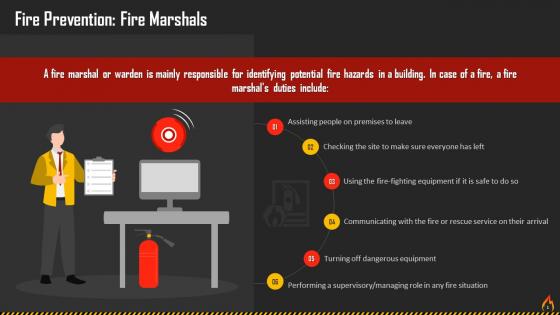
This slide provides information about fire marshals in a workplace and also lists their responsibilities. A fire marshal or warden is mainly responsible for identifying potential fire hazards in a building.
People who downloaded this PowerPoint presentation also viewed the following :
Fire Marshals And Their Duties Training Ppt with all 17 slides:
Use our Fire Marshals And Their Duties Training Ppt to effectively help you save your valuable time. They are readymade to fit into any presentation structure.














FAQs for Fire Marshals And Their
So fire marshals are basically the fire prevention cops in your area. They're not the ones rushing into burning buildings - they're trying to stop fires from happening in the first place. Most of their time is spent inspecting buildings, making sure places follow fire codes, and investigating fires after they happen to figure out what went wrong. They also do public safety education stuff. Honestly, it's way more detective work than I thought! They can review building plans, give out permits, or even shut places down if they're not safe. If you're opening a business, you'll probably deal with them at some point.
So fire marshals are basically detectives who investigate how fires started and do safety inspections - way more paperwork than you'd think. They work normal hours and focus on prevention stuff. Firefighters are the ones actually rushing into burning buildings with hoses. Totally different vibes. My cousin's a fire marshal and he spends most days checking that businesses follow fire codes and doing community education talks. Pretty steady work but not nearly as exciting as the movies make it look. Really depends if you want the investigative side or the adrenaline rush of emergency calls.
Most states want you to have a fire science degree or tons of hands-on firefighting experience first. You'll need certifications too - the big one is CFM from the National Association of Fire Investigators. Honestly, it's kinda all over the place depending where you live. Usually takes 5-10 years in fire service before you can even apply. Fire investigation and code enforcement training are must-haves. Oh, and public safety law stuff. Most people I know started as regular firefighters and climbed up. Your best bet? Call some local fire marshals and just ask them directly about your area's requirements.
So fire marshals basically focus on a few main things when they're putting together prevention plans. They'll do regular building inspections, check that fire safety systems work, and make sure exit routes are clearly marked. Code compliance is big - they're always on businesses about that stuff. Storage of hazardous materials gets special attention too. Emergency evacuation procedures are another piece, though honestly most people don't think about that until it's too late. They also spend time educating the public about basics like where to put fire extinguishers. Don't wait around for them to find problems during an inspection - stay ahead of it.
So fire marshals have this whole checklist thing they go through - exit routes, where your fire extinguishers are, alarm systems, sprinklers, sketchy electrical stuff. Honestly, some are way more thorough than others. They're hunting for fire hazards and anything blocking escape routes. When they find violations, you'll get paperwork with deadlines to fix everything. My advice? Do your own walkthrough first pretending you're the inspector. You'll spot most issues before they show up and save yourself those annoying 30-day notices. Way less stressful that way.
Oh man, the usual suspects are blocked exits and overloaded circuits - fire marshals are obsessed with those. Missing fire extinguishers too, or ones that expired like 3 years ago. Improper storage of flammable stuff gets people in trouble constantly. Smoke detectors that don't work are another big one (honestly so annoying since it's such an easy fix). Exit doors locked during business hours will definitely get you written up. Most of this is preventable though - just walk through your place every few months with a critical eye. You'll spot problems way before any inspector does.
Your local fire marshal will totally work with you on this stuff. They do training sessions, workplace inspections, all that. Most will customize it for your specific industry too - like if you're running a restaurant, they'll focus on kitchen fires instead of generic safety stuff. The demonstrations are actually pretty cool, they'll literally set things on fire in your parking lot to show how fast stuff spreads. It's usually free or super cheap since preventing fires is way easier than fighting them. Just call your fire department's prevention office - honestly, they seem to love this kind of thing and will probably have ideas you hadn't even thought of.
So they've got thermal cameras to spot heat issues and electrical problems. Moisture meters too for checking water damage. Gas detectors, electrical testing gear, the usual stuff. But honestly? The tablets are what really changed everything - they can pull up building plans, old inspection records, and fire codes instantly. Way better than shuffling through paperwork. Some use drones for roof checks now which beats climbing ladders in this heat. Oh, and definitely ask about their digital reporting timeline when you're dealing with them. It'll speed up your approval process big time.
Yeah, fire marshals are totally on top of this stuff now. Updated codes cover lithium battery risks, e-waste storage, all that tech stuff. They're requiring special suppression systems for server rooms and way stricter rules around charging stations. The whole vaping explosion thing honestly blindsided everyone at first - what a mess that was. Now businesses need specific plans for lithium battery fires since they burn completely different than regular fires. Data centers got hit with new cooling system requirements too. If you're storing or making electronic equipment, definitely check your local codes. They've changed big time in just the last couple years.
So fire marshals are basically the fire safety teachers for everyone. They do school visits, community workshops, all that prevention stuff. Honestly, they're way better at making safety training interesting than you'd expect - like who makes stop-drop-and-roll actually fun? They'll also help businesses create emergency plans and run drills. Most people don't know this, but if you're planning an event or need safety training, just call your local fire marshal's office. Free resources and presentations. Pretty solid deal if you ask me.
So fire marshals secure the scene first and talk to witnesses. Then they work backwards from the least damaged areas toward the worst spots - kinda like following breadcrumbs but in reverse. They're basically detectives who know burn patterns really well. Lots of photos, evidence collection, testing for accelerants or electrical problems. The char patterns on walls? That's where the real story is - shows exactly how everything spread. Oh and definitely don't touch anything if you're ever in that situation. They need the scene intact to figure out what actually happened.
Fire marshal reports are huge in legal cases - they usually determine who's at fault and what started the fire. These guys have real authority to investigate scenes and interview people, so their findings carry major weight. Insurance companies pretty much live by these reports when deciding claims. Courts accept them as expert testimony too. Honestly? They can totally make or break your case. My cousin learned this the hard way last year. Get that report ASAP if you're dealing with fire litigation. Read through it carefully because it'll probably shape your whole strategy going forward.
So fire marshals basically become the go-to fire safety experts when disasters hit. They work through this thing called incident command systems - it's how all the agencies (police, EMS, emergency management) coordinate without stepping on each other's toes. During big emergencies, they're the ones figuring out evacuation zones and managing where fire trucks go. Plus they handle utility shutoffs with gas and electric companies, which honestly sounds stressful as hell. My advice? Figure out your local setup ahead of time and know who your fire marshal contact is. You don't want to be scrambling for phone numbers when things go sideways.
Actually, fire marshals do way more than just enforce rules - they literally help write them. These guys work with local governments to draft new codes based on what they're seeing out there. Makes sense, right? They're the ones dealing with actual fires and doing building inspections, so they know where regulations aren't working. It's like they're translating real-world problems into actual policy. Your local fire marshal has probably seen every type of fire hazard you can imagine. Faulty wiring, blocked exits, you name it. That experience gives lawmakers the data they need to create better codes.
Build relationships first - connect with council members and the mayor before you actually need anything. Document everything: response times, violations, incidents. Politicians get numbers. Don't just complain about problems though, come with actual solutions. Tie everything back to safety and property values (they love that combo). Business groups are gold since they usually have the mayor's attention - definitely worth partnering with them. Honestly, persistence is key but stay professional about it. Solid proposals with clear costs work way better than just asking for money.
-
Keep doing the good work guys. Surpass the needs and expectations always!!
-
Attractive design and informative presentation.