


Fire Prevention And Protection Fundamentals Training Ppt





Try Before you Buy Download Free Sample Product
 Impress Your
 Audience
 100%
100% Editable
 Save Hours
 of Time


These slides provide information about fir prevention and protection. We can prevent fires by providing staff training, appointing fire marshals, conducting fire drills, and performing regular fire safety checks.
People who downloaded this PowerPoint presentation also viewed the following :
Content of this Powerpoint Presentation
Slide 1
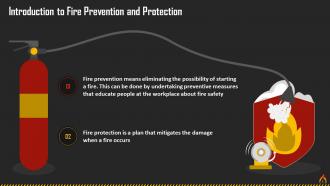
This slide gives the definition of Fire Prevention and Protection. Fire prevention means eliminating the possibility of starting a fire. Fire protection is a plan that mitigates the damage when a fire occurs.
Slide 2
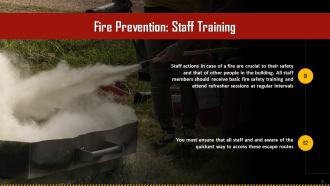
This slide discusses the importance of fire safety training for employees in a workplace. Staff actions in case of a fire are crucial to their safety and that of other people in the building. All staff members should receive basic fire safety training and attend refresher sessions at regular intervals
Slide 3
This slide talks about fire marshals in a workplace and also lists their responsibilities. A fire marshal or warden is mainly responsible for identifying potential fire hazards in a building.
Slide 4
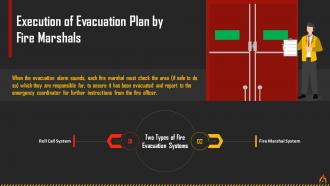
This slide discusses the execution of an evacuation plan by fire marshals in case of a fire emergency. When the evacuation alarm sounds, each fire marshal must check the area (if safe to do so) which they are responsible for, to ensure it has been evacuated and report to the emergency coordinator for further instructions from the fire officer.
Instructor’s Notes:
- Roll call system: In this, it is made sure that everyone has left the building and reached a safe place
- Fire marshal system: In this, the building is split into small manageable areas
Slide 5
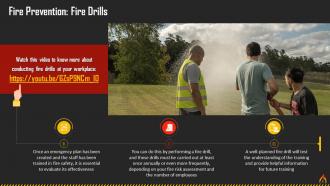
This slide talks about the importance of conducting regular fire drills for staff to prevent fires. Once an emergency plan has been created and the staff has been trained in fire safety, it is essential to evaluate its effectiveness. You can do this by performing a fire drill, and these drills must be carried out at least once annually, depending on your fire risk assessment and the number of employees.
Slide 6
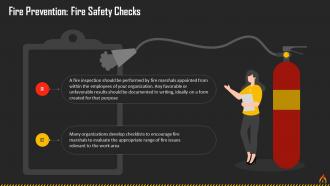
This slide discusses the importance of fire safety checks by fire marshals to help in prevention of fires. A fire inspection should be performed by fire marshals appointed from within the employees of your organization. Any favorable or unfavorable results should be documented in writing on a form created for that purpose.
Fire Prevention And Protection Fundamentals Training Ppt with all 22 slides:
Use our Fire Prevention And Protection Fundamentals Training Ppt to effectively help you save your valuable time. They are readymade to fit into any presentation structure.












FAQs for Fire Prevention And Protection
Cooking fires are the worst offenders, then heating stuff, electrical problems, and cigarettes. Don't walk away from your stove - I've almost burned down pasta water more times than I'll admit. Get your heating system checked yearly and stop cramming everything into one outlet (guilty as charged). Smoke detectors need monthly tests and fresh batteries annually. If you smoke, use deep ashtrays and definitely not in bed. Honestly, just spend like 10 minutes this weekend walking around looking for potential fire hazards. Way easier than dealing with actual flames later.
You'll definitely want a fire extinguisher - get one that handles different fire types. Smoke detector batteries are crucial too. Also grab a flashlight, basic first aid stuff, and write down emergency numbers. Fire blankets are actually pretty great for kitchen accidents, way easier than wrestling with an extinguisher when your pan's on fire. Store it all somewhere you can reach quickly but not near anything that could ignite. Set a reminder to check expiration dates twice a year because I always forget that part. Oh, and make sure everyone knows where this stuff is!
Definitely run these quarterly at schools, twice yearly at offices. Don't announce them ahead of time - people need to practice the real thing, not some choreographed walk-through. Map your escape routes beforehand and pick someone to guide each group out. Always have a meeting spot outside where everyone gathers. Honestly, drills feel like such a pain when you're in the middle of something important, but they're worth it. Time how long evacuations take and talk through what went wrong after. Did people get confused somewhere? Fix those issues now. Oh, and make sure everyone actually knows what they're supposed to do before chaos hits.
Honestly, tech has completely changed fire safety. Smart smoke detectors can actually tell the difference between real fires and your cooking disasters - game changer. Most systems now automatically call 911 for you, and the new sprinklers are way more precise than those old ones that flood everything. Buildings use IoT sensors to catch problems before they turn into actual fires, which is pretty cool. You can even monitor your place from your phone now. If you're thinking about upgrading, definitely go smart - the data you get is so much better than traditional stuff.
Ugh, monthly testing is the official rule but honestly who remembers? I just set my phone to remind me first Saturday of every month - takes like 30 seconds to hit the button. Replace the whole thing every 10 years since the sensors get sketchy after that. Check the back for manufacture dates. Oh and swap batteries yearly, or whenever that stupid chirping starts at 3am (seriously, why always the middle of the night?). If you're lazy like me, just change them when daylight saving hits - easy to remember.
Dude, biggest myth? That you can fight fires yourself - just get out, seriously. Also people never replace smoke detector batteries (do it yearly) or the whole detector after 10 years. Crawling under smoke isn't just a suggestion, it's mandatory if you want to breathe. Oh and here's what blew my mind - modern couches and stuff burn crazy fast compared to old furniture, so forget what you've seen in movies. Fire moves quick now. Honestly just drill your escape route with everyone and keep those detectors working.
Start with a solid fire risk assessment - update it regularly too. Get your detection systems, extinguishers, and escape routes sorted and clearly marked. Training your staff is massive because honestly, most violations happen when people just don't know what they're doing. You'll want regular equipment inspections and keep good records since inspectors are obsessed with documentation. Local fire codes change sometimes, so maybe check with your fire marshal quarterly? I know it sounds boring but staying current will save you headaches later.
Honestly, community outreach is where it's at for fire safety. Instead of waiting for people to find info themselves, you go to them - neighborhood events, schools, local businesses. Those dramatic before/after fire photos on social media get shared like crazy too. But here's the thing: make it hands-on. Fire extinguisher demos, escape plan workshops, those inflatable safety houses kids go nuts for. People need actual skills they can use, not another flyer for the trash. Oh, and definitely figure out what fire risks your area deals with most, then focus your efforts there.
Dude, first thing - clear everything flammable at least 30 feet from your house. Dead plants are literally fire candy. Replace wood siding with stucco or metal if you can swing it. Same goes for roofing - ditch wood shingles for tile or metal. Dual-pane windows won't crack as easily from heat (learned that one the hard way). Oh, and screen your vents and gutters so embers can't sneak in. Honestly, just think like you're fire-proofing against the world's most destructive toddler - remove anything it could grab and burn.
So there are four types - Class A is for wood/paper stuff (water works), Class B handles grease and liquid fires (CO2 or dry chemical), Class C is electrical (never use water or you'll get zapped), and Class D is for metals which honestly you probably won't deal with. Most places have those ABC combo extinguishers that cover the basics. Your kitchen should really have a grease-specific one though. The technique is PASS: Pull pin, Aim at the base of flames, Squeeze handle, Sweep side to side. Just figure out where yours are located now - trust me, you don't want to be searching during an actual fire.
Man, fires mess with your head big time. Your brain just shuts down - panic, can't think straight, some people literally freeze. The smoke and alarms don't help either, it's sensory overload. Honestly, most of us think we'd handle it fine but nope. You get tunnel vision and make weird decisions. Sleep problems and anxiety can stick around after too, which sucks. Practice your escape plan though - like actually walk through it. When you're stressed, you'll fall back on whatever you've rehearsed. Makes a huge difference.
The layout is huge for fire safety - probably the biggest thing actually. You'll want multiple exits that don't all lead to the same spot. Wide hallways help too, otherwise everyone gets stuck in bottlenecks. Clear sightlines are key so people can see where they're headed through the smoke. Dead-end hallways? Total nightmare scenario. Distance to exits matters since the longer you're walking, the more smoke you're breathing in. I'd honestly just walk through your building pretending there's a fire and see what sucks about the route.
Hey! So for those risky jobs, you definitely need way more than the standard fire safety stuff. Get hands-on extinguisher training and learn evacuation routes that actually make sense for your specific workplace hazards. Chemical plants, confined spaces - totally different training requirements there. Your company should be doing annual refreshers and practice drills (honestly, some places slack on this). Fire classifications matter too depending on what materials you're dealing with. Oh, and check your industry's OSHA standards - they're pretty specific about what training you actually need to stay compliant and not get anyone hurt.
So fire-rated materials are basically there to slow down flames and buy you time to get out. They resist heat and smoke for set periods - could be 30 minutes, maybe up to 3 hours depending on what you need. You'll find them in stairwells, between apartment units, around structural stuff. Honestly, I think of them as the building's safety net when everything goes wrong. Building codes require them in certain spots, so if you skip the rated materials where they're needed, you're gonna fail inspection for sure. Check your local fire codes first though - they can be pretty specific about requirements.
Oh man, the fire safety stuff coming out is wild! Smart smoke detectors can actually tell the difference between real fires and your burnt breakfast now - no more annoying false alarms. Water mist systems are getting big too since they use way less water but work just as well. Firefighters are getting these sensors that track their health while they're working, which is pretty smart honestly. The early detection tech with thermal cameras and gas sensors is where it gets really futuristic though. For your place, definitely watch those AI detection systems - they're gonna be game changers for catching actual threats without all the false positives.
-
Informative and engaging! I really like the design and quality of the slides.
-
Templates are beautiful and easy to use. An amateur can also create a presentation using these slides. It is amazing.