


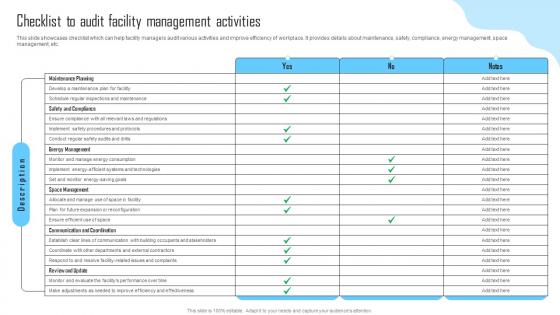
Checklist To Audit Facility Management Activities Facility Management And Maintenance




Try Before you Buy Download Free Sample Product
 Impress Your
 Audience
 100%
100% Editable
 Save Hours
 of Time


This slide showcases checklist which can help facility managers audit various activities and improve efficiency of workplace. It provides details about maintenance, safety, compliance, energy management, space management, etc.
People who downloaded this PowerPoint presentation also viewed the following :
Checklist To Audit Facility Management Activities Facility Management And Maintenance with all 6 slides:
Use our Checklist To Audit Facility Management Activities Facility Management And Maintenance to effectively help you save your valuable time. They are readymade to fit into any presentation structure.





FAQs for Checklist To Audit Facility Management Activities Facility
So for your audit checklist, definitely hit the big stuff first - safety compliance, emergency procedures, that kind of thing. HVAC systems and security protocols are huge too. Then move into maintenance schedules, energy efficiency, and how you're using your space. Oh and vendor performance - that one's easy to forget but super important. The documentation part is honestly kind of boring but auditors eat that stuff up, so make sure your record-keeping is solid. I'd customize it based on what type of facility you're dealing with. Breaking it into chunks makes the whole thing way less overwhelming than trying to tackle everything at once.
So basically, an audit checklist helps you catch all the stuff that's been slipping through the cracks - and trust me, there's always more than you think. You'll end up looking at everything from maintenance to safety with totally fresh eyes. It gives you a real baseline to compare against industry standards too. The documentation part is actually pretty clutch for tracking improvements later. I'd start with anything that hits your wallet or safety first since those fixes usually pay off fastest. You know how it is - the obvious problems get attention, but it's the sneaky ones that'll bite you.
Okay so the main stuff you gotta worry about is safety compliance - OSHA standards, fire codes, emergency exits, all that. Environmental regs too for waste management and air quality. ADA accessibility is huge. Honestly? Local building codes and zoning laws will mess you up way more than federal stuff sometimes. Oh and if you're doing healthcare or food service, there's extra industry requirements on top of everything else. I'd make some kind of matrix that connects each regulation to your audit points. These rules change constantly so you'll need regular check-ins.
Honestly, I'd go quarterly if you're just starting out - annual audits miss way too much stuff. Monthly spot checks on the big things like HVAC and safety gear are clutch though. High-traffic places? Definitely need more frequent looks. My old boss used to say facilities are like cars - the older and busier they get, the more attention they need. You can always dial it back if quarterly feels like overkill, but it's better to catch problems early than deal with expensive fixes later. Really depends on how much risk you're comfortable with.
Dude, tech has completely changed facility audits - no more drowning in paperwork! Mobile apps let you snap photos and update checklists on the spot. IoT sensors are game-changers too since they monitor your HVAC and equipment 24/7 instead of just during those quarterly walkrounds. Cloud platforms mean your whole team stays in the loop instantly. Honestly, I wish we'd adopted this stuff years ago - would've saved so many headaches. Just start by converting your paper checklists to digital. That one change alone will cut your data entry time in half.
Focus on energy use per square foot first - that's where you'll see real money. Preventive maintenance completion rates matter too, plus how well you're actually using your space. Happy tenants = way less headaches, so track satisfaction scores and how fast you handle emergencies. Oh, and definitely watch maintenance costs as a percentage of your total facility value. Compliance gaps will bite you later if ignored. Honestly, start with just these basics instead of trying to measure everything at once. You can always add more metrics once you've got the hang of it.
Just tack green stuff onto your current audit checklist - way easier than starting from scratch. Check HVAC energy efficiency, water usage, waste diversion rates. Honestly, I think this approach is genius because you're already doing audits anyway. Throw in sections for renewable energy, air quality, eco-friendly cleaning products. Oh, and sustainable vendor partnerships too - that one's huge. The trick is making it feel as normal as checking fire extinguishers. Like, just another routine thing that actually moves the needle on your environmental impact.
Don't try auditing everything at once - you'll drown in details and miss the big stuff. Start with your most critical systems first. Here's what I've learned: skip relying on paperwork alone. Walk around, chat with the actual workers. They'll tell you exactly what's broken (and management probably doesn't know half of it). Set your audit criteria before you start, otherwise you're comparing apples to oranges. Oh, and this is huge - actually follow up afterward! Most people identify problems then just... disappear. Schedule those check-ins or nothing changes.
Start with a solid schedule and tell everyone what you're actually hunting for upfront. Loop in department heads, maintenance folks, and regular users - they'll spill all the real problems (and boy, do they love to vent). Don't save everything for some big reveal at the end, that's just asking for drama. Share bits as you find them so nobody gets blindsided. Quick check-ins work way better than formal presentations. The whole thing should feel collaborative, not like you're playing gotcha. Wrap it up with everyone in the room so you can hash out next steps together.
When you document stuff, get super specific - "needs repair" tells you nothing six months from now. Take photos and note exact locations, plus how bad each issue actually is. I break everything into critical/moderate/minor categories because it makes budgeting way easier later. Oh and definitely include timelines and rough cost estimates in your recommendations rather than vague "fix this eventually" notes. The consistency thing is huge too - stick to the same format throughout or you'll hate yourself when compiling the final report. Trust me on that one.
Honestly, think of it like getting a physical for your building. You'll catch equipment about to fail, safety issues, and compliance problems before they turn into expensive disasters. The paperwork from audits also covers your ass legally - super helpful for insurance claims and staying on regulators' good side. I'd use whatever you find to figure out what needs fixing first and set up better maintenance schedules. It's way cheaper than dealing with emergencies later. Plus you can actually prove you weren't just ignoring obvious problems, which matters more than people realize.
Your employees are honestly your best audit resource - they're in there every single day spotting stuff you'd never catch. Like that one meeting room where the AC is perpetually broken or whatever. They know which spaces actually suck for getting work done vs. what just looks nice. Quick survey before your audit helps tons, plus grab coffee with a few people to get the real tea. Trust me, their input beats any checklist when it comes to fixes that'll actually matter. Way better than just walking around guessing what needs attention.
Okay so basically - internal audits are your own people doing the checks, which is way less stressful and happens more often. External ones bring in outside auditors who don't know your team, so they're more objective but honestly can be a real pain sometimes. Your internal stuff focuses on fixing things before they blow up. The external ones are better for compliance and when you need to show stakeholders you're legit. I'd probably do internal every quarter and external once a year, but that's just what works for most places I've seen.
Look, audit data is honestly your best friend for making smart facility decisions long-term. You'll spot actual patterns instead of just guessing - like which HVAC units are total energy hogs or where costs keep spiking. Game changer for your 3-5 year budgets. No more throwing money at whatever's loudest today. Pull your last few reports and hunt for stuff that keeps showing up. Those recurring headaches? That's your roadmap right there. Way better than the "fix it when it breaks" approach most places use.
Start with the basics - audit methods, compliance stuff, and how buildings actually work. Your people need to know inspection techniques and documentation. Building codes, safety regs, environmental standards - all that fun stuff. The technical side (HVAC, electrical, structural) is where most newbies struggle honestly. Interview skills matter too since they'll be talking to facility staff constantly. I'd go with FMP or SFP certification first, then add specialized training depending on what types of facilities you're dealing with. Oh, and definitely have them practice with your real checklists before sending them out alone.
-
The designs by SlideTeam are honestly the best I have seen so far. Will be definitely coming back for more.
-
The design is clean-cut, modern, and sleek, keeping the users' needs in mind. The multiple uses make this product worth every penny!