


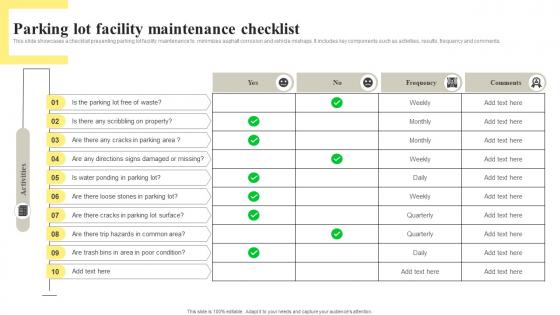
Parking Lot Facility Maintenance Checklist




Try Before you Buy Download Free Sample Product
 Impress Your
 Audience
 100%
100% Editable
 Save Hours
 of Time


This slide showcases a checklist presenting parking lot facility maintenance to minimizes asphalt corrosion and vehicle mishaps. It includes key components such as activities, results, frequency and comments.
People who downloaded this PowerPoint presentation also viewed the following :
Parking Lot Facility Maintenance Checklist with all 6 slides:
Use our Parking Lot Facility Maintenance Checklist to effectively help you save your valuable time. They are readymade to fit into any presentation structure.





FAQs for Parking Lot
So you've got two options - asphalt or concrete. Most places go with asphalt because it's cheaper and way easier to fix when stuff breaks. Concrete's pricier upfront but honestly? It'll outlast asphalt by like 10 years if you take care of it. Problem is when concrete does crack, you're looking at some serious repair bills. Winter's brutal on both though - all that freezing and thawing just destroys pavement. Oh, and definitely get someone to check your lot every couple years. Catching problems early saves you a ton of headaches later.
Honestly, most parking lots need a full maintenance check every 2-3 years. But here's the thing - if you've got crazy traffic or brutal winters, you're looking at yearly work instead. I'd walk through quarterly to spot cracks and drainage issues early (way cheaper than fixing huge problems later). Sealcoating every 3-4 years really helps too. My old boss used to say being proactive beats reactive every time, and he wasn't wrong. Oh, and actually set those calendar reminders now or you'll totally forget like I always do.
Look for those spiderweb cracks that spread out everywhere - that's usually the first sign. Potholes are obvious, but also check if any sections are sinking or buckling up. Water sitting around after it rains? That's bad news for drainage. Oh, and weeds growing through cracks mean the foundation's compromised. Faded lines aren't a huge deal functionally but they make everything look shabby. Loose gravel and oil stains that won't budge are other warning signs. Honestly, I've learned to trust my gut - if it looks sketchy when you're walking around, probably time to call someone.
Yeah weather totally controls when you can do this stuff. Winter's the worst - constantly cleaning salt and checking for new potholes after it freezes and thaws. Summer heat actually speeds up sealcoating, which is nice I guess. Spring hits you with all the damage from winter months. Before fall hits, you've gotta clear those drains or leaves will mess everything up. Honestly can't stick to some rigid schedule because weather doesn't care about your plans! I'd build in extra time and keep a flexible checklist ready.
So basically sealcoating keeps water and UV rays from trashing your driveway, plus it makes everything look crisp and black again. Most people do it every 2-3 years but honestly? Just look at it. When it's looking gray or water stops beading up, that's your cue. I always wait for a good weather window in late spring or summer - you need like 48 hours with no rain. Oh, and don't seal brand new asphalt, wait at least 6 months. Trust me on that one.
Honestly, staying on top of maintenance is what saves you from accidents later. Fill those potholes and cracks before someone trips or messes up their car. Make sure water drains properly - standing water is just asking for trouble. Keep your lighting bright too, because walking through a dark parking lot feels sketchy as hell. Oh, and don't let your line striping fade into oblivion or you'll have people parking like idiots and getting into arguments. I'd say check everything quarterly instead of waiting for problems to pop up. Way easier to fix small stuff than deal with someone getting hurt.
Honestly, drones are probably your best bet - they'll catch cracks and potholes from above without you walking around for hours. Ground-penetrating radar's pretty cool too, shows you what's happening under the surface before things get really expensive to fix. There are phone apps now that supposedly use AI to check pavement just from photos, but eh, they're kinda hit or miss compared to real equipment. IoT sensors can track temperature and moisture stuff that messes with your surfaces. If you've got multiple lots, definitely start with the drone thing - gives you a solid overview without breaking the bank.
Your city's building department controls basically everything - ADA stuff, drainage, repair materials, all of it. Regulations are totally different everywhere though, which is annoying. Some places obsess over stormwater systems while others care more about handicap striping and space sizes. I'd definitely get to know your local inspectors early on (they can actually be pretty helpful). Oh and always pull permits when you're supposed to - skipping that step will bite you later. It's honestly kind of a confusing mess navigating all the rules, but worth doing it right.
Check your local rules first - that's always step one. For cleaning and seal coating, grab biodegradable products so you're not dumping nasty chemicals into storm drains. Permeable pavement is actually pretty sweet for repairs because it helps with flooding issues. Don't go crazy with the salt in winter since it kills your pavement AND the plants around it. Oh, and make sure you're tossing old asphalt at proper disposal sites, not just anywhere. Honestly, creating a simple checklist for your crew makes this way easier to manage.
Dude, landscaping is actually huge for parking lot upkeep. Good drainage around your planted spots stops water from sitting on the asphalt - saves you from cracks and potholes later. Trees give shade which cuts down on that thermal expansion thing (temperature changes really screw with pavement, who knew?). You can also use plants to guide traffic flow and make natural barriers. Just make sure you work with whoever's doing your landscaping so tree roots don't mess with underground stuff and water runs away from the pavement.
Oh man, definitely don't skip maintenance - you'll pay way more later. I've literally watched parking lots go from needing like a $2k touch-up to full $15k+ reconstruction. It's brutal. Those tiny cracks become potholes, drainage problems turn into floods, and suddenly you need complete resurfacing instead of basic sealcoating. The repair costs end up being 3-5x higher than just doing preventive stuff. Honestly, just budget a small amount each year for routine maintenance. Way better than getting slammed with those massive surprise bills that'll make you want to cry.
Oh man, drainage is huge for parking lots. Water sitting there will destroy your asphalt - it gets into cracks, freezes, expands, then you're looking at serious damage. Standing water also makes you liable if someone slips, which sucks. Good drainage keeps water moving off the surface instead of just sitting there doing its freeze-thaw thing. Honestly, I've watched parking lots last like 20+ years longer when they did drainage right from the start. Just make sure you're clearing those drains regularly. If you're seeing puddles everywhere, might need to add more drainage points.
Honestly, good marking saves you so much work later. People drive where they're supposed to when lanes are clear, so you don't get weird wear patterns everywhere. Those curbs and landscaping beds stay intact too - have you seen how much it costs to replant stuff? Wild expensive. Traffic flows smoother with decent signs, and enforcing rules becomes way easier. I've found checking sign visibility every few months and repainting lines yearly prevents most headaches. Short term effort, but it'll save your sanity down the line.
Ugh, oil spills are the worst! First thing - grab kitty litter or any absorbent stuff you have and soak it up, then scrape the mess off. Whatever you do, don't spray it with water because you'll just push the oil everywhere (trust me on this one). Check your driveway every week or so for new stains since they're way easier to deal with when they're fresh. Oil literally eats away at asphalt over time. I'd keep some degreaser around too for the stubborn spots - saves you from wanting to tear your hair out later.
So basically, spreading traffic around your lot saves you tons of money on repairs. Cars hitting the same spots over and over? That's what kills pavement fast. Proper lane widths help too - no more cars scraping the same edges constantly. Traffic jams are the worst though, all that stopping and starting in one area just destroys asphalt. I learned this the hard way at my old job. Smart route design naturally guides drivers to spread their weight across the whole surface instead of creating those nasty wear patterns. Map out your heavy traffic spots first when you're planning changes.
-
What a stunning collection of customizable templates! Really a time-saver..
-
Editable, diversified, compatible with MS PPT and Google Slides, and on top of that finest graphics!! I mean in the words of the famous Ross Geller, “What more do you want!”