


Facility Management And Maintenance Planning Guide Powerpoint Presentation Slides
Grab our professionally curated Facility Management and Maintenance Planning Guide. It is a comprehensive guide offering strategies and tools for optimizing facility management and maintenance processes. Our Space management deck covers critical areas such as occupancy management, maintenance management, asset management, Cleaning, etc. Additionally, it highlights Occupancy management, a crucial area that involves managing space usage and allocation. Our Facility planning design PPT recommends strategies such as space planning, utilization tracking, and occupancy monitoring to improve occupancy management. The guide recommends asset tracking, maintenance planning, and data analytics to optimize asset utilization. Further, our Building maintenance module includes Cleaning and janitorial management. Strategies such as cleaning schedules, sanitation protocols, and inventory management are recommended. Moreover, our Facility operations template highlights the key features of facility planning software, such as space planning, scheduling, asset tracking, and data analytics. By implementing the strategies highlighted in the guide and utilizing facility planning software, facility managers can improve efficiency, reduce costs, and enhance the occupant experience. Get access now.
Grab our professionally curated Facility Management and Maintenance Planning Guide. It is a comprehensive guide offering st..



























-

- Google Slides is a new FREE Presentation software from Google.
- All our content is 100% compatible with Google Slides.
- Just download our designs, and upload them to Google Slides and they will work automatically.
- Amaze your audience with SlideTeam and Google Slides.
-

Want Changes to This PPT Slide? Check out our Presentation Design Services
-

- WideScreen Aspect ratio is becoming a very popular format. When you download this product, the downloaded ZIP will contain this product in both standard and widescreen format.
-

- Some older products that we have may only be in standard format, but they can easily be converted to widescreen.
- To do this, please open the SlideTeam product in Powerpoint, and go to
- Design ( On the top bar) -> Page Setup -> and select "On-screen Show (16:9)” in the drop down for "Slides Sized for".
- The slide or theme will change to widescreen, and all graphics will adjust automatically. You can similarly convert our content to any other desired screen aspect ratio.
Compatible With Google Slides

Get This In WideScreen
You must be logged in to download this presentation.


Do you want to remove this product from your favourites?
PowerPoint presentation slides
This complete presentation has PPT slides on wide range of topics highlighting the core areas of your business needs. It has professionally designed templates with relevant visuals and subject driven content. This presentation deck has total of sixty six slides. Get access to the customizable templates. Our designers have created editable templates for your convenience. You can edit the color, text and font size as per your need. You can add or delete the content if required. You are just a click to away to have this ready-made presentation. Click the download button now.

People who downloaded this PowerPoint presentation also viewed the following :
Content of this Powerpoint Presentation
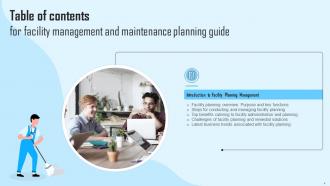
Slide 1: This slide introduces Facility Management and Maintenance Planning Guide. Commence by stating Your Company Name.
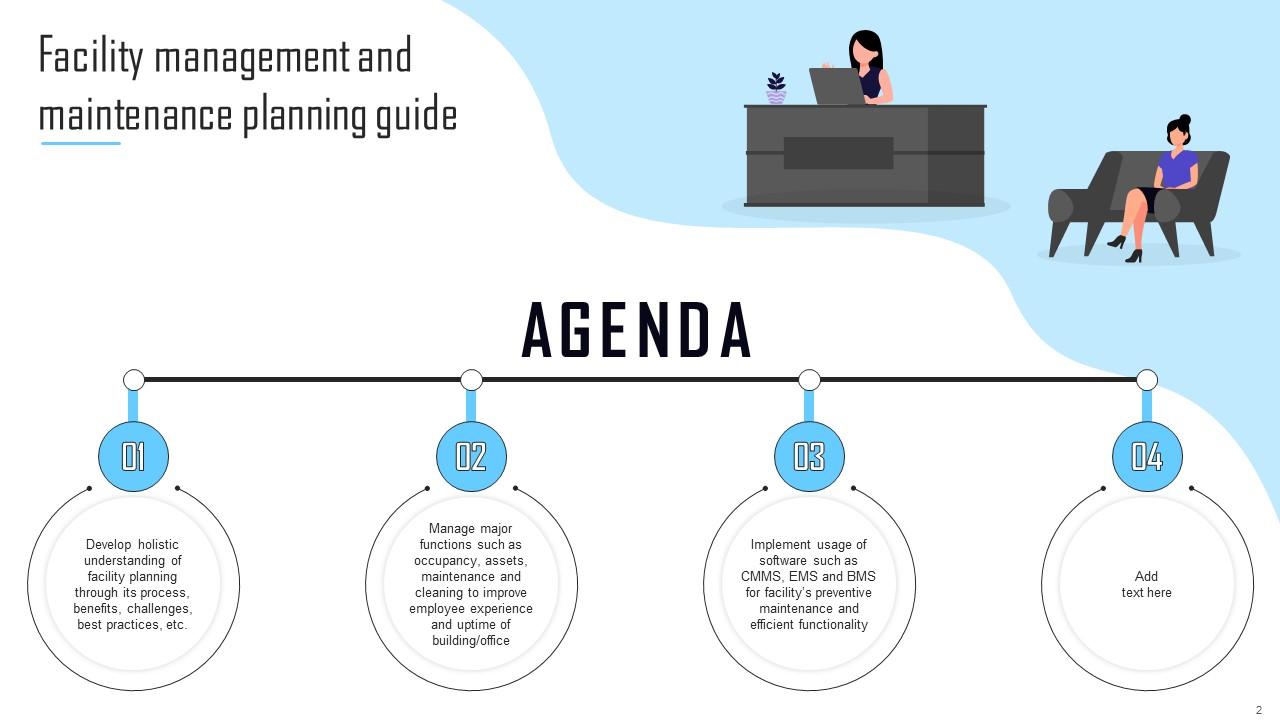
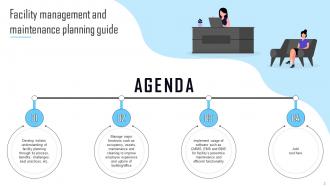
Slide 2: This slide depicts the Agenda of the presentation.
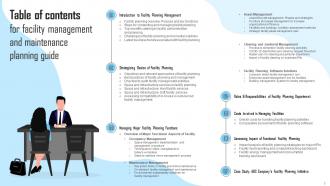
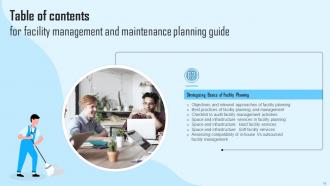
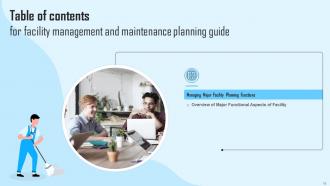
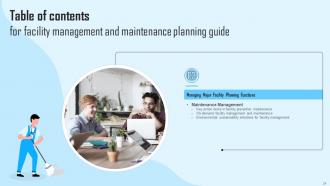
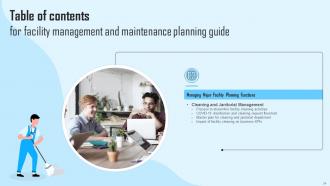
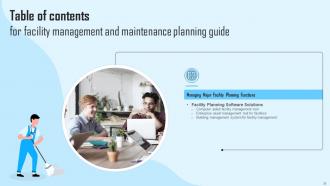
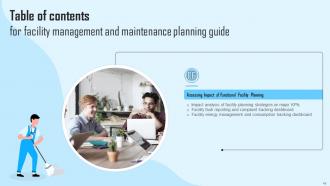
Slide 3: This slide includes the Table of contents.
Slide 4: This slide highlights the Title for the Topics to be discussed further.
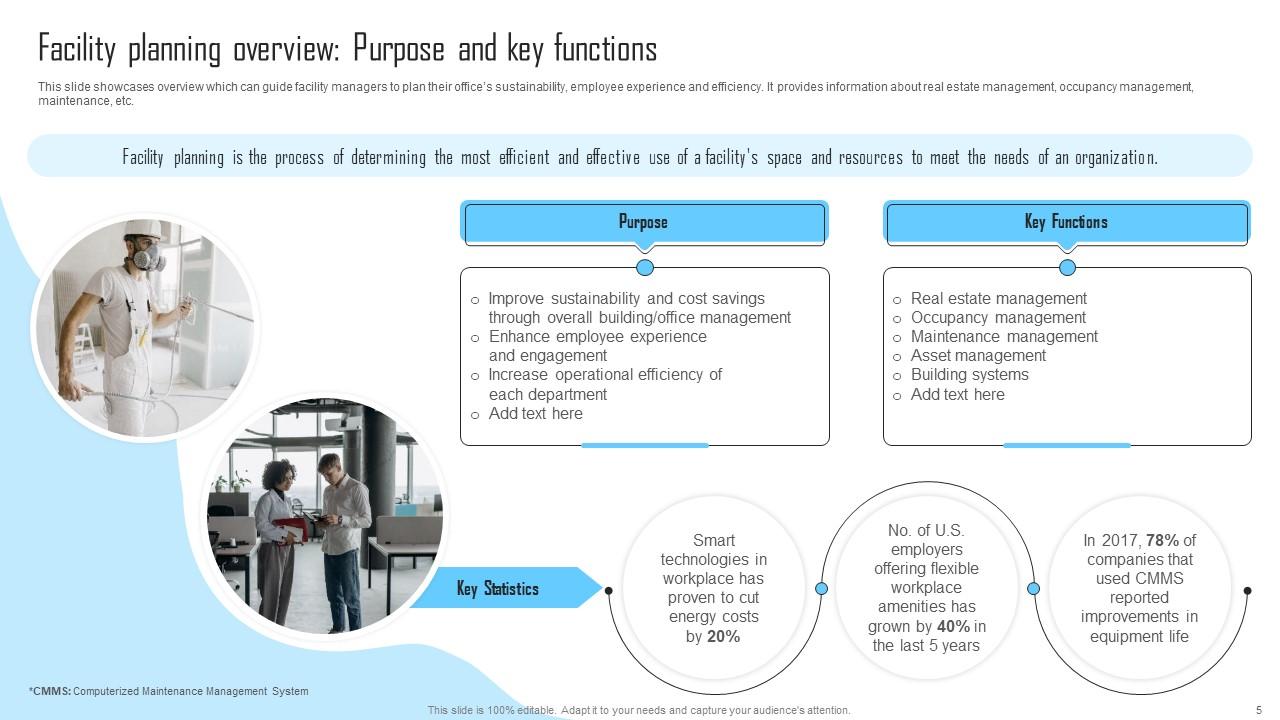
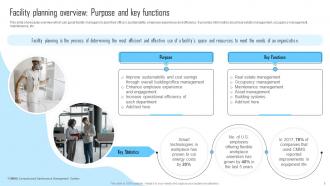
Slide 5: This slide showcases overview which can guide facility managers to plan their office’s sustainability, employee experience and efficiency.
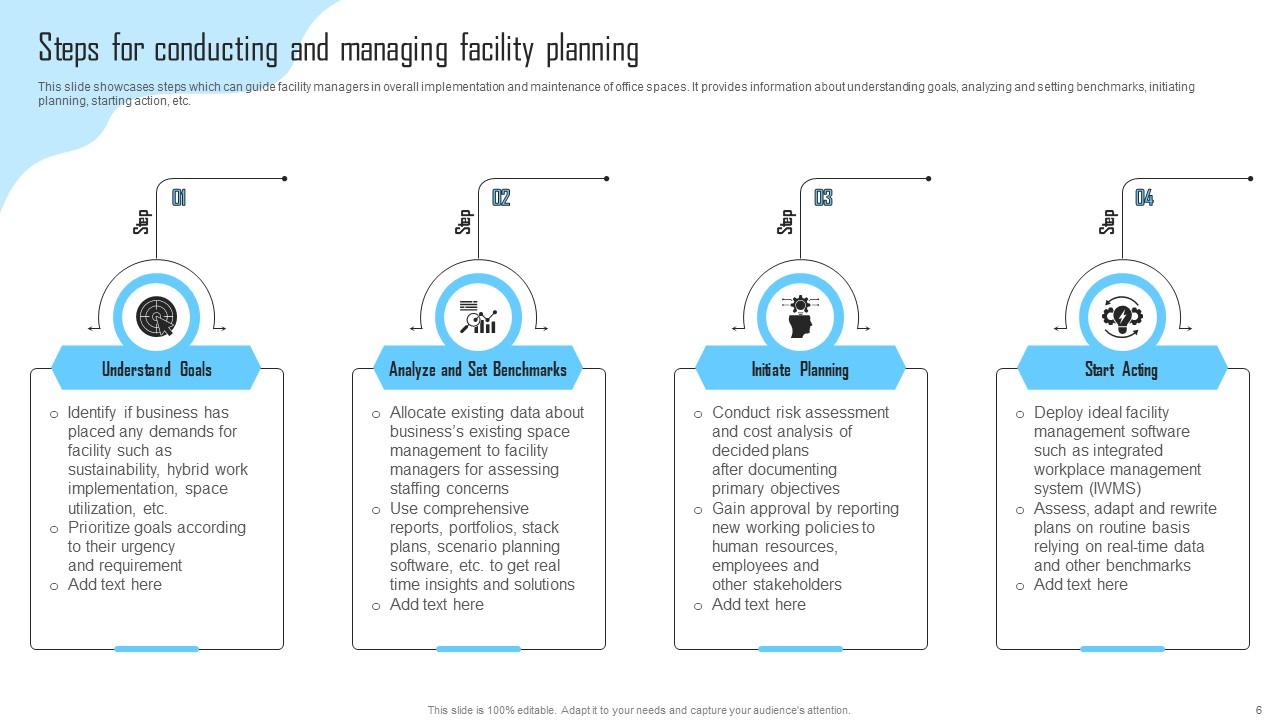
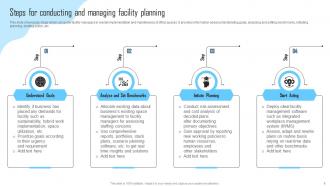
Slide 6: This slide states the steps which can guide facility managers in overall implementation and maintenance of office spaces.
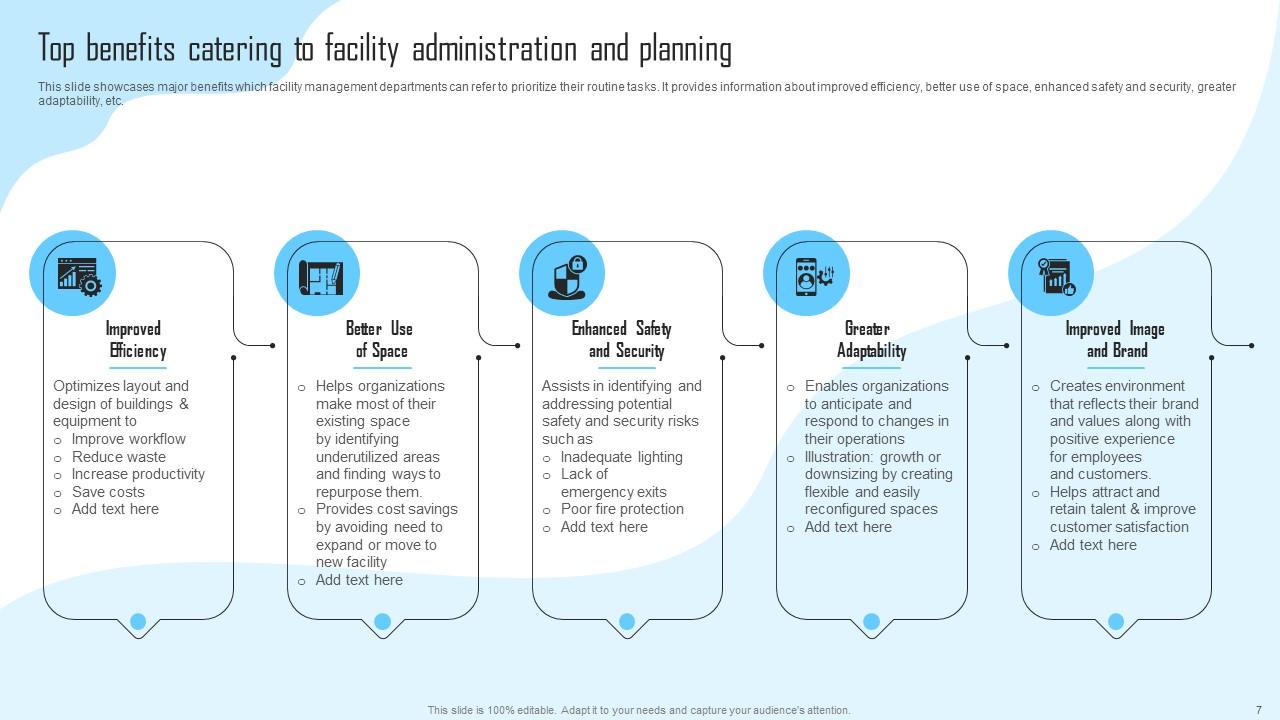
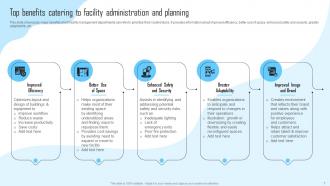
Slide 7: This slide includes the major benefits which facility management departments can refer to prioritize their routine tasks.
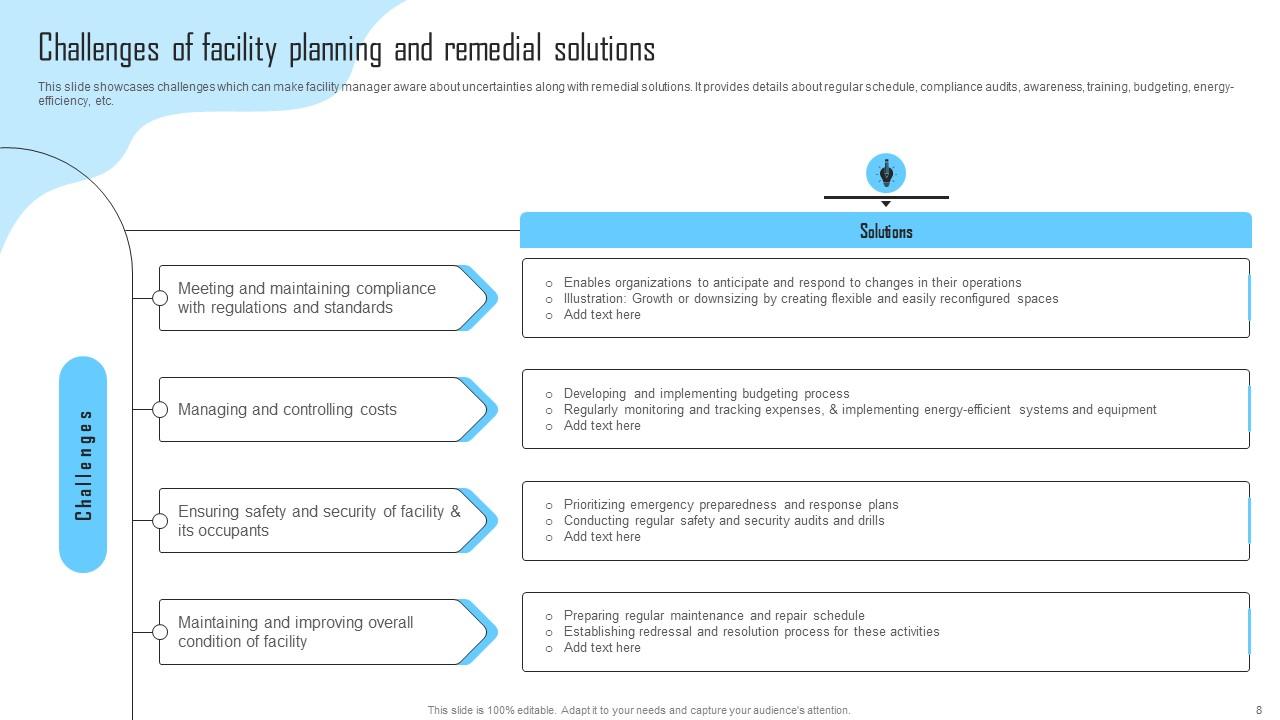
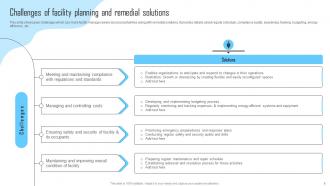
Slide 8: This slide highlights the challenges which can make facility manager aware about uncertainties along with remedial solutions.
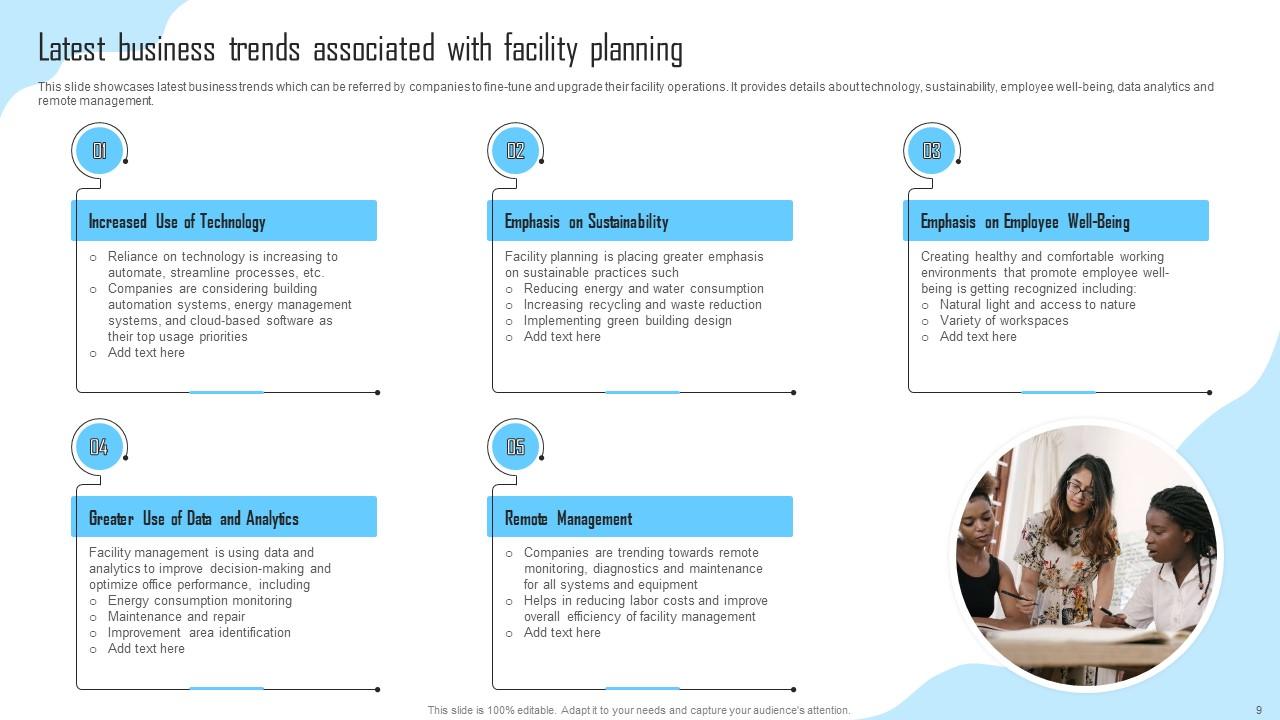
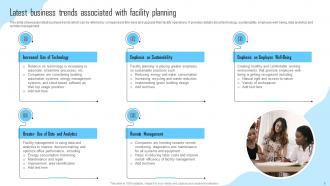
Slide 9: This slide reveals latest business trends which can be referred by companies to fine-tune and upgrade their facility operations.
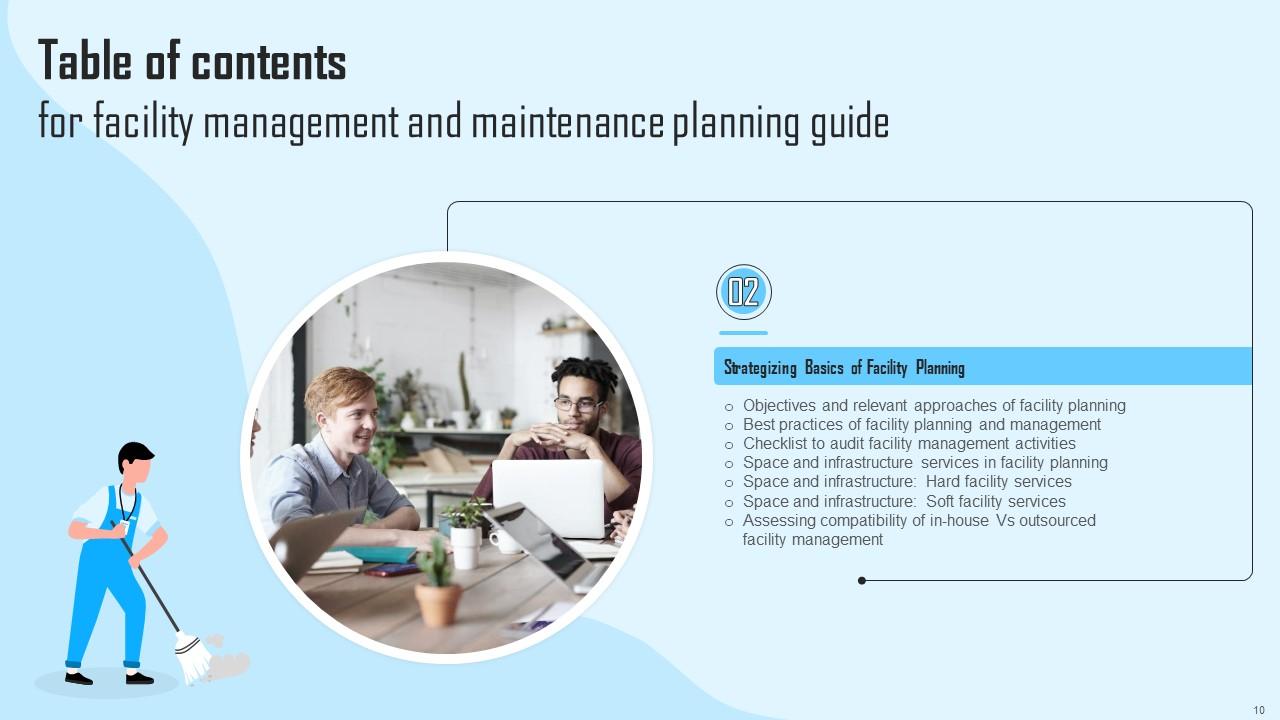
Slide 10: This slide presents the Heading for the Contents to be further covered.
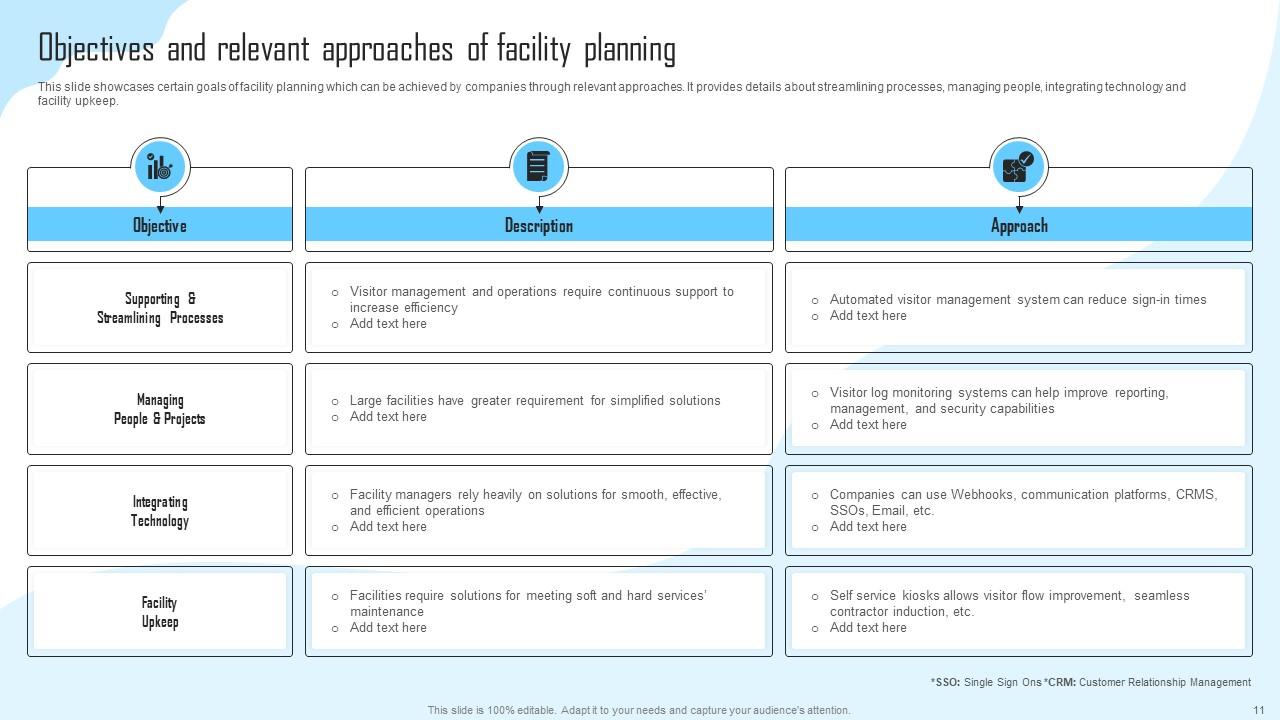
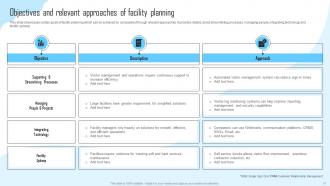
Slide 11: This slide showcases certain goals of facility planning which can be achieved by companies through relevant approaches.
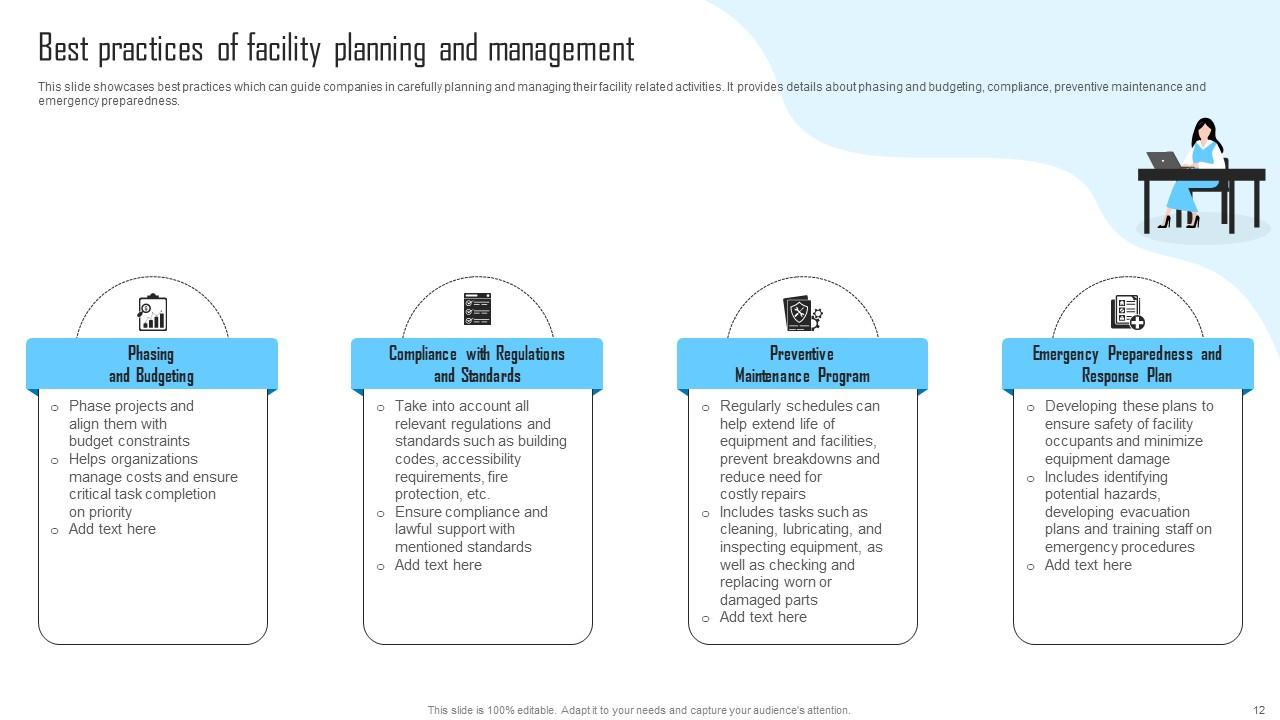
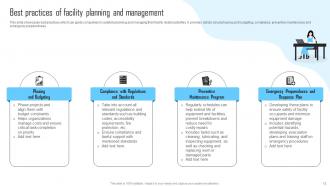
Slide 12: This slide presents best practices which can guide companies in carefully planning and managing their facility related activities.
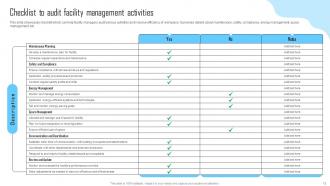
Slide 13: This slide indicates the checklist which can help facility managers audit various activities and improve efficiency of workplace.
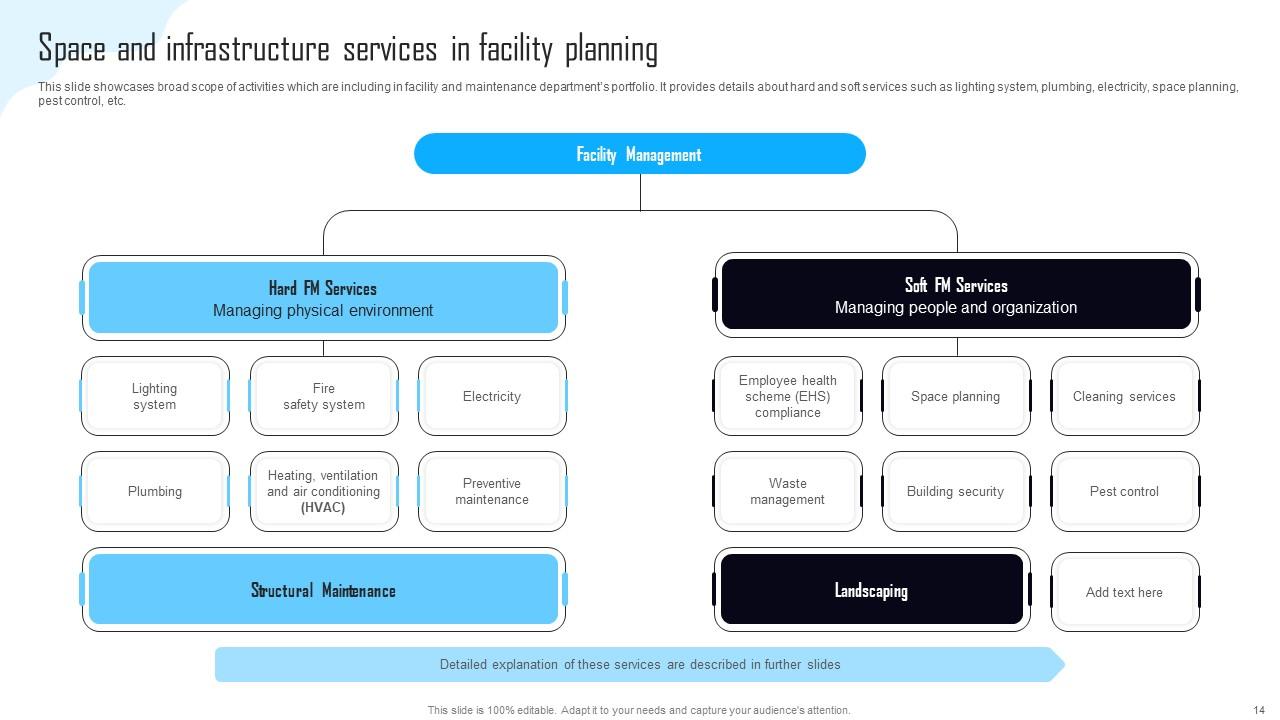
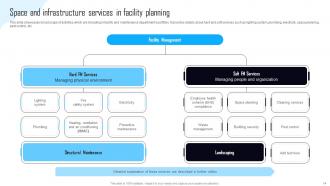
Slide 14: This slide portrays the broad scope of activities which are including in facility and maintenance department’s portfolio.
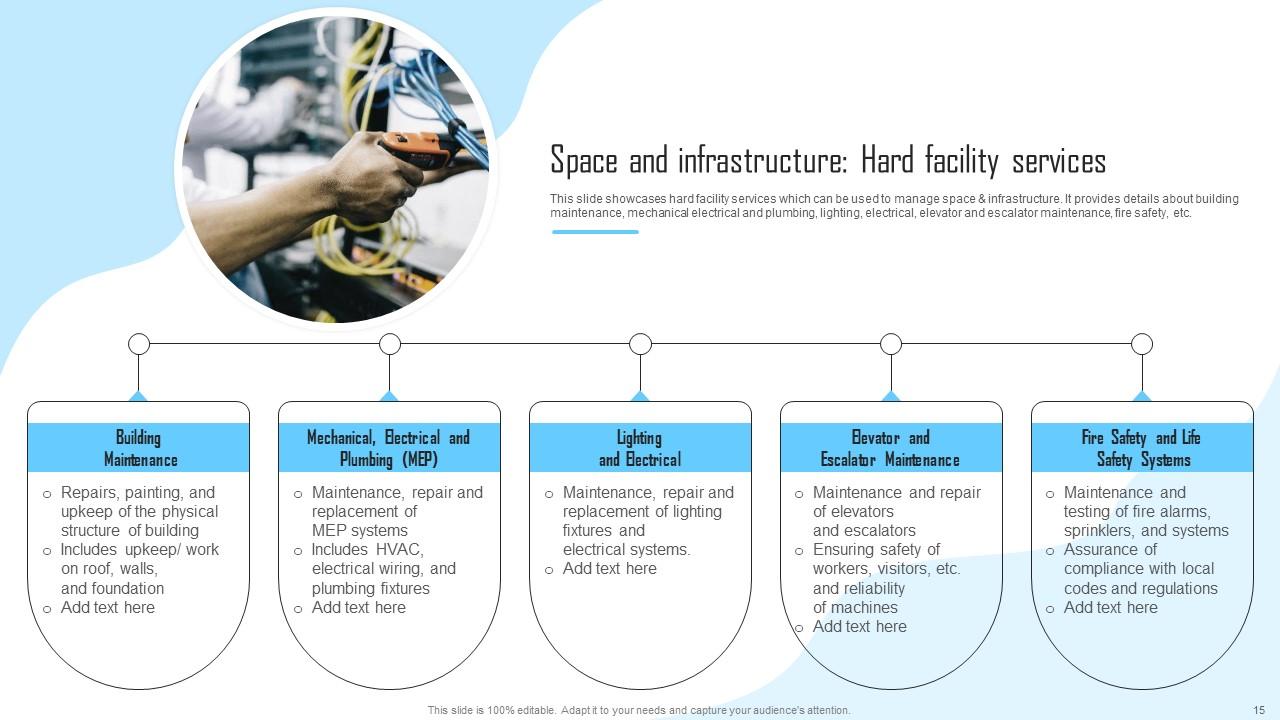
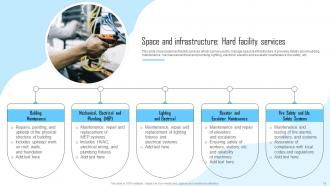
Slide 15: This slide hgihlights hard facility services which can be used to manage space & infrastructure.
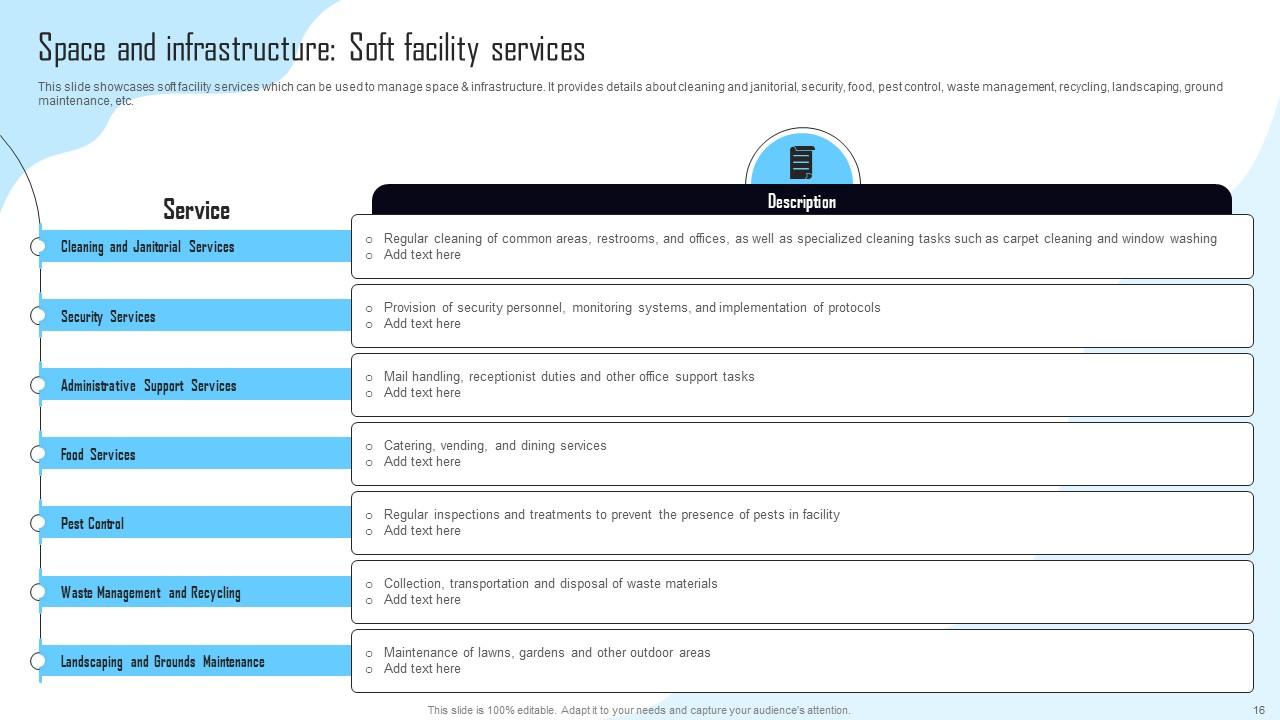
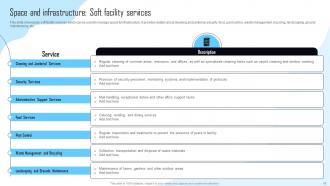
Slide 16: This slide mentions about the soft facility services which can be used to manage space & infrastructure.
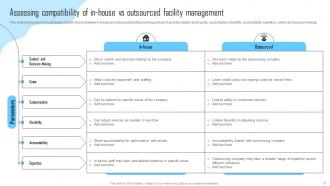
Slide 17: This slide includes how businesses should choose between in-house and outsourced facility planning services.
Slide 18: This slide exhibits the Title for the Ideas to be discussed further.
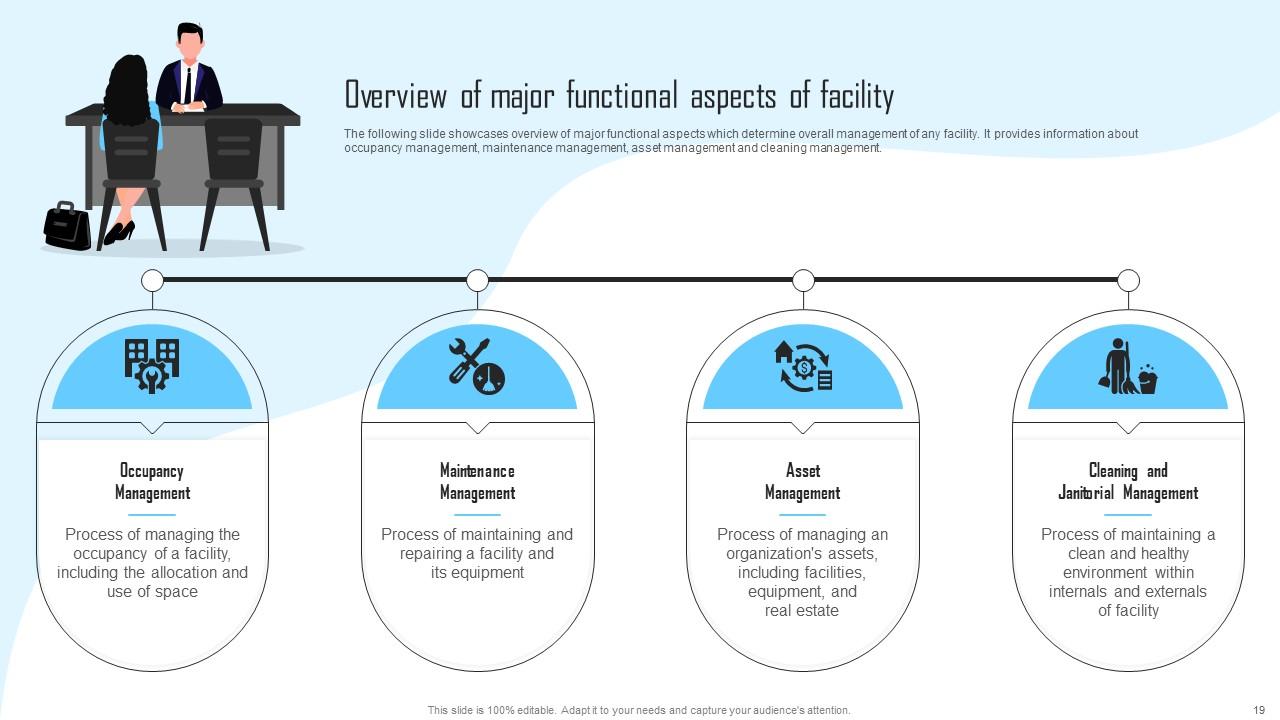
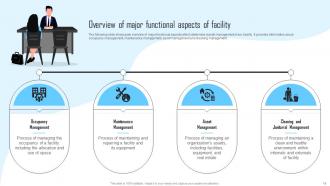
Slide 19: The following slide showcases overview of major functional aspects which determine overall management of any facility.
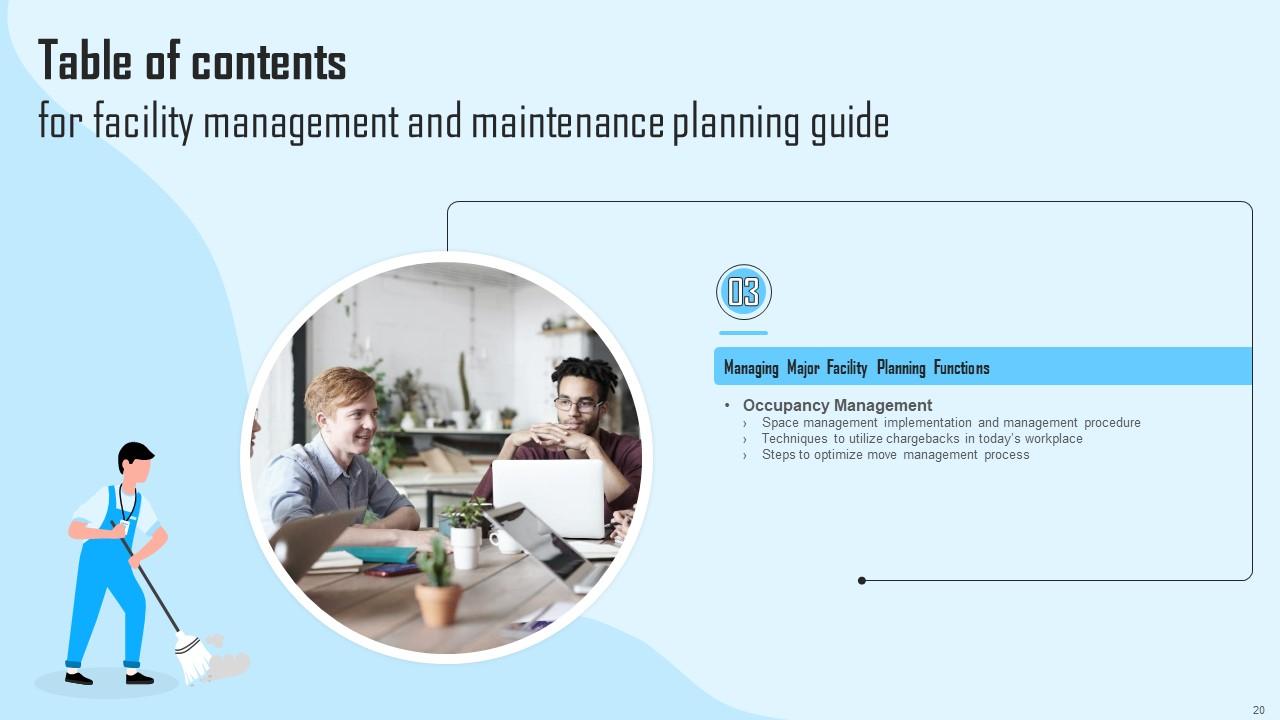
Slide 20: This slide contains the Heading for the Ideas to be covered in the upcoming template.
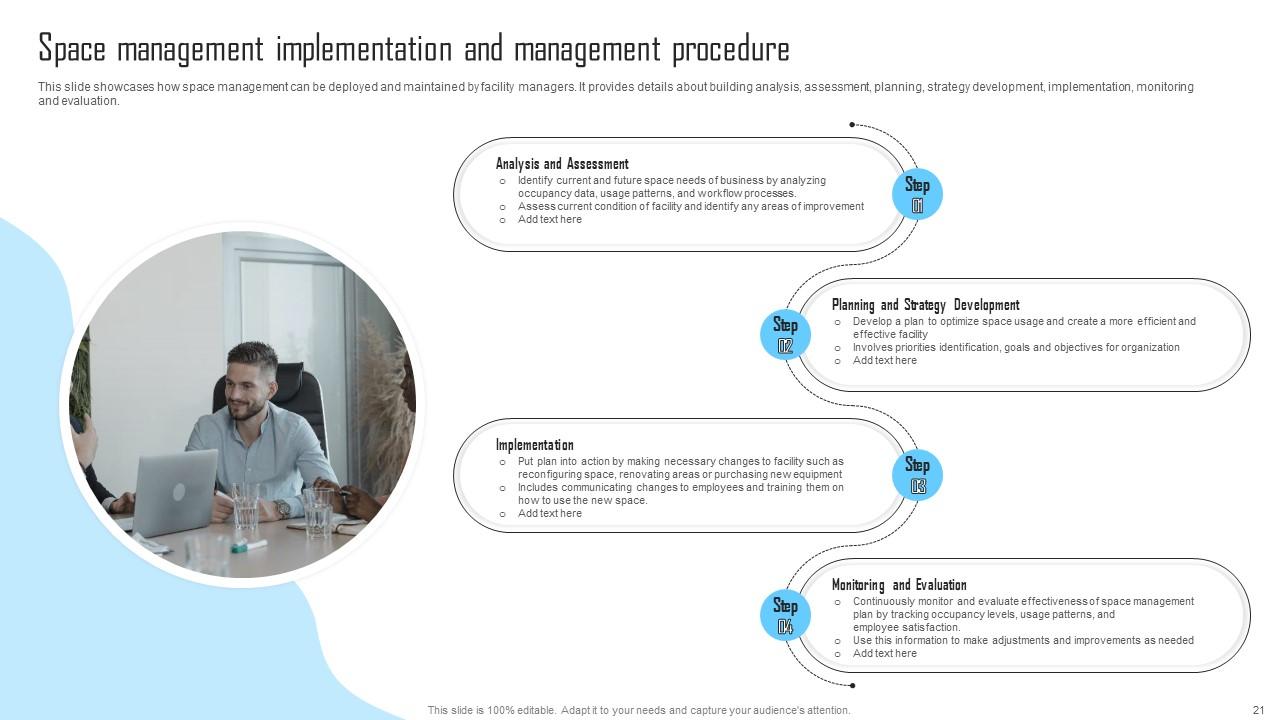
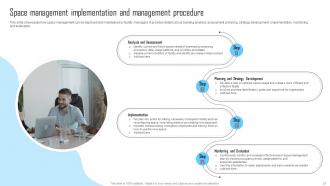
Slide 21: This slide states how space management can be deployed and maintained by facility managers.
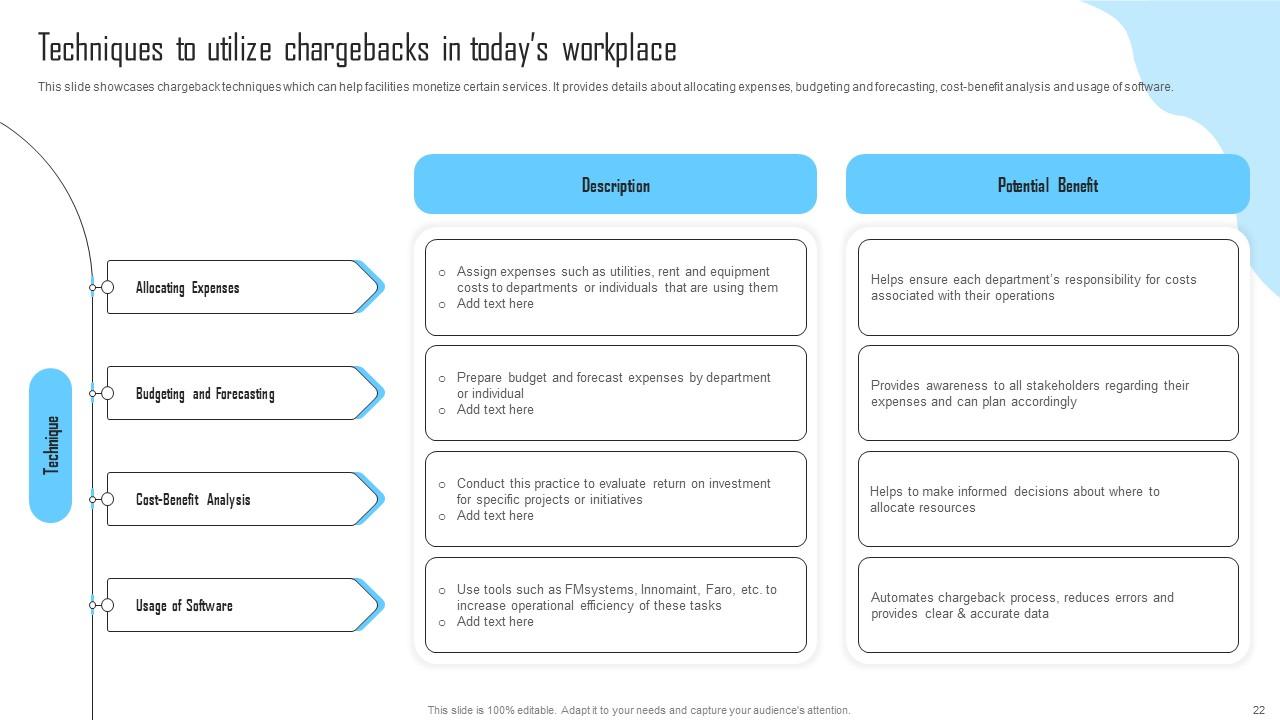
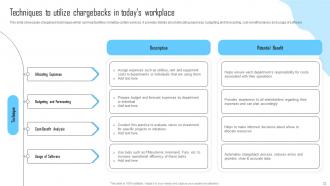
Slide 22: This slide depicts chargeback techniques which can help facilities monetize certain services.
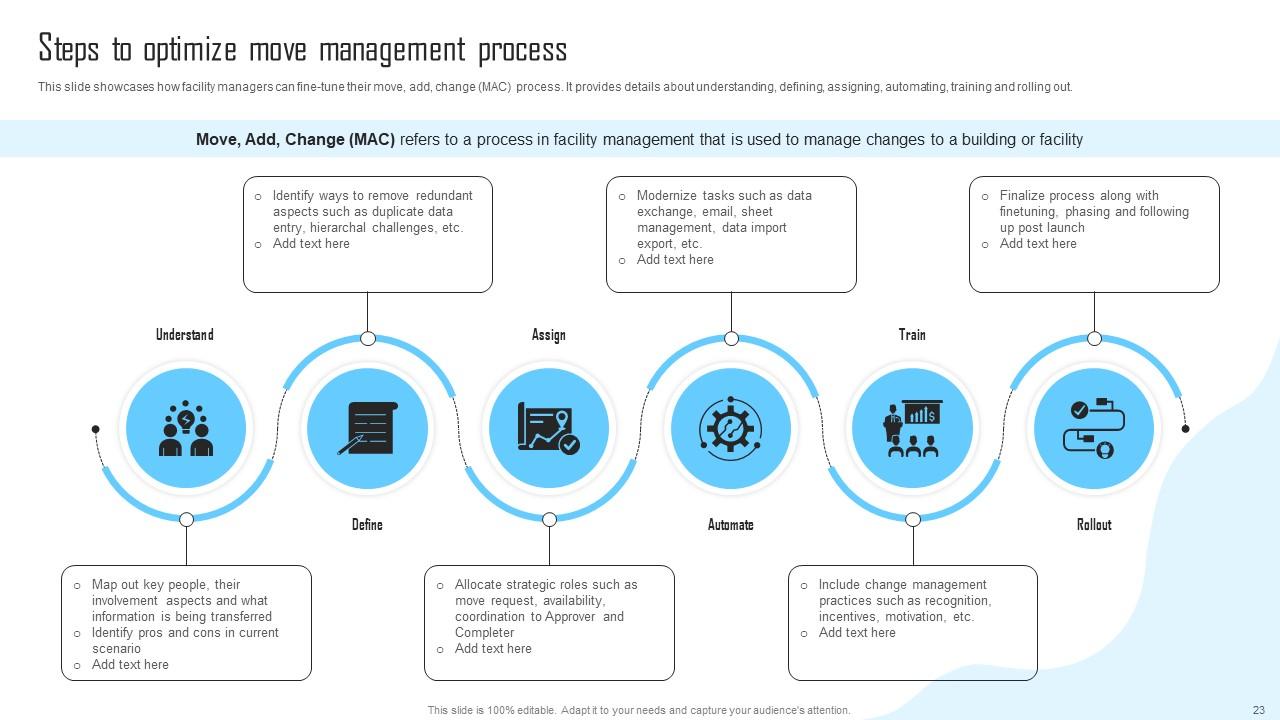
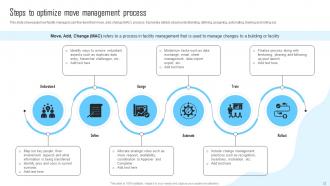
Slide 23: This slide highlights the Steps to optimize move management process.
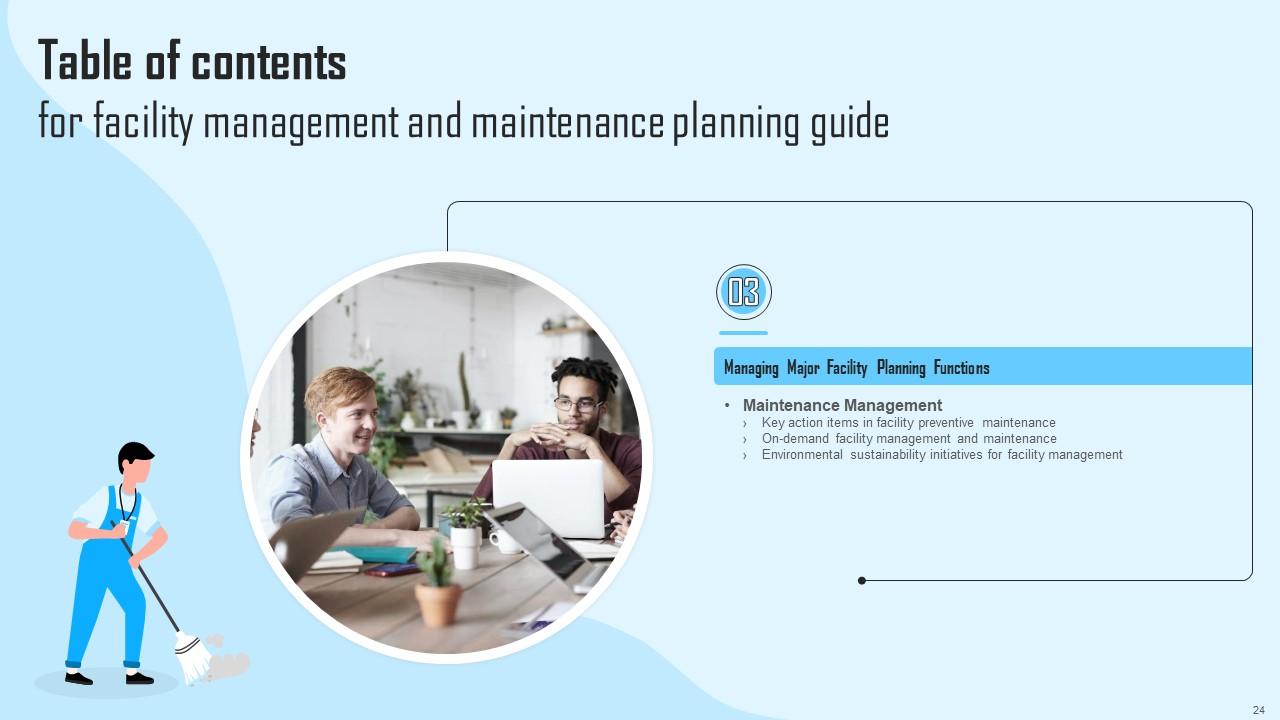
Slide 24: This slide exhibits the Title for the Ideas to be discussed further.
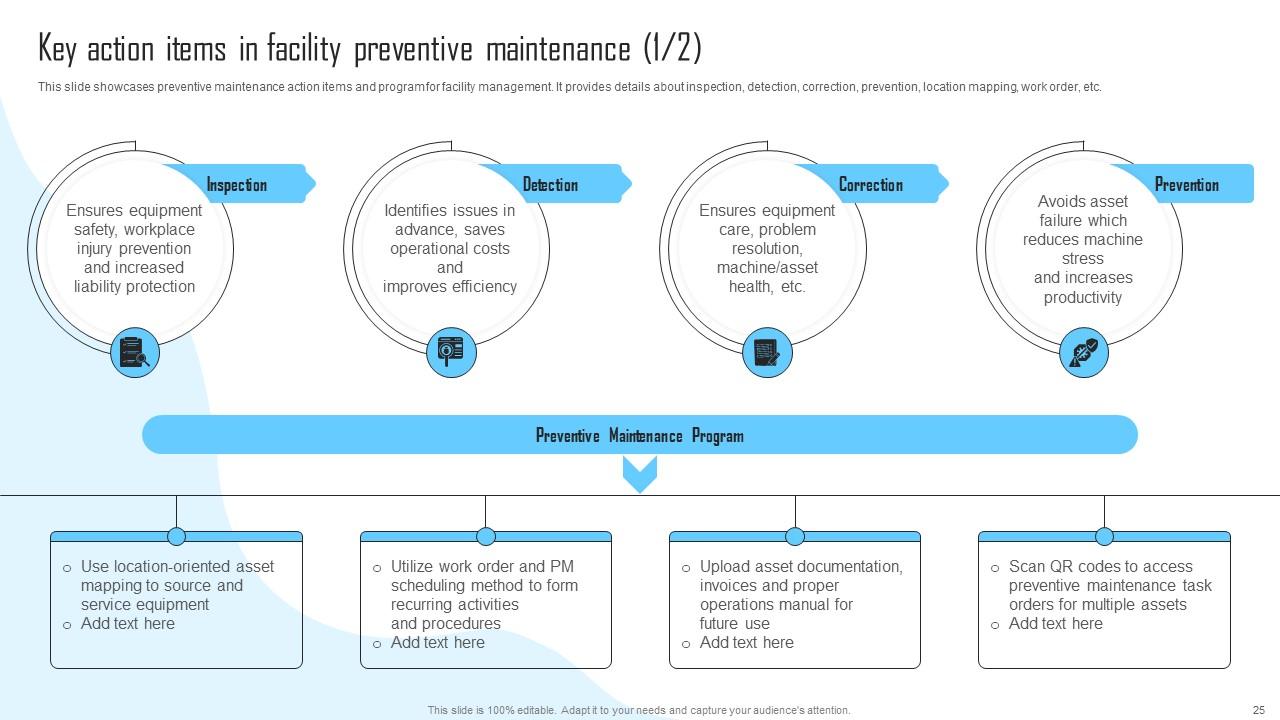
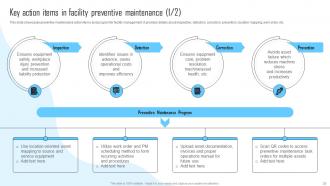
Slide 25: This slide showcases preventive maintenance action items and program for facility management.
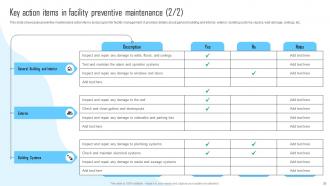
Slide 26: This slide continues preventive maintenance action items and program for facility management.
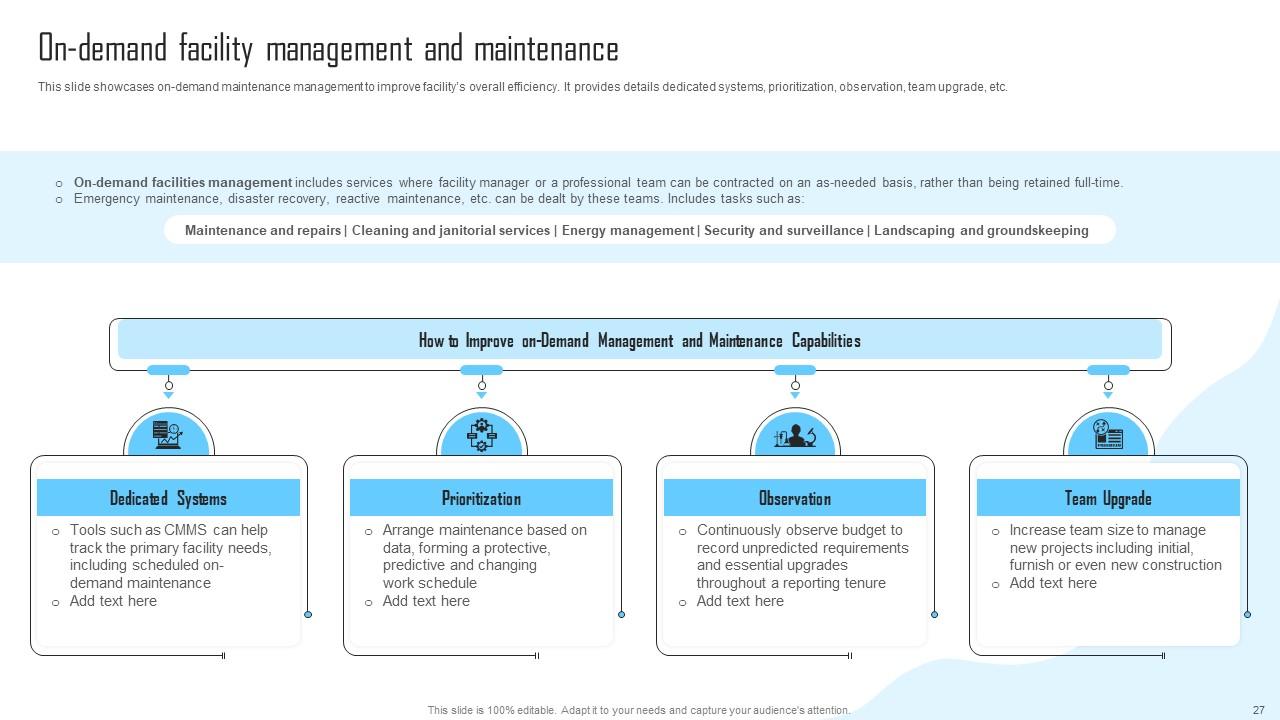
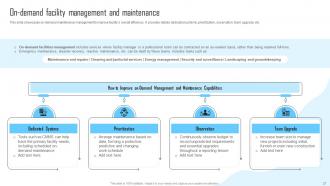
Slide 27: This slide portrays on-demand maintenance management to improve facility’s overall efficiency.
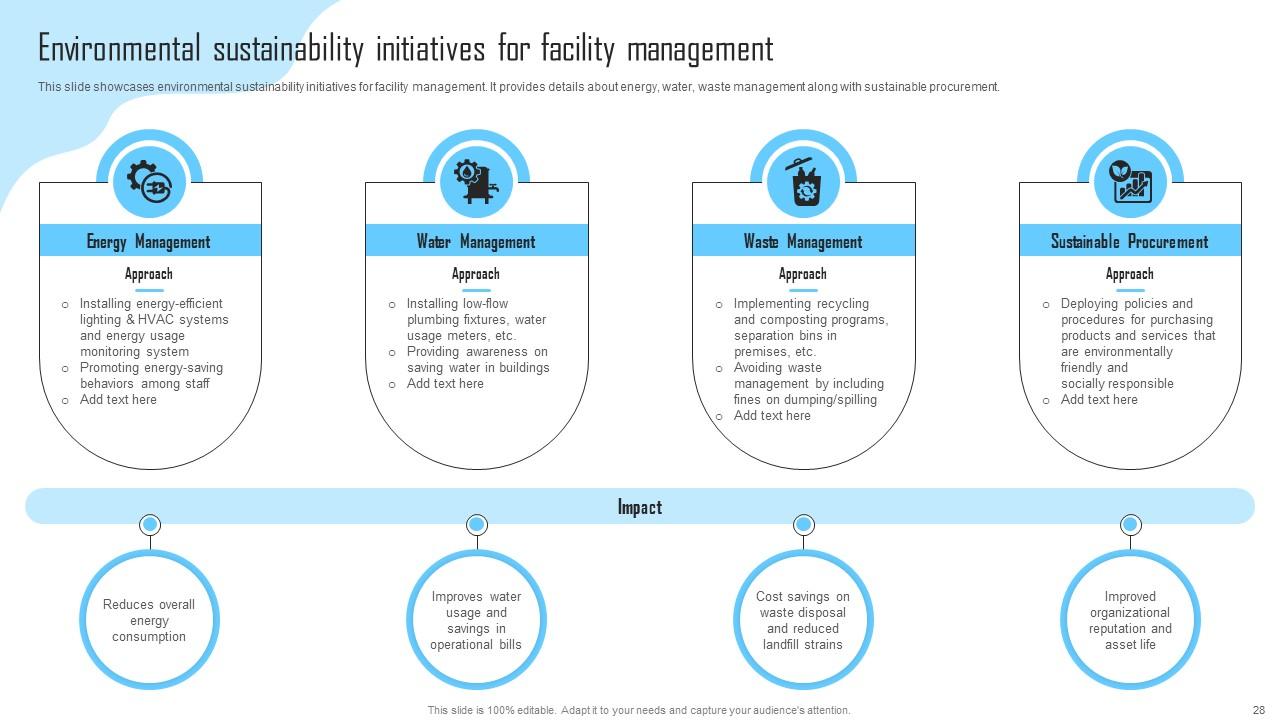
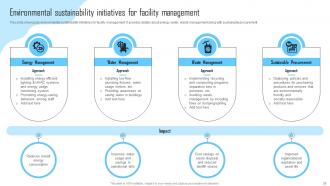
Slide 28: This slide includes environmental sustainability initiatives for facility management.
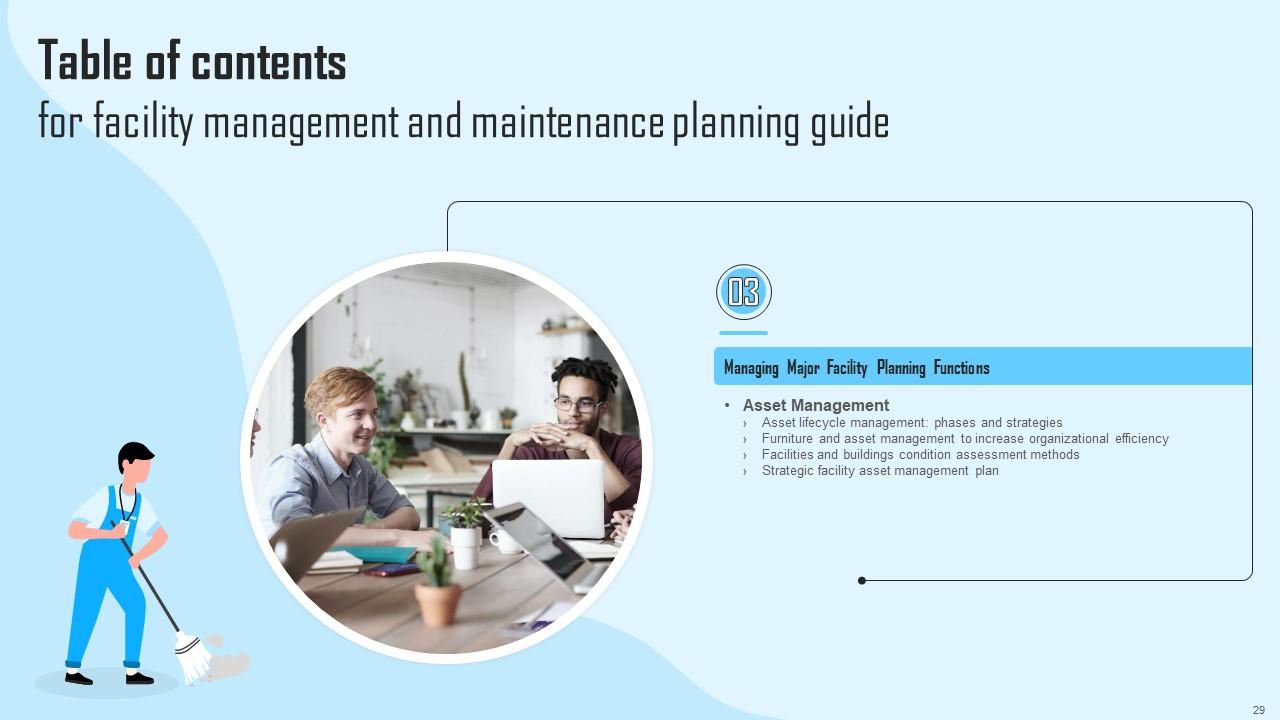
Slide 29: This slide highlights the Heading for the Ideas to be covered next.
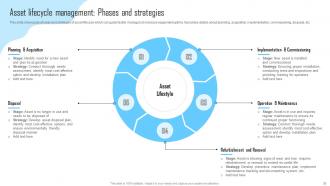
Slide 30: This slide showcases phases and strategies of asset lifecycle which can guide facility managers to increase equipment uptime.
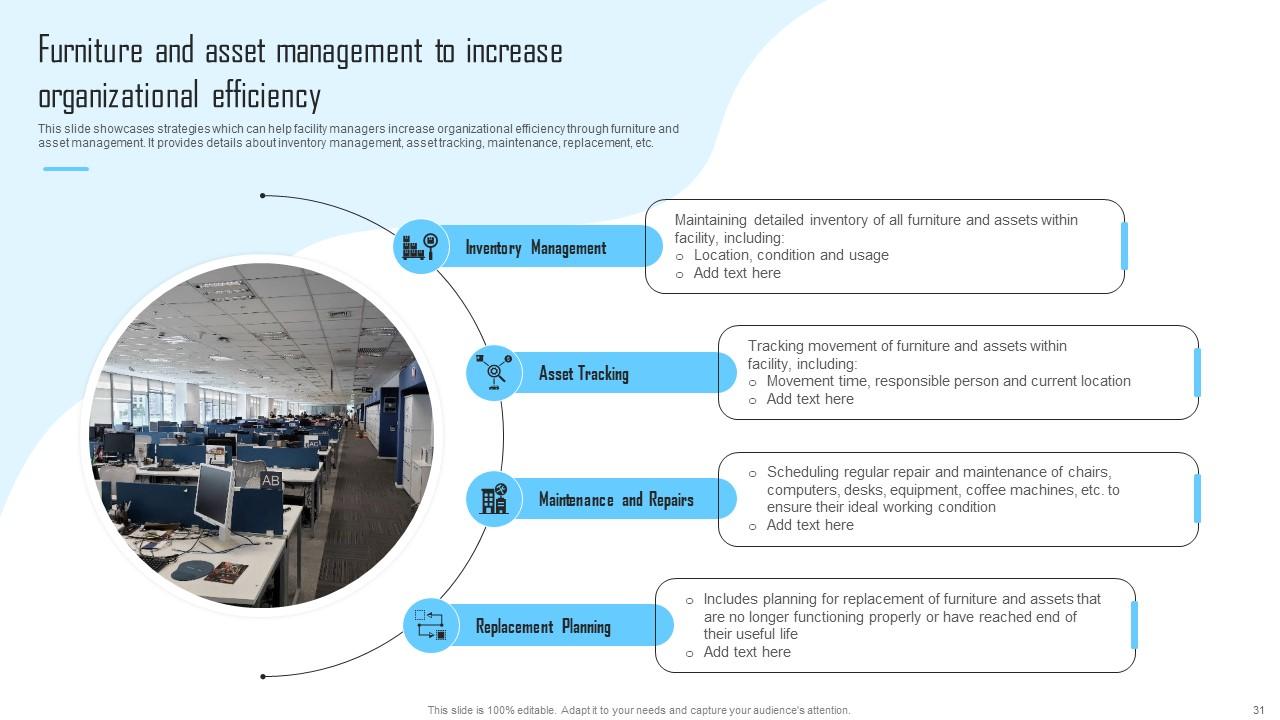
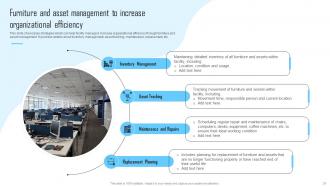
Slide 31: This slide displays strategies which can help facility managers increase organizational efficiency through furniture and asset management.
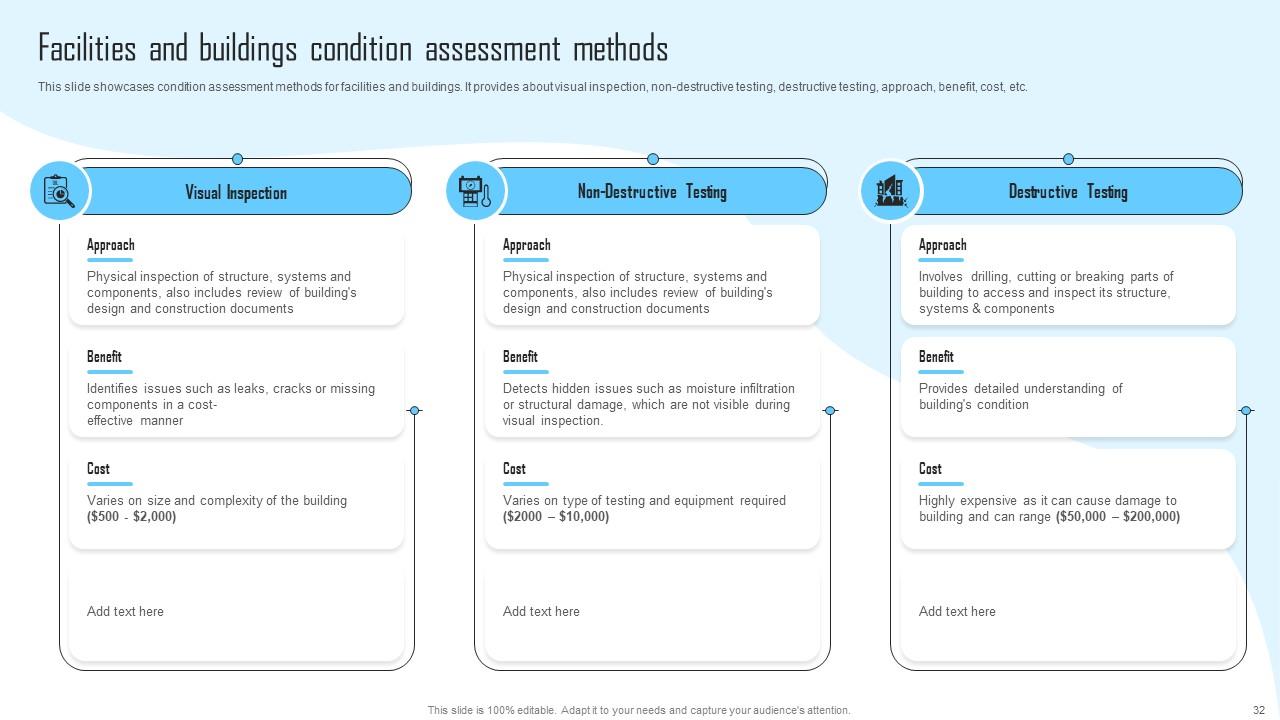
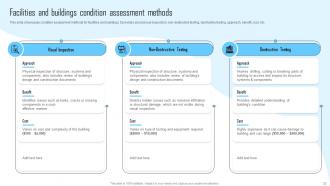
Slide 32: This slide showcases condition assessment methods for facilities and buildings.
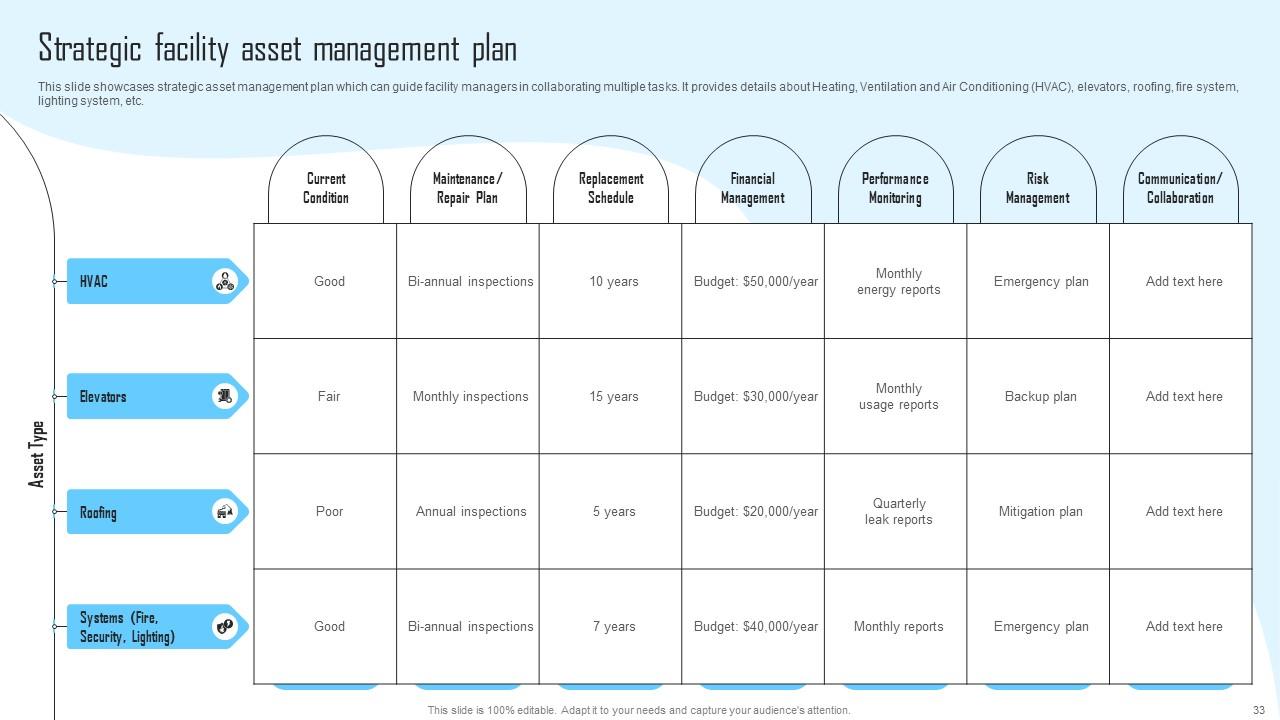
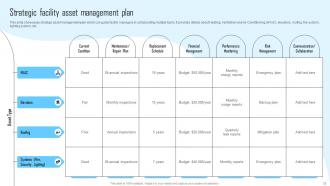
Slide 33: This slide represents strategic asset management plan which can guide facility managers in collaborating multiple tasks.
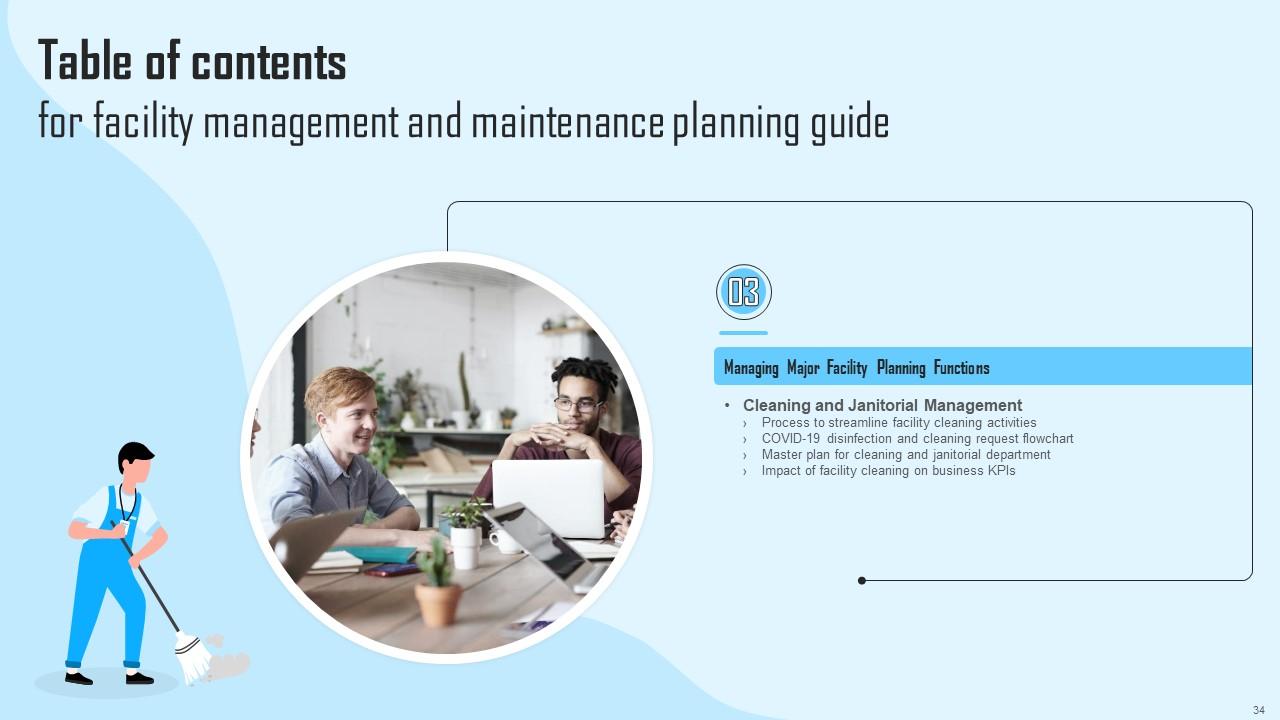
Slide 34: This slide contains the Title for the Contents to be further discussed.
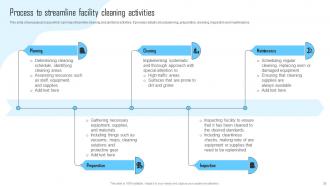
Slide 35: This slide showcases process which can help streamline cleaning and janitorial activities.
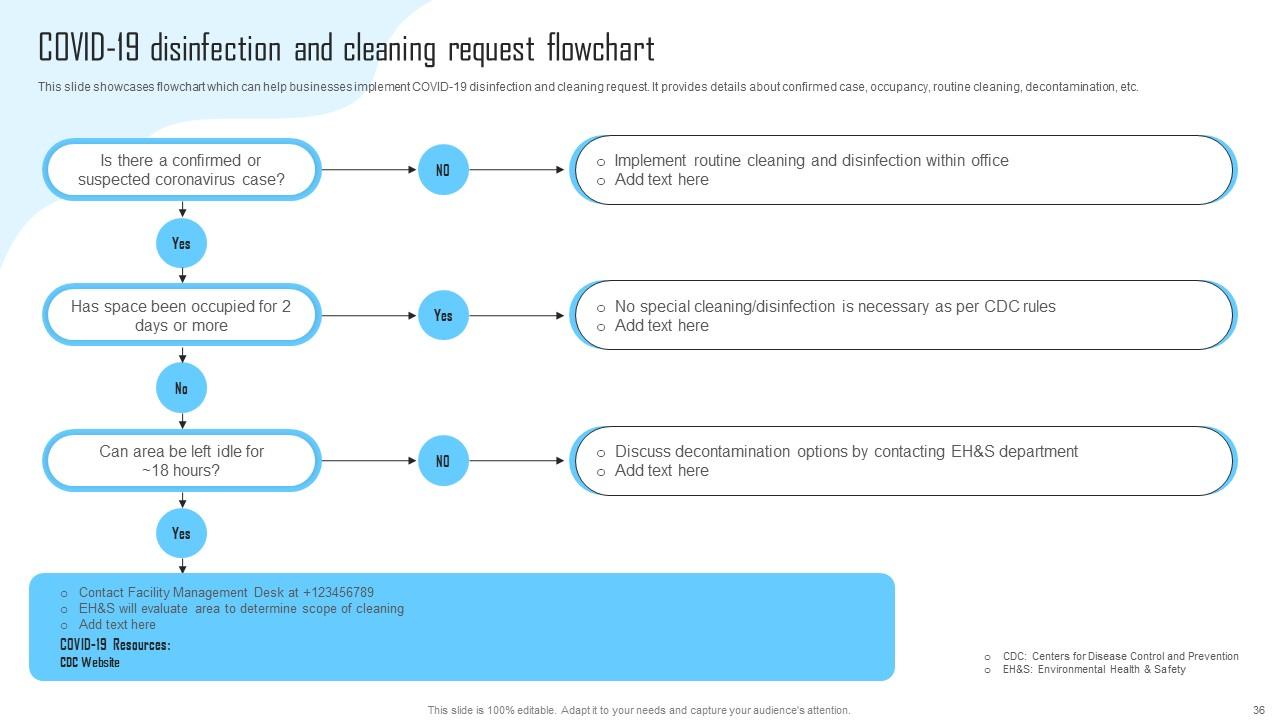
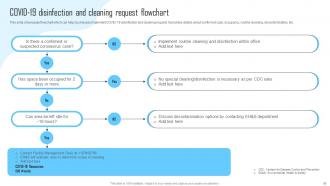
Slide 36: This slide presents flowchart which can help businesses implement COVID-19 disinfection and cleaning request.
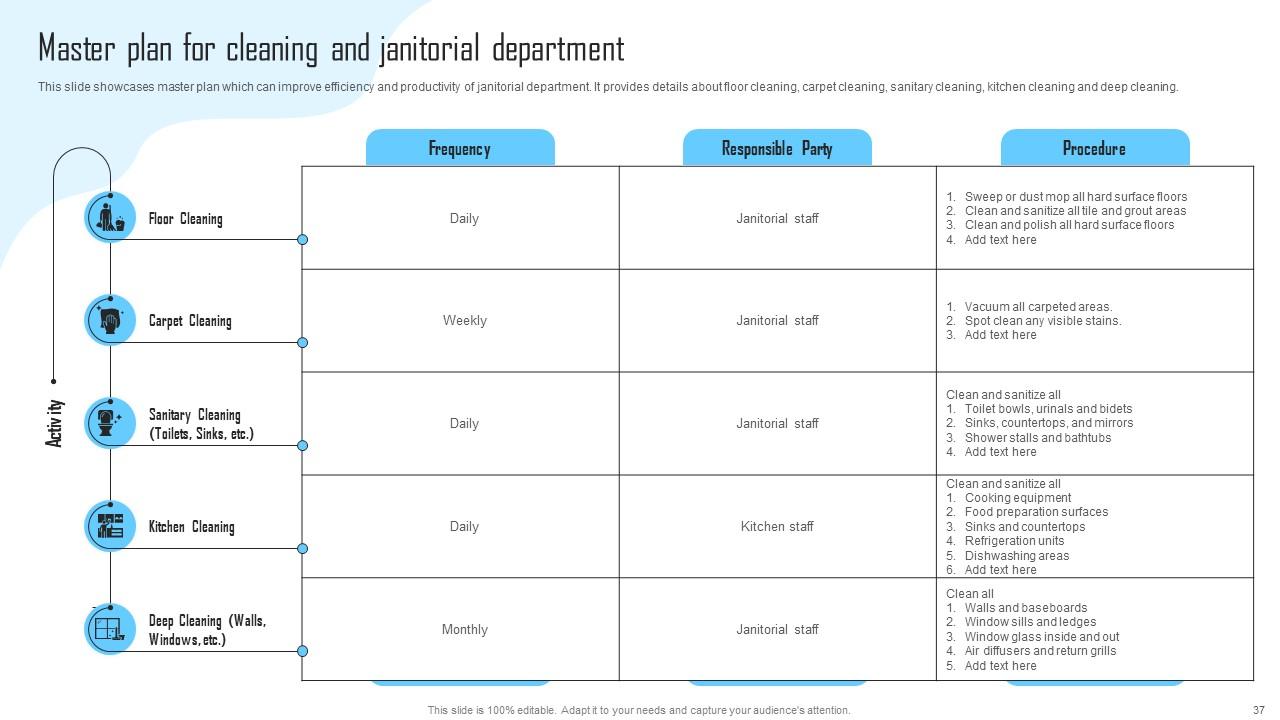
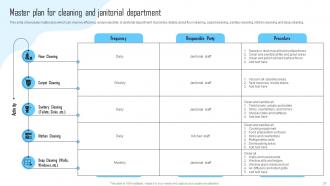
Slide 37: This slide reveals the master plan which can improve efficiency and productivity of janitorial department.
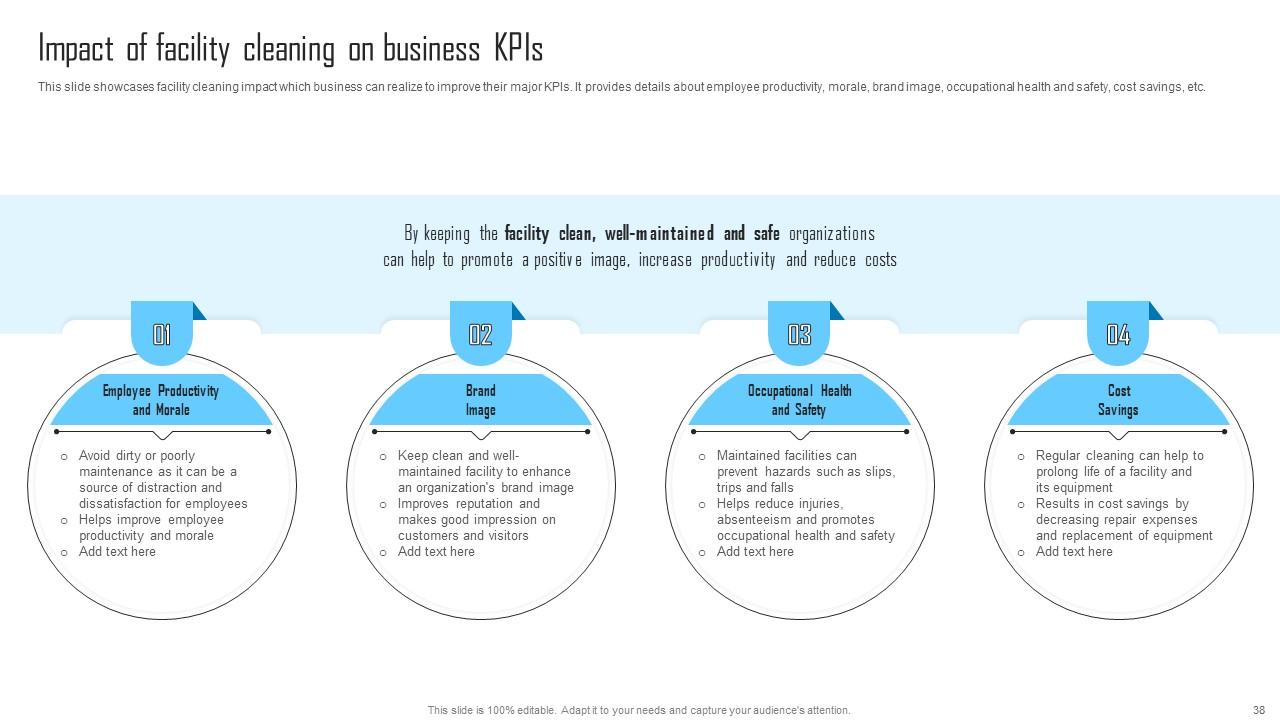
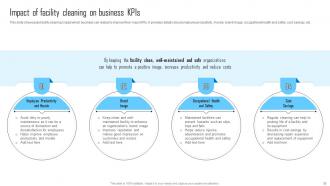
Slide 38: This slide highlights facility cleaning impact which business can realize to improve their major KPIs.
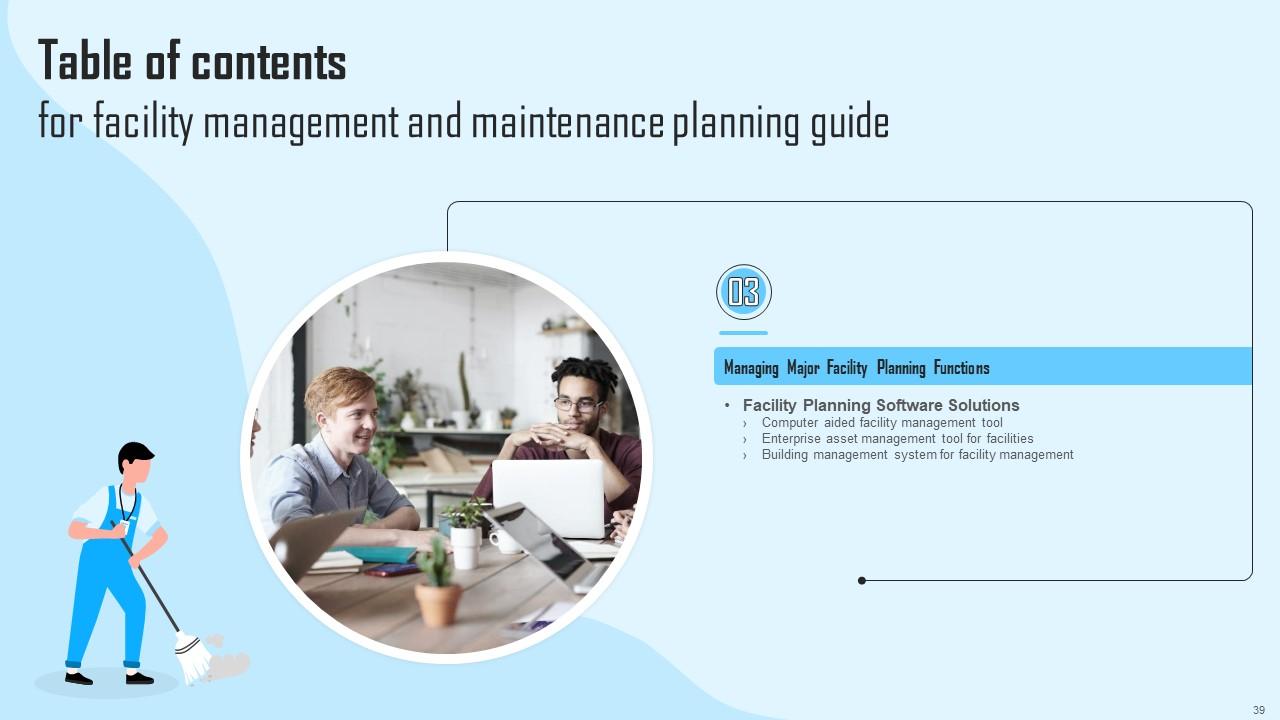
Slide 39: This slide contains the Heading for the Topics to be covered next.
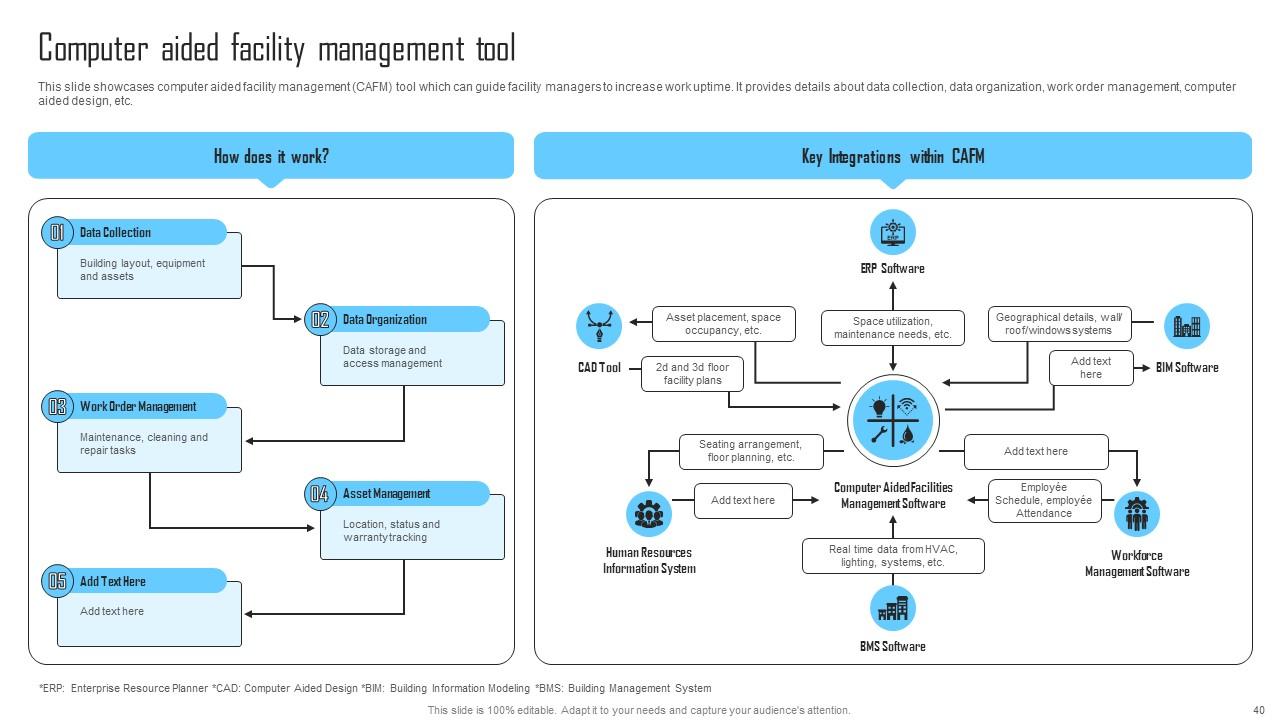
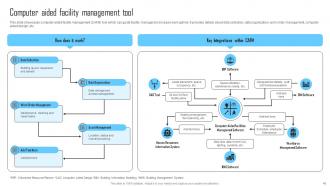
Slide 40: This slide showcases computer aided facility management (CAFM) tool which can guide facility managers to increase work uptime.
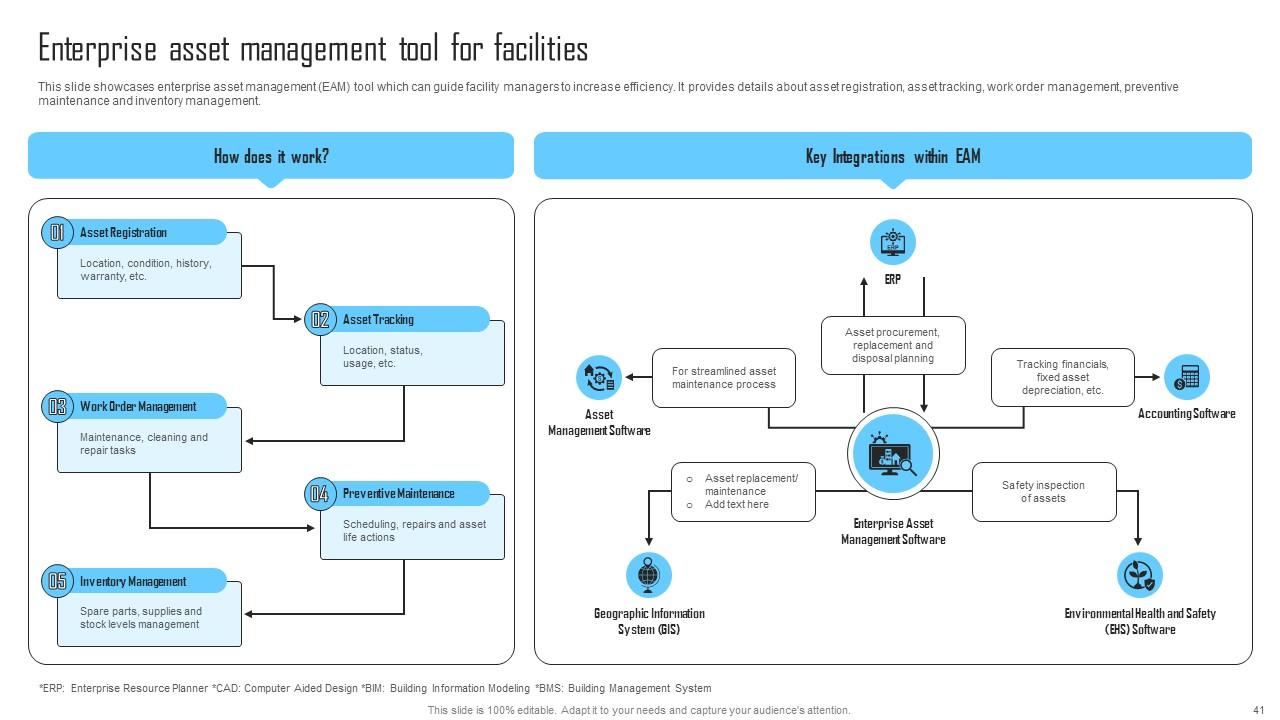
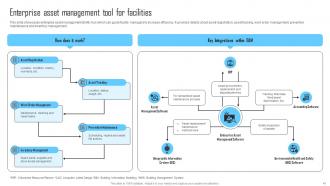
Slide 41: This slide presents enterprise asset management (EAM) tool which can guide facility managers to increase efficiency.
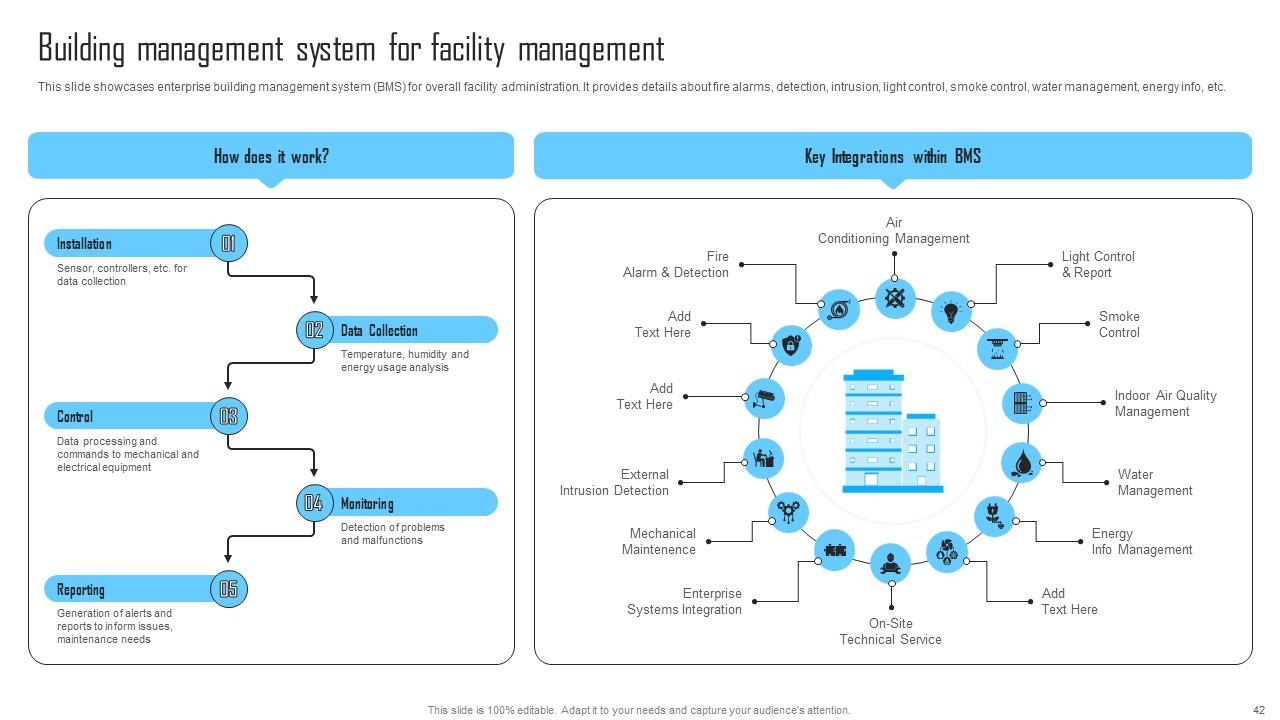
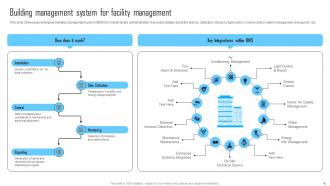
Slide 42: This slide highlights enterprise building management system (BMS) for overall facility administration.
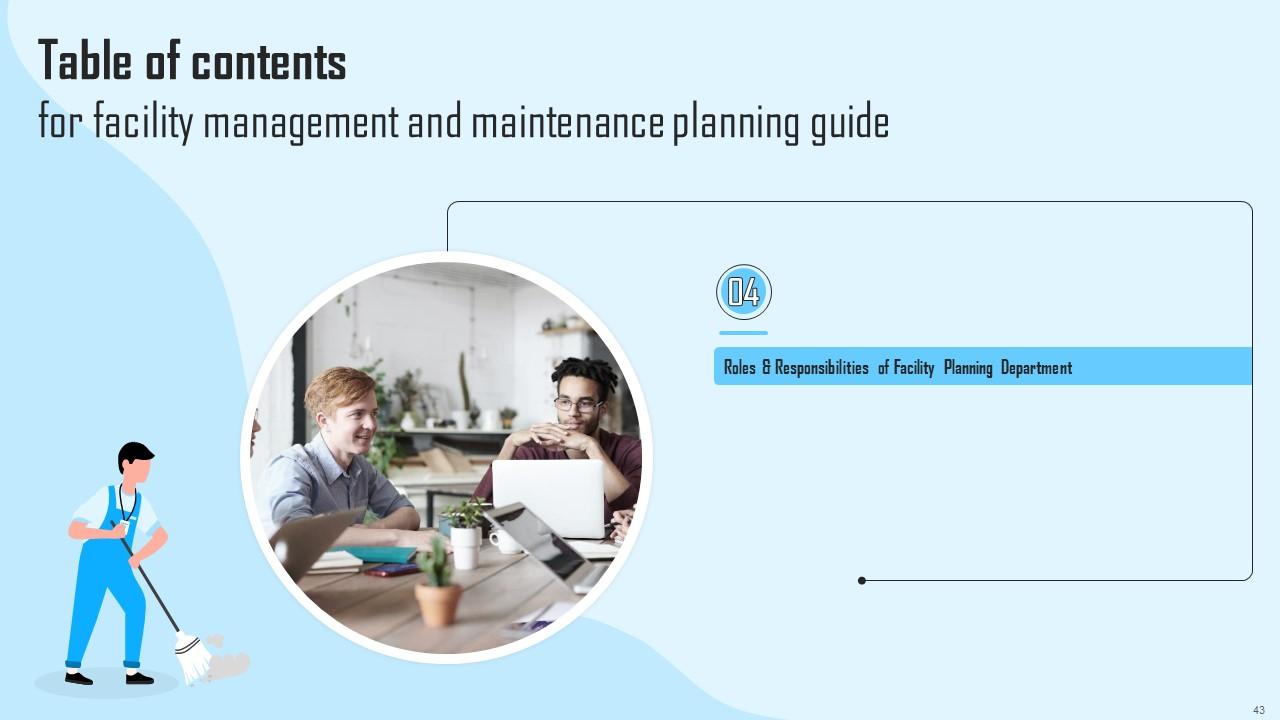
Slide 43: This slide exhibits the Title for the Topics to be discussed further.
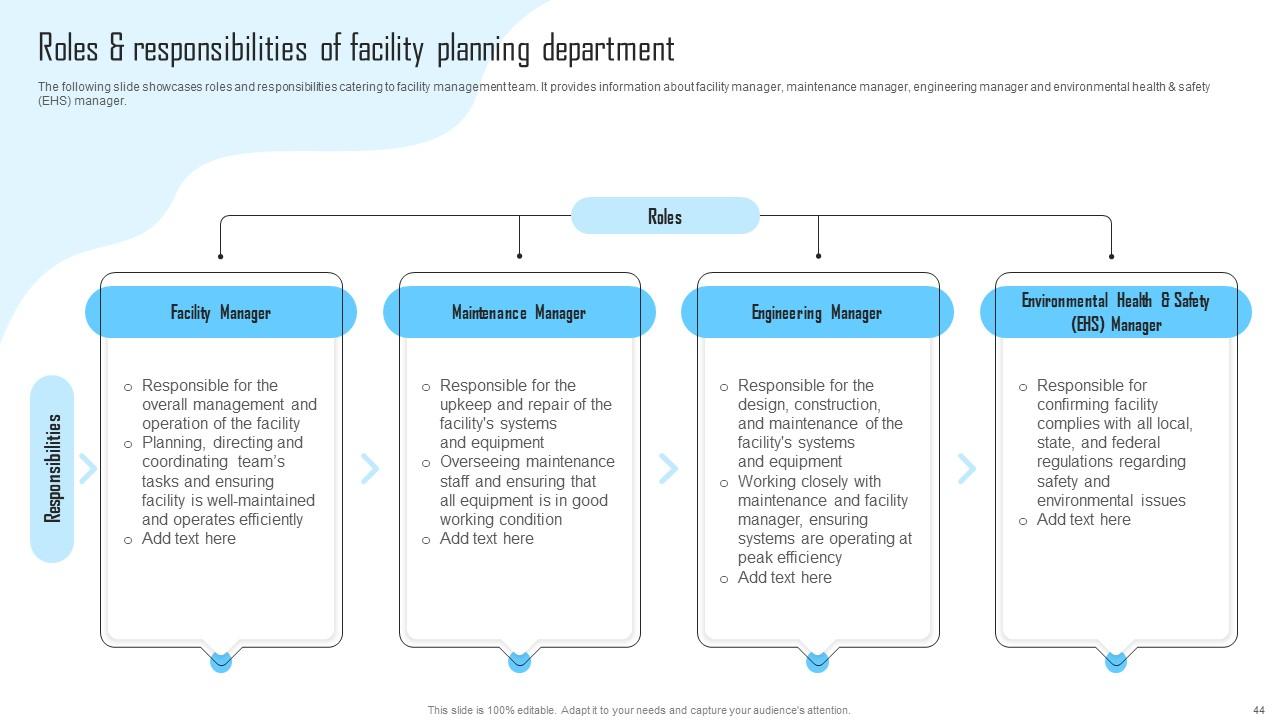
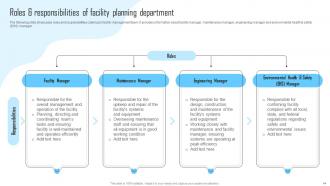
Slide 44: This slide highlights the Roles & responsibilities of facility planning department.
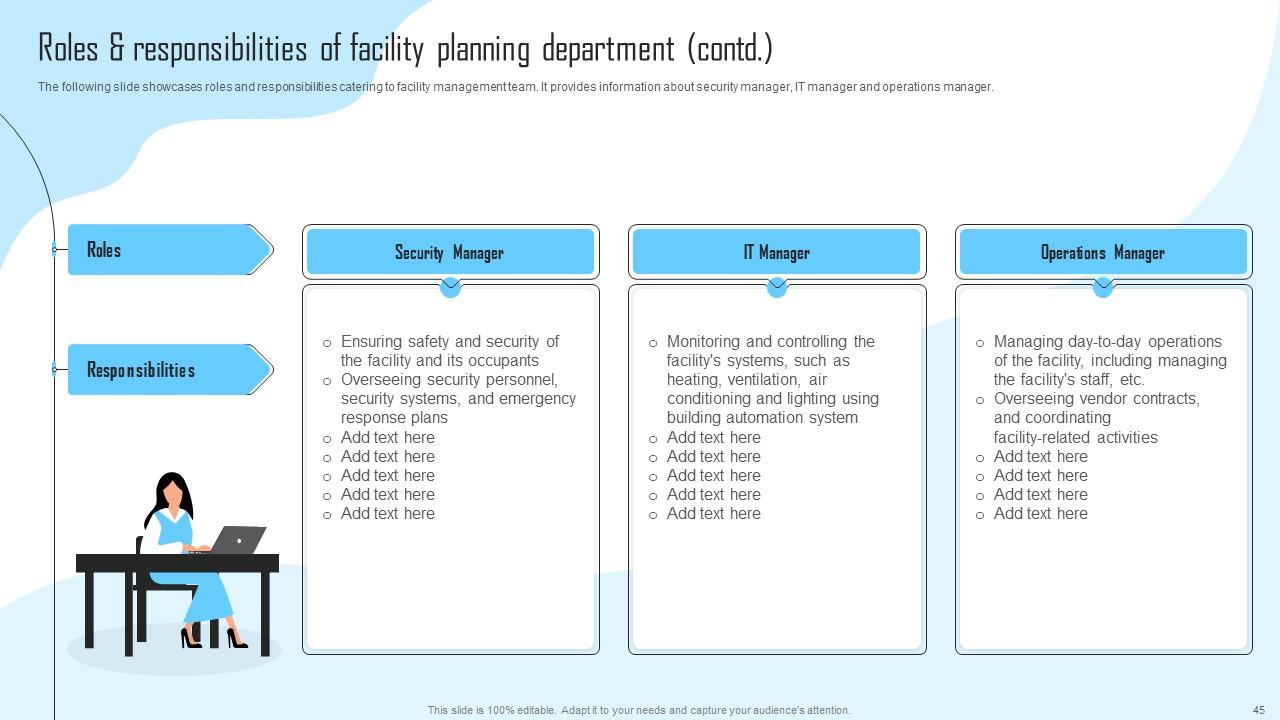
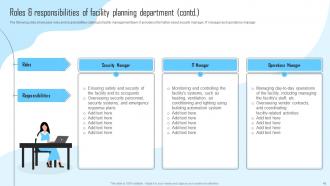
Slide 45: The following slide showcases roles and responsibilities catering to facility management team.
Slide 46: This slide contains the Heading for the Contents to be covered further.
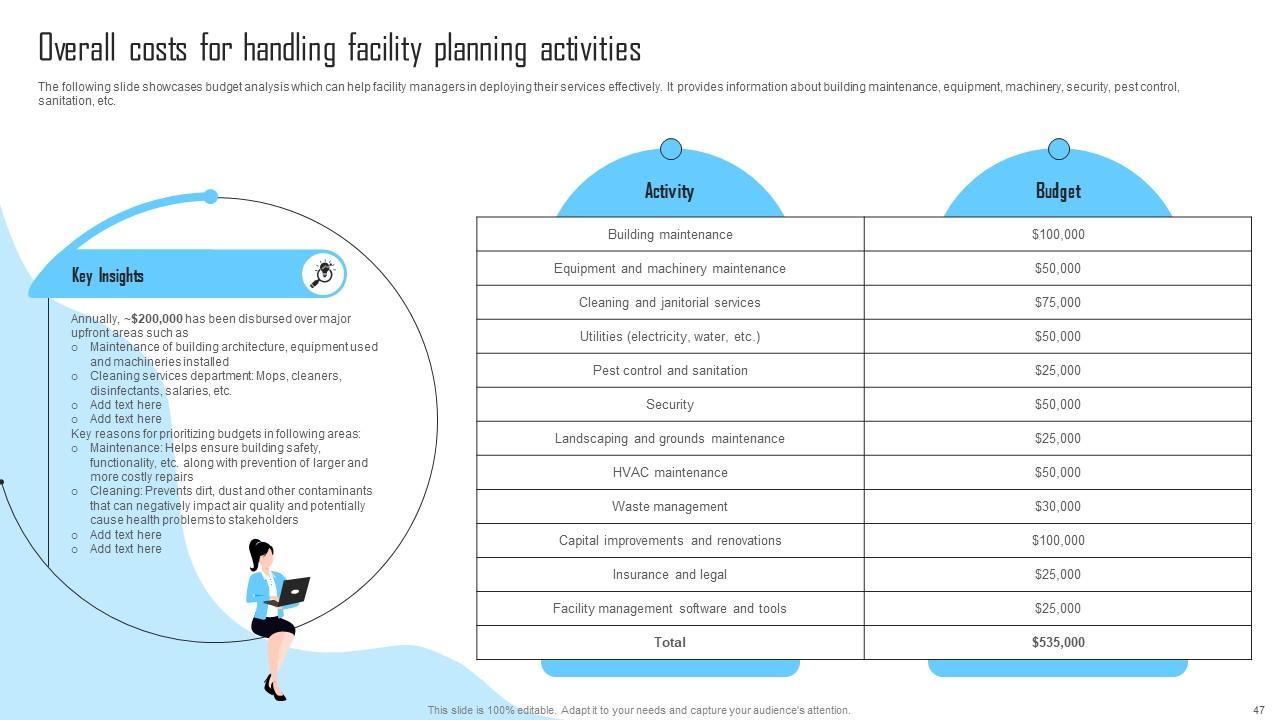
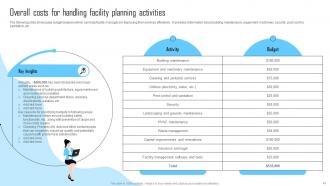
Slide 47: The following slide showcases budget analysis which can help facility managers in deploying their services effectively.
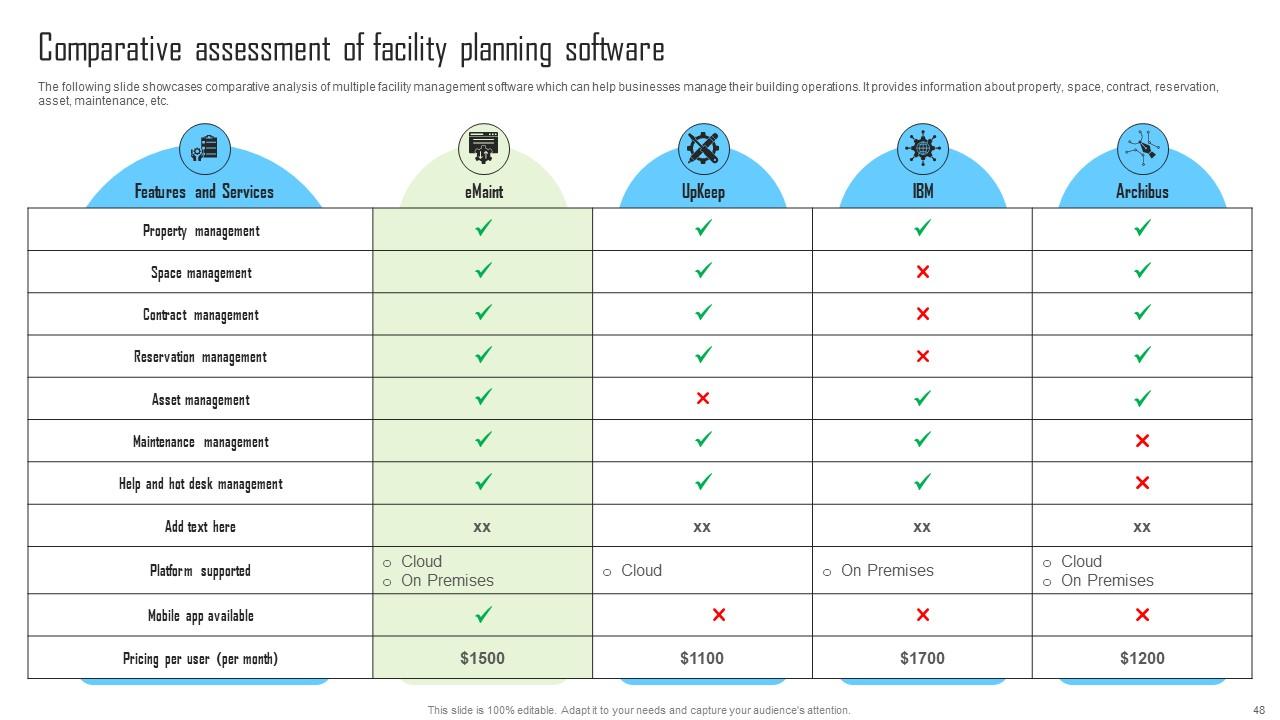
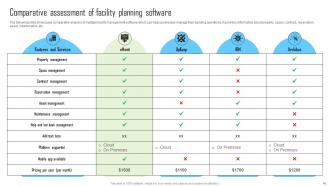
Slide 48: This slide mentions the comparative analysis of multiple facility management software.
Slide 49: This slide portrays the Title for the Ideas to be discussed next.
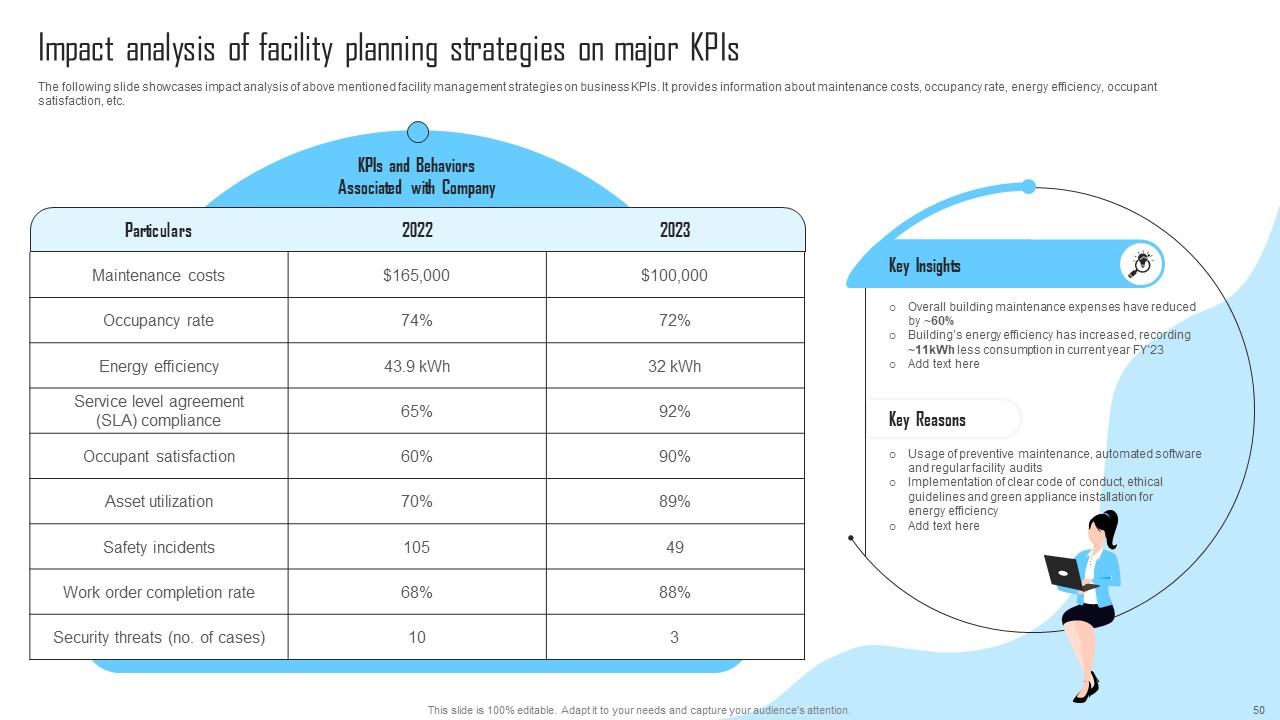
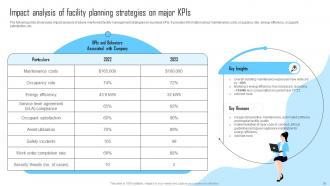
Slide 50: The following slide showcases impact analysis of above mentioned facility management strategies on business KPIs.
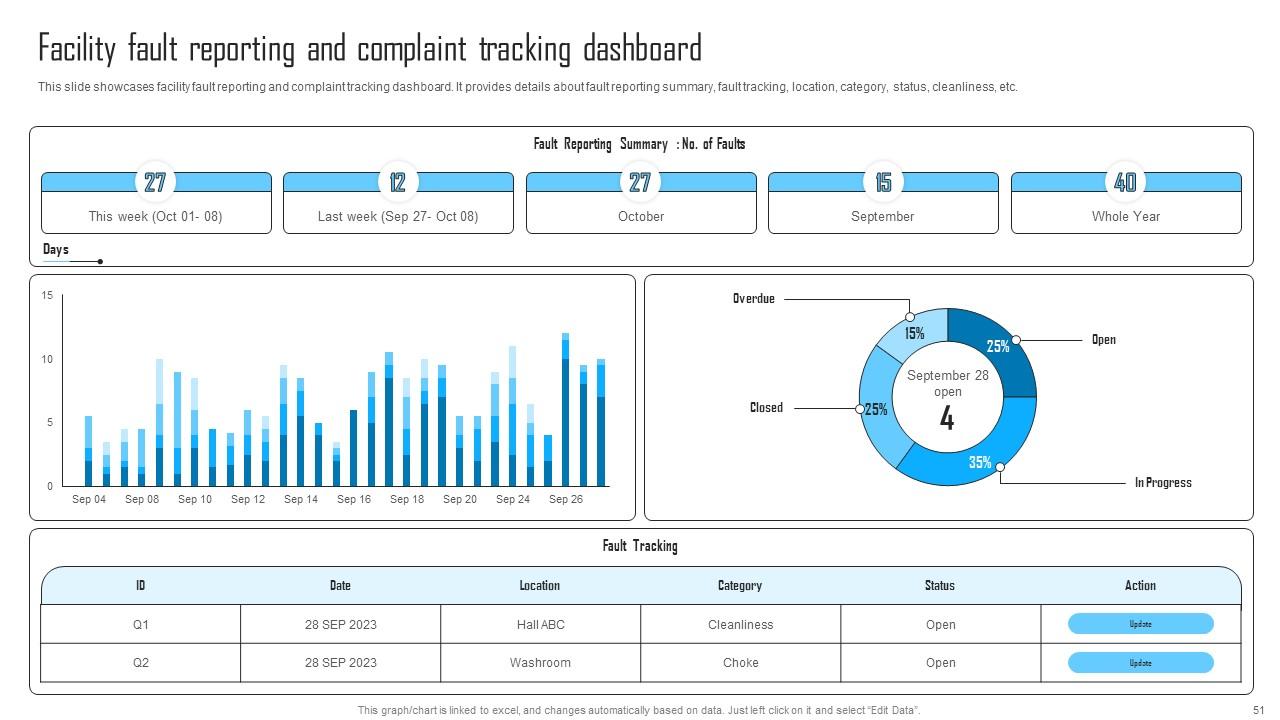
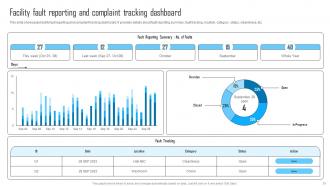
Slide 51: This slide presents facility fault reporting and complaint tracking dashboard.
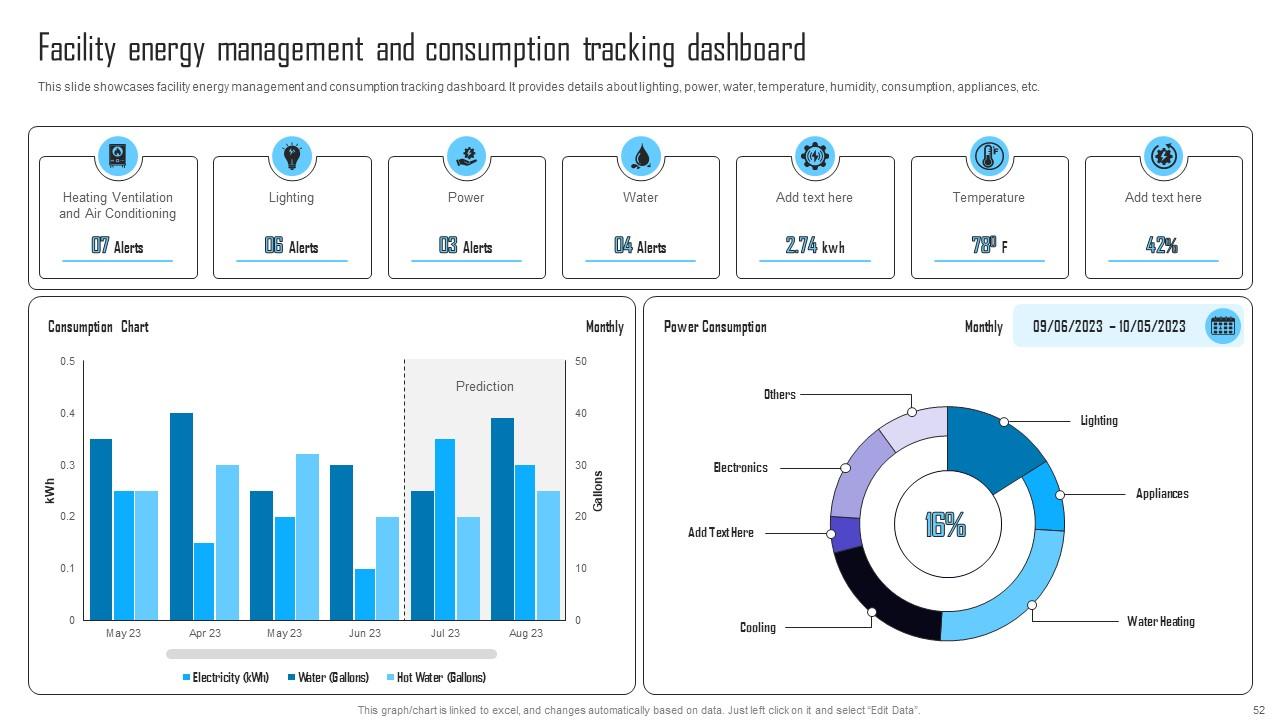
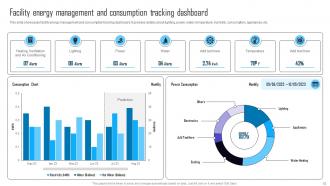
Slide 52: This slide illustrates facility energy management and consumption tracking dashboard.
Slide 53: This slide contains the Heading for the Ideas to be covered further.
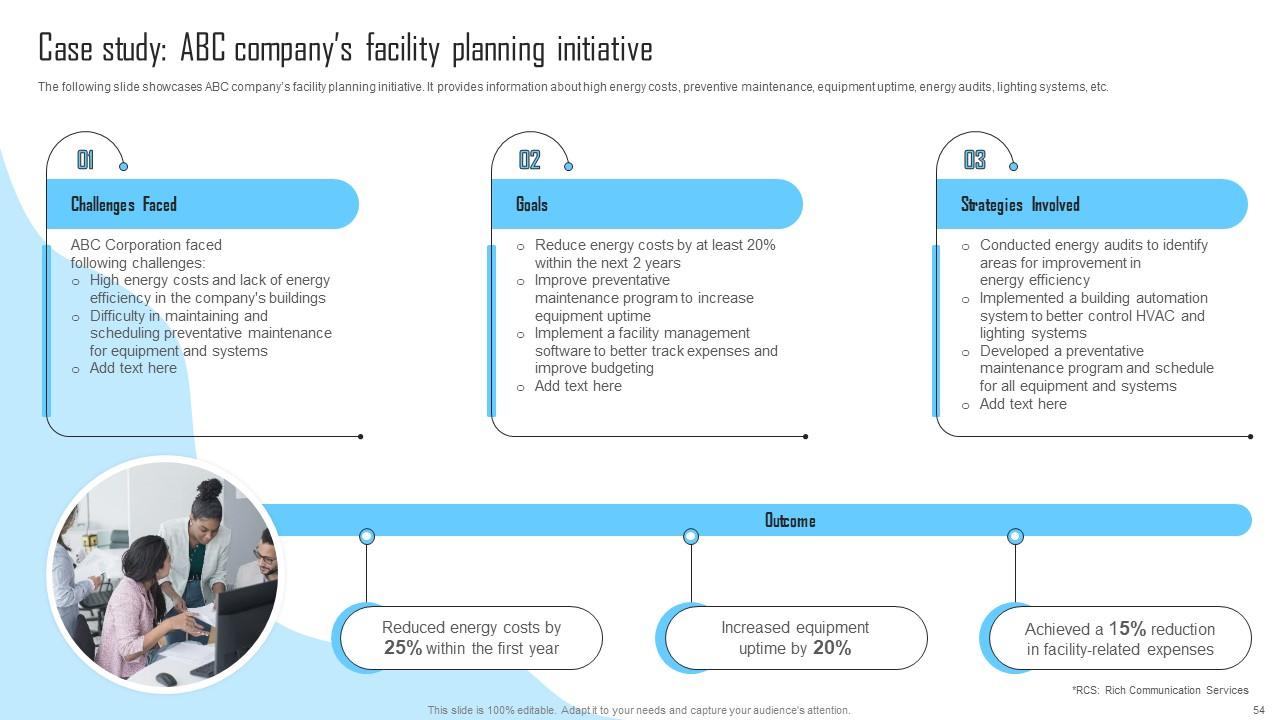
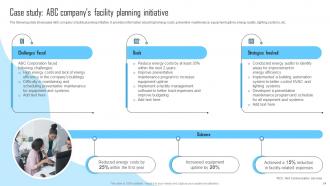
Slide 54: The following slide illustrates the ABC company’s facility planning initiative.
Slide 55: This is the Icons slide containing all the Icons used in the plan.
Slide 56: This slide is used for depicting some Additional information.
Slide 57: This slide exhibits the company's mission, vision, and goals.
Slide 58: This slide contains the company-related information.
Slide 59: This slide showcases the Mind map.
Slide 60: This is the Venn diagram slide.
Slide 61: This slide contains the Posts it notes for reminders and deadlines.
Slide 62: This is Meet our team slide. State your team-related information here.
Slide 63: This slide displays the Timeline of the company.
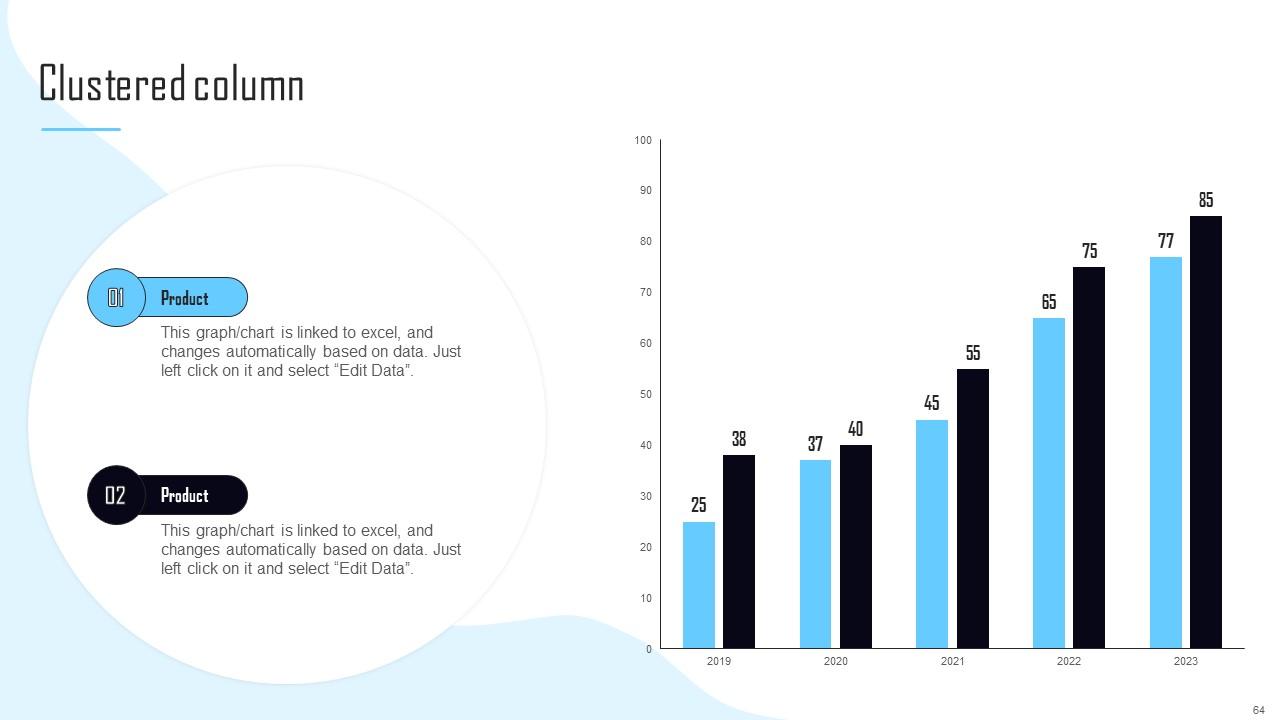
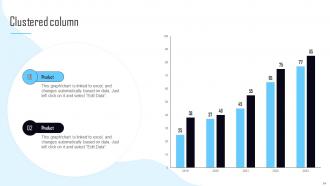
Slide 64: This is the Clustered column slide.
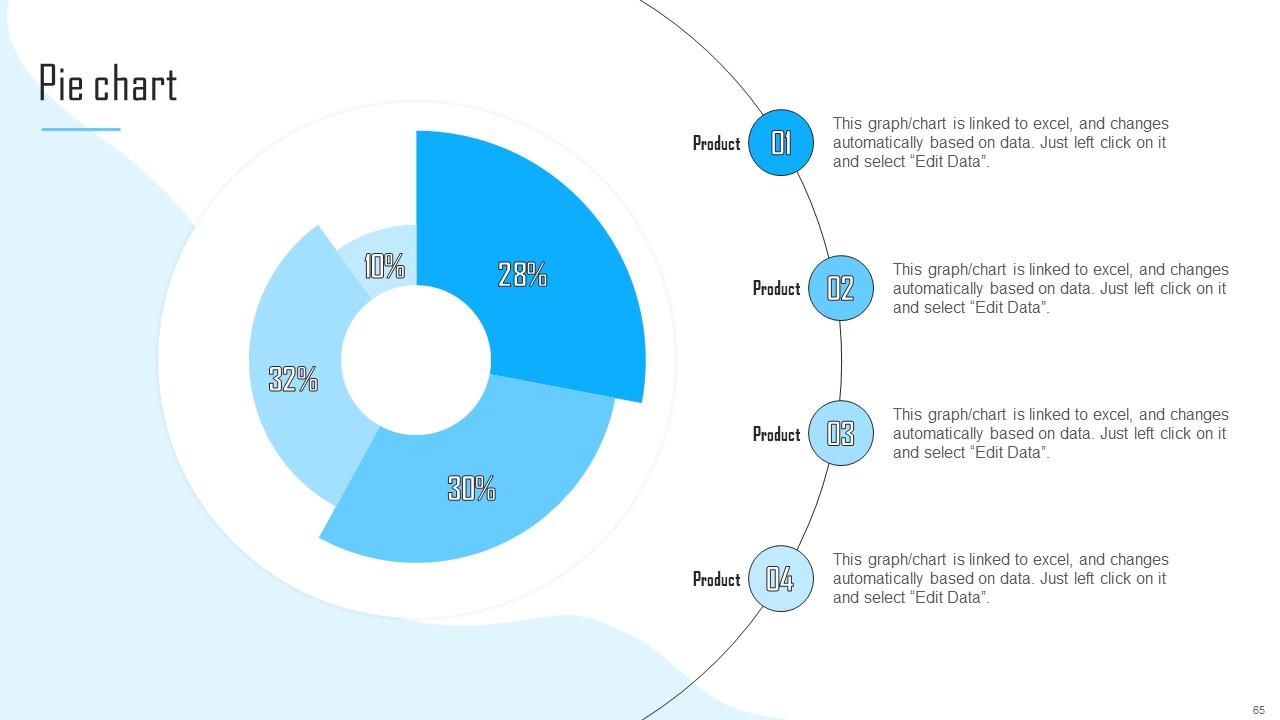
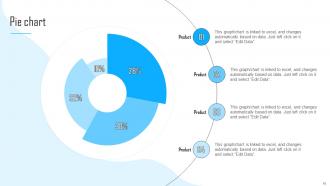
Slide 65: This slide elucidates the Pie chart.
Slide 66: This is the Thank You slide for acknowledgement.
Facility Management And Maintenance Planning Guide Powerpoint Presentation Slides with all 71 slides:
Use our Facility Management And Maintenance Planning Guide Powerpoint Presentation Slides to effectively help you save your valuable time. They are readymade to fit into any presentation structure.
-
“You have the structure in place that are easy to explore new opportunities.I will be recommending your services to other people.”
-
SlideTeam was so customer-centric and quick service-provider that I doubted the amount I was paying and literally re-checked the transaction.
