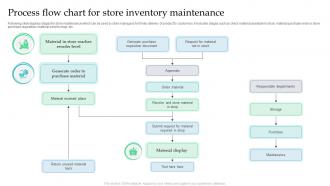
Process Flow Chart For Store Inventory Maintenance
Try Before you Buy Download Free Sample Product
Audience
Editable
of Time
Following slide displays stages for store maintenance which can be used by store managers for timely delivery of product to customers. It includes stages such as check material available in store, material purchase order or store purchase requisition, material send to shop, etc.
People who downloaded this PowerPoint presentation also viewed the following :
Process Flow Chart For Store Inventory Maintenance with all 6 slides:
Use our Process Flow Chart For Store Inventory Maintenance to effectively help you save your valuable time. They are readymade to fit into any presentation structure.
FAQs for Process Flow Chart For
You'll need real-time tracking software and barcode/RFID scanners as your foundation. Automated reorder points are huge too. Most places totally bomb the forecasting part though - they're either drowning in stock or constantly sold out of what people actually want. Get a solid reporting dashboard and supplier management system. Oh, and make sure everything talks to your POS system because nobody wants to manually enter data all day. That's just asking for headaches. I'd start with an audit of your current setup, then focus on getting automated tracking running smoothly before you dive into all the analytics bells and whistles.
Dude, get some inventory software - it'll change your life! Barcode scanners and real-time tracking mean no more guessing what's in stock. Your phone becomes your clipboard, which is so much better than those ancient spreadsheets everyone still uses for some reason. The system sends alerts when you're running low and even predicts what you'll need based on sales patterns. Oh, and if it connects to your register, everything updates automatically when customers buy stuff. Start simple though - don't go crazy with features right away. Build up as you figure out what actually works for your store.
Track four main things: how fast inventory turns over, stockouts, carrying costs, and forecast accuracy. Your best sellers should move quickly - that's where the money is. Stockouts are brutal because customers hate it when you're out of what they want. Carrying costs will kill your margins if you've got too much sitting around (learned that one the hard way). Forecast accuracy keeps you from ordering too much or too little. Pull these numbers weekly and you'll start seeing patterns. Makes ordering way less of a guessing game.
Ugh, inventory is such a pain. You'll either have too much stuff sitting around eating your cash, or you'll run out of popular items right when people want them. Counting everything accurately? Good luck with that - one miscount screws up your whole system. Predicting what people actually want is basically impossible, especially seasonal stuff or whatever randomly goes viral. Then there's suppliers being late, people stealing things, products expiring... it's a mess. Oh, and you get to physically count everything all the time - super fun. Honestly though, get decent inventory software from the start. Set up automatic reorders so you're not scrambling at midnight when bestsellers sell out.
So demand forecasting is basically figuring out how much inventory you'll need and when. Look at your historical sales data, seasonal patterns, market shifts - that whole mix. Accurate forecasts mean you're not sitting on too much stock (hello, cash flow problems) or running out when customers want to buy. I'd honestly call it half science, half educated guessing. Track how well your predictions match reality each month, then tweak your approach. Better forecasting helps you nail those reorder points and safety stock levels. Start there and see how it goes.
Dude, it's a game changer. All that boring stuff like reorder points and stock updates happens automatically - no more manual counting or fat-fingering numbers into spreadsheets. Your team can actually think instead of doing data entry all day. Real-time updates mean you know exactly what you have without walking the warehouse every morning (which honestly sounds awful). I'd start with basic low-stock alerts first. Once you see how much time that saves, you'll want to automate everything else. Trust me on this one.
Honestly, start with your supplier relationships - that's where most people mess up. You need ones that actually show up on time consistently. Next, look at your sales data and pick products with steady demand patterns for testing. Don't go crazy trying to convert everything at once, just pick maybe 3-4 items with your most reliable suppliers. Get decent inventory software that talks to your POS system, then set up those automatic reorder points based on how long delivery usually takes. The forecasting part is huge too - you've got to know what's selling when. Start small though, seriously.
Honestly, just make it routine - monthly for your fast-moving stuff, quarterly for everything else. ABC analysis helps you figure out what to count first. Don't do those massive shutdown audits (your staff will hate you). Cycle counts are way better. Train people properly on counting and rotate who does what areas - catches mistakes you might miss otherwise. Oh, and compare your counts against more than just the POS system. I learned that one the hard way. The whole point is avoiding those nightmare twice-a-year inventory days that everyone dreads.
You basically have to flip your whole ordering strategy on its head depending on the season. Like, you're buying winter jackets in August which feels absolutely backwards but that's how it works. Ramp up inventory 2-3 months early, then dump whatever's left after peak season so it doesn't clog your warehouse forever. The hardest part? Guessing how demand will actually shift and tweaking your safety stock. Honestly, just start tracking your seasonal patterns now - even rough data beats flying blind when you're making next year's buying calls.
Honestly, if you're small just go with ABC analysis and basic reorder points. Spreadsheets work great when you're starting - don't let anyone tell you otherwise. Big retailers? They need the fancy automated forecasting and real-time tracking across tons of locations. The thing is, you can literally walk around and see what's getting low. Walmart can't eyeball thousands of products they'll never touch. I'd say start with whatever you can track manually, then get fancier systems as things get more complicated. No point overengineering it early on.
Honestly, better demand forecasting is gonna be your best friend here. Check your sales data way more often - like weekly instead of monthly - so you catch trends before they bite you. Bundle those slow movers with your bestsellers, people love feeling like they scored a deal. Flash sales work great too, but target specific customers instead of blasting everyone (way better ROI). Oh and set up alerts when stock hits certain levels - being proactive beats scrambling later. I know it sounds obvious but most people wait until they're drowning in inventory to act.
FIFO is your best friend here - always move the older stuff first. Set up alerts for expiration dates because discovering gross moldy fruit hidden somewhere is literally the worst. I'd also do dynamic pricing when things are getting close to their sell-by date. Work out solid delivery schedules with your vendors too, since less time from farm to shelf = better margins. Oh, and base your ordering on actual sales data instead of guessing. Turnover rates don't lie, even when your gut says otherwise.
Honestly, your supplier relationships make a huge difference with inventory. Better forecasting happens when they actually know your business. You'll get more flexible order quantities too. Emergency stock? They'll prioritize you if the relationship is solid - I've seen this save companies during crazy shortages. Payment terms and volume discounts come easier when they trust you, which helps you stock the right amounts without draining cash. It's pretty straightforward really - pay on time, communicate regularly, treat them like partners instead of just another vendor. Trust me, it pays off when you're in a bind.
So inventory turnover is just cost of goods sold divided by your average inventory value. Higher numbers mean you're moving stuff fast, which is usually great for cash flow. But here's the thing - too high might mean you're running out of stock and losing sales. Too low? You're sitting on merchandise that's not selling. I always tell people to look at what others in your industry are doing for comparison. Oh, and track it monthly or quarterly so you can actually see if things are getting better or worse. Makes way more sense than just looking at one random snapshot.
Honestly, skip the boring classroom stuff and get them working with your actual inventory right away. Cover the basics - cycle counting, storage, spotting when numbers don't match up. Most places forget this part, but explaining how screwups actually cost money makes it stick way better. Your software is probably the trickiest bit, so show them all the shortcuts and what to do when things break. Oh, and definitely check in with them weekly that first month. Bad habits are a pain to fix later.
-
I am extremely pleased with these PPT slides that we used for our event. They were easy to modify and came out great in all aspects!
-
Top Quality presentations that are easily editable.