


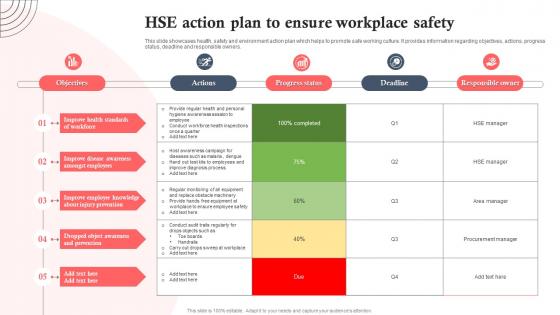
HSE Action Plan To Ensure Workplace Safety




Try Before you Buy Download Free Sample Product
 Impress Your
 Audience
 100%
100% Editable
 Save Hours
 of Time


This slide showcases health, safety and environment action plan which helps to promote safe working culture. It provides information regarding objectives, actions, progress status, deadline and responsible owners.
People who downloaded this PowerPoint presentation also viewed the following :
HSE Action Plan To Ensure Workplace Safety with all 6 slides:
Use our HSE Action Plan To Ensure Workplace Safety to effectively help you save your valuable time. They are readymade to fit into any presentation structure.





FAQs for HSE Action Plan To
So you'll need the basics: hazard ID, risk assessment, control measures, emergency procedures. Training protocols too, obviously. Define who does what - that part's crucial or everything falls apart. Incident reporting and regular audits round it out. The paperwork feels brutal at first, not gonna lie. Communication strategy matters big time though - people can't follow what they don't know about. Here's the thing: don't let it become some dusty binder nobody touches. Start with your worst risks and build from there. Keep tweaking it as you go.
Start with your industry's risk guidelines and OSHA standards - that's your baseline. Check what's happened at similar companies historically. Your frontline workers are goldmines for this stuff though, they see things management totally misses. Walk through your workplace systematically and break down each process step by step. Don't skip the weird risks like ergonomics or how chemicals might interact (learned that one the hard way once). Trade associations usually have good resources too. Make a checklist from everything you find and actually update it when things change - otherwise it's useless.
Honestly, training is what makes or breaks your whole HSE plan. Without it you're basically just shuffling paperwork around hoping for the best. Your team needs to know how to spot hazards, handle emergencies, and use safety gear properly - otherwise what's the point? I've watched companies blow this off then act surprised when accidents keep happening. Regular refresher sessions are key too, and yeah you'll need to document everything for compliance stuff. Oh, and it really helps build that safety culture where people actually care instead of just going through the motions.
Honestly, once a year is the absolute minimum but most places I know do it every 6-12 months. Major changes are when you really need to jump on it though - new equipment, incidents, regulatory updates, that kind of stuff. After any serious near-miss too since those always show you what you missed the first time around. Too many companies just file these things away and forget about them, which is kinda pointless if you think about it. Set a calendar reminder right now and make sure someone specific owns it, otherwise it'll just keep getting pushed to next quarter.
Honestly, the trick is mixing it up - don't just rely on one method. Visual stuff works great, so throw up signs in the risky spots and do actual demonstrations. People learn way better when they can practice instead of just reading some boring manual. Get your supervisors on board too since they need to back up what you're teaching. I'd definitely set up monthly safety meetings where folks can ask questions about real situations they've run into. Oh, and those toolbox talks are clutch - way better than firing off another email that nobody reads anyway. Keep it hands-on and repetitive.
Tech basically brings your HSE plan to life instead of letting it collect dust. IoT sensors handle the boring stuff - air quality, noise, equipment monitoring - so workers don't have to remember manual checks (which they always forget anyway). Mobile apps are game-changers for instant hazard reporting with photos and location data. Sure, there's a learning curve, but honestly the results are worth it. You'll get live dashboards showing safety trends, so you can catch issues early. My advice? Start small with just a mobile app and expand from there.
OSHA's the main thing - they'll come down hard if you mess that up. Gotta cover hazard ID, training your people, how to report incidents, and emergency stuff. State and local regs can actually be tougher than federal ones (trust me on this). Depending what you do, you might need ANSI or NFPA standards too. Document everything because inspectors love their paperwork. Oh, and definitely run it by legal or get a safety consultant - they'll catch the weird local stuff I'd probably miss.
Make safety everybody's job, not just some policy gathering dust. Your leadership has to actually show up - walk around, ask questions, and listen when people flag problems. Don't punish folks for reporting close calls or they'll just stop talking. Yeah, formal training matters, but honestly? The daily stuff counts more. Celebrate when things go right and make it totally okay to halt work if something feels sketchy. I've seen too many places where managers just hide in their offices. Have real conversations with your team regularly and actually do something with their input.
Track both sides of the coin here. Leading indicators show if you're preventing stuff - training completion rates, how often people report near-misses, hazard IDs. Lagging indicators are the bad news: actual incidents, lost time injuries, workers comp claims. Honestly, the behavioral stuff matters too though - meeting attendance, survey scores about safety culture. Monthly dashboards work best for spotting patterns. Oh, and make sure people actually want to report near-misses without getting in trouble, otherwise your data's gonna be worthless.
Look, you've gotta bake HSE stuff right into those contracts upfront - none of this "we'll figure it out later" nonsense. Make contractors submit safety plans before they even step on site, and honestly? Half of them will try to BS their way through it, so actually read the damn things. Set up regular audits and surprise checks throughout the project. Oh, and they need to use your incident reporting system too. Basically treat them like your own people when it comes to safety - same standards, no exceptions. Start by looking at how you're currently onboarding contractors and see where you can tighten things up.
Form a safety committee right away with people from different departments. Brainstorming sessions work great - frontline workers catch hazards management totally misses. Some people won't speak up in meetings though, so surveys or suggestion boxes help too. Oh, and definitely loop back with these same groups when you're updating the plan to see what's actually working. The key thing is you've got to implement their feedback or people will just stop bothering to participate next time around.
Don't just dump risk assessments in the back of your safety plan like homework you forgot about. Use those findings to figure out what hazards need your biggest focus and budget. When writing control measures, actually reference the specific risks - auditors love seeing you used the data instead of just collecting dust with it. Think of it more like... okay this sounds cheesy but the risk assessment really is your foundation. You can't build good procedures without it. Schedule regular reviews for both docs so they don't get out of sync when things change. Both should be living documents that actually talk to each other.
Honestly, the biggest pain points are gonna be pushback from employees, tight budgets, and getting leadership actually invested. Nobody wants another layer of "safety theater" dumped on them. Start with small pilot programs instead of some massive rollout - way less overwhelming. Get your frontline people helping build the plan since they actually know where the real dangers are. Leadership needs to show up, not just dump everything on HR (seriously, this happens all the time). Connect safety performance to reviews and make a big deal when things go well. Quick wins beat grand plans every time.
Honestly, a good HSE plan is like an insurance policy that actually pays you back. You'll catch problems before they blow up into expensive disasters. Workers who aren't constantly looking over their shoulders for hazards? They get way more done. Equipment lasts longer when you're spotting issues early instead of waiting for breakdowns. Here's the thing though - the biggest benefit isn't even safety related. Planning everything out systematically forces you to really examine your processes, and that's where you find all the stupid inefficiencies nobody noticed before. Less downtime, fewer regulatory headaches, better productivity. It's kind of a no-brainer.
OSHA's website is actually your best starting point - they've got free templates that don't suck. Check if your industry has an association too, they usually have specific frameworks. Your insurance company will probably help with risk assessments since they don't want to pay out claims later. Makes sense from their end, right? Start with those free government resources to get the basics down. You can always hire an HSE consultant later if you need someone to walk you through the more technical stuff for your specific business.
-
Extensive range of templates! Highly impressed with the quality of the designs.
-
I’ve been your client for a few years now. Couldn’t be more than happy after using your templates. Thank you!