

Successful Occupational HSE Improvement Action Plan





Try Before you Buy Download Free Sample Product
 Impress Your
 Audience
 100%
100% Editable
 Save Hours
 of Time


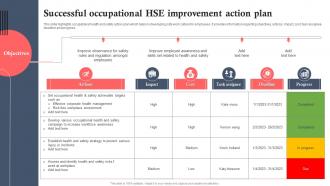
This slide highlights occupational health and safety action plan which helps in developing safe work culture for employees. It provides information regarding objectives, actions, impact, cost, task assignee, deadline and progress.
People who downloaded this PowerPoint presentation also viewed the following :
Successful Occupational HSE Improvement Action Plan with all 6 slides:
Use our Successful Occupational HSE Improvement Action Plan to effectively help you save your valuable time. They are readymade to fit into any presentation structure.





FAQs for Successful Occupational HSE
Honestly, it comes down to four things. Leadership has to actually care - like physically show up and put money where their mouth is, not just send emails about safety. Get your workers involved in committees and let them report close calls without getting in trouble (this is where most places screw up tbh). You'll need regular risk assessments and tracking systems too. Oh, and measure both the proactive stuff like training numbers AND the actual injury rates. I'd start by figuring out where you stand on all this first.
You need both types of metrics, honestly. Leading indicators are the proactive stuff - safety training rates, near-miss reports, hazard assessments. Those help you catch problems before they blow up. Lagging indicators show what already happened: injury rates, workers' comp claims, lost days. Most companies get obsessed with the lagging numbers but that's kinda backwards since it's already too late by then. Focus more on the leading ones if you can. Oh and set up monthly dashboards to review trends - makes it way easier to spot patterns early.
Honestly, good training is what makes the difference between having safety rules on paper and people actually following them. You can't expect workers to follow protocols they don't really understand. Regular sessions on hazard recognition and emergency procedures give people the skills to protect themselves and catch issues early. The best part? It builds that culture where everyone's watching each other's backs. Just make sure it's relevant to their actual job - generic training is pretty much useless. Oh, and hands-on practice beats lecture-style every time. Quarterly refreshers work well to keep everything fresh.
Honestly, start with whatever's driving you crazy right now - don't try to do everything. Digital platforms work great for tracking compliance automatically. IoT sensors give you real-time monitoring of hazards, which is pretty clutch. Mobile apps make incident reporting way easier for your team. The wearable tech is where it gets interesting though - detecting fatigue, monitoring exposure, even predicting accidents before they happen. AI analytics can spot patterns you'd totally miss otherwise. I'd probably focus on one or two things first rather than going full tech overhaul mode.
Honestly, the two biggest roadblocks are always employee pushback and getting leadership actually committed upfront. People hate change - they'd rather stick with unsafe habits than learn new ones, which is wild but totally human nature. Resources get stretched thin, communication sucks, and everyone tries doing everything at once instead of breaking it down. Oh, and the training time? Most places think it'll take half as long as it actually does. Start with small wins first. Get your bosses to show up and be visible about it. Explain why you're changing things, not just what's changing.
Leadership's gotta actually show they care, not just hang up those cheesy safety posters everywhere. Celebrate when people report near-misses - honestly, rewarding honesty instead of punishing it is huge. Give your team proper training and tools they can actually use. Regular safety huddles work really well where everyone can speak up without fear. Make it collaborative, not like you're scolding kids. When people feel supported rather than blamed, they'll naturally start watching out for each other. Oh, and weave safety into everyday conversations instead of making it this separate "thing." You'll see the shift happen pretty fast once people trust the process.
Track both leading and lagging indicators if you want the real picture. Leading ones are like near-miss reports, training completion rates, hazard counts - stuff that prevents incidents. Lagging indicators? Injury rates, lost-time incidents, workers comp claims. Most places obsess over the lagging metrics because they're easier to count, but honestly that's backwards thinking. The leading metrics actually predict problems before they blow up. Oh, and don't sleep on employee safety surveys - people know where the sketchy stuff is. Start with maybe 3-4 metrics you can realistically track instead of going crazy with spreadsheets everywhere.
Dude, engagement is everything for safety programs. Without it, you'll have perfect paperwork but people getting hurt left and right. I've watched companies with beautiful documentation completely bomb because workers just didn't give a damn. When people actually care though? They spot hazards before accidents happen, follow rules without being babysat, and aren't scared to call out problems. It's wild how different teams are when they see safety as protecting their buddies versus just another corporate thing. Honestly, just ask your crew what's actually dangerous in their day-to-day work.
Start by walking through each area and spotting hazards - get the people doing the actual work involved since they know what's really going on day-to-day. Rate each risk by how likely it is and how bad it could get. Focus on the scary stuff first, obviously. Document everything but don't make it more complicated than it needs to be. I know it sounds like a lot upfront, but once you get rolling it's not too bad. Review things when processes change or every few months. Pick your worst areas first and go from there - builds good momentum.
First, figure out which rules actually apply to you - OSHA, EPA, fire codes, whatever. I know it sounds boring as hell, but you've got to compare your current stuff against those requirements to see what's missing. If it gets too complicated (especially with multiple locations), just hire a consultant. Worth the money, trust me. Set up some kind of regular check-in schedule because these regulations change all the time. Someone on your team should definitely sign up for those regulatory update emails. Don't treat this like a one-and-done thing - it's ongoing maintenance.
Start with what you've already got - fold mental health stuff into your current safety programs. EAPs, stress management workshops, maybe add mental health check-ins to those regular safety meetings. Your managers need training to catch burnout before it gets ugly (honestly, most of them are clueless about the warning signs). Survey your people first about what's actually stressing them out. The big thing? People have to feel safe calling out workload problems without getting screwed over for it. I've watched too many companies ignore this until someone completely falls apart.
Make the reporting process dead simple - like under 2 minutes simple. Mobile-friendly forms are a must. Here's the thing though: you absolutely have to follow up with people who submit stuff, otherwise they'll think it's pointless. Anonymous reporting helps since nobody wants to deal with workplace drama later. I've seen this work best when you actually tell people what came of their report, even if it's just "hey we fixed that broken thing you mentioned." Track how fast you respond to stuff. Small wins build trust way faster than you'd think, and people start believing their input actually matters.
Honestly, integrating HSE with business strategy is a total win-win. Your operational costs drop because there's less downtime and fewer incidents to deal with. Employees actually work better when they feel safe - the morale boost is real. Insurance gets cheaper, and you dodge those scary lawsuits that could seriously mess up your company. Oh, and clients are expecting solid HSE performance now, so it helps you stand out from competitors. I'd say start by matching your HSE metrics with whatever business goals you're tracking anyway. Makes the whole thing way more manageable.
Honestly, it all comes down to whether your bosses actually care or just pretend to. Good leaders don't just talk safety - they show up, put money behind it, and call people out when needed. Workers pick up on that energy fast. I've seen places where management walks through wearing their hard hats and actually stops to fix problems versus others where they just send emails about "safety first" (eye roll). The difference in accident rates is huge. If your leadership team isn't modeling what they preach, you're basically fighting an uphill battle.
Honestly, the biggest thing right now is AI safety monitoring - companies are using wearables to track fatigue and spot hazards before they happen. Mental health stuff is huge too, not just the physical safety we used to focus on. Predictive analytics is everywhere now. Oh, and sustainability keeps creeping into HSE since environmental issues mess with worker health anyway. The amount of real-time data you can pull from sensors is actually insane. My advice? Pick one area that's already bugging you instead of going crazy trying to do it all. You'll burn out your team otherwise.
-
“I really like the convenient operation and professionalism I saw on the SlideTeam website. I want to express my regards and appreciation to the team.”
-
I am so thankful for all of the templates I've found on your site. They have saved me hours every week and helped make my presentations come alive. Keep up with these amazing product releases!