


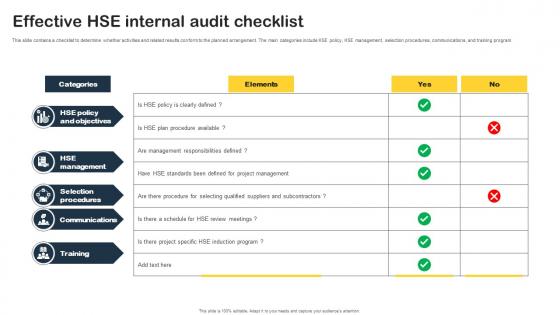
Effective HSE Internal Audit Checklist




Try Before you Buy Download Free Sample Product
 Impress Your
 Audience
 100%
100% Editable
 Save Hours
 of Time


This slide contains a checklist to determine whether activities and related results conform to the planned arrangement. The main categories include HSE policy, HSE management, selection procedures, communications, and training program.
People who downloaded this PowerPoint presentation also viewed the following :
Effective HSE Internal Audit Checklist with all 6 slides:
Use our Effective HSE Internal Audit Checklist to effectively help you save your valuable time. They are readymade to fit into any presentation structure.





FAQs for Effective HSE
For your HSE audit, hit the main areas: safety procedures, health monitoring, environmental stuff, and emergency prep. But here's what really matters - watch if people actually wear their PPE or just have it sitting around. Honestly, half the time it's just for show. Don't forget to check docs, talk to staff, and physically inspect equipment. Oh, and skip those generic templates everyone uses. They miss the real hazards in your specific industry. Behavioral observations are huge too. Mix interviews with actual walkthroughs - you'll catch way more issues that way.
Look, bare minimum is once a year, but that's really just covering your ass legally. High-risk stuff like construction or chemical plants? You're looking at quarterly checks, maybe every six months if you're lucky. New facilities are basically disaster magnets so they need way more attention. Here's the thing though - you don't want your team rolling their eyes every time audit season rolls around. Nobody learns anything when they're burnt out from constant inspections. I'd say start annual and see what breaks. If you're finding major issues, bump up the frequency. Otherwise you're just going through the motions.
So internal audits = your own people checking stuff, external = outsiders coming in. Your team can be super flexible with internal ones - hit problem areas when you want, adjust the scope, whatever. Perfect for catching crap before it blows up. External audits cost more and feel formal as hell, but honestly? Fresh perspective is worth it, plus you need that credibility for certs and regulatory stuff. I'd probably do internal every quarter, external once a year. Keeps things tight without going overboard on audits - nobody wants auditors breathing down their neck constantly, right?
Honestly, I'd start with the big ones - OSHA standards (29 CFR) and EPA regs. Then check if your state has extra requirements. ISO 45001 is everywhere now, so throw that in if your company uses it. Local fire and building codes matter too. Oh, and industry stuff - like DOT if you're moving things around, FDA for food handling, whatever applies to you. The trick is not going crazy with some massive generic list that nobody will actually use. Figure out your biggest risk areas first, then just match up the regulations that actually matter for those specific problems. Way more manageable that way.
Mobile audit apps are game-changers for HSE stuff - no more paper forms everywhere. Your data syncs automatically and you'll catch way fewer mistakes. Photo documentation happens right on the spot, GPS shows exactly where problems are. Some platforms even predict compliance issues using AI, which honestly blows my mind sometimes. Automated reports save you from hours of manual work later. My buddy started with just a basic mobile app last year and his team loves it now. Start simple, then add features once everyone's used to it. Way less headache than the old way.
Honestly, documentation issues kill most companies during audits. Missing training records, outdated risk assessments - basic stuff that's easy to fix. PPE is always a nightmare too. People wear it wrong or don't maintain equipment properly. Emergency plans are usually ancient and nobody's bothered updating them. Plus half the minor incidents never get reported, which looks terrible when auditors dig in. I'd say do random spot checks on this stuff beforehand because it's such low-hanging fruit. Way better than scrambling during the actual audit.
Start your training 4-6 weeks out so people actually have time to learn the stuff. Role-playing beats handing out boring binders every time - way more engaging. Cover your HSE policies, emergency procedures, and any recent incidents they might ask about. Supervisors need to nail their responsibilities, workers should know PPE basics and reporting procedures. Honestly, I'd throw in some practice scenarios too. Schedule a refresher the week before because people forget things fast. Oh, and make sure everyone can actually explain what they do, not just recite it from memory.
Dude, you absolutely need to get your workers talking during that HSE audit. They're the ones actually dealing with the dangerous stuff every day, so they know what's really going on versus what's written down. Honestly, management usually has no clue about the day-to-day risks. Workers will tell you about training gaps, procedure problems, and new hazards nobody's caught yet. Set up anonymous surveys - people are way more honest when they won't get in trouble. Walk around and just chat with them too. Oh, and actually do something with their feedback or they'll stop bothering to help you out.
Start with a risk matrix - plot each finding by how bad it could get and how likely it is. Tackle the high-risk stuff first, especially anything that might seriously injure someone or get you in trouble with regulators. Medium-risk items can wait a few months. Low-risk goes on the back burner for now. Honestly, I've seen too many companies try fixing everything simultaneously and just spin their wheels. Handle the dangerous stuff that could actually shut you down, then work through the rest. It's way more effective than the shotgun approach most places use.
Track leading stuff like audit completion rates and how fast you close corrective actions, plus lagging metrics - incident rates, near-misses, compliance scores. Time to close findings is honestly my favorite metric because it shows if leadership actually cares or just goes through the motions. Watch for repeat findings too - same issues cropping up means your audits aren't fixing anything. Compare quarter-over-quarter instead of just looking at single snapshots. Oh, and don't go crazy tracking everything. Pick 3-4 metrics you can actually move the needle on.
Set up regular check-ins to track how your fixes are going - monthly works best. Train your team on whatever new stuff came up in the audit, otherwise they'll just keep making the same mistakes. Document everything because future you will thank present you when the next audit rolls around. Those mini quarterly assessments are honestly a lifesaver for catching problems early. I'd also benchmark against what other companies in your industry are doing, just so you know where you stand. Oh, and put actual calendar reminders in your phone right now or this whole thing will get buried under other priorities. Most places do great for like two months then completely forget about it.
Yeah totally doable on a shoestring budget. Grab some free checklists online and tweak them for whatever risks you're dealing with. I'd hit the scary stuff first - don't try auditing everything like you're some massive corporation. Your own people can do peer audits once they know what to look for, which honestly works pretty well. Maybe team up with other small companies to split costs? The real trick is doing it regularly instead of going all-out once a year then forgetting about it. Monthly quick walkthroughs beat fancy audits that never actually happen. Just start somewhere this week.
You know what's cool about HSE audits? They actually get people thinking differently about safety instead of just going through the motions. Regular audits send a clear message that this stuff matters - like really matters. People become way more aware of hazards around them and start speaking up about near-misses. The results speak for themselves: fewer accidents, better compliance, everyone's more tuned in. Honestly, I think the best part is when you can use those findings to highlight what's working well, not just beat people up over what isn't. Makes the whole process feel less punitive, you know?
Use a standard template to capture the issue, how bad it is, what caused it, and what needs fixing. Photos help too if you can grab them. Here's what I've learned works best - always send a draft to whoever you audited first so they can check for mistakes. Nobody wants to get blindsided by the final version, trust me. Get the final report out within 48-72 hours to management, safety teams, and department heads. Be super specific about deadlines and who's responsible for what. Then you'll want some kind of tracking system to follow up on whether they actually fixed anything.
Honestly, the worst part is when management says "yes, great ideas!" then gives you like zero budget to actually do anything. Teams get annoyed too - they're already swamped and here you come with more work. Can't blame them really. Timeline pressure is brutal because you're juggling daily stuff while trying to fix bigger problems. Some changes take forever to stick, especially process stuff. My take? Go for easy wins first. Show some results, then people will actually listen when you pitch the harder fixes. Works way better than diving straight into the messy systemic problems.
-
The slides are remarkable with creative designs and interesting information. I am pleased to see how functional and adaptive the design is. Would highly recommend this purchase!
-
I never had to worry about creating a business presentation from scratch. SlideTeam offered me professional, ready-made, and editable presentations that would have taken ages to design.