Action Plan For Health And Safety At Work Strategy

Rating:
80%
Action Plan For Health And Safety At Work Strategy
Slide 1 of 6

or

Favourites Favourites

Try Before you Buy Download Free Sample Product

Audience Impress Your
Audience
Editable 100%
Editable
Time Save Hours
of Time
The Biggest Sale is ending soon in
0
0
:
0
0
:
0
0
Rating:
80%
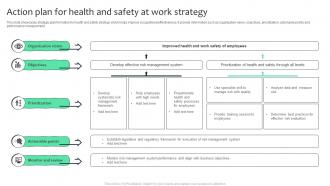
This slide showcases strategic plan formation for health and safety strategy which helps improve occupational effectiveness. It provide information such as organization vision, objectives, prioritization, actionable points and performance measurement. Introducing our Action Plan For Health And Safety At Work Strategy set of slides. The topics discussed in these slides are Organization Vision, Actionable Points, Monitor And Review. This is an immediately available PowerPoint presentation that can be conveniently customized. Download it and convince your audience.

FAQs for Action Plan For Health And Safety

Honestly, start with getting your leadership actually invested - not just saying they care about safety. You'll need solid policies, regular risk checks, and training that people can actually retain. Build in good incident reporting and audits too. Emergency procedures are critical, and compliance stuff is obviously mandatory. The training piece is probably the biggest thing though - can't expect people to follow rules they don't get. Oh, and make sure those emergency protocols aren't just posted somewhere gathering dust. Get the leadership piece locked down first, then everything else falls into place easier.

Honestly, you've gotta stop treating safety like some annoying checkbox exercise. Include safety numbers in your regular performance reviews and budget meetings - I saw firsthand at my old job what happens when you don't track this stuff. Put safety KPIs right next to your revenue goals. Get leadership actually showing up for safety meetings instead of just sending emails about it. Here's the thing - frame it as pure business sense. Less downtime, cheaper insurance, people actually stick around longer. Once executives see those dollar signs, they'll care way more than if you just lecture them about doing the right thing.

Look, good training is basically what stops your safety rules from being useless paperwork. Your team needs to actually know how to spot problems and handle equipment right - otherwise they'll just freeze up when something goes wrong (trust me, I've seen it happen). Regular sessions keep everyone sharp and show you're not just checking boxes. Make it hands-on though, not some boring PowerPoint. Figure out where you're most vulnerable first and focus your training there. Oh, and tailor it to what each person actually does - generic stuff doesn't stick.

Honestly, the tech for health monitoring has gotten pretty wild lately. Your basic fitness trackers can catch heart rate spikes and even detect falls now. There's apps that'll monitor air quality and noise levels too - which is actually super useful if you work somewhere sketchy. What blows my mind is how they can predict incidents before they happen. Real-time alerts are a game changer for safety stuff. I'd start small though - maybe grab some basic trackers for anyone doing physical work, or try those environmental monitoring apps first. Don't go overboard right away.

Yeah, so workplace hazards are totally different depending on what you do. Construction guys worry about falls and heavy equipment. Healthcare workers get stuck by needles or throw out their backs constantly. Manufacturing has all the scary machinery plus chemical stuff. Office people? Mostly just bad posture and stress - though honestly that stress thing is no joke. Training helps a ton, plus doing regular safety checks and updating old equipment. The key is getting people to actually report close calls without freaking out about getting in trouble. I'd pick your worst 3 problems first and focus there.

Okay so you've gotta watch both types of indicators or you'll be flying blind. Leading ones predict what's coming - stuff like training completion rates, how often people report near-misses, audit scores. Lagging indicators are your actual incidents, comp claims, lost time injuries. Most companies just stare at the lagging data though, which is honestly like trying to drive while only looking in your mirrors. Set up monthly dashboards for both. Oh and definitely survey your workers about safety culture - they'll tell you things your spreadsheets won't catch.

Okay so three main things to tackle: communication, training, and supplies. Everyone needs to know evacuation routes and meeting points - plus how to actually reach emergency contacts when chaos hits. I know drills feel annoying but do them anyway, trust me. Stock your first aid kits and pick people for specific jobs like floor wardens. Write up an emergency plan that people can actually find and understand (not buried in some random folder). Oh and do a walkthrough this week to spot any obvious gaps you missed.

Dude, mental health and workplace safety are totally connected - stressed out people have way more accidents. When someone's dealing with burnout or anxiety, they're making mistakes and calling out sick constantly. Workplace injuries can mess with people's heads too, so it goes both ways. Honestly, I can't believe companies took this long to figure it out. You need employee assistance programs, stress management stuff, maybe some training. Oh and actually let people report mental health issues without feeling weird about it. Can't just focus on hard hats anymore - people's brains matter too.

Start with OSHA stuff - that's mandatory and covers the basic workplace safety requirements. Industry standards like ISO 45001 are worth checking out too. State regulations can actually be tougher than federal ones, so don't skip those. EPA might come into play if you're dealing with environmental hazards. The whole regulatory thing is honestly pretty messy at first. Most compliance software helps track what applies to your industry though. I'd probably run a compliance audit first to see where you're falling short, then build from there. Way easier than trying to tackle everything at once.

Look, your bosses have to actually give a damn about safety - not just pretend they do. I've watched entire programs crash and burn because management talks big but then slashes the safety budget. When leaders show up to meetings, hold people accountable, and put real money behind it? That's when employees start caring too. You'll get better training participation, more people reporting incidents instead of hiding them. Honestly, the whole vibe changes - people actually start watching each other's backs. Just make sure leadership isn't just rubber-stamping policies from behind their desk.

So for workplace safety metrics, I'd focus on two buckets. Injury rates and workers' comp claims tell you what already went wrong - useful but kinda depressing. The real gold is in prevention stuff: how many people finished safety training, near-miss reports (seriously, these are huge), and audit scores. Also track how fast you investigate incidents. I always think mixing both types gives you the full picture. Days lost due to accidents is another big one to watch. You'll start seeing patterns that help you actually stop problems before they cost you money.

Safety has to feel like everyone's thing, not just some HR presentation we sit through annually. Get your leadership actually walking around in hard hats - people pay attention to that stuff. Create a culture where reporting close calls doesn't get you in trouble. Small team discussions about real hazards they've seen work way better than those generic safety meetings where half the room's checking their phones. Celebrate the wins publicly too. Honestly, most places treat it like a checkbox exercise. Make employees feel like they actually have input on procedures instead of just being lectured at.

Dude, you should totally get your employees involved in making those safety policies. They're the ones actually using the equipment every day, so they know where the real problems are - way better than some manager sitting in an office. Plus people follow rules they helped create, which is just common sense honestly. Your frontline workers will spot hazards that leadership completely misses. They feel more invested too when you actually listen to their ideas. Oh and set up a safety committee with people from different departments. Trust me, the compliance rates will be so much better when everyone's had a say in it.

Dude, remote work safety is way more than just "don't trip over your coffee table." Do risk assessments for people's home setups - ergonomics, mental health stuff, cybersecurity. Update your policies to actually cover working from home. Regular check-ins help too. Honestly? Most companies are winging it right now, which is kinda wild when you think about it. Survey your team every few months about what problems they're running into. The biggest thing is staying flexible and listening to what your remote people actually need, not just guessing.

Think of audits like getting your car inspected - annoying but they catch stuff before it becomes a real problem. They show you what's actually happening vs what you think is happening with safety procedures. Honestly, the patterns they reveal are usually things you'd never notice otherwise (like how nobody actually checks equipment on Fridays lol). Don't treat them like some gotcha thing though. Schedule them regularly and actually fix what they find - that's the only way they're worth doing. Otherwise you're just going through the motions.

Ratings and Reviews

80% of 100
Review Form
Write a review
Most Relevant Reviews
  1. 80%

    by Domingo Hawkins

    Excellent products for quick understanding.
  2. 80%

    by Dirk Kelley

    Excellent template with unique design.

2 Item(s)

per page: