HSE Action Plan Powerpoint Ppt Template Bundles
Try Before you Buy Download Free Sample Product
Audience
Editable
of Time
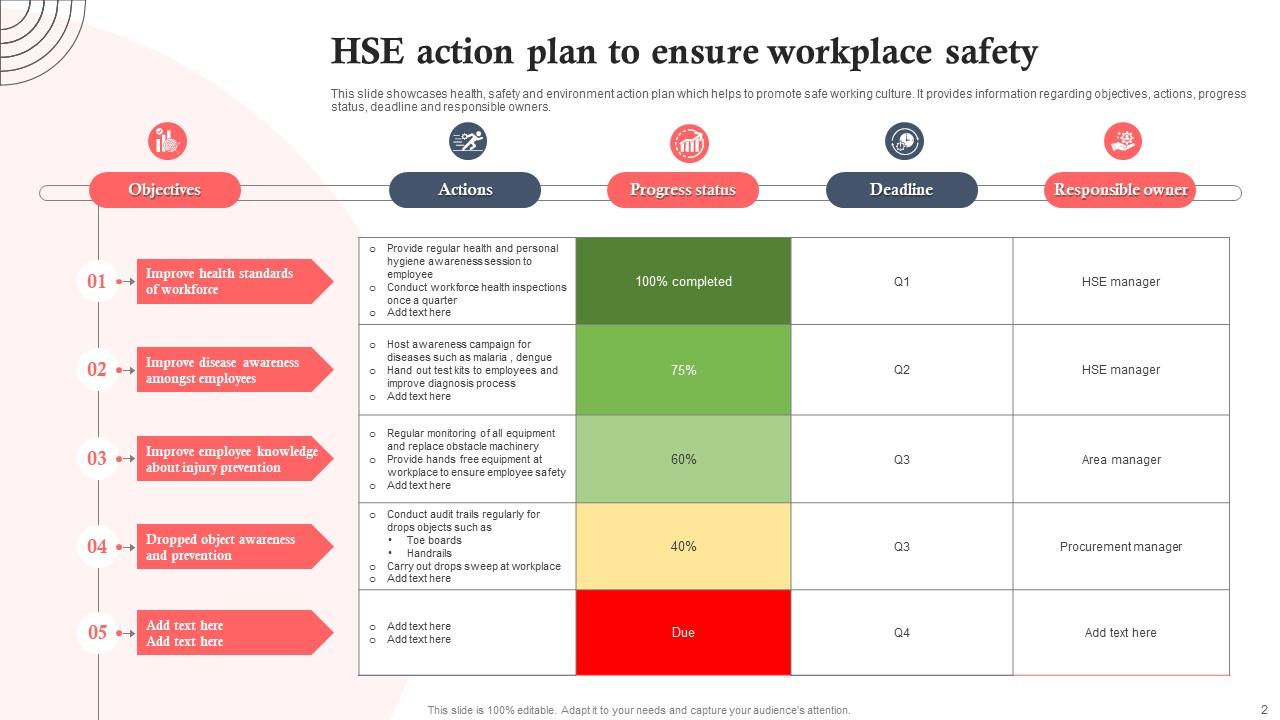
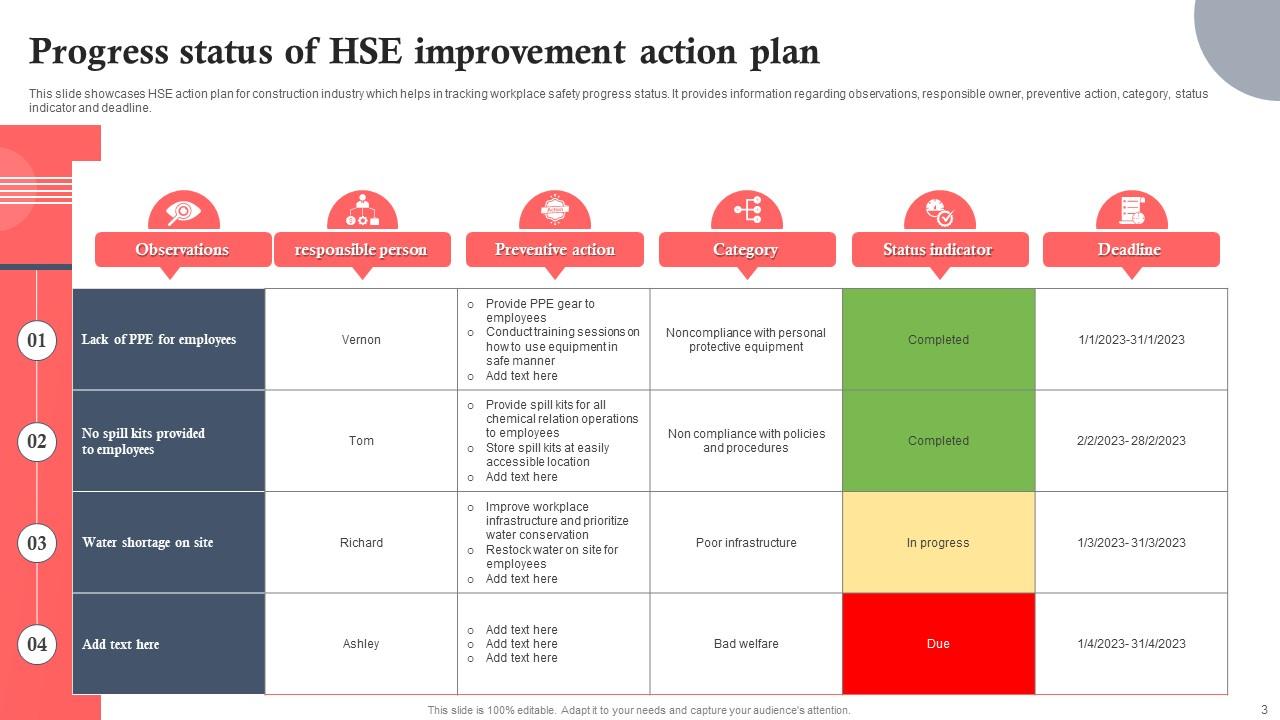
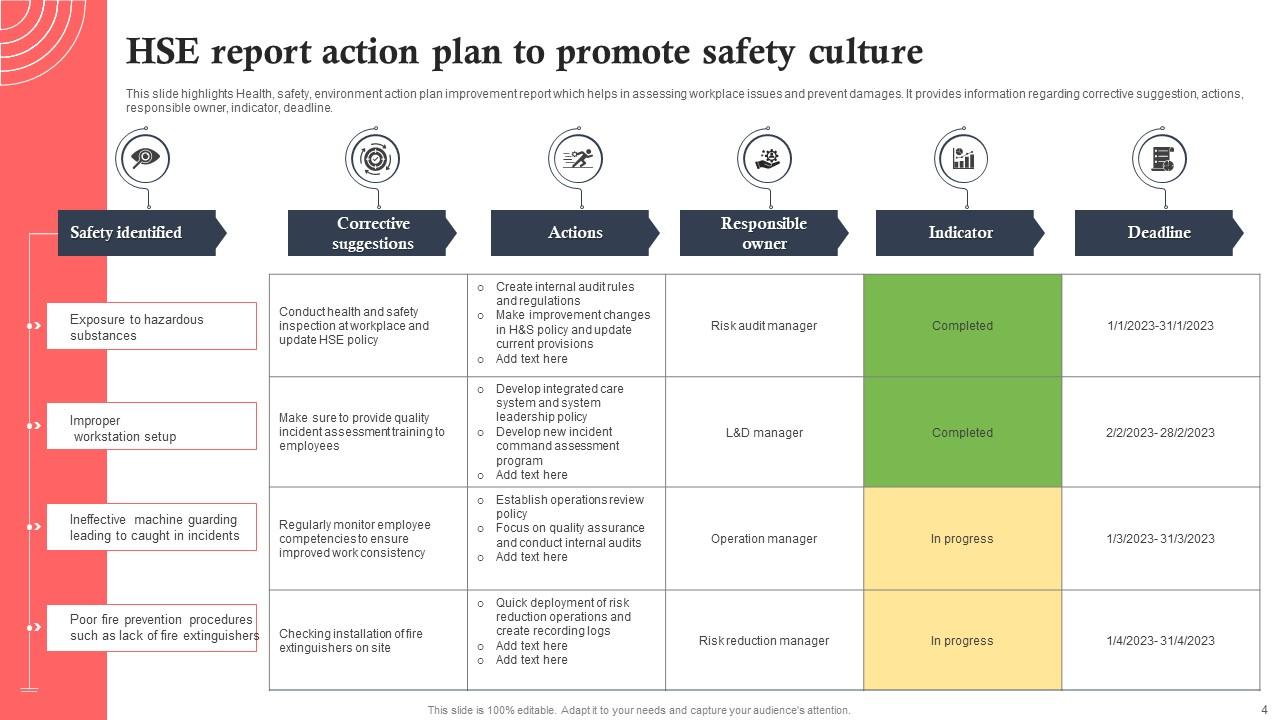
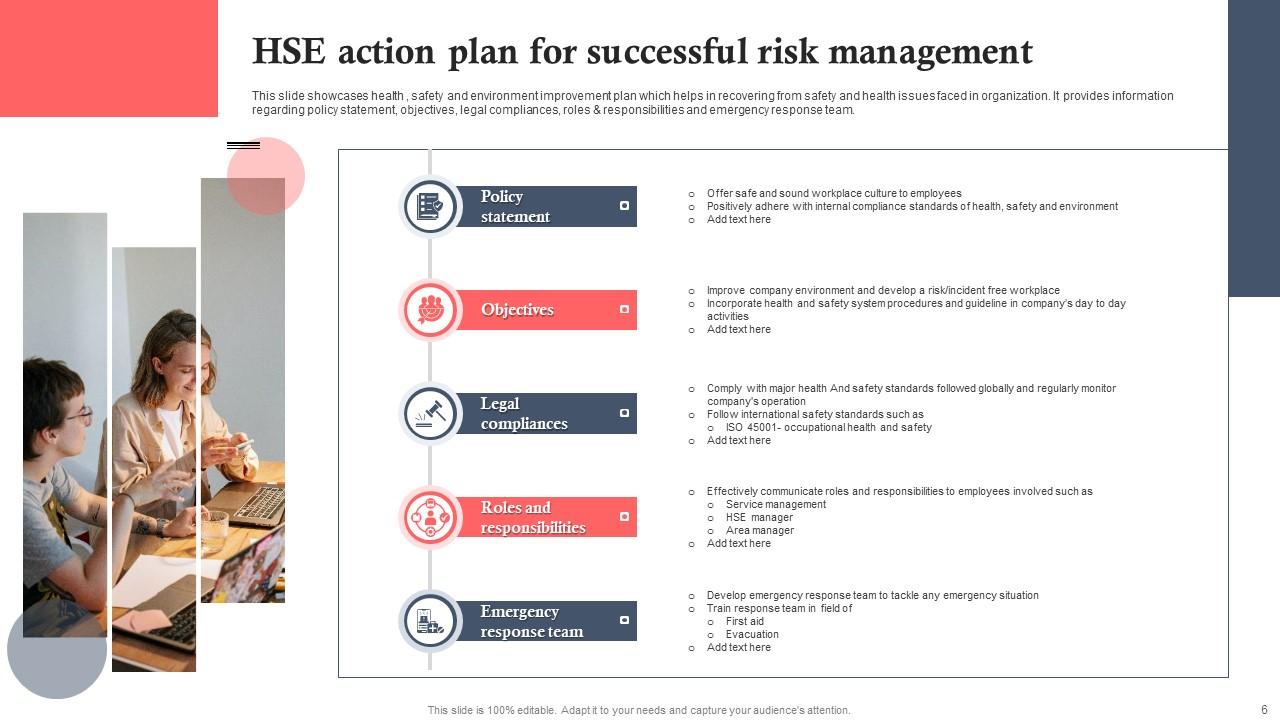
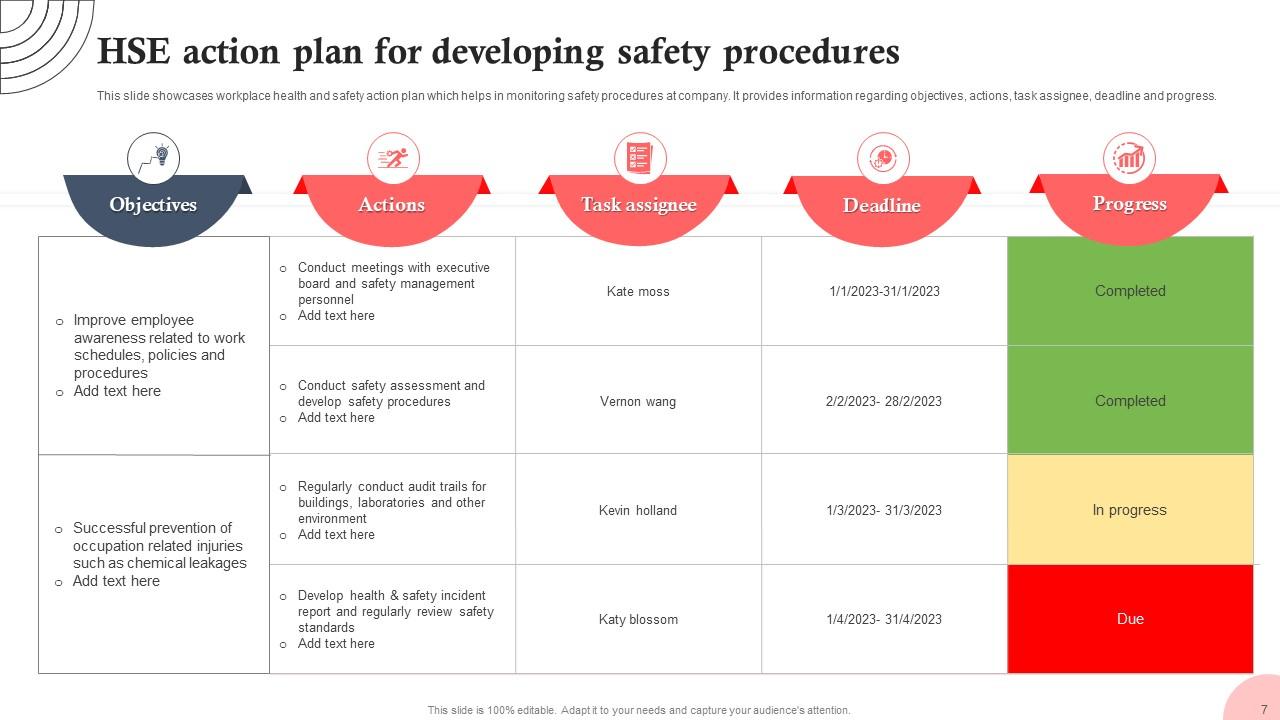
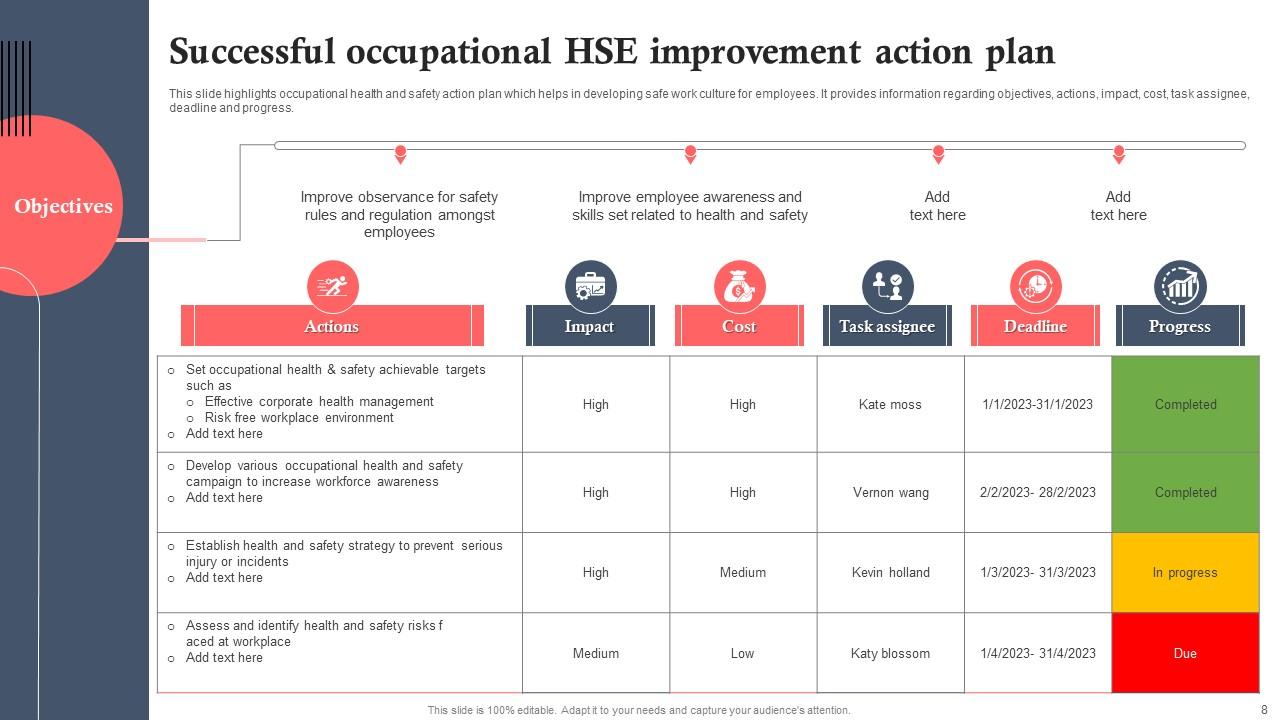
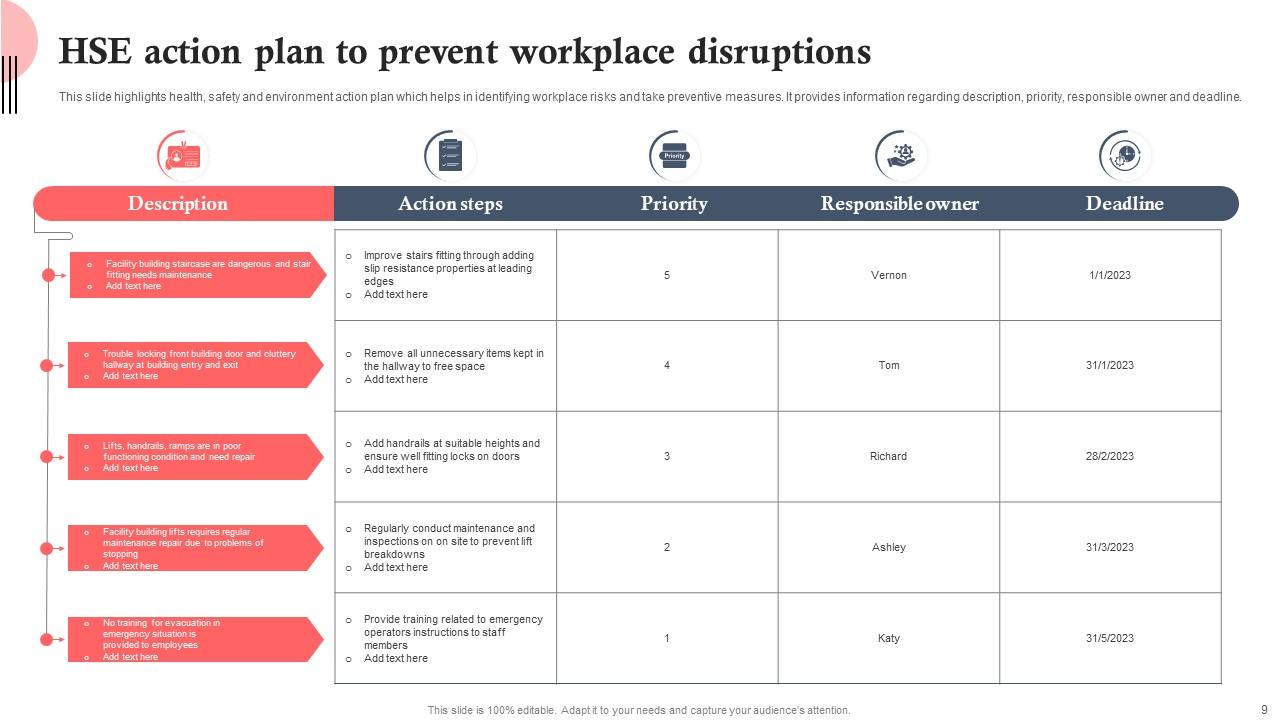
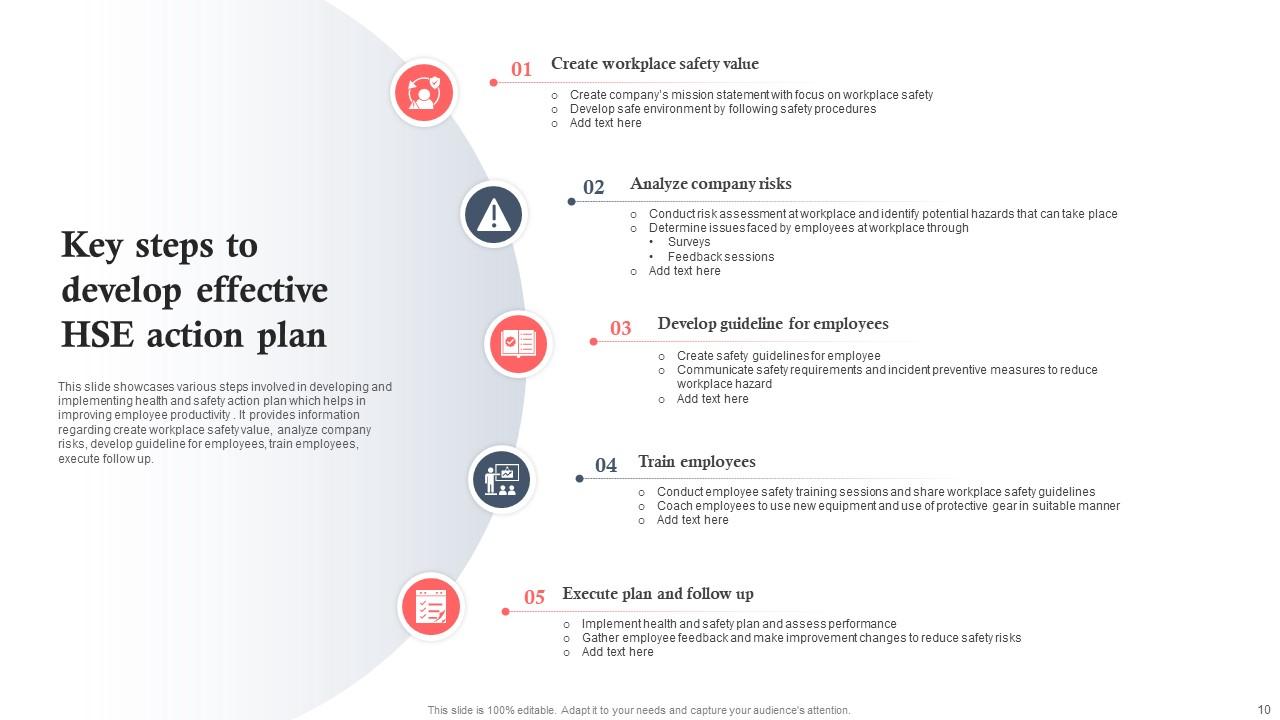
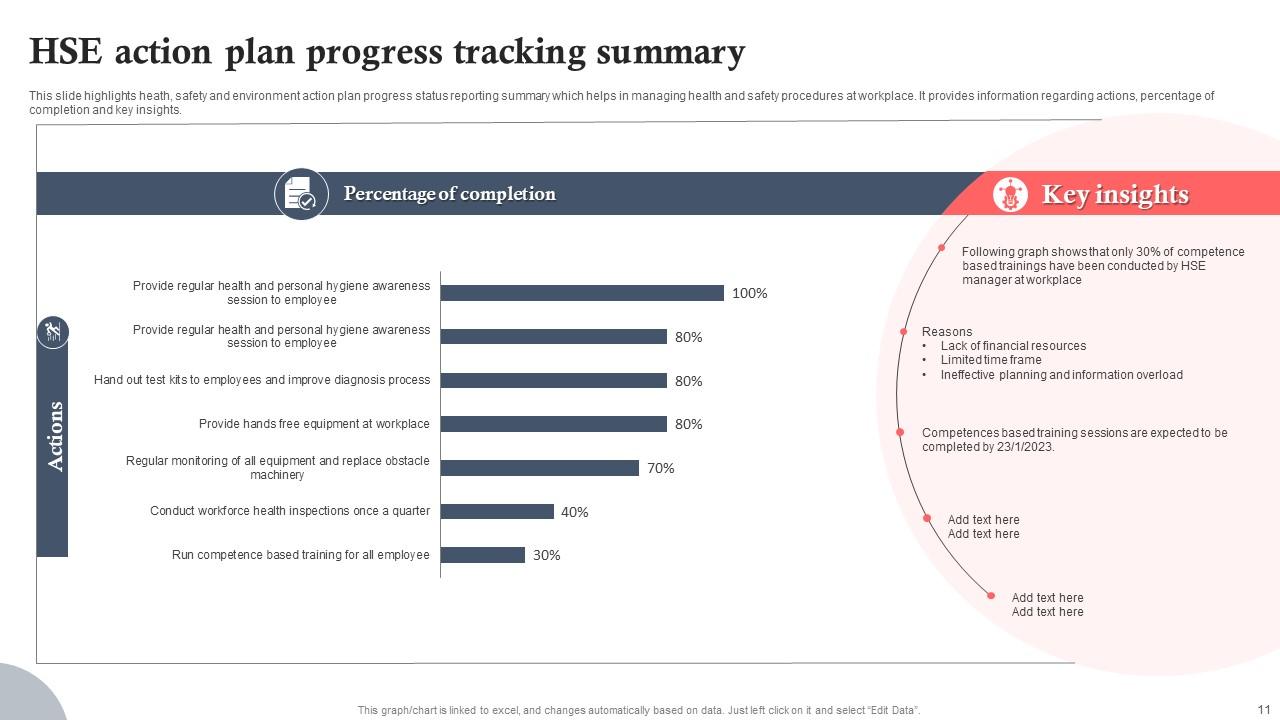
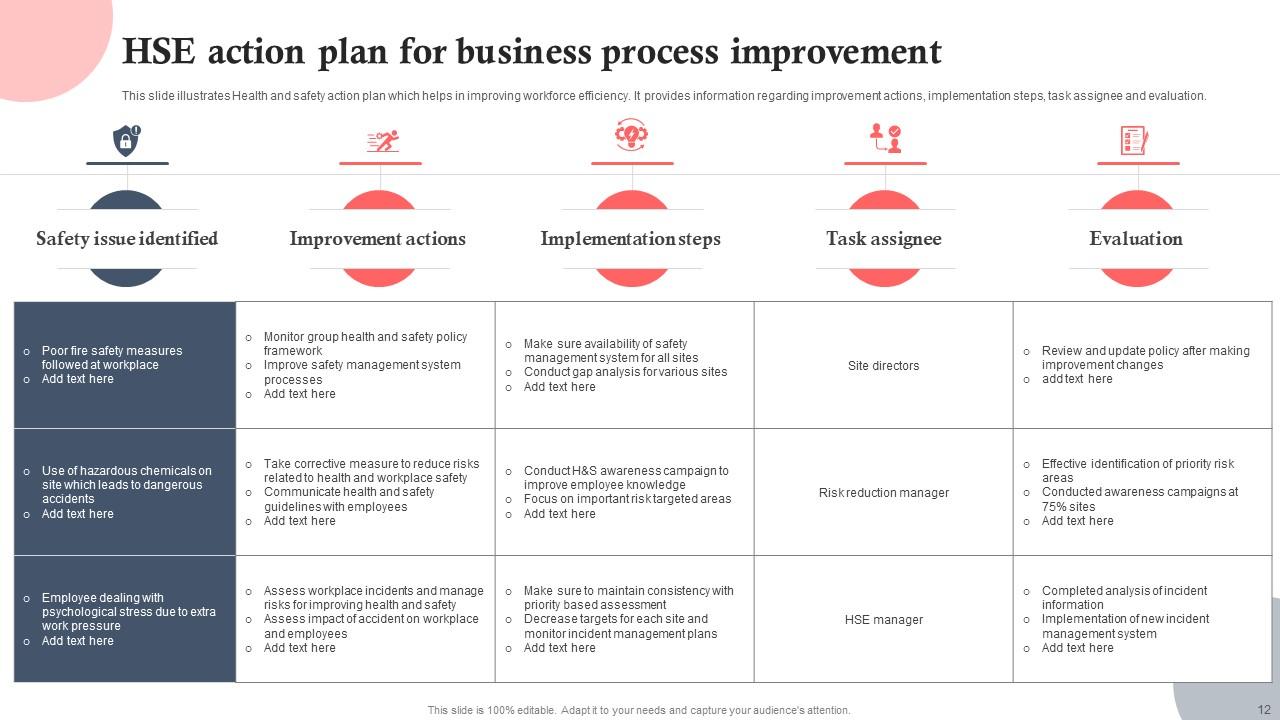
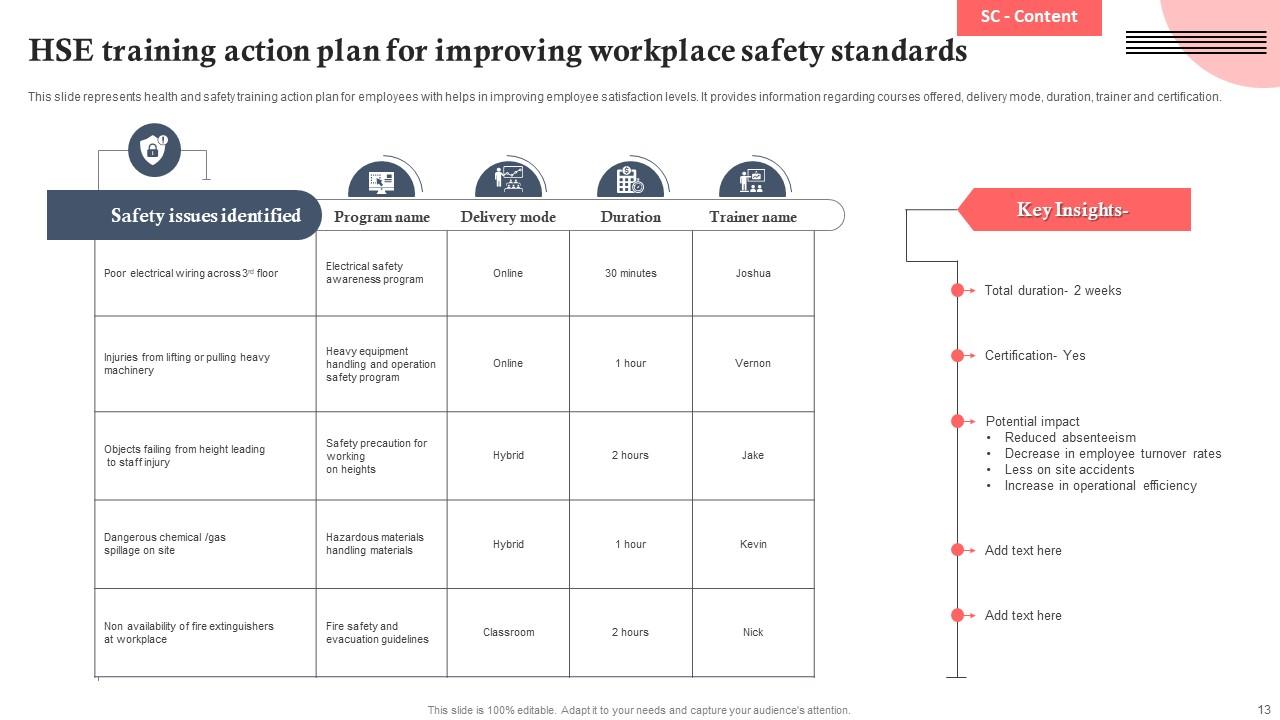
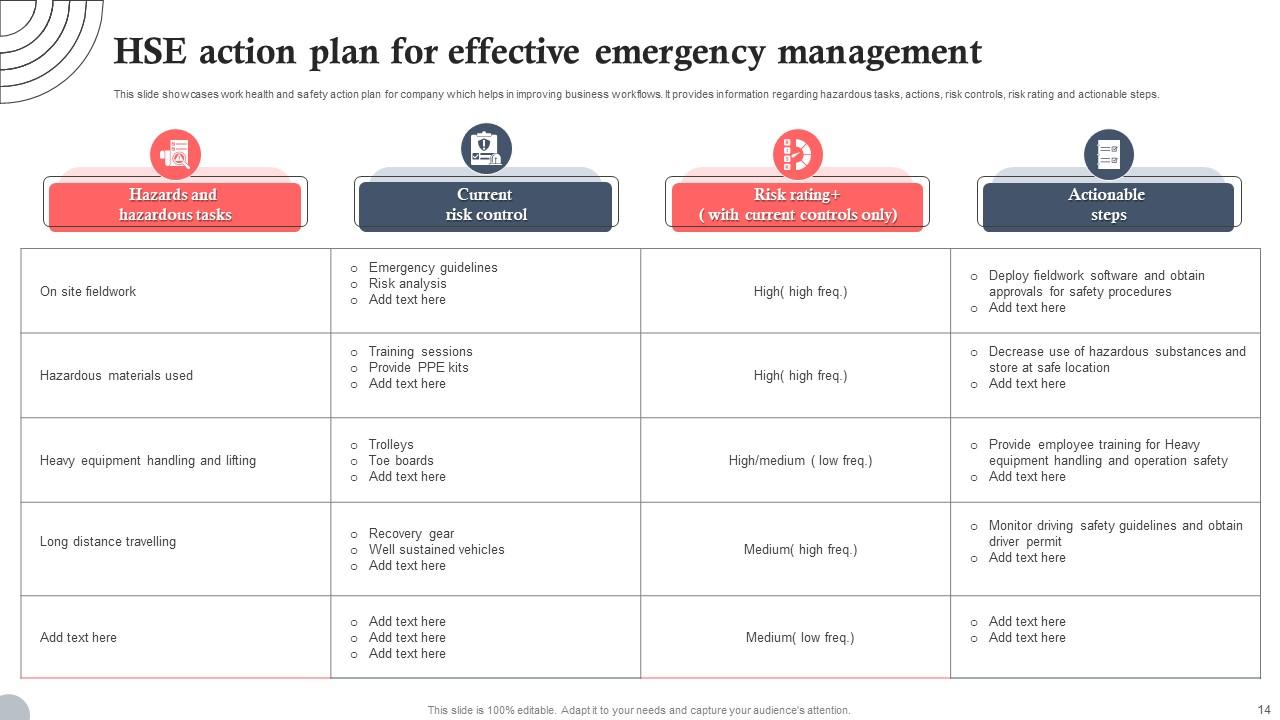
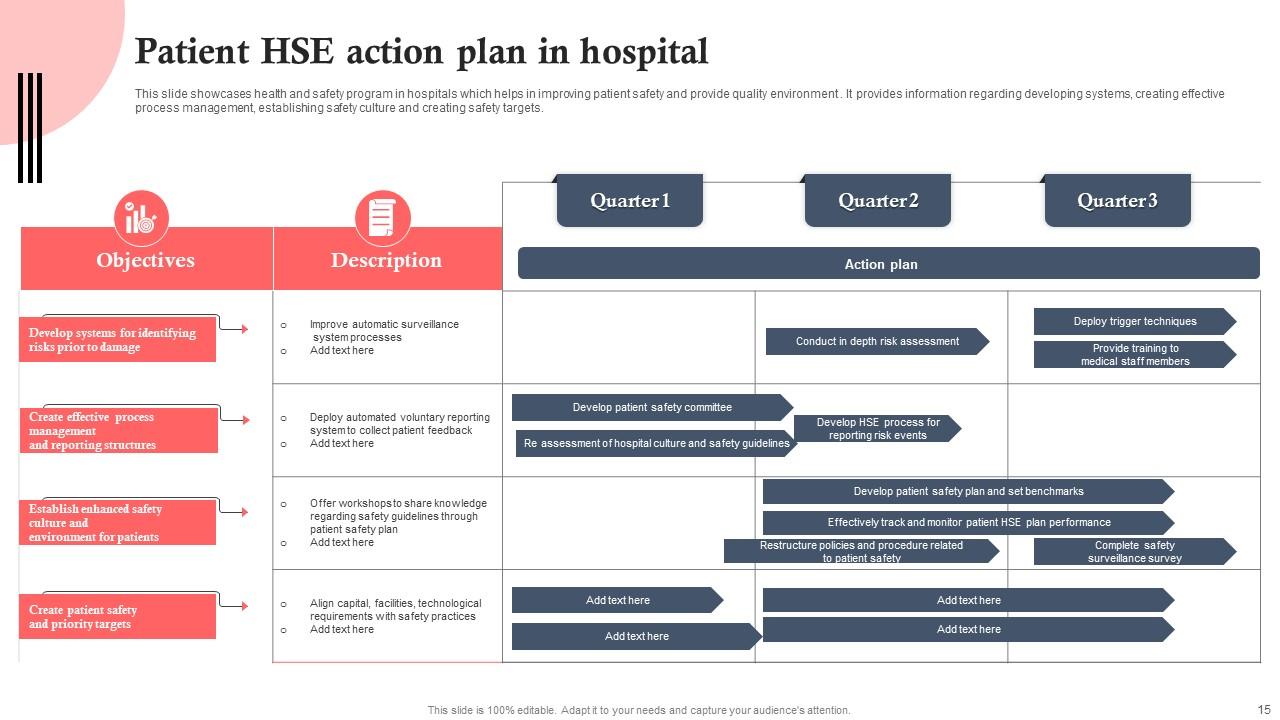
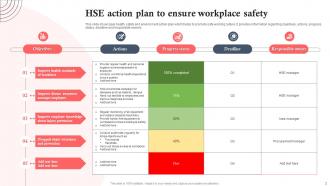
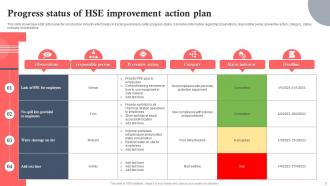
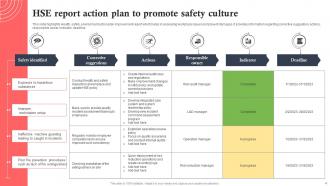
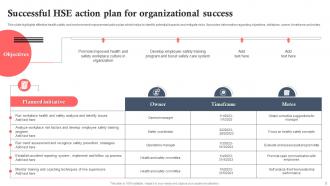
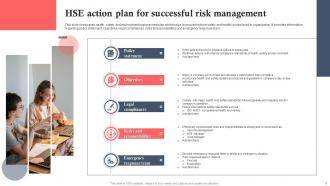
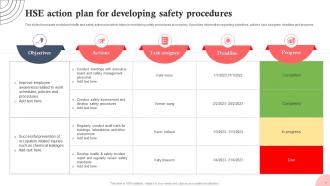
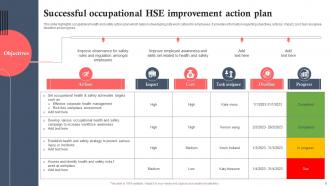
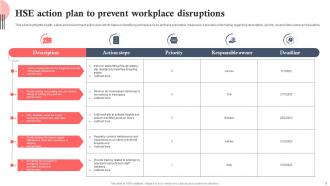
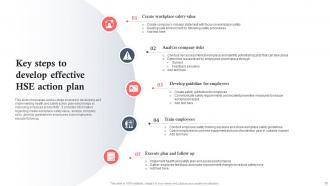
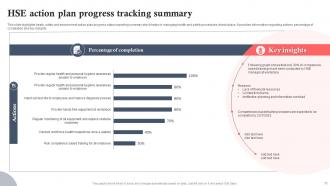
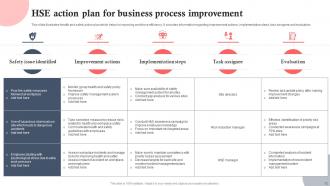
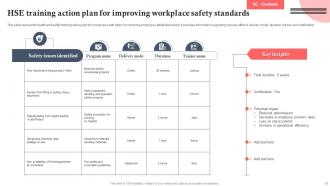
Introducing our HSE Action Plan PowerPoint PPT presentation, a vital tool for organizations committed to fostering a culture of workplace safety and prioritizing Health, Safety, and Environment HSE initiatives. Dive into the core of Workplace Safety, exploring comprehensive strategies to minimize risks and ensure employee well-being.Track HSE Plan Progress Status effectively, empowering your team to assess and communicate the advancements made in health and safety protocols.Unveil the significance of cultivating a robust Safety Culture, promoting employee engagement and adherence to safety measures.Navigate the HSE Report, providing a clear overview of accomplishments, areas of improvement, and compliance with safety regulations. With visually engaging slides and expert insights, this PPT equips your organization to excel in Risk Management Action Plans, elevating your commitment to workplace safety and environmental stewardship. Get this presentation now and lead your organization towards a safer and healthier future.
People who downloaded this PowerPoint presentation also viewed the following :
HSE Action Plan Powerpoint Ppt Template Bundles with all 24 slides:
Use our HSE Action Plan Powerpoint Ppt Template Bundles to effectively help you save your valuable time. They are readymade to fit into any presentation structure.
FAQs for HSE Action Plan Powerpoint
Your HSE Action Plan needs clear objectives tied to the actual hazards you've spotted. Figure out who's responsible for what and set real deadlines - seriously, this is where most plans die a slow death. Don't forget to allocate resources and build in regular check-ins so you can see if anything's actually happening. Keep it realistic, not just some document that sits in a drawer collecting dust. I'd start with your biggest risks first, then work down the list. Oh, and make sure you've got ways to measure success - otherwise you're just guessing if it worked.
So basically, regulations are like your safety plan's foundation - you've gotta hit those minimums no matter what. Map out everything that applies to you (OSHA, EPA, whatever local stuff). Then build your whole plan around meeting those standards. Honestly, I'd start with a gap analysis first - way easier to see what you're missing. Your plan needs specific steps, deadlines, and someone actually responsible for each thing. It's kinda boring but super necessary. Oh, and don't forget some regulations change pretty frequently, so you'll need to stay on top of updates too.
Risk assessments basically tell you what could blow up (literally or figuratively) and how likely that is. Use those results to figure out what needs fixing right now versus what can wait. It's like emergency room triage but for workplace stuff. The data shows you where to spend your safety budget, what training people actually need, and which controls to install. Honestly, without decent risk assessments you're just throwing darts at a board. I'd start by pulling up your latest assessments and see how they match your current to-do list.
Track both types of metrics - leading ones show prevention (training rates, safety audits, near-miss reports) while lagging ones show actual results (incidents, injuries, violations). Most places obsess over the lagging stuff but miss early warnings, which is backwards if you ask me. Monthly dashboards help, but here's the thing - definitely talk to your frontline people regularly. They'll give you the real story about what's working versus what just looks good on paper. Oh, and don't get too caught up in perfect data collection at first.
Get employees involved in building the plan from scratch - they'll actually care if it's their idea too. Ditch those awful PowerPoint toolbox talks and use real scenarios they deal with every day. Recognition programs should reward good safety behavior, not just counting incident-free days (honestly, those feel so outdated). Your supervisors need to coach people through safety conversations instead of just calling out what's wrong. Safety committees are huge - but you've gotta actually follow through on their suggestions or people will check out fast. Make it feel relevant to their actual job, not some compliance thing.
Look, you've gotta tailor your HSE plan to whatever industry you're in. Construction crews obsess over fall protection and equipment checks. Chemical plants? They're all about exposure controls and emergency protocols. Healthcare is more infection control and ergonomics - honestly, it's a completely different world from manufacturing. Start with a solid risk assessment to figure out what hazards you're actually dealing with. Then match your action items to the right industry standards like OSHA reqs for your sector. I'd check out what other companies in your space are doing that works.
Yeah, email's fine for getting the word out but let's be real - half the people won't read past the subject line. Team meetings or toolbox talks work way better since you can actually explain stuff and handle questions. Digital dashboards are solid too, plus old-school printed copies in break rooms (some folks still prefer paper, weirdly). Different people learn differently, so hit them from multiple angles. I'd probably go with 2-3 methods max though - don't overcomplicate it. Pick whatever actually fits how your team operates.
Honestly, the biggest pain points are always budget issues and getting people on board. Nobody likes change - drives me crazy but it's true. Then you've got the whole "who's responsible for what" mess where everyone's pointing fingers. Communication falls apart fast, especially between different teams or if you're dealing with multiple shifts. Oh, and timeline pressure? That's when people start cutting corners on safety stuff they really shouldn't skip. Best thing you can do is see this coming and build in extra time upfront for proper training and making sure everyone knows their role.
Dude, start with one tool that fixes your biggest headache - maybe tracking who's actually done what, or getting field updates without waiting forever. Mobile apps are honestly a lifesaver since your crew can update stuff right from site instead of scribbling notes they'll probably lose anyway. You can automate the boring tracking stuff, set up alerts for overdue actions, and get real-time dashboards so you're not constantly bugging people for updates. Digital platforms let you assign tasks directly and upload photos as evidence. Way better than drowning in spreadsheets - been there, not fun. Don't overcomplicate it though.
Look, without regular reviews your safety program is basically useless paperwork. Monthly check-ins are non-negotiable - you've got to track both the predictive stuff (training rates, near-misses) and actual incidents. It's like going to the doctor, honestly. Skip the checkups and problems sneak up on you. The feedback keeps your team actually caring instead of just going through the motions. Plus when budget season rolls around, you'll have real data to back up requests. Catch issues early or they'll definitely catch you later. Trust me on this one.
Honestly, just expand your risk assessments to cover environmental stuff too - waste, energy use, carbon tracking. Most of this overlaps with what you're already doing anyway. Your CFO will probably love it since green initiatives usually save money (win-win, right?). Look at where your current HSE processes already touch environmental issues and build on that. Way easier than starting from scratch. Don't overthink it - pick maybe 2-3 sustainability metrics to track each quarter. Makes it feel less like another random corporate initiative and more like you're just... doing your job better.
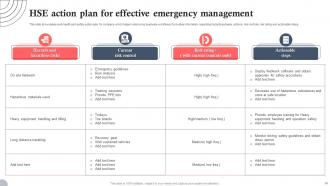
Everyone needs different training based on their role - supervisors should learn incident investigation, workers need hazard recognition, and management has to understand compliance stuff. Don't forget updated procedures, safety sheets, and monitoring tools too. Look, I know training budgets suck, but trust me, skipping it costs way more later. Communication channels are huge because the best plan means nothing if nobody knows what they're supposed to do. Oh, and start with your biggest knowledge gaps first - makes the most sense that way.
Look, whenever new regulations drop, that's your cue to review your HSE Action Plan immediately. Don't just wait around for the scheduled review - I've seen too many people get burned that way. New rules can totally mess with your current setup or expose blind spots you didn't know existed. Map out what's changed against your existing controls and risk assessments first. Then adjust your action items and deadlines accordingly. Oh, and definitely set up some kind of alert system for regulatory updates. Trust me, it beats the alternative of frantically trying to catch up later when you're already behind.
Track both leading and lagging indicators for your HSE plan. Leading stuff is better for prevention - training completion, safety audits, near-miss reports, hazard IDs. Lagging covers incident rates, lost time injuries, violations, comp claims. Honestly, most people obsess over lagging indicators but that's like looking in the rearview mirror. Set up completion percentages for action items with deadlines. A monthly dashboard works great, just don't make it too fancy or you'll never use it. Oh, and assign owners to each metric - otherwise everything becomes nobody's job.
Look, your HSE plan needs leaders who actually show up - not just write pretty mission statements. Get them in safety meetings, doing walk-arounds, and putting real money behind improvements. People can totally tell when leadership is just going through the motions, so authenticity is huge here. Make sure they're tackling hazards quickly and holding everyone accountable for safety goals the same way they obsess over quarterly numbers. Oh, and deadlines matter - follow through is everything. Bottom line: if safety decisions don't get the same weight as financial ones, your plan's basically worthless.
-
My presentations were a bit amateur before I found SlideTeam’s designs. I’ve been able to find slides for nearly every topic I’ve had to present. Thanks, Slideteam!
-
I downloaded some of the presentations for work. They were simple to modify and saved me a lot of time and effort.