


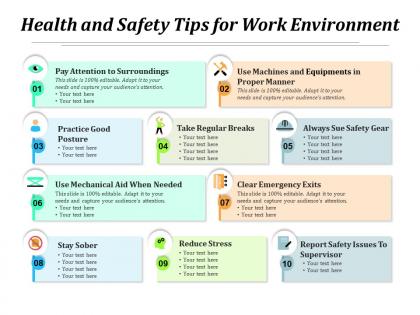
Health and safety tips for work environment




Try Before you Buy Download Free Sample Product
 Impress Your
 Audience
 100%
100% Editable
 Save Hours
 of Time


Our Health And Safety Tips For Work Environment are topically designed to provide an attractive backdrop to any subject. Use them to look like a presentation pro.
People who downloaded this PowerPoint presentation also viewed the following :
Health and safety tips for work environment with all 2 slides:
Use our Health And Safety Tips For Work Environment to effectively help you save your valuable time. They are readymade to fit into any presentation structure.

FAQs for Health and safety tips
Start by walking around and spotting your biggest risks - that's honestly the most important step. You'll need clear procedures for different hazards, plus training so people actually know what to do. Someone has to be in charge of this stuff, so assign specific safety roles. Set up an incident reporting system (trust me, you want to catch patterns early). Don't forget emergency procedures and PPE requirements for whatever dangers you've got. Oh, and do regular safety checks - way better than dealing with accidents later. Skip the generic templates and make it specific to your actual workplace.
Honestly? Your executives need to actually walk the walk - not just talk about safety while pushing crazy deadlines. The biggest thing is creating a culture where people can report problems without getting thrown under the bus. Nobody's gonna speak up if they think they'll catch heat for it. Regular training's fine, but what really works is getting employees involved in the actual safety decisions instead of just talking at them. Oh, and celebrate the good stuff - when people do things right, not just "hey we went 100 days without an accident." Put safety metrics in performance reviews too. Bottom line: reward people for flagging hazards, don't punish them.
Look, safety training is what actually keeps people from getting hurt - without it, your policies are just useless paperwork. You'll need both the initial stuff for new hires plus regular refreshers because people definitely get sloppy over time. Make it hands-on though, nobody learns anything from boring slides. Cover equipment use, emergency procedures, all that essential stuff. Oh and keep it updated with new regulations - that part's crucial but honestly kind of a pain. I'd start by figuring out where your current training sucks.
So basically you're playing detective, hunting down anything that could hurt people before it actually happens. Your team knows the real dangers way better than management does, so get them involved. Look at who might get injured and how bad it could be, then tackle the worst stuff first. Don't overwhelm yourself trying to fix everything at once though - I learned that the hard way. Regular check-ins keep you legal and honestly save money since accidents are expensive as hell. Start with the obvious dangerous spots and work from there.
Dude, there's some pretty wild stuff happening with workplace safety tech right now. AI cameras can actually catch unsafe behavior and ping supervisors immediately - kind of creepy but effective. Wearables are everywhere too, tracking heart rate, detecting falls, chemical exposure levels. Construction crews use drones for inspections now so nobody has to climb sketchy structures anymore. VR training is getting really common for dangerous job simulations. Honestly, I'd start with wearables if I were you - they're usually the cheapest upgrade and you'll see results fast. My cousin's company just rolled them out and they love them.
Honestly, skip the thick manuals - nobody's reading those things. Do short visual training instead, using stuff that actually happens at your workplace. Regular check-ins work way better than just onboarding once and forgetting about it. Throw up some visual reminders where people work and keep simple checklists handy. In team meetings, have someone share a quick safety tip or near-miss story. That conversational approach hits different than lecturing people. Oh, and repetition helps but don't be that annoying safety person everyone avoids. Make it relevant to what they're doing daily and you'll see better results.
Look, the usual suspects are slips, cuts, burns, and those annoying repetitive strain things. Most accidents? They happen when you're in a rush or your mind's elsewhere - I swear that's like 90% of workplace injuries right there. Clean up spills right away, don't be lazy about lifting properly, and yeah I know PPE is annoying but just wear it. Take actual breaks too. Know where the first aid stuff is before you need it. Oh and report close calls - they're basically your warning system. Shortcuts when you're tired never end well.
Honestly, engagement makes or breaks safety programs. Teams that don't care will just fake it or skip stuff entirely. But when people actually buy in? They report problems, follow rules without anyone watching, and watch each other's backs. It's crazy how different it looks. The key is making people feel heard - then they'll actually show up to training and speak up about issues. Oh, and avoid the whole "corporate mandates safety rules" vibe. Make it feel like everyone's working together instead. Way better results that way.
Yeah, so OSHA basically makes you provide a safe workplace - hazard assessments, employee training, proper safety gear, all that stuff. The paperwork is honestly such a pain. Different industries have their own rules too. But here's the thing - if someone gets hurt and you haven't been following the standards, you're looking at workers' comp claims, possible lawsuits, plus OSHA fines that can get pretty expensive. I'd start with a basic walkthrough of your place to spot obvious hazards. Also check when you last did safety training - that stuff expires faster than you think.
Your workers are basically your best safety radar system. They're out there every day spotting weird equipment behavior, close calls, and processes that look sketchy in real life. Management sitting in offices? They miss tons of this stuff. Set up ways for people to speak up - surveys, meetings, anonymous reporting, whatever works. The trick is making sure nobody gets thrown under the bus for raising concerns. Otherwise people just stay quiet. You'll get way better intel about what's really going down versus what the safety manual says should happen. Act on what they tell you though - that part's crucial.
Honestly, tracking safety stuff saves you serious money. Your workers' comp and insurance costs drop when incident rates go down. Employees don't bail as much either - and replacing people is crazy expensive. Good safety records help you land contracts too. I know a guy whose company lost a huge bid because their safety numbers were trash. The productivity boost is real though - when people aren't worried about getting hurt, they actually work better. Plus fewer work stoppages means you're not constantly putting out fires.
Make a solid checklist first - equipment, procedures, exits, PPE, all that stuff. Don't just audit when things blow up (we've all done that though). Walk through with the actual workers since they catch what bosses miss. Take real photos and notes, not just "fix this later" garbage. Here's the key part: assign specific people to handle each issue with actual deadlines. Otherwise you're just burning money on paperwork that'll sit in a drawer. Oh, and do it regularly - consistency beats perfection every time.
So this is actually pretty straightforward - when people are stressed or depressed, they're way more prone to accidents at work. Makes total sense if you think about it. Overwhelmed employees miss safety cues and don't follow protocols as carefully. I've noticed this myself - exhausted people just aren't as sharp. Supporting mental health through stress programs or mental health days prevents injuries before they happen. Oh, and here's the thing - psychologically safe workers actually speak up more about safety issues and near-misses. Just check in with your team regularly and let them take breaks when needed.
Yeah, workplace safety issues will make people quit faster than almost anything else. Nobody's sticking around if they think they'll get hurt on the job - that's just common sense. When employees feel safe, they trust you actually give a damn about them, which builds real loyalty. Injured workers can't do their jobs either, so you end up short-staffed and everyone else gets overwhelmed. Honestly, just ask your team what worries them safety-wise. You'll probably hear stuff you never even thought of. It's such an easy win but so many managers overlook it.
Honestly, start small with stuff that won't break the bank. Get your safety protocols written down clearly and make sure everyone actually knows them - you'd be shocked how many workplace accidents are just people winging it. Check your equipment regularly too. I'd focus on whatever your biggest hazards are instead of trying to tackle everything. Good lighting and keeping walkways clear sounds boring but it works. First aid kits are obvious. Oh, and definitely bug your insurance company - they usually have free training stuff they'll throw at you. Just stick with whatever system you pick, that's the real trick.
-
Great product with effective design. Helped a lot in our corporate presentations. Easy to edit and stunning visuals.
-
Wonderful templates design to use in business meetings.