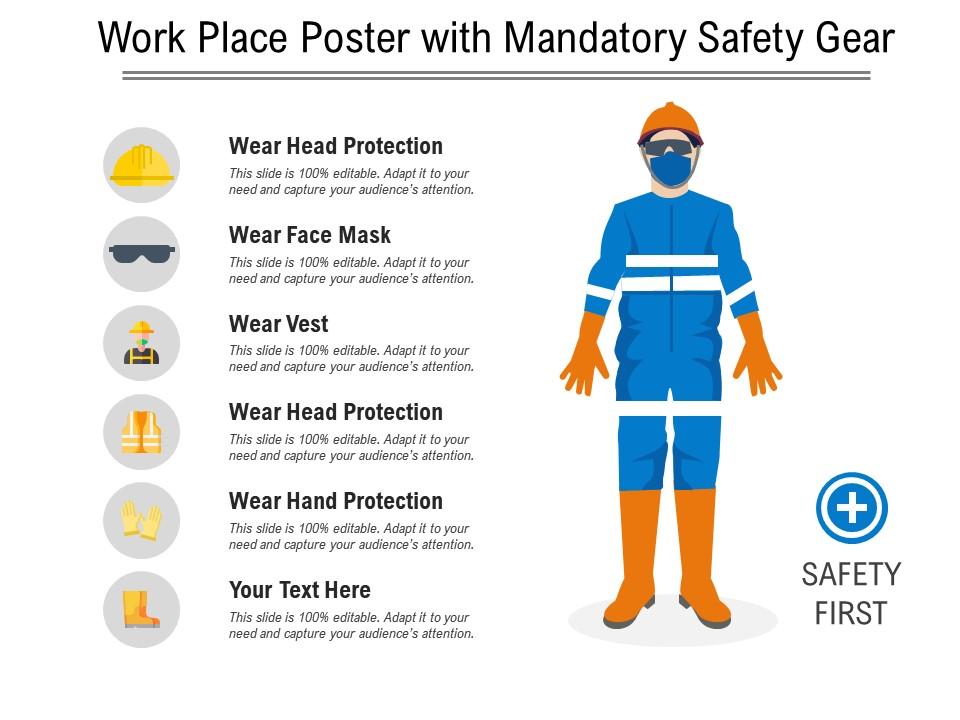
Work place poster with mandatory safety gear
Try Before you Buy Download Free Sample Product
Audience
Editable
of Time
Our Work Place Poster With Mandatory Safety Gear are topically designed to provide an attractive backdrop to any subject. Use them to look like a presentation pro.
People who downloaded this PowerPoint presentation also viewed the following :
Work place poster with mandatory safety gear with all 2 slides:
Use our Work Place Poster With Mandatory Safety Gear to effectively help you save your valuable time. They are readymade to fit into any presentation structure.
FAQs for Work place poster with
Look, you need four core things for safety compliance that actually works. First - policies that make sense for your specific workplace, not some generic template. Training comes next, and please skip the death-by-PowerPoint approach. Third is regular monitoring and audits to spot problems before they blow up. Documentation is honestly a pain but regulators eat that stuff up, so don't skip it. Oh, and get your leadership actually committed - fake support from executives will tank your whole program faster than anything else. My advice? Figure out your biggest risks first and build around those instead of trying to fix everything at once.
Track both leading and lagging indicators - you need the whole picture. Leading ones are like training completion rates, safety audit scores, near-miss reports. Those actually prevent problems. Lagging indicators? That's your incident rates, workers' comp claims, OSHA citations. Honestly, way too many companies just obsess over the lagging stuff when it's already too late. The good stuff happens when you mix both types and watch trends over months, not just random snapshots. Monthly dashboard reviews with your team - that's where you'll see real progress.
Dude, training is huge for staying compliant. Your team needs to actually know what they're doing, not just have some manual sitting around. Most places require documented training records anyway - auditors love checking that stuff. I'd do refreshers every quarter and track who's completed what. Honestly, the companies that skip this are the ones getting hit with violations later. It protects your workers AND keeps you out of trouble. Plus when people actually understand the hazards, they're way more likely to follow procedures correctly. Worth the investment for sure.
Honestly, start with something simple like air quality sensors or PPE tracking - don't go crazy trying to automate everything at once. IoT devices and wearables can monitor safety stuff 24/7, which beats those awful paper checklists we all hate filling out. You'll get instant alerts when something's wrong instead of finding out days later. The dashboards show patterns you'd never catch manually, and everything feeds into your compliance reports automatically. Way more accurate than doing it by hand. Real-time data makes such a difference - I wish more places would just bite the bullet and switch already.
Dude, you really don't want to mess around with this stuff. Fines can range from thousands to literally millions depending on what you're dealing with. Your insurance will go through the roof. Work gets shut down, you'll have inspectors breathing down your neck constantly, and if someone actually gets hurt? Lawsuits are coming your way. Management can even face criminal charges in the worst cases - like, actual jail time. The crazy part is how much cheaper it is to just follow the rules from the start. Document everything and make sure your people know what's required. Trust me on this one.
Stay ready for audits like they could drop by any day - trust me on this one. I once spent hours digging through files during a surprise visit and it was not fun. Have someone on your team do mock audits using the same checklist real inspectors use. Documentation should be current and easy to find, not buried in some random folder. When auditors show up, be available for questions but don't breathe down their necks or make excuses for everything. Here's the thing - their findings aren't personal attacks, they're actually helpful for spotting what needs fixing. Make your action plan right after and follow through.
Honestly, start with getting your managers to actually walk around and talk to people - not just check boxes. Your employees know where the real dangers are, so get them involved in spotting problems and fixing them. Safety meetings are huge but make them interactive or everyone zones out. The game changer though? People need to feel safe reporting close calls without getting in trouble. I'd roll out a no-blame reporting system ASAP. Oh and make sure leadership is actually visible in this stuff, not just sending emails about it.
Dude, you've got way more options than you think! OSHA actually does free consultations - they'll come check out your place without slapping you with penalties, which is pretty cool. Industry associations are solid for templates and training stuff that won't break the bank. YouTube and sites like ComplianceForge have surprisingly good resources too. But honestly? Sometimes just grabbing coffee with other small business owners who've dealt with this stuff is the best move. No point reinventing the wheel when there's already good tools out there you can tweak for your situation.
Oh man, healthcare and aviation are brutal with safety regs - like, one mistake and people die, so they don't mess around. Nuclear power, oil & gas, and pharma are the same deal. Food production's another big one, plus chemical manufacturing and mining. Construction too, obviously - hence all the hard hats you see everywhere. My cousin works in pharma and says the FDA compliance stuff is insane. OSHA's pretty ruthless with most of these industries. Just know if you're getting into any of this, you'll be drowning in safety training and paperwork. It's expensive but not really negotiable.
Ugh, compliance is such a headache because every country does their own thing. Europe has REACH and CE marking stuff, while the US goes with OSHA and FDA rules depending on what you're selling. Then Asia-Pacific throws their own requirements into the mix too. The annoying part? Some places take international standards but pile on extra local rules anyway. Honestly, I'd figure out which markets you're targeting first, then just hire local experts who actually know this stuff. Way easier than trying to decode all those regulations yourself.
Look, incident reporting is basically your insurance policy for staying compliant. Regulators want to see you're catching problems before they blow up. Your reports prove your safety system isn't just paperwork sitting in a drawer somewhere. Catching stuff early beats dealing with a disaster later - trust me on that one. The data helps you spot patterns and fix bigger issues across the board. Oh, and make sure your team knows this isn't about pointing fingers. It's about preventing accidents and keeping everyone safe.
Honestly, you need multiple info streams or you'll get blindsided. OSHA updates are obvious, but don't skip your industry newsletters - they catch the big changes fast. Government social media is actually useful (weird, right?). Google alerts work as backup for your specific compliance stuff. Your legal team better be watching Federal Register publications too. The trick is having several sources feeding you updates instead of just one. Trust me, relying on a single channel always backfires when something important slips through.
Dude, safety committees actually work because they get regular employees involved in the process instead of just having bosses bark orders from their offices. Workers investigate incidents and spot problems before someone gets hurt. The buy-in is totally different when it's coming from your coworkers rather than some executive you never see. But here's the thing - and I can't stress this enough - the committee needs real power to make changes happen. If they're just there to look good on paper, forget it. Give them actual authority and you'll see people start following protocols without all the usual pushback. It's like peer pressure but for good reasons.
Honestly, treat safety like an investment instead of just another expense. Focus on the easy wins first - better training and keeping equipment maintained properly. Those prevent the really expensive disasters later. I've watched way too many companies get burned by skipping this stuff! Go after your biggest risks immediately, then work down the list. Bulk buying safety gear helps with costs, and you can sometimes split training expenses with other local businesses. The trick is baking safety into everything from day one rather than scrambling to add it later. Oh, and definitely track your incident numbers - makes it way easier to prove it's worth the money.
Get your team involved in writing the safety rules - they'll actually follow stuff they helped create. Do quick safety check-ins regularly, not just when something goes wrong. People get lazy when they're rushing or bored, so make it easy for anyone to call out problems without getting in trouble. I'd pair newbies with someone who knows their stuff too. Honestly, celebrate when people report close calls instead of making them feel stupid about it. Oh, and definitely recognize the folks who spot issues before they become real problems. Makes them feel like their input matters.
-
Good research work and creative work done on every template.
-
Informative design.
-
The Designed Graphic are very professional and classic.
-
Qualitative and comprehensive slides.
-
Excellent template with unique design.